

In 2026, wheel alignment costs in the U.S. typically range from $50 to $200. Two-wheel alignment usually runs $50 to $100, while four-wheel alignment can be $100 to $200. Factors like vehicle type, location, and additional services influence pricing. You can save by opting for independent service centers, looking for special promotions, or investing in a lifetime alignment package. Understanding these dynamics will help you make informed decisions about your vehicle’s maintenance needs.
Why Does Wheel Alignment Matter?
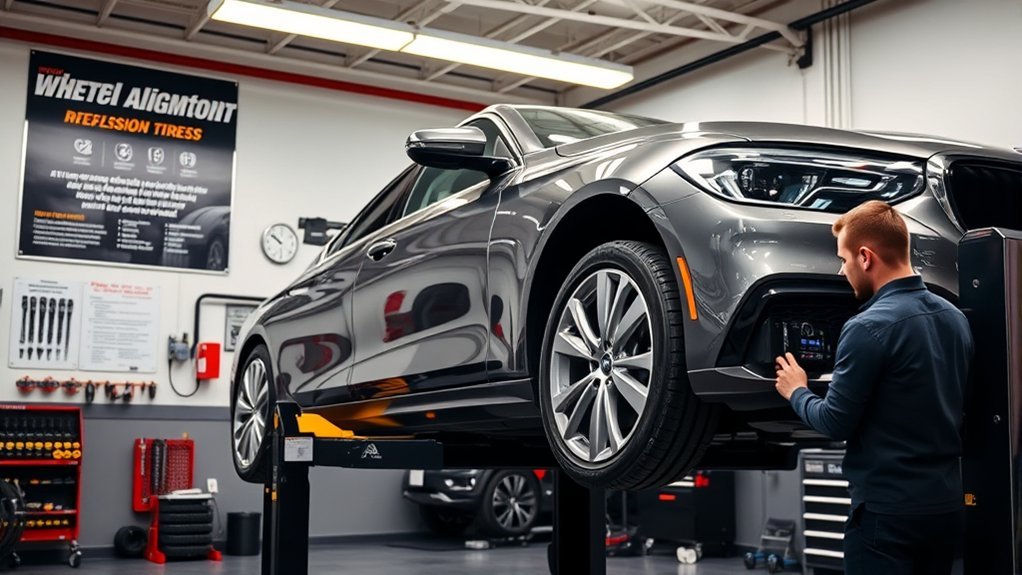
Proper wheel alignment is vital for your vehicle’s performance and safety. It directly impacts steering control, ensuring your vehicle responds accurately to your inputs. When your wheels are aligned, you’ll experience improved handling, reducing the risk of drifting or pulling, which can lead to driver fatigue during long trips. This precision not only enhances safety but also fosters a more enjoyable driving experience.
Moreover, maintaining correct wheel alignment promotes tire longevity. By ensuring even tire wear, you can avoid premature replacements, ultimately saving you money. Regular alignment checks, ideally once a year or after significant impacts like potholes, are essential for peak performance.
Additionally, proper alignment can enhance fuel efficiency by minimizing rolling resistance, contributing to better gas mileage. By understanding the importance of wheel alignment, you empower yourself to maintain your vehicle’s health, ensuring a safer and more economical journey.
How Much Does Wheel Alignment Cost?
Understanding wheel alignment costs is important for maintaining your vehicle’s performance and safety. Typically, a two-wheel alignment ranges from $50 to $100, while a four-wheel alignment usually costs between $100 and $200.
Understanding the costs of wheel alignment is crucial for your vehicle’s performance and safety, with two-wheel alignments typically costing $50 to $100.
If you own a premium vehicle, expect higher costs due to specialized alignment techniques and equipment. Keep in mind that additional services, like tire balancing or suspension repairs, can greatly increase the overall expense.
It’s wise to have your alignment checked at least once a year, or more frequently if you frequently drive on rough roads or hit potholes. Many people fall prey to alignment myths, believing they only need an alignment when they notice uneven tire wear.
In reality, proactive maintenance can save you money in the long run. Some service centers even offer lifetime alignment packages for around $200, providing a practical solution for ongoing alignment needs.
Factors Influencing Wheel Alignment Costs
While various factors can influence wheel alignment costs, the type of vehicle you own is often the most crucial. Luxury and performance cars typically require specialized equipment, resulting in a higher cost breakdown compared to standard vehicles.
Key factors include:
- Alignment types: Two-wheel alignments generally range from $50 to $100, while four-wheel alignments can cost between $100 to $200.
- Condition of suspension components: Worn or damaged parts may necessitate repairs before alignment, increasing costs.
- Geographic location: Pricing varies greatly; independent centers often offer lower rates than dealerships.
- Additional services: Tire balancing or necessary repairs can further elevate the overall expense.
Understanding these factors can help you navigate the landscape of wheel alignment costs effectively, ensuring you make informed decisions about your vehicle’s maintenance.
When Should You Get a Wheel Alignment?

When should you consider getting a wheel alignment to keep your vehicle running smoothly?
It’s recommended to check the alignment at least once a year or every 6,000 miles. This alignment frequency guarantees peak performance and safety.
Pay attention to alignment signs like your vehicle pulling to one side, a crooked steering wheel while driving straight, or uneven tire wear patterns. These indicators suggest it’s time for an alignment.
Additionally, after experiencing a significant impact, such as hitting a pothole or curb, you should have an alignment inspection.
If you notice vibrations through the steering wheel or hear strange noises while turning, don’t hesitate to get it checked out promptly.
Regular alignment checks during tire rotations can help maintain even tire wear, prolonging the life of your tires and enhancing your driving experience.
Ways to Reduce Wheel Alignment Costs
To minimize wheel alignment costs effectively, consider exploring various strategies that can lead to considerable savings. Here are some practical tips:
- Use independent service centers: They often charge less than dealerships, with prices ranging from $75 to $200.
- Look for alignment specials: Many shops offer promotional discounts that can considerably lower your costs.
- Check alignment during tire rotations: This routine maintenance practice can help you catch misalignments early, preventing costly repairs.
- Invest in a lifetime alignment package: Typically around $200, this can be cost-effective if you need multiple alignments over your vehicle’s lifespan.
Frequently Asked Questions
Can I Perform Wheel Alignment at Home?
You can perform wheel alignment at home using DIY techniques and home tools, but it’s essential to guarantee precision. Consider investing in alignment tools and following guidelines to achieve accurate results for ideal vehicle performance.
What Symptoms Indicate a Need for Wheel Alignment?
If you notice uneven tire wear or experience steering issues, it’s time to check your wheel alignment. These symptoms can affect handling and safety, so addressing them promptly helps maintain your vehicle’s performance and longevity.
How Long Does a Wheel Alignment Take?
A wheel alignment typically takes about 30 minutes to an hour, depending on service efficiency and the vehicle’s condition. Ensuring proper alignment enhances performance, so don’t hesitate to schedule this essential maintenance regularly.
Do All Vehicles Require the Same Alignment Methods?
Not all vehicles require the same alignment methods. Different alignment techniques depend on vehicle specifications, including suspension type and manufacturer guidelines. Understanding these factors helps guarantee peak performance and tire longevity for your specific vehicle.
Is Wheel Alignment Covered Under Vehicle Warranties?
Wheel alignment typically isn’t covered under standard vehicle warranties, but some manufacturers may offer specific coverage for certain alignment types. It’s essential to review your warranty details for potential benefits and limitations regarding alignment services.
Conclusion
In summary, maintaining proper wheel alignment isn’t just about comfort; it’s essential for vehicle safety and longevity. Think of it as the compass guiding your car through the ever-changing terrain of the road. By understanding the costs and factors involved, and knowing when to seek alignment, you can navigate expenses effectively. With a few strategic choices, you can keep your vehicle aligned without breaking the bank, steering clear of unnecessary repairs down the line.







Leave a Reply