
Shifting a Jeep Wrangler into four-wheel drive is simple once you know which transfer case your vehicle has. The correct procedure is different for 4H and 4L, and exact speed limits can vary by model year. Check your owner’s manual first, then use the steps below to engage each mode without forcing the lever or binding the drivetrain.
Quick Answer
To shift from 2H to 4H, slow to a steady speed within your owner’s-manual limit, ease off the accelerator, and move the transfer-case lever into 4H. For 4L, roll at about 1–3 mph, place the transmission in Neutral or depress the clutch, shift firmly into 4L, and confirm full engagement.
Key Takeaways
- You normally do not need transmission Neutral when shifting between 2H and 4H.
- The preferred 4H-to-4L procedure uses a slow 1–3 mph roll with an automatic transmission in Neutral or a manual-transmission clutch depressed.
- Use 4H Part Time and 4L only on loose, slippery, or low-traction surfaces—not dry, high-traction pavement.
- Wranglers equipped with 4H Auto may use that mode on variable and hard-surface roads.
- Never drive until the transfer-case lever and dashboard indicator show that the selected mode is fully engaged.
At a Glance
| Time Required | About 1–2 minutes |
| Difficulty | Easy, once the correct procedure is known |
| Tools Needed | Your vehicle-specific owner’s manual |
| Cost | $0 |
Model-year check: Wrangler generations, trims, and optional transfer cases do not all use identical labels or limits. Confirm the model year with the NHTSA VIN Decoder, then retrieve the matching manual from the official Mopar Owner’s Manual center. The exact manual overrides general guidance.
Understanding Four-Wheel Drive Modes in Your Jeep
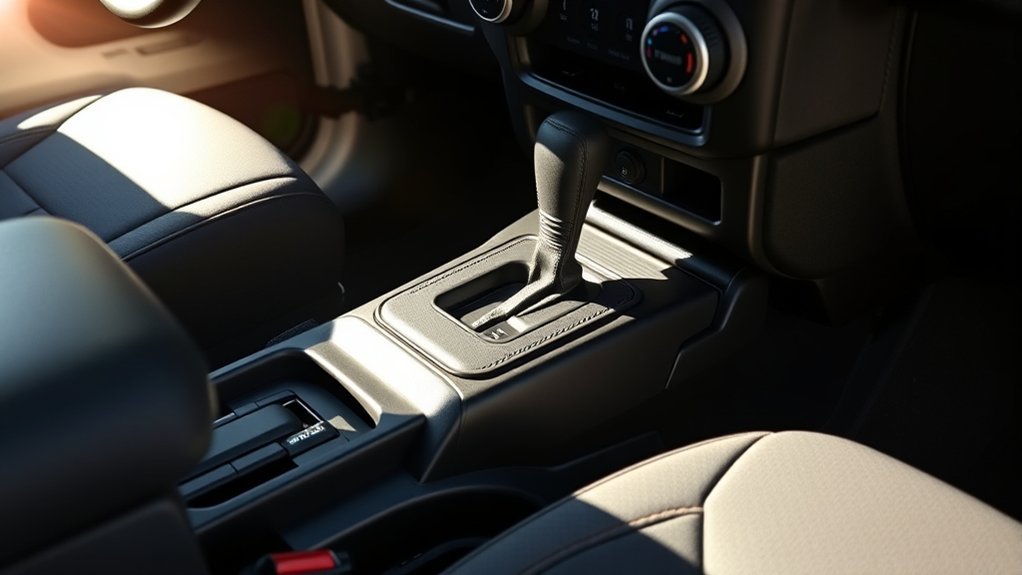
Before moving the transfer-case lever, look at the labels beside it. A Wrangler may have a four-position part-time transfer case or a five-position transfer case with an automatic four-wheel-drive mode.
- 2H — Two-Wheel Drive High: The normal setting for dry streets, highways, and other firm surfaces. Engine power is sent to the rear wheels.
- 4H — Four-Wheel Drive High: On a four-position part-time system, this locks the front and rear driveshafts together. Use it for snow-covered roads, ice, loose gravel, mud, sand, and other surfaces that allow some tire slip.
- 4H Auto — Four-Wheel Drive Auto: Available on certain full-time systems. The vehicle can vary front-wheel engagement as traction changes, so this mode may be used on variable and hard-surface roads.
- 4H Part Time: The locked high-range setting on a five-position transfer case. Treat it like conventional 4H and avoid using it on dry, high-traction pavement.
- N — Transfer-Case Neutral: Disconnects both driveshafts from the powertrain. It is mainly used for approved recreational towing procedures and is not a normal driving mode.
- 4L — Four-Wheel Drive Low: Provides much lower gearing for slow travel, steep climbs or descents, rocks, deep mud, deep snow, and other situations that require extra low-speed pulling power.
Use 2H for normal dry-road driving, 4H Part Time for loose or slippery surfaces, 4H Auto for changing conditions when equipped, and 4L for slow technical driving.
Warning: Transmission Neutral and transfer-case N are not the same. Transfer-case Neutral can allow the Wrangler to roll even if an automatic transmission is in Park or a manual transmission is in gear. Apply the parking brake and follow the owner’s manual whenever transfer-case N is intentionally selected.
When to Use 4WD for Best Performance
Select four-wheel drive before the vehicle becomes deeply stuck, but only when the surface and transfer-case design support the mode you plan to use.
Use 4H Part Time for:
- Snow-covered or icy roads
- Loose gravel and dirt roads
- Mud, sand, and low-traction trails
- Moderate off-road climbs and descents
- Situations where the tires can slip enough to release driveline tension
Use 4H Auto, when equipped, for:
- Changing rain, snow, and dry-road conditions
- Patchy ice or intermittent low traction
- Normal hard-surface travel when the owner’s manual permits it
Use 4L for:
- Rock crawling and obstacle negotiation
- Steep, slow climbs or descents
- Deep mud, sand, or snow
- Low-speed recovery situations
- Any approved task requiring greater torque multiplication at very low speed
Current Jeep guidance says 4L is a low-speed mode and should not exceed 25 mph. In real technical terrain, the safe speed is often far lower. Always drive at a speed that allows you to steer, stop, and respond to obstacles.
Warning: Do not use 4H Part Time or 4L on dry, high-traction pavement. Because the front and rear driveshafts are locked together, normal differences in front- and rear-axle speed cannot release easily. The result may be tire scrubbing, difficult steering, driveline binding, or component damage.
Four-wheel drive can help the Wrangler move forward on a slippery surface, but it does not cancel the limits of tire grip. Leave extra braking distance, slow before turns, and do not assume that 4WD will prevent a slide.
How to Shift Into 4WD High: A Step-by-Step Guide
Shifting from 2H to 4H is the normal way to gain extra traction without selecting low-range gearing. On many current Wranglers, the shift can be made while stopped or moving. Jeep owner-manual guidance commonly lists 0–45 mph as the preferred range, although the exact upper limit can differ by model year.
Preparation Before Shifting
- Identify the mode: Determine whether the lever says 4H, 4H Part Time, or 4H Auto.
- Check the surface: Use part-time 4H only where the tires can slip, such as snow, gravel, dirt, mud, or sand.
- Reduce speed: Slow to a comfortable, steady speed within the limit in your owner’s manual. A lower speed generally reduces shift effort.
- Stop wheelspin: Do not shift while only the front or rear wheels are spinning. Ease off the accelerator and regain a steady roll first.
- Keep a straight, controlled path: Avoid making the shift during a sharp turn, sudden acceleration, or abrupt maneuver.
Engaging 4WD High Mode
- Maintain a steady speed or remain stopped.
- Keep an automatic transmission in Drive or a manual transmission in the appropriate driving gear. Transmission Neutral is normally not required for 2H-to-4H.
- Move the transfer-case lever firmly from 2H into 4H or 4H Part Time. Apply steady pressure rather than jerking or forcing it.
- If shifting while moving, momentarily ease off the accelerator after moving the lever. Do not accelerate during the shift.
- Check the instrument cluster for the appropriate four-wheel-drive indicator.
- Confirm that the lever is seated fully in the selected detent before continuing.
If the Wrangler has 4H Auto, move the lever into that position using the same general high-range procedure. The automatic mode can then adjust front-wheel engagement as conditions change.
Pro Tip: Shift into 4H before entering deep snow, loose sand, or a muddy section. Engaging the system while the vehicle is moving steadily is easier and safer than waiting until the wheels are spinning.
Safety Tips for Shifting Into 4WD Low
Shifting into 4L requires a different procedure because the transfer case must engage its low-range gears. Jeep’s preferred method uses a very slow roll rather than a normal driving speed.
- Enter 4H first: Place the transfer case in 4H, 4H Part Time, or the manual-approved high-range position before selecting 4L.
- Slow to approximately 1–3 mph: Allow the Wrangler to coast slowly in a straight, safe area.
- Unload the transmission: Place an automatic transmission in Neutral. With a manual transmission, press the clutch pedal fully.
- Move the transfer-case lever firmly: Shift through the gate into 4L without pausing in transfer-case N.
- Complete the shift: After the lever is fully in 4L, place the automatic transmission back in Drive or the desired gear. With a manual, select the appropriate gear and release the clutch smoothly.
- Verify engagement: Confirm the lever position and the 4L indicator before applying meaningful throttle.
A 4L shift may be possible while completely stopped, but the gear teeth may not be aligned. If the lever will not seat, do not force it. Return to the proper starting position, let the vehicle roll at 1–3 mph, place the transmission in Neutral or depress the clutch, and try again.
Warning: Do not attempt to engage or disengage 4L at normal road speed. Do not drive if the lever is between detents, the indicator does not confirm the selected range, or the transfer case makes persistent grinding or abnormal noises.
Once 4L is engaged, use gentle throttle and low speed. Engine rpm will be much higher at a given road speed than it is in 2H or 4H, so watch the tachometer and avoid overspeeding the engine.
Avoid These Common Mistakes When Shifting Gears
Most shifting problems come from using the wrong speed, shifting while the tires are spinning, confusing the two Neutral positions, or forcing a lever that is not aligned.
Timing Your Shifts Properly
- Do not wait for heavy wheelspin: Front- and rear-driveshaft speeds need to be compatible for a smooth shift.
- Do not accelerate during a high-range shift: Keep a steady roll and momentarily release the accelerator after moving the lever.
- Use the slow-roll method for 4L: Approximately 1–3 mph is preferred on current Wrangler procedures.
- Do not force the lever: If the gears do not align, reset the procedure and try again at the correct crawl speed.
- Confirm full engagement: The lever and indicator should agree before you continue driving.
Avoid Speeding While Shifting
A shift-speed limit is not the same as a safe driving speed. Even when a manual permits a 2H-to-4H shift at a relatively high speed, snow, ice, gravel, mud, visibility, and tire condition may require you to travel much more slowly.
Do not use an invented minimum speed in 4H. There is no need to remain above 15 mph. Drive as slowly as conditions require, and do not exceed the exact limits listed in the owner’s manual.
There is also no special 55 mph limit for ordinary 2H highway driving. In 2H, follow posted limits, tire ratings, weather conditions, and normal safe-driving practices.
Use Neutral When Necessary
Transmission Neutral is required for the normal 4H-to-4L and 4L-to-4H procedure on an automatic Wrangler. A manual-transmission Wrangler uses the clutch pedal instead.
- 2H to 4H: Transmission Neutral is normally unnecessary.
- 4H to 4L: Use automatic-transmission Neutral or fully depress the manual-transmission clutch while rolling at 1–3 mph.
- 4L to 4H: Use the same slow-roll and transmission-unloading procedure.
- Transfer-case N: Do not stop or pause in this position during the moving low-range shift.
Note: If the transfer-case lever has a layout or electronic control that differs from these descriptions, stop and use the vehicle-specific manual. Do not assume that a procedure for a JL, JK, TJ, 4xe, Rubicon, or another trim applies unchanged to your Wrangler.
How to Easily Disengage From Four-Wheel Drive
Returning to 2H is usually a two-stage process if you are starting in 4L: first shift from 4L to 4H, then shift from 4H to 2H.
To shift from 4L to 4H:
- Choose a straight, safe path and slow to approximately 1–3 mph.
- Place an automatic transmission in Neutral or press the clutch on a manual transmission.
- Move the transfer-case lever firmly from 4L into 4H without pausing in transfer-case N.
- Return the automatic transmission to Drive or select the correct manual gear.
- Confirm that the 4L indicator has gone out and the high-range position is fully engaged.
To shift from 4H to 2H:
- Continue straight at a steady, owner-manual-approved speed or stop the vehicle.
- Ease off the accelerator.
- Move the transfer-case lever into 2H.
- Momentarily keep the accelerator released to help unload the driveline.
- Confirm that the four-wheel-drive indicator turns off.
If the indicator remains on or the Wrangler feels bound after returning to 2H, move to a loose or low-traction surface when it is safe to do so, straighten the steering, ease off the accelerator, and allow the vehicle to roll gently. Uneven tire pressure, unequal tire wear, excessive loading, cold transfer-case fluid, or driveline tension can delay disengagement.
Never continue onto dry pavement in part-time 4H merely because the indicator is slow to turn off. Stop safely and resolve incomplete disengagement first.
Maintenance Practices for Your Jeep’s 4WD System
Good transfer-case performance depends on more than the shift lever. Tires, fluids, universal joints, and other driveline components all affect how smoothly the system engages and releases.
- Follow the factory maintenance plan: Have the transfer-case fluid inspected and changed at the intervals or under the severe-use conditions listed for your model year. Do not apply one universal mileage interval to every Wrangler.
- Match all four tires: Use tires of the same specified size, type, and similar circumference. A major difference in wear or diameter can create driveline speed differences.
- Keep tire pressure even: Set cold pressure to the vehicle placard specification. Low or unequal pressure can contribute to delayed or difficult disengagement.
- Inspect for leaks: Look beneath the transfer case, transmission, axles, and driveshaft areas for fresh fluid or impact damage.
- Inspect universal and CV joints: Check for torn boots, looseness, vibration, or unusual noises according to the maintenance schedule.
- Clean after off-road use: Remove packed mud, sand, plants, and debris from the underbody, wheels, brakes, radiator, and driveline areas.
- Check after water exposure: After deep water, mud, or flooding, have affected fluids and components inspected for contamination as directed by the owner’s manual.
- Operate the system appropriately: Using the transfer case under suitable conditions can confirm that it functions, but do not cycle it on dry pavement or force a stiff lever merely to “exercise” it.
Pro Tip: After a trail trip, inspect the Jeep before driving at highway speed. Packed mud can unbalance a wheel, abrasive debris can reduce brake performance, and brush may hide damage to hoses, seals, or driveline parts.
Frequently Asked Questions About Jeep 4WD Usage
Most normal 4WD questions can be resolved by checking the transfer-case label, the instrument-cluster indicator, the road surface, tire condition, and the procedure in the correct model-year manual.
If the lever feels unusually stiff: Reduce speed and shift effort, travel straight, ease off the accelerator, and make sure the wheels are not spinning. Cold transfer-case fluid can temporarily increase effort. Never add excessive force or use an extension on the lever.
If 4L will not engage: Confirm that you are in 4H, let the vehicle roll at approximately 1–3 mph, place the automatic transmission in Neutral or depress the manual-transmission clutch, and shift firmly without pausing in transfer-case N.
If the Wrangler will not leave 4H: Check that the steering is straight, the tires are properly inflated and closely matched, and the vehicle is not on a high-traction surface with the driveline wound up. Ease off the accelerator and allow a gentle straight roll while selecting 2H.
If the indicator flashes or disagrees with the lever: Do not assume the shift is complete. Stop in a safe location, return the lever to a clearly engaged position, and repeat the correct procedure. Persistent warning lights, grinding, popping, or loss of drive require professional diagnosis.
Frequently Asked Questions
Can you switch from 2H to 4H while driving a Jeep Wrangler?
Yes, on most mechanically shifted Wranglers, 2H-to-4H can be selected while stopped or moving. Current owner-manual guidance commonly identifies 0–45 mph as the preferred range. Ease off the accelerator, move the transfer-case lever firmly, and verify the indicator. Follow the exact limit in your model-year manual.
Do you need to stop before shifting a Jeep Wrangler into 4L?
A complete stop is possible on many Wranglers, but it is not the preferred method because the gear teeth may not align. The usual procedure is to roll at about 1–3 mph, place an automatic transmission in Neutral or depress the clutch, and move the transfer-case lever firmly into 4L.
Can you drive a Jeep Wrangler in 4H on dry pavement?
Do not use 4H Part Time on dry, high-traction pavement because it locks the front and rear driveshafts together and can cause binding. A Wrangler equipped with 4H Auto may use that automatic full-time mode on hard surfaces when the owner’s manual permits it.
How fast can you drive a Jeep Wrangler in 4L?
Current Jeep guidance says not to exceed 25 mph in 4L, but 4L is intended for slow technical driving and conditions may require speeds of only a few miles per hour. Watch engine rpm and follow the lower limit in your exact owner’s manual if it differs.
Why is my Jeep Wrangler hard to shift out of 4WD?
Driveline tension, cold transfer-case fluid, mismatched tire wear, unequal tire pressure, excessive loading, or an attempted shift during wheelspin can delay disengagement. Straighten the wheels, ease off the accelerator, roll gently on a suitable low-traction surface, and try again without forcing the lever.
Conclusion
To use your Jeep Wrangler’s four-wheel-drive system safely, treat 4H and 4L as two different shifts. High range can normally be selected while stopped or moving within the owner-manual limit, without placing an automatic transmission in Neutral. Low range uses a slow 1–3 mph roll with the transmission unloaded.
Use 4H Part Time and 4L only where the tires can slip, reserve 4H Auto for equipped vehicles and approved conditions, and never continue driving until the lever and dashboard indicator confirm full engagement. With the correct model-year procedure and regular tire and driveline maintenance, the system will be ready when snow, mud, rocks, or steep terrain demand extra control.
Sources
- 2026 Jeep Wrangler Owner’s Manual — factory procedures for selecting 4H and 4L, transfer-case warnings, operating limits, and system variations.
- 2026 Jeep Wrangler Frequently Asked Questions — current Wrangler 4×4 systems, 4H Auto, part-time operation, and high-range shifting guidance.
- Jeep 4×4 FAQ and Glossary — high-range and low-range use, low-speed shifting, road-surface limits, and off-road preparation.
- Jeep Beginner’s Guide to Off-Roading — 2H versus 4H use, preferred high-range shift speed, wheelspin cautions, and shifting technique.
- NHTSA VIN Decoder — vehicle identification and model-year verification before selecting an owner’s manual.






Leave a Reply