

Changing your transmission fluid is essential for maintaining your vehicle’s performance and extending its lifespan. You should look for signs like dark fluid, a burnt smell, or slipping gears, which indicate the need for a change. Gather the right tools, lift your vehicle safely, and follow a step-by-step process to drain the old fluid, replace the filter, and refill with fresh fluid. This guide will help guarantee your transmission runs smoothly and efficiently. Learn more about maintaining your transmission health.
Why You Should Change Your Transmission Fluid

Why should you change your transmission fluid regularly? Regular fluid changes are vital for maintaining transmission longevity. Over time, transmission fluid degrades, leading to increased friction and wear. This degradation can result in overheating and potential transmission failure.
By changing the fluid, you remove about half of the old fluid, which eliminates harmful contaminants and metal fragments that could damage your transmission.
Additionally, replacing the transmission filter during this process prevents clogs that impair fluid flow, ensuring your transmission operates effectively. Fresh transmission fluid promotes smoother shifting and enhances fuel efficiency, contributing to peak performance.
Following the maintenance intervals outlined in your owner’s manual not only extends the life of your transmission but also reduces the risk of costly repairs due to neglect. Keeping your transmission fluid fresh is an essential part of vehicle maintenance that empowers you to protect your investment and enjoy a smoother driving experience.
Recognizing Signs You Need a Transmission Fluid Change?
Recognizing when it’s time for a transmission fluid change is essential for maintaining your vehicle’s performance.
Start by inspecting the fluid color; clean transmission fluid is typically a bright red, while dark, dirty fluid indicates contamination and reduced lubrication. If you detect a burnt smell, it’s a sign of overheating, which requires immediate action.
Inspect your transmission fluid regularly; bright red indicates cleanliness, while dark fluid signals contamination and potential overheating issues.
Pay attention to any shifting issues, such as erratic or slipping gears—these often signal that your fluid is old or degraded, and a change is necessary to restore proper function.
Additionally, look for metallic specks or debris in the fluid, which can suggest internal wear and tear, underscoring the need for a timely fluid change to prevent further damage.
Regularly checking your fluid level and condition, as outlined in your owner’s manual, will help you stay ahead of potential transmission problems.
Essential Tools and Preparation for a Smooth Fluid Change
Before diving into the transmission fluid change, it’s essential to gather the right tools and prepare your workspace effectively. Start by guaranteeing you have safety gear, including gloves and safety goggles, to protect yourself during this fluid maintenance process.
Gather the necessary tools: 13mm and 10mm sockets, a ratchet with an extension, a torque wrench, a scraper, abrasive pad, a funnel, brake cleaner, towels, and a catch can for draining the fluid.
Lift the vehicle safely using ramps or jack stands, and chock the wheels to prevent movement, enhancing vehicle safety. Identify the transmission pan’s location, realizing there’s no drain bolt; plan your approach by removing the rear bolts first to control fluid flow.
Additionally, prepare a tinfoil funnel to minimize mess when draining the old transmission fluid. This preparation guarantees a smooth and efficient fluid change, setting you up for success.
Step-by-Step Process for Changing Your Transmission Fluid and Filter
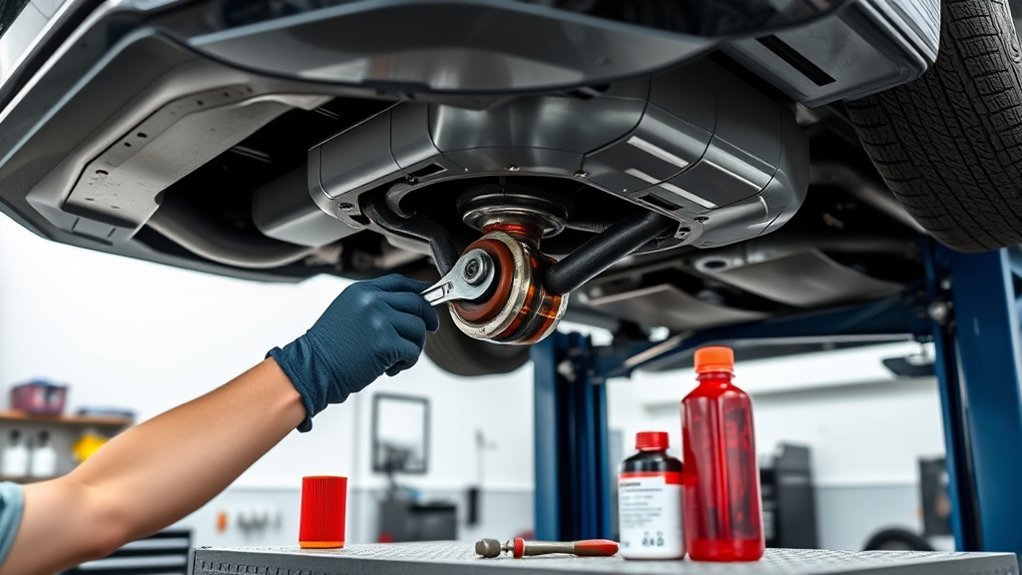
With your tools ready and workspace prepared, you can now proceed to change your transmission fluid and filter efficiently.
Start by safely lifting the vehicle and draining fluid from the transmission pan; remove the rear bolts first to control the flow.
After draining, replace the old filter, secured by a single 10mm bolt, ensuring the new filter matches for proper fitment.
Clean the oil pan thoroughly with brake cleaner, removing the old gasket and inspecting the magnet for metal filings—this is crucial for evaluating transmission health.
Next, apply silicone paste to the edge of the oil pan for gasket adhesion, then reattach it using a crisscross pattern, torquing the bolts to 10-15 foot pounds.
Finally, refill the transmission with approximately three and a half quarts of the appropriate fluid types, start the vehicle, and shift through the gears to circulate the fluid before checking the level.
Tips for Long-Lasting Transmission Health
To guarantee your transmission remains in peak condition, regularly checking the fluid level and its condition is essential. Aim to inspect it every 30,000 miles, or as outlined in your owner’s manual. Use the correct transmission fluid to optimize performance and prevent damage. Avoid extreme driving conditions, like heavy towing or stop-and-go traffic, to minimize excess heat that can wear your transmission prematurely.
Incorporate preventative maintenance by changing the fluid and filter every 30,000 to 60,000 miles, which removes contaminants and sustains fluid integrity. Additionally, consider using quality fluid additives to enhance protection and performance.
Stay vigilant for signs of trouble—such as slipping, unusual noises, or leaks—and address them promptly to avoid costly repairs. By following these tips, you’ll help guarantee the longevity and reliability of your transmission, allowing for a more liberated driving experience.
Frequently Asked Questions
How Often Should I Change My Transmission Fluid?
You should change your transmission fluid every 30,000 to 60,000 miles, depending on your vehicle and driving conditions. Regular transmission maintenance helps prevent fluid degradation, ensuring ideal performance and extending your transmission’s lifespan.
What Type of Transmission Fluid Is Best for My Vehicle?
For your vehicle, synthetic fluid’s often superior due to its stability and performance. However, verify compatibility with your system to avoid fluid compatibility issues. Conventional fluid may suffice for older models. Always consult your owner’s manual.
Can I Change Transmission Fluid Without Professional Help?
Yes, you can change transmission fluid without professional help. In fact, 70% of DIY enthusiasts successfully perform fluid replacements. Just make certain you follow proper guidelines and use the right tools for effective maintenance.
What Are the Risks of Neglecting Transmission Fluid Changes?
Neglecting transmission fluid changes risks transmission overheating and fluid contamination. This can lead to reduced performance, costly repairs, and potential transmission failure. Staying proactive with maintenance guarantees your vehicle operates efficiently and prolongs its lifespan.
How Can I Dispose of Old Transmission Fluid Properly?
You can dispose of old transmission fluid by taking it to local recycling centers. Make certain to store the fluid in sealed containers to prevent spills and guarantee safe transport for proper recycling.
Conclusion
Changing your transmission fluid regularly can greatly extend the life of your vehicle’s transmission. In fact, studies show that up to 90% of transmission failures are attributed to overheating and poor fluid quality. By staying proactive and following the steps outlined in this guide, you can prevent costly repairs and guarantee smooth shifting. Remember, a well-maintained transmission not only enhances performance but also contributes to your vehicle’s overall reliability. Don’t overlook this essential maintenance task!







Leave a Reply