
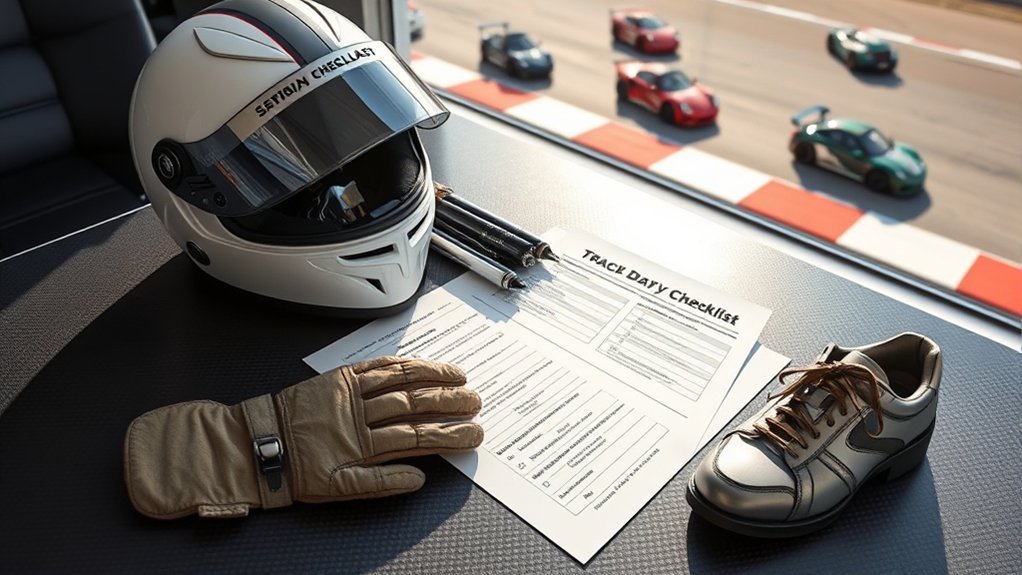
For a safe track day, conduct a pre-track inspection to check your brakes, tires, and fluids. Confirm your battery is secure, and remove any loose items. Pack essential safety gear like a Snell SA2010 helmet, long sleeves, and gloves. Inspect your engine for leaks and change the oil if needed. Don’t forget to monitor tire pressure and brake condition. For expert tips on maximizing your track experience, keep going through the checklist.
Ensure Your Safety: Essential Pre-Track Day Inspections
Before hitting the track, you need to ascertain your vehicle is in peak condition, as even minor oversights can lead to serious safety issues.
Start with a thorough pre-track inspection to verify your vehicle meets safety standards. Check brake lines for leaks and guarantee at least one-third of your brake pads remain.
Perform a detailed pre-track inspection to ensure your vehicle’s safety, checking for brake line leaks and adequate brake pad thickness.
Next, inspect tire conditions and fluid levels—make sure oil, brake fluid, and coolant are fresh to prevent mechanical failures.
Don’t overlook the battery; it should be securely tied down with insulated electrical connections to avoid short circuits.
Finally, remove all loose items from the interior and trunk. This not only prevents hazards but also optimizes weight distribution while you’re on the track.
Effective vehicle maintenance isn’t just about performance; it’s about guaranteeing your safety. Taking these steps allows you to fully embrace your track day experience with confidence.
What Safety Gear and Equipment Should You Bring?
When preparing for a track day, having the right safety gear and equipment is essential to guaranteeing your well-being on the circuit.
Start by selecting a helmet that meets helmet standards; confirm it’s SA2010 or newer, as M-rated helmets won’t pass tech inspections. Next, pack long-sleeve shirts and closed-toed shoes to comply with safety regulations.
Don’t forget your racing gloves; they should fit well and be clean, providing the grip and control you need. If the event requires it, include a fire-resistant racing suit for added protection against potential fire hazards.
Additionally, carry a personal first-aid kit to address minor injuries and headaches, and hydrate adequately to fend off dehydration during the day.
Essential Engine Checks Before the Track
Making sure your engine is in top condition is vital for a successful track day, as even minor issues can lead to significant problems on the circuit.
Start by inspecting the engine bay for loose components and potential fluid leaks. These leaks can compromise performance and safety.
Change the engine oil and filter before your track day to maintain peak lubrication under high-stress conditions.
Verify that all belts and hoses are in good condition, free of cracks or wear, to prevent breakdowns during operation.
It’s also important to flush the cooling system and refill it with fresh coolant to keep the engine temperature in check and avoid overheating during extended runs.
Finally, confirm the battery is securely mounted and all terminals are insulated to prevent electrical failures on the track.
Taking these steps will help you enjoy a smoother, more liberated driving experience.
Prepare Your Tires and Brakes for Optimal Performance
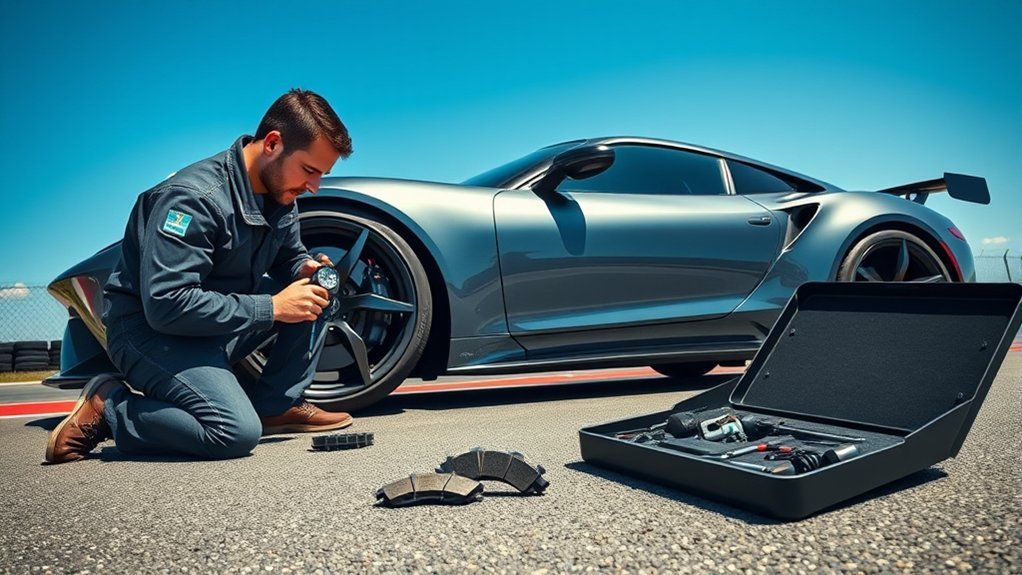
Tires and brakes are critical components for achieving peak performance on the track, and their preparation can make or break your driving experience. Start by verifying your tire tread depth is above 30% to maintain traction and prevent hydroplaning. Before each session, monitor tire pressure and adjust based on track conditions for maximum grip. Regularly check brake pad thickness; confirm at least one-third remains for effective stopping power.
Upgrade to high-performance brake fluid for better heat resistance, and inspect all brake lines and fittings for leaks or wear. Compromised components can lead to brake failure, posing serious safety hazards.
| Component | Inspection Checklist |
|---|---|
| Tire Tread Depth | Above 30% |
| Tire Pressure | Adjust for track conditions |
| Brake Pad Thickness | At least 1/3 remaining |
| Brake Fluid | High-performance type |
| Brake Lines | Check for leaks or wear |
Prepare thoroughly, and liberate your driving experience!
Expert Tips for a Smooth Track Day Experience
To make the most of your track day, prioritize essential preparations that enhance both performance and safety.
Start by ensuring you have a Snell SA2010 or newer helmet, as M-rated helmets won’t pass tech inspection. Familiarize yourself with the track layout and rules to improve your driving techniques and awareness. Hydration is vital; bring a cooler with water and Gatorade, aiming for one quart of fluids per day for every 50 pounds of body weight.
Additionally, pack a toolbag with necessary tools, spare parts, and a tire pressure gauge for monitoring throughout the day. Adjust your vehicle’s alignment and ride height the night before to optimize handling.
Finally, remember track etiquette: respect other drivers, signal intentions, and maintain safe distances. By following these tips, you’ll set yourself up for a smooth and exhilarating track day experience.
Frequently Asked Questions
What Should a Safety Checklist Include?
Your safety checklist should include verifying safety equipment, ensuring proper track preparation, inspecting brakes, tires, and battery, checking for fluid leaks, and confirming helmet compliance with safety standards to enhance your driving experience.
What Is Needed for Track Day?
For track day, confirm your vehicle’s ready, like a racehorse primed for the finish line. Check fluids, brakes, and bring a certified helmet, safety gear, hydration, snacks, plus tools for any necessary repairs.
What Is a 10 Point Safety Check on a Car?
A 10-point safety check on your car includes brake inspection, tire pressure verification, fluid checks, battery security, belt and hose assessment, light functionality, and windshield visibility to guarantee peak performance and safety on the track.
What Safety Gear Is Required for 24 Hours of Lemons?
For the 24 Hours of Lemons, you need a Snell SA2010 or newer racing helmet, long-sleeve shirts and pants, closed-toed shoes, and a five- or six-point harness. Make sure your safety gear meets all regulations.
Conclusion
So, you’ve got your checklist and a burning desire to release your inner race car driver—just remember, the track isn’t a Fast & Furious movie set. You might not have a stunt double ready to jump in if things go sideways. By following these safety tips and checks, you’ll not only protect yourself but also avoid becoming a viral sensation for all the wrong reasons. Now, go ahead and channel your inner professional, but keep it safe out there!







Leave a Reply