
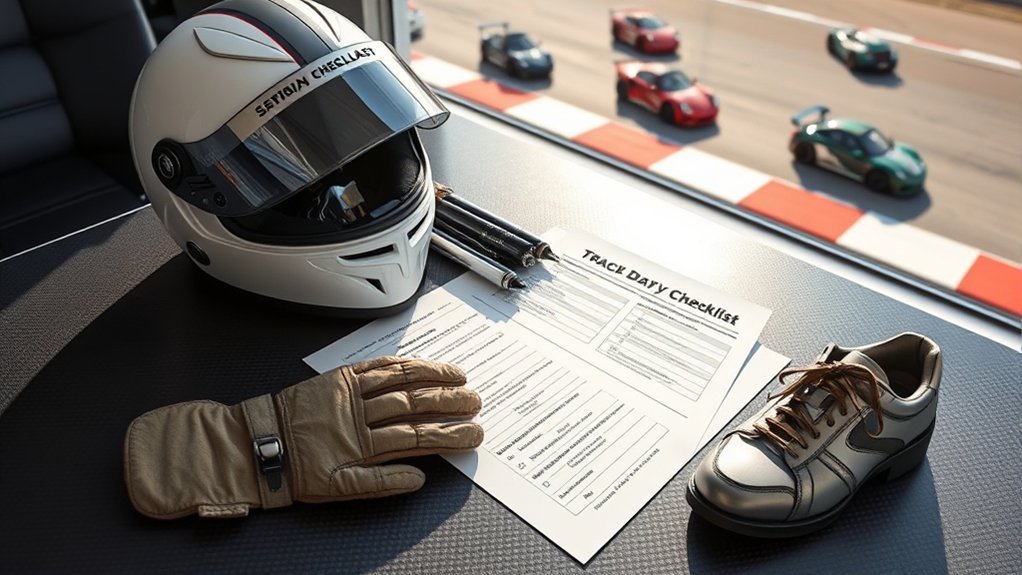
A track day puts far more heat and stress into your brakes, tires, engine, and driver than an ordinary commute. A careful inspection can catch worn parts, leaks, loose hardware, and equipment problems before they become emergencies. Use this track day safety checklist as a starting point, then follow the current rules and tech sheet for your specific organizer and venue.
Quick Answer
Before a track day, inspect the brakes, tires, wheels, fluids, cooling system, battery, steering, suspension, seats, restraints, lights, and engine bay. Remove loose items, verify your helmet and clothing meet the event rules, torque the wheels to specification, and recheck the car after every session.
Key Takeaways
- The organizer’s current rulebook and venue-specific tech sheet take priority over any general checklist.
- Do not rely on arbitrary tire-tread or brake-pad percentages; the parts must be undamaged and able to complete every session safely.
- Snell SA2025 is the current Snell auto-racing helmet standard, but accepted certifications vary by event.
- Avoid major, untested maintenance or suspension changes the night before the event.
- Stop driving immediately for a soft brake pedal, fluid leak, overheating, smoke, vibration, damaged tire, warning light, or unusual noise.
At a Glance
| Time Required | About 45–90 minutes for a careful DIY inspection; longer when service or repairs are needed |
| Difficulty | Moderate; use a qualified technician when you cannot inspect brakes, steering, suspension, or fluid leaks confidently |
| Tools Needed | Flashlight, tire-pressure gauge, tread-depth gauge, torque wrench, correct wheel socket, basic hand tools, and the vehicle’s specifications |
| Cost | Often $0 for the inspection when you own the tools; repairs, fluid service, a mechanic, tires, brake parts, or a compliant helmet cost extra |
Warning: Passing an event’s basic tech inspection does not guarantee that a vehicle is mechanically safe. You remain responsible for its condition. Do not drive on track when you find a leak, damaged tire, cracked wheel or rotor, loose suspension part, soft brake pedal, overheating problem, or any defect you cannot evaluate confidently.
Read the Track Day Rules and Tech Sheet First
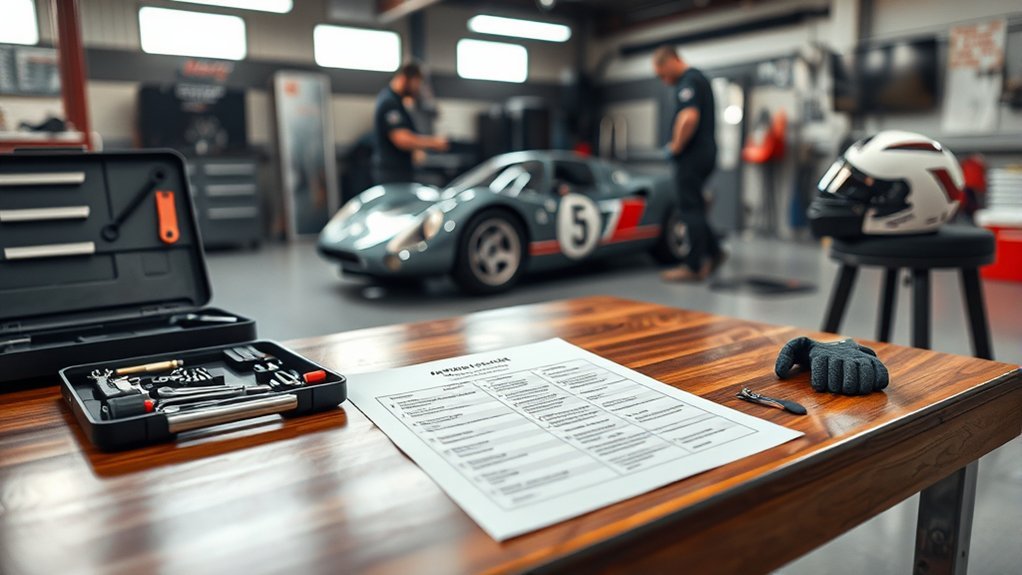
Start with the event registration page, rulebook, and venue-specific tech form. Requirements can change by organizer, track, vehicle type, and run group. The SCCA Track Night rules, for example, include separate requirements for helmets, convertibles, seats, restraints, cameras, electric vehicles, and vehicle eligibility.
Download and complete the correct inspection form before leaving home. The SCCA Track Night tech sheet covers the brakes, tires, wheels, steering, suspension, battery, belts, hoses, throttle, visibility, and loose interior items. Your own event may use a stricter form.
Confirm the event schedule, driver meeting, waiver process, sound limit, fuel rules, passing rules, flag meanings, tow-hook requirements, and whether instructors or passengers are allowed. Do not assume rules from a previous event still apply.
The safest checklist is the current one issued by the organizer running your event.
10-Point Pre-Track-Day Vehicle Safety Checklist
- Inspect the complete brake system. Check pad material on the inner and outer pads, not just the easiest pad to see. Inspect rotors for cracks, heavy scoring, severe heat discoloration, or damage. Look for leaks at the master cylinder, reservoir, hoses, hard lines, calipers, and fittings. The pedal should feel firm and consistent, and every brake light must work. Use fluid that meets the vehicle manufacturer’s required specification and the event’s condition or boiling-point requirements. If the fluid is old, contaminated, or of unknown history, service it early enough to check for leaks and confirm a firm pedal before the event.
- Check the tires and wheels.
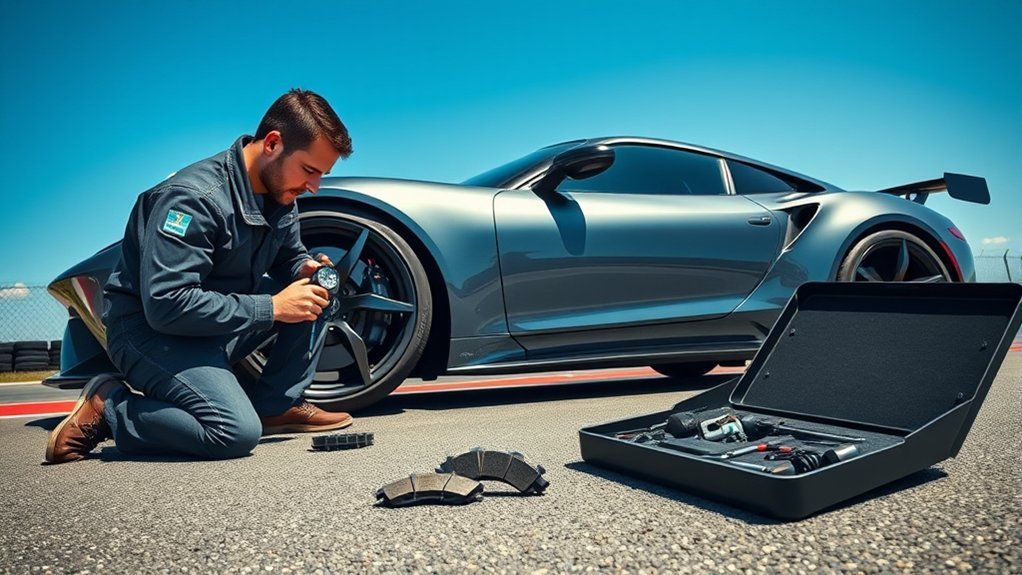
Inspect each tire for cuts, cracks, bulges, punctures, exposed cords, flat spots, uneven wear, and excessive age. Confirm that the tire type, load rating, speed rating, size, and condition are suitable for the car and event. Inspect every wheel for cracks, bends, damaged mounting surfaces, or missing hardware. Remove decorative hubcaps when the organizer requires it. Install every lug nut or bolt and torque it to the vehicle or wheel manufacturer’s specification while the assembly is cool. Bring the wheel-lock key when applicable.
- Record a cold tire-pressure baseline. Use an accurate gauge before driving to establish a repeatable starting point. Street placard pressure is a useful road-use reference, but the correct track setting depends on the tire, vehicle, weather, load, pace, and tire manufacturer’s guidance. Pressure rises as the tire heats. Check it promptly after each session and record both the hot reading and handling notes. Never use the sidewall maximum as a target pressure.
- Inspect fluids and look for leaks. Check engine oil, brake fluid, coolant, transmission fluid, power-steering fluid when applicable, and other serviceable fluids identified in the owner’s manual. Inspect underneath the car and around reservoirs, caps, filters, hoses, fittings, and drain plugs. Tighten caps correctly. Do not automatically change every fluid immediately before the event; service what is due or unsuitable, use the correct specification, and road-test the car afterward.
- Check the cooling system. Inspect the radiator, expansion tank, cap, water pump area, hoses, clamps, fans, and visible connections. Look for stains, crusted residue, swelling, rubbing, loose clamps, or seepage. Confirm that the cooling fans operate and the temperature remains normal during a road test. Some tracks or race series restrict glycol coolant, so check the event rules before changing anything.
- Secure the battery and inspect the electrical system. The battery must be held by a proper rigid mount, not a bungee cord or loose strap. Cover the positive terminal and protect nearby conductors from contact with metal. Check that the battery cannot slide, tip, or contact the hood. Confirm that warning lights complete their normal self-check and that no unexplained fault remains active.
- Inspect steering and suspension. Check wheel bearings for play, ball joints and tie-rod ends for looseness, bushings for damage, shocks or struts for leakage, springs for cracks or poor seating, and steering for binding or excessive free play. Look for loose fasteners, damaged boots, tire rubbing, and fresh contact marks. Have a qualified technician inspect the car when you do not have the equipment or experience to load and check these parts safely.
- Check the seat, seatbelt, and rollover protection. The driver’s seat must be firmly mounted with no unusual movement. Inspect the three-point belt or approved harness for cuts, fraying, damaged webbing, worn latches, missing hardware, incorrect routing, or an expired certification where dates apply. Convertibles may need documented factory rollover protection or an approved roll bar, and some venues impose stricter rules than the organizer’s general policy.
- Inspect the engine bay, throttle, fuel system, and exhaust. Secure loose covers, intake parts, wiring, hoses, and reservoirs. Check belts and hoses for wear, cracks, swelling, rubbing, or poor routing. Make sure the throttle returns quickly and fully when released. Tighten the fuel cap, inspect for fuel odor or seepage, and confirm that any required overflow container is present. The exhaust must be secure and able to meet the venue’s sound limit.
- Clear the cabin and check visibility and recovery equipment. Remove floor mats, bottles, tools, child seats, garage-door remotes, cargo, and every other loose item from the cabin and trunk. Unsecured objects can become projectiles or lodge near the pedals. Check the windshield, mirrors, wipers, lights, and glass. Solidly mount any camera and add a secondary tether when required. Install or pack the correct factory tow eye so track workers can recover the vehicle without searching through your luggage.
| Component | Ready-for-Track Check |
|---|---|
| Tires | No cracks, bulges, cuts, exposed cords, severe wear, or other damage; suitable type and rating |
| Wheels | No cracks or structural damage; all hardware present and torqued to specification |
| Brake pads | Meet the organizer’s limit and have enough material for every session and the drive home |
| Brake fluid | Correct specification, proper level, known service condition, no leaks, and a firm pedal |
| Steering and suspension | No play, binding, leaking shocks, broken parts, loose fasteners, or tire contact |
Note: Make repairs and setup changes several days before the event whenever possible. A road test followed by a second inspection is safer than changing alignment, ride height, brakes, fluids, or wheels late the night before.
Track Day Helmet and Driver Safety Gear
Helmet rules differ between HPDE programs, tracks, and race series. Do not rely on the phrase “SA2010 or newer.” The Snell Foundation introduced SA2025 as its current auto-racing helmet standard on October 1, 2025. SA2020 helmets remain common, but the exact certification and model year accepted at your event must be confirmed before you travel.
Look under the helmet liner for the original certification label. The helmet should fit firmly without painful pressure points, remain stable when you move your head, and have no crash damage, crushed liner, loose trim, damaged strap, or badly scratched visor. Never buy a used helmet with an unknown impact history.
Do not assume a motorcycle-rated M helmet will pass. Some track-day programs accept specified M certifications, while other events require an SA helmet. The 24 Hours of Lemons, for example, expressly prohibits M-rated helmets.
For a street-car HPDE, common minimum gear includes:
- An undamaged helmet with a certification accepted by the organizer and venue
- Solid, closed-toe shoes with a secure fit and thin enough soles for pedal control
- Long pants and a long-sleeve shirt when required by the track
- Natural-fiber clothing when the rules recommend or require it
- Racing gloves only when required or when they improve grip without reducing control
- A certified fire-retardant suit, gloves, shoes, socks, and head-and-neck restraint when required for racing or a prepared competition car
Bring the full clothing set even when the forecast is hot. Venue rules can be stricter than the organizer’s standard policy.
What to Pack for a Track Day
A compact, organized kit prevents last-minute borrowing and keeps the paddock clear. The official Track Night packing guidance recommends items such as a completed tech sheet, torque wrench, basic tools, tow hook, drinks, snacks, spare fluids, and a tire-pressure gauge.
- Documents: Driver’s license, registration confirmation, waiver documents, completed tech sheet, emergency contact details, and any required membership card
- Driver gear: Approved helmet, closed shoes, long pants, long sleeves, gloves or suit when required, sunglasses, hat, and sunscreen
- Tire and wheel tools: Accurate pressure gauge, torque wrench, correct socket, wheel-lock key, tread gauge, inflator, and valve caps
- Basic tools: Socket set, screwdrivers, pliers, flashlight, tape, zip ties, shop towels, and work gloves
- Vehicle supplies: Correct engine oil and other approved fluids the car may consume, funnel, glass cleaner, rags, and the factory tow hook
- Paddock supplies: Storage tub or tarp for items removed from the car, folding chair, weather protection, and trash bags
- Driver care: Water, electrolyte drinks when appropriate, easy-to-digest food, personal medication that does not impair driving, and a small first-aid kit
Pro Tip: Pack the removed cabin items in a lidded plastic tub. It keeps the paddock organized and protects your belongings when the event continues in rain.
Final Checks Before the First Session
- Attend the driver meeting and learn the flags, pit-entry procedure, passing zones, point-by rules, blend line, sound limit, and emergency signals.
- Remove all loose objects and floor mats, close storage compartments, and secure any camera with its required backup tether.
- Check cold tire pressures and write them down.
- Torque wheel hardware to the correct specification while the wheels are cool. Do not repeatedly tighten already-correct hardware or guess at the torque value.
- Check fluid levels, caps, the battery mount, the brake pedal, mirrors, seat position, belt routing, helmet fit, and tow-hook location.
- Start the first session at a conservative pace. Use the early laps to warm the tires, brakes, engine, transmission, and driver.
- Build speed only after the car feels normal and you understand the track, traffic, flags, and passing procedure.
Checks Between Track Sessions
Inspect the car after every session rather than waiting for the end of the day. Park in a safe paddock location, let the car stabilize, and complete the same short routine each time:
- Look under the car and through the engine bay for fresh leaks, smoke, loose parts, or unusual odors.
- Check tire pressures promptly and record the hot readings.
- Inspect the tire shoulders, tread, sidewalls, and wheel openings for rubbing, pickup, cuts, or rapid wear.
- Check brake-pedal feel before leaving the paddock.
- Inspect visible pad material and rotors when conditions allow safe access.
- Watch engine temperature and other gauges, then check fluid levels according to the vehicle manufacturer’s safe procedure.
- Review unusual vibration, pulling, noise, warning lights, or handling changes before the next session.
- Rest, eat, and hydrate. Driver fatigue can become as dangerous as a mechanical fault.
Warning: Never remove a radiator or pressurized coolant cap while the system is hot. Escaping coolant and steam can cause severe burns. Let the system cool and follow the vehicle manufacturer’s procedure.
Hydration Note: There is no reliable one-size-fits-all formula based only on body weight. OSHA recommends frequent water intake during heat exposure, with the amount adjusted for temperature, exertion, clothing, acclimatization, and personal risk. Stop driving for dizziness, confusion, nausea, unusual weakness, chills, or loss of coordination.
When to Stop Driving Immediately
Signal, leave the racing line when safe, and return to the pits when you notice any of the following:
- A soft, sinking, unusually long, or inconsistent brake pedal
- A new vibration, steering pull, clunk, scrape, or grinding noise
- Smoke, a fuel smell, a hot electrical smell, or visible fluid
- Rising coolant or oil temperature
- A low-pressure, charging, brake, stability-control, or other serious warning light
- Loss of power, throttle that does not return normally, or erratic engine behavior
- A cut, bulge, exposed cord, sudden pressure loss, or severe tire rubbing
- Driver confusion, blurred vision, dizziness, nausea, cramping, or extreme fatigue
Do not attempt one more fast lap to “see whether it clears up.” Ask track staff or a qualified technician for help before returning to the circuit.
Convertibles, EVs, Modified Cars, and Insurance
Convertibles: Check both the organizer’s rollover policy and the venue’s additional restrictions. A cosmetic style bar is not the same as an approved roll bar. Confirm helmet clearance, roll-bar padding, seat position, and whether the car passes the organizer’s rollover-protection test.
Electric vehicles: EV eligibility may be track-specific because incident response requires suitable training and equipment. Confirm approval before registering. Inspect the vehicle for warnings, impact damage, coolant leaks, underbody damage, charging faults, or battery-temperature problems.
EV Warning: Do not touch, cut, disconnect, repair, or probe orange high-voltage cables, traction-battery components, or a damaged high-voltage system unless you are properly trained and equipped. Isolate the vehicle and contact qualified personnel.
Modified cars: Reinspect every altered system, including wheel fitment, spacers, studs, suspension clearance, brake hoses, seat mounts, harness routing, roll-bar padding, oil catch systems, and camera mounts. A modification that works on the street may fail after repeated high-load sessions.
Insurance: Do not assume a normal street-auto policy covers physical damage during an HPDE or track event. Read the exclusions, contact the insurer, and consider event-specific coverage before putting a valuable car on track.
24 Hours of Lemons Safety Gear
The 24 Hours of Lemons is wheel-to-wheel endurance racing, not an ordinary street-car track day. Its safety requirements are much more extensive. Under the current Lemons rules, key driver requirements include:
- An undamaged full-face Snell SA2015-or-newer helmet; Lemons states that SA2015 helmets are accepted through January 1, 2027
- A compliant SFI 38.1- or FIA 8858-rated head-and-neck restraint
- An SFI- or FIA-certified fire-retardant driving suit
- Certified fire-retardant racing gloves, shoes, and socks
- Required fire-resistant underwear when using specified single-layer suits
- No prohibited synthetic undergarments that can melt in a fire
- Arm restraints when driving an open T-top or convertible
The race car also needs a compliant roll cage, racing seat, five- or six-point harness, onboard fire-suppression system, and many other safety features. Read the complete current rulebook rather than using a short equipment summary to build or prepare a race car.
Frequently Asked Questions
What should a track day safety checklist include?
It should cover the brakes, tires, wheels, fluid levels, leaks, cooling system, battery, steering, suspension, seat, restraints, engine bay, throttle return, fuel cap, exhaust, lights, mirrors, wipers, loose interior items, helmet, clothing, tools, and between-session checks. The organizer’s current tech sheet takes priority.
What do I need for a track day?
You generally need a mechanically sound and eligible vehicle, a valid driver’s license, completed registration and waiver documents, an approved helmet, closed-toe shoes, and any clothing required by the venue. Bring a tire gauge, torque wrench, correct socket, wheel-lock key, tow hook, basic tools, spare approved fluids, water, food, and weather protection.
What is a 10-point safety check on a car?
For track preparation, a practical 10-point check covers brakes; tires; wheels and pressure; fluids and leaks; cooling; battery and electrical equipment; steering and suspension; seat, restraints, and rollover protection; engine, throttle, fuel, and exhaust; and the cabin, visibility, camera mounts, and recovery equipment.
What helmet rating should I use for a track day in 2026?
Snell SA2025 is the current Snell auto-racing standard, and SA2020 helmets remain common. However, the correct answer is the certification listed by your organizer and venue. Some events accept selected motorcycle-rated helmets, while others require an SA helmet. Check the registration page before buying or traveling.
What safety gear is required for the 24 Hours of Lemons?
Current Lemons rules require an approved full-face helmet, a compliant head-and-neck restraint, a certified fire-retardant suit, certified racing gloves, shoes, and socks, and other specified clothing. The car must also meet detailed requirements for its roll cage, racing seat, five- or six-point harness, fire-suppression system, and related safety equipment.
What tire pressure should I use on a track day?
There is no universal track pressure. Start with guidance from the tire manufacturer, vehicle manufacturer, organizer, or an experienced trackside tire technician. Measure and record cold pressure, check the hot pressure after each session, inspect the wear pattern, and make small adjustments rather than copying another car’s setting.
Conclusion
A safe track day starts in the garage, not at pit exit. Read the event rules, inspect every high-load system, bring the correct equipment, and give yourself time to test any repair before the event. At the track, build speed gradually and recheck the car after every session. When the car or driver gives you a warning, pit immediately and solve the problem before returning to the circuit.
Sources
- SCCA Track Night in America Rules and Regulations — helmet, vehicle, convertible, EV, restraint, camera, and event requirements
- SCCA Track Night Tech Sheet — driver-safety and vehicle-inspection checklist
- Snell Foundation SA2025 Press Release — current Snell auto-racing helmet standard
- 24 Hours of Lemons Prices and Rules — current driver gear, harness, cage, seat, and fire-suppression requirements
- NHTSA TireWise — tire pressure, tread, damage, and maintenance guidance
- OSHA Water, Rest, Shade Guidance — hydration and heat-exposure precautions







Leave a Reply