
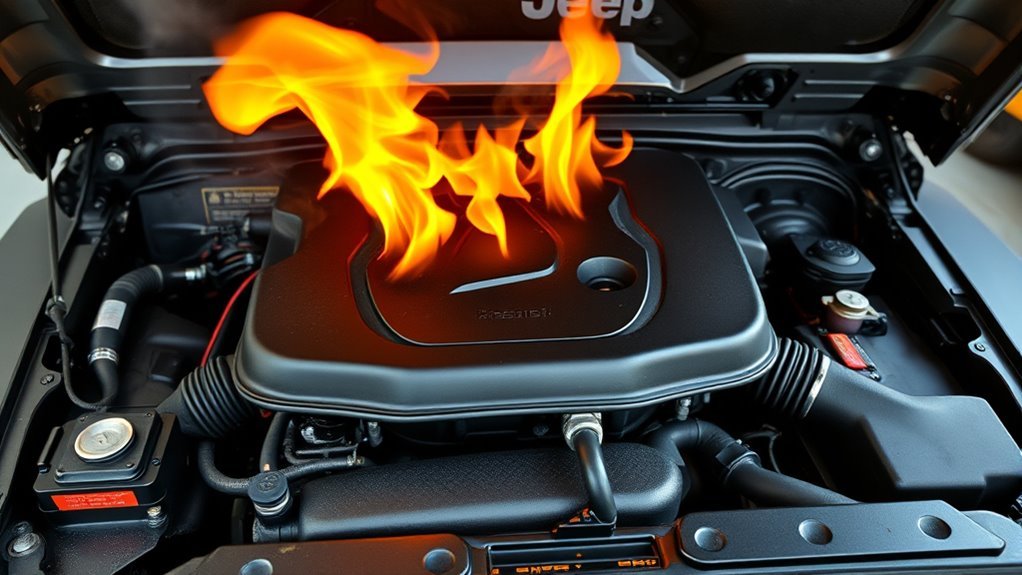
If your 2016 Jeep Wrangler’s engine cover is burning but the engine isn’t overheating, it could be due to excessive heat buildup or poor airflow. Check for melting or discoloration, and inspect cooling components for proper function. Loose wiring can also generate extra heat, so make sure everything’s secured. Consider upgrading to heat-resistant materials if you’re replacing the cover. Staying aware of symptoms like unusual odors and loss of power is essential for prevention. There’s more you can do to protect your vehicle.
Why Is My Jeep Wrangler’s Engine Cover Burning?
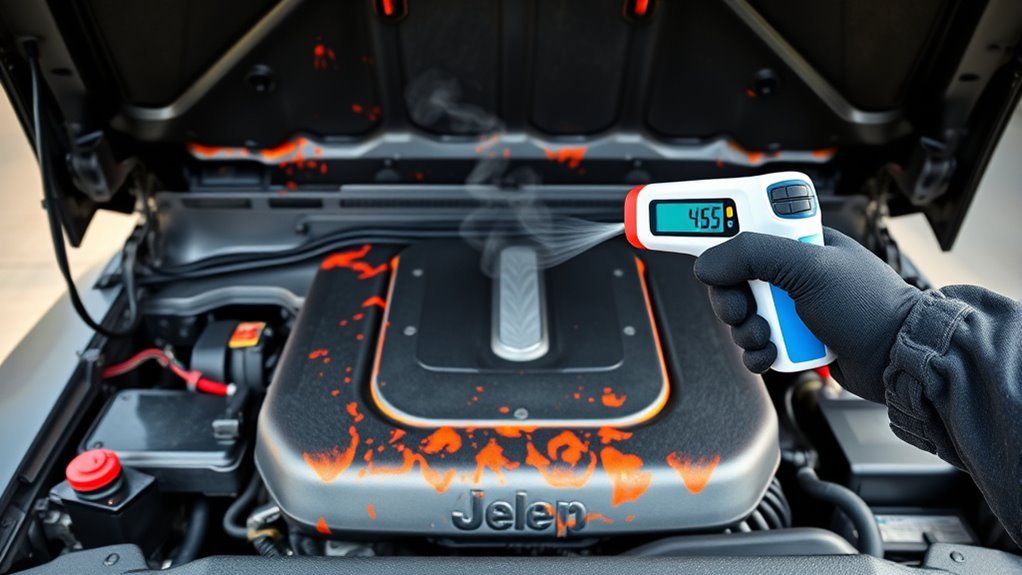
If you’ve noticed your Jeep Wrangler’s engine cover burning, it’s likely due to excessive heat buildup in the engine bay. This issue often stems from poor airflow or malfunctioning cooling components that can’t manage the heat effectively. The proximity to heat sources, like the exhaust manifold, plays a significant role in deteriorating the engine cover materials, leading to burning or melting. Even if your engine isn’t showing obvious overheating symptoms, high temperatures can still damage your engine cover, signaling potential underlying problems.
Using low-quality or incompatible engine covers can amplify this risk, as they may lack the necessary heat resistance factors found in OEM materials. Regular inspections of your engine cover for signs of wear can help you catch issues early, preventing further heat-related damage and ensuring your Wrangler stays in peak condition. Stay vigilant to keep your ride liberated and ready for any adventure!
How to Identify Non-Overheating Symptoms in Your Wrangler
While your Jeep Wrangler may not show signs of overheating, various symptoms can still signal underlying issues that need attention. Keep an eye on your temperature gauge; if it rises but coolant levels are adequate, it might not indicate overheating. However, if you notice steam or smoke under the hood, it could hint at leaks or burning oil, even if the temperature remains normal.
Unusual odors, particularly a sweet smell, can indicate coolant leakage without the engine overheating. Additionally, if you experience a loss of power during acceleration, it may stem from fuel delivery problems rather than overheating. Don’t ignore dashboard warning lights, as they can illuminate for electrical issues or low oil pressure unrelated to engine performance. Regularly monitoring these signs will empower you to keep your Wrangler in top shape and ready for adventure.
Inspecting Your Burning Engine Cover: Key Steps for Diagnosis
Noticing a burning smell or seeing signs of damage on your engine cover can be alarming, especially after monitoring for overheating symptoms. Start by inspecting the engine cover for melting or discoloration, which indicates excessive heat or contact with hot components. Next, check for any loose or damaged wiring that might be generating extra heat near the engine cover. A loose engine cover can vibrate and come into contact with hot parts, so make sure it’s properly secured.
Additionally, examine your cooling system components, including the radiator and coolant levels, to confirm they’re functioning correctly. This helps prevent overheating, which can exacerbate the issue. Regular temperature monitoring with a gauge is essential to catch potential problems early. By staying proactive, you can address any underlying issues with the engine cover materials before they escalate into serious damage.
How to Fix and Prevent a Burning Engine Cover
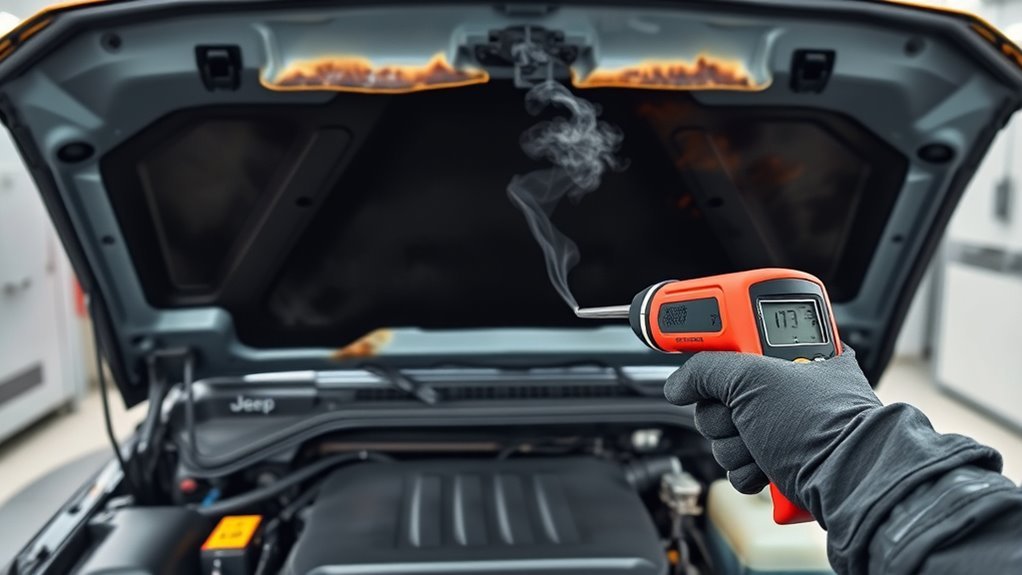
To effectively fix and prevent a burning engine cover, you need to stay vigilant about regular inspections and maintenance. Here are key steps to guarantee your engine cover stays in top shape:
- Regularly inspect for signs of melting or burning.
- Guarantee all engine components are well-insulated and in good condition.
- Remove the engine cover if high temperatures persist for better airflow.
- Check and replace damaged heat shields around exhaust components.
- Use high-quality, heat-resistant materials for any replacements.
When to Seek Professional Help for Your Jeep Wrangler
When should you consider seeking professional help for your Jeep Wrangler? If you notice smoke or burning smells from the engine cover, it’s essential to act quickly to avoid fire hazards. Unusual noises like knocking or ticking signal potential internal issues that need expert attention. Persistent overheating symptoms, even after routine engine maintenance, warrant a thorough inspection of your cooling system. Additionally, frequent coolant leaks or low levels could indicate problems like a failing water pump.
| Signs to Seek Help | Action Required |
|---|---|
| Smoke or burning smells | Immediate professional evaluation |
| Unusual engine noises | Expert diagnosis to prevent repairs |
| Frequent coolant leaks | Assessment for underlying issues |
For any signs of oil burning or excessive consumption, consulting a mechanic guarantees you prevent severe engine damage. Remember, following these safety tips protects both you and your vehicle.
Frequently Asked Questions
Does Pouring Water on an Engine Help Cool It Down?
Pouring water on an engine might momentarily cool it down, but it’s risky. You’re better off using proper coolant systems for effective engine cooling, as water can cause damage and isn’t a long-term solution.
Why Does My Jeep Smell Like It’s Burning?
If your Jeep smells like it’s burning, check for overheating signs, frayed wiring, or leaking fluids. These burning smell causes can indicate serious issues, so investigate promptly to avoid further damage and guarantee your ride stays liberated.
Conclusion
To sum up, keeping an eye on your Jeep Wrangler’s engine cover can save you from bigger headaches down the road. Just like a watchful guardian, staying proactive guarantees you catch issues before they spiral out of control. Regular inspections and timely fixes are your best friends in this journey. If things get too complicated, don’t hesitate to reach out to a professional. Your Wrangler deserves the best care to keep roaring down the road!





Leave a Reply