
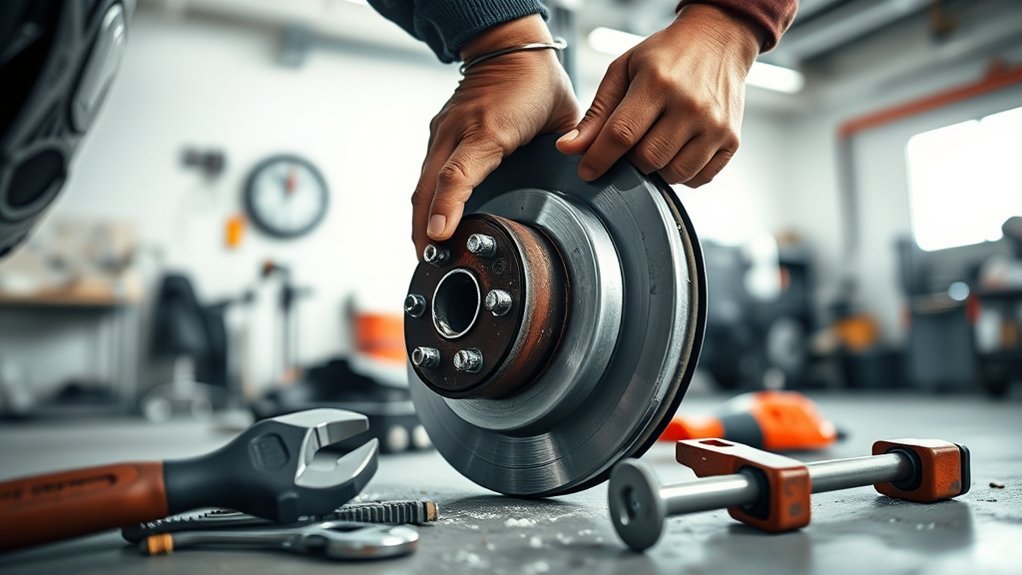
To replace brake pads, gather essential tools: a hydraulic jack, lug wrench, socket wrench, C-clamp, and brake cleaner. First, lift the vehicle and remove the wheel. Compress the caliper piston, then detach the caliper bolts and old pads. Clean the area, install new pads with grease on the backing, and reattach the caliper. Tighten everything to specs, and pump the brake pedal. Avoid common mistakes like not inspecting rotors; there’s more to learn to guarantee a smooth process.
Why You Should Replace Brake Pads: A Step-by-Step Guide
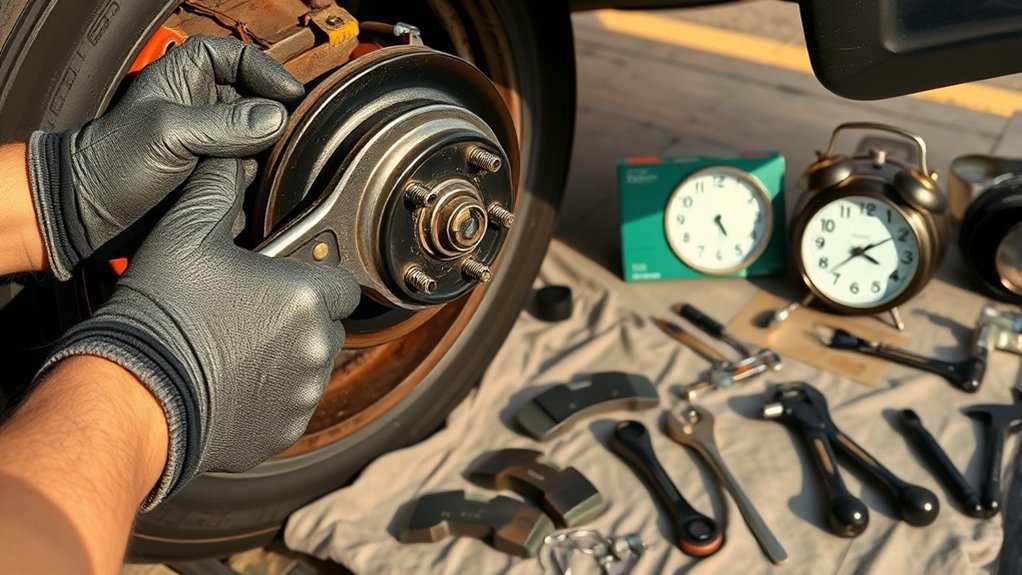
When it comes to vehicle safety, replacing brake pads is crucial, as worn pads can severely affect your stopping power.
Brake pad longevity is critical; if their thickness drops below ¼ inch or you hear squealing or grinding, it’s time for a change. Neglecting this important maintenance can lead to longer stopping distances and riskier driving conditions, compromising your overall brake safety significance.
You’ll want to conduct regular inspections to catch wear early and prevent costly rotor damage.
Replacing brake pads typically takes 1 to 2 hours, depending on your vehicle and experience level. Make sure you have the right tools and follow a systematic approach to enhance vehicle performance and safety.
Prioritizing this simple yet crucial task can liberate you from stress on the road, making certain you maintain the control you need in emergency situations.
Don’t overlook the significance of fresh brake pads in your driving experience.
Essential Tools for Brake Pad Replacement
Before you start replacing brake pads, gather essential tools to guarantee a smooth process.
You’ll need a jack, jack stands, a lug wrench, and a socket wrench set for wheel and caliper removal.
Additionally, a C-clamp or brake caliper tool and brake cleaner spray are vital for proper installation and maintenance.
Must-Have Tools List
Replacing brake pads requires specific tools to guarantee the process is efficient and safe. Here’s a must-have tools list to help you tackle this task seamlessly, especially if you’re considering performance upgrades or different brake pad materials.
| Tool | Purpose | Additional Notes |
|---|---|---|
| Hydraulic Jack | Lifts the vehicle for access | Make certain it’s rated for your vehicle |
| Lug Wrench | Removes wheel lug nuts | Check for proper size |
| Socket Wrench Set | Detaches caliper bolts | Use the right size for a tight fit |
| C-Clamp/Caliper Tool | Compresses caliper piston | Necessary for new pad installation |
| Brake Cleaner Spray | Cleans brake components | Guarantees proper installation |
Gather these tools, and you’ll be ready for a successful brake pad replacement.
Safety Equipment Essentials
Ensuring your safety during brake pad replacement is essential, so you’ll want to equip yourself with the right safety gear. First, wear safety goggles to protect your eyes from debris and brake dust. Heavy-duty gloves provide personal protection against sharp components and chemicals. A sturdy pair of work boots is crucial to safeguard your feet from potential hazards.
Use a hydraulic jack to lift the vehicle securely, and always employ jack stands to prevent any accidents. Keep a lug wrench handy for loosening lug nuts, and a socket set for removing caliper bolts.
Finally, have a C-clamp or brake caliper tool available for compressing the caliper piston. With the right safety gear in place, you can confidently proceed with the brake pad replacement.
Step-by-Step Process to Replace Brake Pads
To replace brake pads effectively, start by parking your vehicle on a flat surface and engaging the parking brake. Loosen the lug nuts before lifting the vehicle with a jack and securing it on jack stands.
Next, remove the brake caliper by unscrewing the caliper bolts using a socket wrench, guaranteeing the caliper doesn’t hang by the brake line. Take out the old brake pads from the caliper bracket. Compress the caliper piston with a C-clamp or brake caliper tool to create space for the new pads.
Install the new brake pads securely in the caliper bracket, reattach the brake caliper, and tighten the bolts to the specified torque in your vehicle’s manual. Finally, pump the brake pedal several times to restore pressure before taking a cautious test drive to ascertain proper brake function.
| Step | Action | Tool Needed |
|---|---|---|
| 1 | Park & Engage Parking Brake | None |
| 2 | Loosen Lug Nuts | Lug Wrench |
| 3 | Remove Brake Caliper | Socket Wrench |
| 4 | Compress Caliper Piston | C-Clamp/Brake Tool |
| 5 | Install New Brake Pads | None |
Top Mistakes to Avoid When Replacing Brake Pads
When tackling brake pad replacement, avoiding common pitfalls is essential for safety and performance.
Here are some key mistakes to steer clear of:
- Failing to compress the caliper piston properly can complicate reinstallation and lead to uneven brake pad wear.
- Neglecting to pump the brake pedal post-installation may result in a soft pedal feel, compromising your braking effectiveness.
- Using incorrect brake pads can severely impact braking performance and lead to premature wear of both pads and rotors.
- Skipping rotor inspections for wear or damage results in improper seating of new pads, decreasing braking efficiency.
How to Check Your Brake Pads and Rotors?
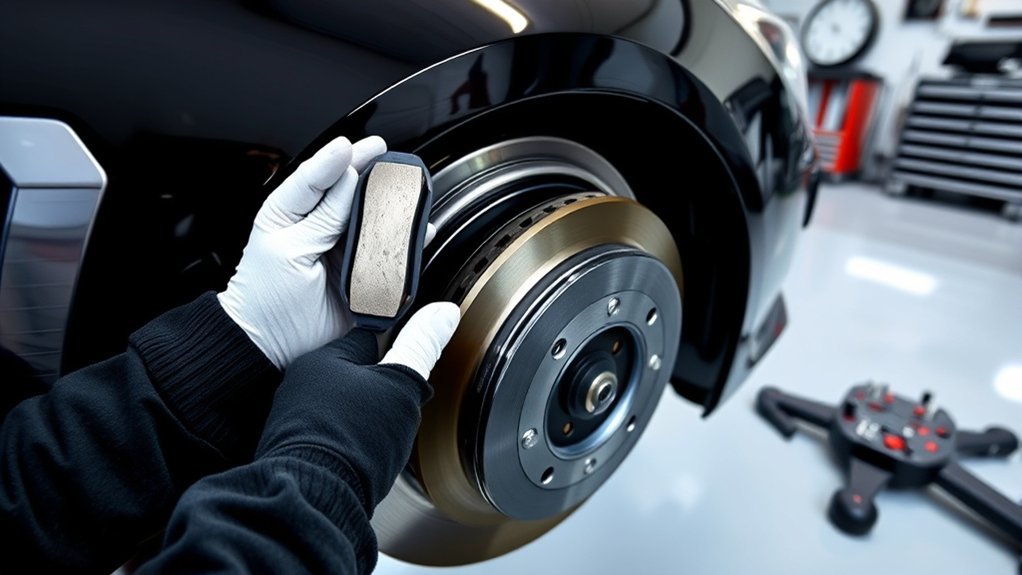
Checking your brake pads and rotors is essential for maintaining peak vehicle safety and performance. Start by visually inspecting the brake pad thickness; if it measures less than ¼ inch, it’s time for a replacement to guarantee safe stopping power.
Listen for high-pitched squealing sounds when you brake, as this indicates that the wear indicators on the pads are engaged, signaling the need for a change.
Next, conduct a thorough rotor inspection. Look for grooves, scoring, or uneven wear, which may suggest resurfacing or replacement is necessary to protect your new brake pads.
If you experience a shaking or pulsating sensation in the brake pedal, this could point to uneven pad wear or warped rotors that need immediate attention.
Finally, regularly monitor your brake fluid levels, as low fluid can indicate worn brake pads or leaks, affecting overall braking performance.
Final Brake Pad Checks
After replacing your brake pads, you need to check the brake fluid level to guarantee it’s not overflowing.
Then, take your vehicle for a low-speed test drive on a flat surface to confirm that the brakes engage smoothly and without any unusual noises.
These final checks are essential for maintaining peak braking performance.
Brake Fluid Level Check
A crucial step in the brake pad replacement process is the brake fluid level check. Before and after replacing your brake pads, verify the fluid is within the recommended range. Low fluid can signal a need for pad replacement or other issues, while overfilled fluid can cause leaks.
Follow these maintenance tips:
- Check the brake fluid level before starting.
- Pump the brake pedal after installation to restore hydraulic pressure.
- Recheck the fluid level after compressing the caliper piston.
- If overfilled, carefully remove excess fluid using a turkey baster or siphon.
Regularly monitoring brake fluid not only verifies effective braking but also helps you spot potential leaks or brake system problems early.
Keep your brakes in top shape for safety!
Test Drive Assessment
Once you’ve replaced the brake pads, it’s essential to assess their performance through a thorough test drive.
Start by pumping the brake pedal several times to restore pressure and guarantee proper pad seating.
During the test drive, evaluate the brakes at low speeds, paying close attention to any unusual noises or vibrations—this is your brake noise troubleshooting phase.
Also, conduct a pedal firmness evaluation; your pedal should feel firm and responsive, free of sponginess or excessive travel.
Monitor the dashboard for any warning lights regarding the braking system.
Finally, perform gentle stops from various speeds to check for effective braking without abnormal sounds, confirming that your new pads are functioning correctly.
FAQs About Brake Pad Replacement
What do you need to know before replacing your brake pads? Understanding key aspects can enhance your brake pad lifespan and guarantee a successful installation. Here are some essential tips:
- Replace pads when they’re less than ¼ inch thick or if you hear a high-pitched squeal.
- Always compress the caliper piston fully to make installation easier and maintain performance.
- Pump the brake pedal several times post-installation to restore pressure.
- Check your vehicle’s manual for the correct type of brake pads to avoid poor performance.
Neglecting rotor inspection can lead to premature wear of new pads, so always assess for damage or uneven wear.
Frequently Asked Questions
How Often Should I Replace My Brake Pads?
You should replace your brake pads every 30,000 to 70,000 miles, depending on your driving habits. Frequent stop-and-go traffic can shorten brake pad lifespan, so monitor your brakes and replace them as needed for safety.
Can I Replace Brake Pads Without Professional Help?
Yes, you can replace brake pads without professional help. Imagine the satisfaction of completing a DIY brake replacement; proper brake pad maintenance empowers you to save money and enhance your vehicle’s safety with confidence.
What Symptoms Indicate Worn-Out Brake Pads?
You’ll notice brake noise, like squeaking or grinding, when pads wear out. Additionally, warning lights may illuminate on your dashboard, signaling it’s time to inspect and possibly replace your brake pads for safety.
Are There Different Types of Brake Pads Available?
Yes, there’re different types of brake pads. Think of ceramic pads as smooth silk, offering quiet stops, while metallic pads resemble sturdy armor, providing strength and durability. Choose based on your driving style and needs.
How Do I Know if My Rotors Need Replacement?
You’ll know your rotors need replacement if you hear brake noise or feel vibrations during braking. Regular rotor inspection can reveal warping or uneven wear, signaling it’s time for a change to guarantee peak performance.
Conclusion
In the world of vehicle maintenance, replacing brake pads is like giving your car a fresh pair of shoes—essential for safety and performance. By following this guide, you’re not just preventing a squeaky ride; you’re ensuring smooth stops and extending your brake system’s lifespan. Remember, a little diligence now will save you from costly repairs later. So, roll up your sleeves, gather your tools, and hit the road with confidence, knowing you’ve mastered brake pad replacement.







Leave a Reply