
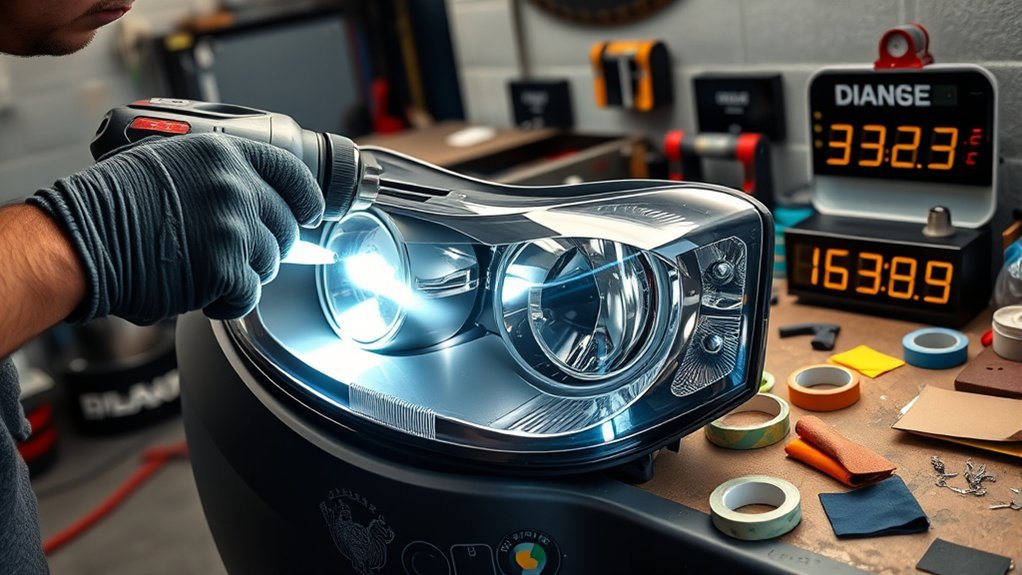
To polish your headlights, start by cleaning them with soap and water, then mask surrounding paint with tape. Select 600-grit sandpaper and wet sand the lenses using circular motions. Progress to finer grits (1000, 2000, 3000). After sanding, apply a plastic-specific polishing compound evenly and buff until clear. Avoid common mistakes like using coarse sandpaper or skipping UV sealant. For more insights on tools and choosing the right restoration kit, keep exploring!
Step 1: Thoroughly Clean Your Headlights
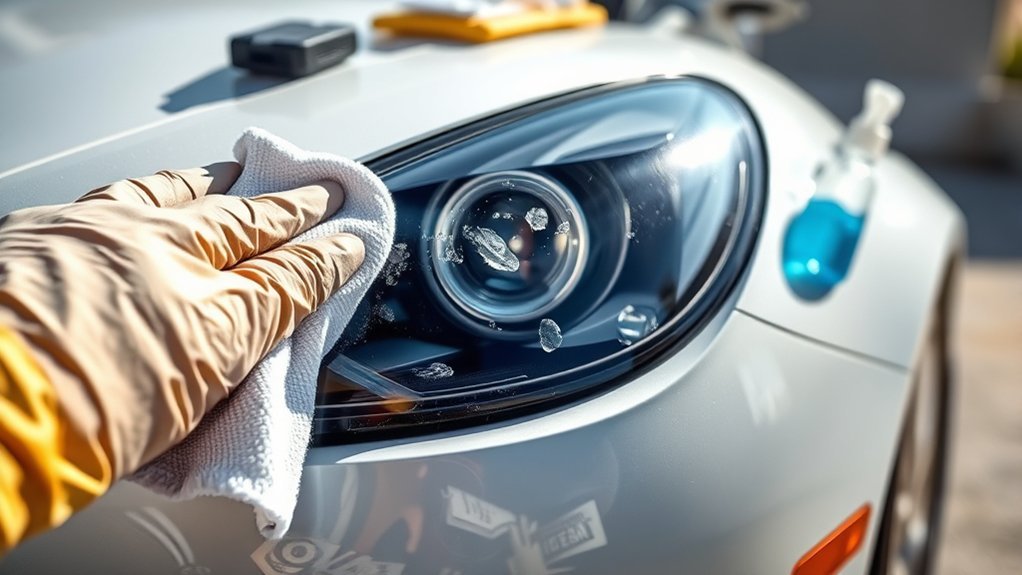
To start, you need to thoroughly clean your headlights to guarantee a successful polishing process.
Begin by washing the headlights with mild soap and water to eliminate dirt and grime. This step’s essential, as any contaminants can lead to scratches during restoration.
Use a microfiber cloth for a gentle cleaning approach, ensuring you protect the polycarbonate surface from further damage. Rinse the headlights thoroughly with clean water and dry them completely to prevent moisture interference during polishing.
Don’t overlook corners and crevices, as dirt can accumulate there, compromising your efforts. By conducting meticulous headlight cleaning, you’re preparing the surface for effective polishing, enhancing clarity and light output.
Ignoring this step can lead to embedded contaminants that diminish the restoration benefits, leaving your headlights less effective. A clean surface is critical for achieving ideal results and maximizing your vehicle’s illumination, driving safety, and aesthetics.
Step 2: Mask Surrounding Areas to Protect Paint
Before you start polishing, it’s essential to mask the surrounding areas to protect your vehicle’s paint.
Use low-tack painter’s tape, pressing it down firmly and extending it a few inches beyond the headlights to prevent any polishing compounds from seeping through.
Double-check your masking to verify all vulnerable surfaces are secure before proceeding with the restoration.
Importance Of Masking Tape
While restoring your headlights, using masking tape is crucial for protecting your vehicle’s paint from accidental damage. Applying high-quality painter’s tape creates a barrier that guarantees the lens is treated without harming the surrounding areas. This step not only prevents scratches but also reduces the risk of chemical contact with the paint. Here’s a quick overview of masking tape benefits:
| Benefit | Description | Tape Removal Techniques |
|---|---|---|
| Paint Protection | Prevents scratches during restoration | Peel back slowly at an angle |
| Clean Edges | Creates sharp lines for a polished look | Use heat to ease removal |
| Easy Application | Quick and straightforward to apply | Moisten for residue-free finish |
| Cost-Effective | Saves on potential touch-up costs | Use a plastic scraper if needed |
| Time-Saving | Reduces time spent on repairs | Remove while paint is still tacky |
Taking the time to mask effectively enhances your vehicle’s aesthetic appeal.
Proper Masking Techniques
When you’re ready to mask the surrounding areas of your headlights, it’s essential to verify the painter’s tape adheres firmly to the surface to prevent any debris or polish from seeping underneath.
Use masking techniques that guarantee the tape covers the car’s paint, extending slightly beyond the edges of the headlights for ideal paint protection. This wider safety margin allows you to sand and polish without risk of scratching the vehicle’s surface.
Before starting the restoration, inspect the masked areas for any gaps; even minor openings can lead to blemishes.
After completing the process, remove the tape carefully to avoid pulling off any paint. This attention to detail will safeguard your car’s finish throughout the restoration.
Step 3: Select the Appropriate Grit Sandpaper for Effective Restoration
Selecting the right grit sandpaper is vital for effectively restoring your headlights. Start with 600-grit sandpaper to tackle oxidation and surface imperfections. This initial grit selection is important, as it sets the foundation for your restoration process.
As you progress, shift to finer grits—1000, 2000, and finally 3000—using proper sanding techniques to achieve a smooth, clear finish.
Wet sanding is recommended; spray water onto the headlights while working to minimize scratches and enhance clarity. Be cautious; using overly coarse sandpaper can create deep scratches that worsen visibility, while too fine grit mightn’t remove enough oxidation.
After sanding, make sure the headlights are completely dry before applying any restoration products. This step maximizes adhesion and effectiveness, leading to better results in your restoration journey.
Step 4: Sand Your Headlights With Care
To achieve a clear and polished finish on your headlights, it’s essential to sand them with care and precision.
Start with 600-grit sandpaper to effectively remove oxidation. Keep the surface wet using a spray bottle; this not only prevents scratches but also enhances headlight clarity.
Begin with 600-grit sandpaper to clear oxidation, keeping the surface wet to prevent scratches and boost clarity.
Employ gentle, circular motions, applying minimal pressure to avoid deep scratches or uneven surfaces. After addressing the initial oxidation, progress to finer grits—move to 1000, then 2000, and finally 3000—to guarantee a smooth finish and eliminate imperfections.
Regularly check for debris buildup on the sandpaper and replace it as needed to maintain effective sanding techniques.
Once you finish sanding, dry the headlights completely before applying any polishing compounds or sealants. This step enhances adhesion and maximizes the effectiveness of your restoration process, making certain your headlights shine clear and bright.
Step 5: Apply the Correct Polishing Compound
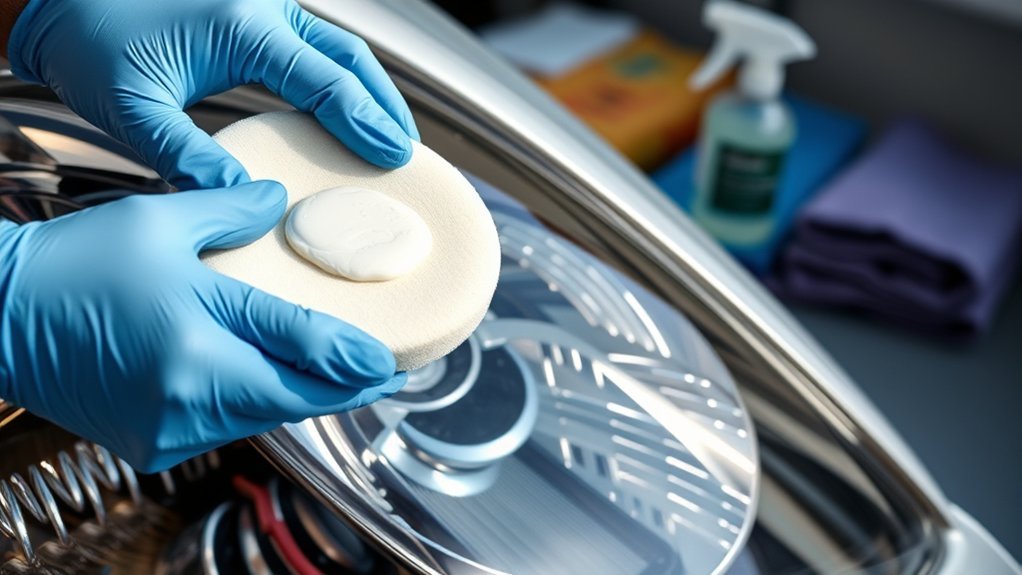
Applying the correct polishing compound is crucial for restoring your headlights to their original clarity.
Choose a compound specifically designed for plastic headlight lenses to avoid scratches and guarantee effective oxidation removal.
Follow these steps for ideal results:
- Clean and Dry: Confirm the headlight surface is clean and dry to prevent trapping dirt and debris.
- Select Compound: Use a polishing compound that matches your headlight’s needs, focusing on effective compound types.
- Apply Evenly: Use a microfiber towel or polishing pad, applying the compound in circular motions for even distribution.
- Buff Off: After letting it sit for the specified time, buff off the compound to reveal restored clarity.
Step 6: Seal Your Headlights for Lasting Clarity
Once you’ve polished your headlights, sealing them is key to ensuring they maintain their clarity over time. To protect against future oxidation and yellowing, choose an appropriate UV sealant or clear coat.
Start by ensuring your headlight surface is completely clean and dry; this promotes ideal adhesion. When selecting sealant types, consider options designed specifically for automotive applications to enhance durability.
Follow manufacturer instructions precisely for application techniques to achieve the best results. Use a clean applicator or microfiber cloth, applying the sealant evenly across the surface. Aim for a thin, uniform layer to avoid runs.
After sealing, allow the product to cure as directed. To maintain clarity and protection, plan to reapply the sealant every few months, especially in harsh environments.
A well-sealed headlight can last from 6 to 12 months before needing reapplication, keeping your visibility sharp and your vehicle looking great.
Avoid These Common Headlight Restoration Mistakes
While restoring headlights can greatly improve visibility, many DIYers make common mistakes that undermine their efforts. To effectively restore your headlights and avoid common pitfalls, pay attention to these restoration errors:
- Skipping Cleaning: Neglecting to clean the surface allows contaminants to scratch the lens, reducing light output.
- Wrong Grit Sandpaper: Starting with coarse sandpaper creates deep scratches. Use around 600 grit to effectively remove oxidation.
- Excessive Pressure: Applying too much pressure during sanding can cause uneven surfaces. Use gentle, circular motions for ideal results.
- Neglecting to Mask: Forgetting to protect surrounding paint can lead to accidental scratches. Always use painter’s tape as a barrier.
Tips for Maintaining Newly Restored Headlights
Successfully restoring your headlights is just the beginning; maintaining that clarity is essential for long-term performance. Start with regular headlight cleaning using a mild soap and water solution. This prevents grime buildup that can compromise visibility.
Every few months, apply a UV-resistant protective coating to shield your headlights from sun damage and oxidation. Confirm the headlight surface is completely dry before applying any protective coatings, as this enhances adhesion and effectiveness.
Incorporate headlight maintenance into your routine car wash schedule to guarantee consistent care. This not only keeps your headlights clear but also extends the lifespan of the restoration.
Additionally, consider parking in shaded areas or using a car cover to minimize UV exposure. By taking these proactive steps, you’ll preserve the clarity and functionality of your restored headlights, ensuring safer driving and a more aesthetically pleasing vehicle.
How to Choose the Best Headlight Restoration Kit?
When choosing a headlight restoration kit, start by checking the included materials to verify it has sandpaper, polishing compounds, and a UV sealant.
Assess the UV protection features, as this will help maintain clarity and prevent future yellowing.
Finally, compare price options to find a kit that offers the best value without compromising on quality.
Check Included Materials
Choosing the right headlight restoration kit is crucial for achieving ideal results, and you’ll want to examine the included materials carefully.
Focus on these critical components:
- Sandpaper grits: Verify it includes a range from 600 to 3000 for effective oxidation removal.
- UV sealant: Look for a protective coating to maintain clarity and prevent future yellowing.
- Material compatibility: Confirm the kit works with your headlight type—plastic or glass.
- Application tools: Check for microfiber cloths and polishing pads, which are essential for a professional finish.
Assess UV Protection
How can you guarantee your headlights stay clear and protected after restoration? Evaluating UV protection is essential.
Look for restoration kits that include a UV sealant or coating, as this safeguards against sun-induced fading and yellowing. Confirm the kit explicitly states it’s compatible with polycarbonate lenses, the standard material for most modern headlights.
When reviewing options, read reviews to gauge effectiveness and durability; proven results matter. Additionally, check if the kit includes multiple sandpaper grits, as starting with coarser grit is important for effective oxidation removal.
Finally, prioritize kits with user-friendly instructions, as proper application techniques are critical for achieving optimal clarity and long-lasting protection. Your headlights deserve the best care for enduring clarity and performance.
Compare Price Options
After confirming your headlights are protected with a reliable UV sealant, the next step is to compare price options for headlight restoration kits.
Here are some budget tips to guide your cost comparison:
- Grit Variety: Look for kits that include sandpaper in grits of 600, 1000, and 2000 for effective oxidation removal.
- UV Sealant Included: Confirm the kit contains a UV sealant or clear coat for long-lasting protection.
- Multiple Applications: Check how many applications each kit offers; more uses mean better value.
- Customer Reviews: Read ratings to assess effectiveness and ease of use, which helps you choose a reliable product.
Frequently Asked Questions About Headlight Restoration?
What questions do you have about headlight restoration? Many people wonder how often they should perform headlight maintenance. Generally, you’ll want to restore your headlights every 6 to 12 months, depending on environmental factors and wear.
If your headlights show severe oxidation, start with higher grit sandpaper, like 2000 or 3000, to remove the deeper layers before polishing. The typical duration for a one-step restoration is about 10-15 minutes per headlight.
Proper cleaning and conditioning before you begin are essential; this prevents further damage during polishing. While you can apply restoration products by hand, using a machine polisher will save time and achieve more effective results.
Always remember, consistent headlight maintenance not only improves visibility but also enhances your vehicle’s overall aesthetic. Don’t let oxidized headlights dim your drive—stay proactive with your restoration efforts.
Frequently Asked Questions
How to Polish Headlights Step by Step?
To polish headlights, start with headlight restoration by cleaning thoroughly. Use masking tape, wet sand progressively from 600 to 3000 grit, apply polishing techniques, and finish with a UV sealant for lasting clarity.
How Do You Remove Cloudy Film From Headlights?
To clear up those cloudy headlights, start with effective cleaning solutions. Use headlight restoration techniques like wet sanding with varying grits, followed by polishing and sealing to guarantee clarity and longevity. Don’t let poor visibility hold you back!
Does WD-40 Actually Clean Headlights?
WD-40’s effectiveness for cleaning headlights is limited; it only masks oxidation temporarily. For proper headlight maintenance, consider dedicated restoration kits that address yellowing and UV damage, ensuring lasting clarity and improved visibility.
When Restoring Headlights, Do You Start Woth Lower or Higher Grit Sandpaper?
When restoring headlights, you start with lower grit sandpaper. This initial sanding technique effectively removes oxidation, allowing you to progress smoothly to higher grits for a crystal-clear finish, achieving ideal headlight restoration results.
Conclusion
Restoring your headlights doesn’t just improve visibility; it breathes new life into your vehicle, making it shine like a diamond on a moonlit night. By following these steps, you’re not only enhancing safety but also boosting your car’s overall aesthetic. Remember to maintain your newly polished headlights to keep that crystal-clear look. With the right techniques and tools, you’ll guarantee your headlights stay bright and beautiful for miles to come. Safe travels!







Leave a Reply