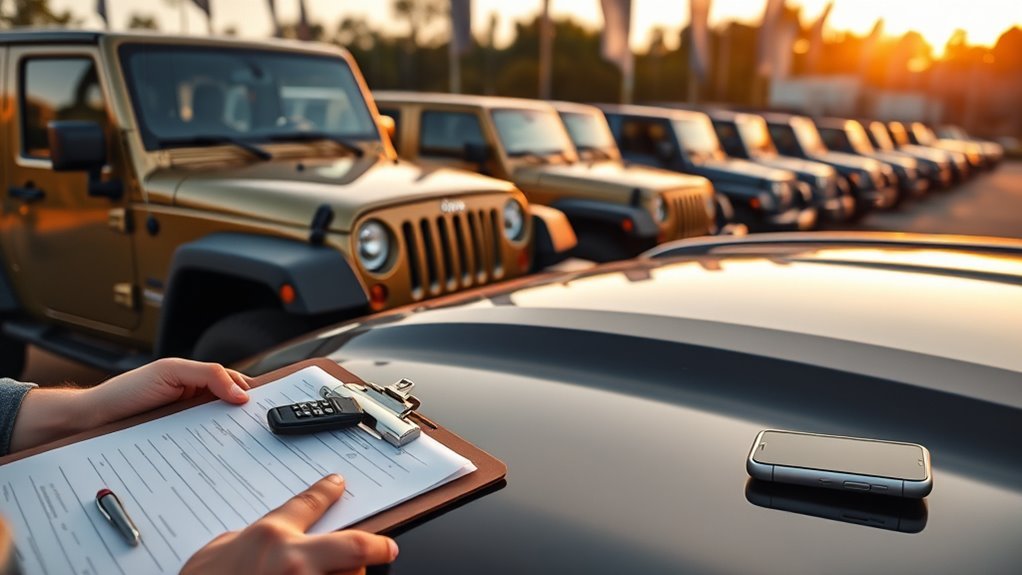
Decide whether you want the lowest upfront price, lowest monthly payment, or lowest interest, then pick a basic trim like Sport to cut costs and compare new, lease, and used options. Check invoice pricing and local dealer inventories for incentives, get multiple trade‑in appraisals, and negotiate the pre‑tax purchase price before discussing financing or trade. Set a firm monthly cap under 15% of take‑home pay and inspect warranties and maintenance—keep going to get step‑by‑step tactics and examples.
Start Here: Quick Steps to Save on a Jeep Wrangler
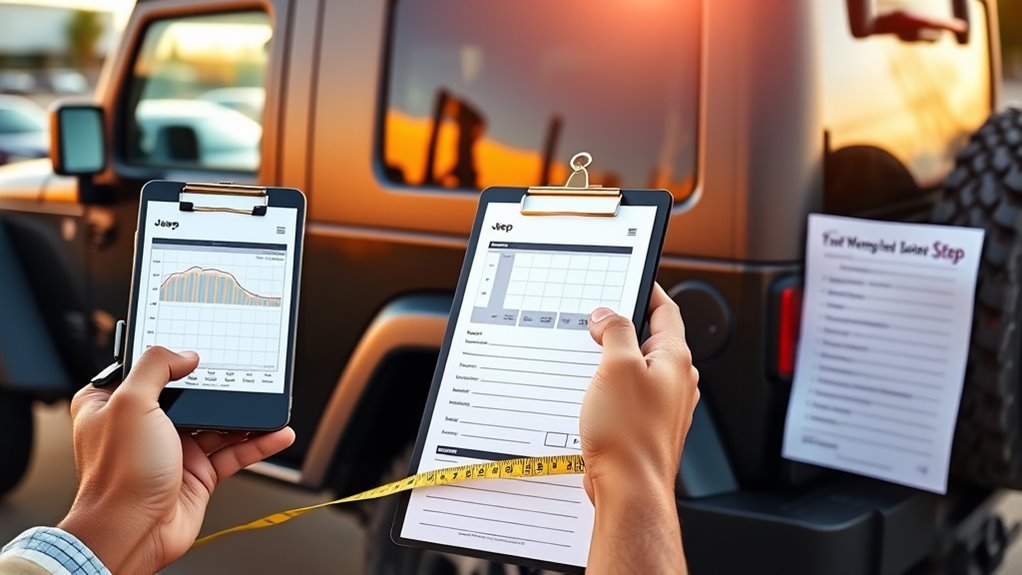
Before you start shopping, decide which cost-saving route matters most—lower upfront price, smaller monthly payments, or minimal interest—and focus your search there. Start with base trims like the Sport or Sport S to capture core off road capabilities without paying for premium extras you may not need. Use online inventories to compare specials and spot discounted new or used Wranglers quickly. Evaluate leasing only if lower monthly payments and access to higher trims matter more than ownership; don’t confuse that with long-term cost if you crave freedom to modify. Trade-ins cut your purchase price and shrink monthly obligations—get several appraisals to maximize leverage. Hunt for competitive financing, including 0% APR deals, but weigh term length against total interest saved. If you plan custom modifications, prioritize a trim and financing path that preserves your budget and autonomy to upgrade later. Make choices that free you financially and keep your options open.
Decide: Buy, Lease, or Buy Used?
Which route makes the most sense for you—owning outright, leasing for lower payments, or buying used to cut upfront costs? You’ll weigh ownership benefits (customize, long-term equity), lease advantages (lower monthly costs, drive new tech often), and used value (big savings, durable performance). Assess total costs—insurance, maintenance, and financing options—against your desire for freedom and flexibility.
| Option | Key point |
|---|---|
| New buy | Ownership benefits: customization, equity |
| Lease | Lease advantages: lower payments, new models |
| Used | Used value: lower upfront, solid resale |
| Finance | Financing options: rates, terms vary |
| Cost mix | Compare total cost of ownership |
Decide by aligning money, lifestyle, and liberation: pick owning for control, leasing for convenience, or used for value. Use clear numbers to compare scenarios and choose the route that frees you from regret while matching your driving goals.
Set a Realistic Budget and Monthly Target
Now that you’ve picked whether to buy, lease, or buy used, set a realistic budget and monthly target so your Wrangler doesn’t become a financial headache. First, tally true budget considerations: purchase price, insurance, routine maintenance, and fuel. Add a buffer for unexpected repairs so freedom doesn’t turn into stress. Aim for a monthly payment under 15% of your take‑home pay to keep mobility sustainable.
Use online calculators for monthly calculations, plugging different down payments, loan terms, and interest rates to see real scenarios. Evaluate financing offers—0% APR or low rates can lower monthly cost, but watch term length and total interest. Check average market prices for the model and options you want so your estimates are grounded, not aspirational.
Set a firm maximum monthly target and stick to it when negotiating. That disciplined cap protects your financial independence and keeps ownership joyful, not burdensome.
Research Wrangler Prices: Trims, Invoice & Local Inventory
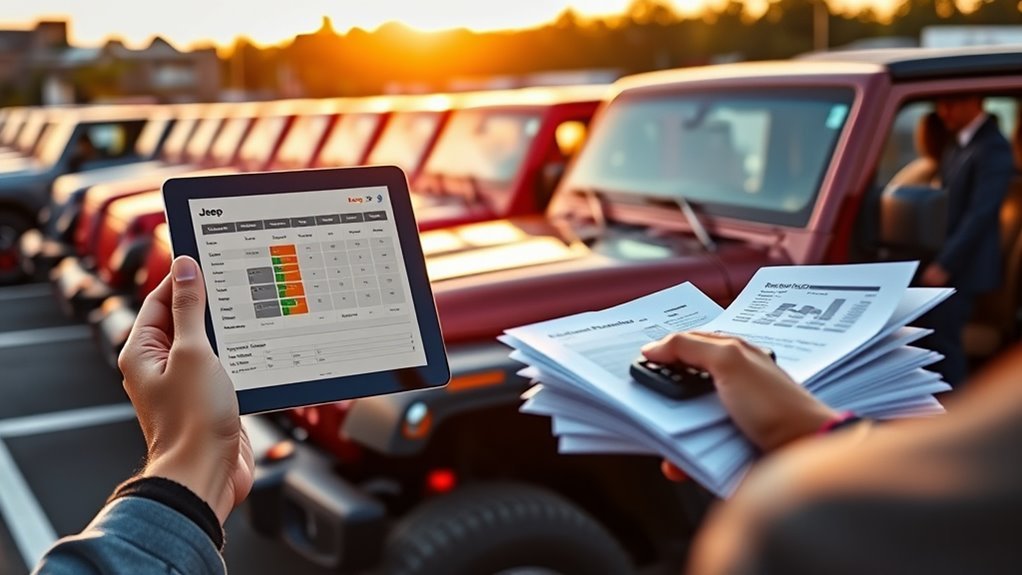
Start by learning the Wrangler trim hierarchy—Sport, Sport S, Rubicon, and others—so you can prioritize the features you actually want and avoid paying for options you won’t use. Do a focused trim comparison, noting capability versus cost, then use invoice price insight to plan invoice negotiation targets. Check local inventory online to spot dealers with surplus stock or end-of-month pressure — that’s where freedom from overpaying begins.
| What to check | Why it matters |
|---|---|
| Trims & features | Avoid buying unwanted options |
| Invoice price | Sets a realistic negotiation floor |
| Local inventory | Reveals supply pressure and deals |
| Market trends/tools | Timing and real-time data for leverage |
Use automotive sites and forums to verify invoice figures and current markups. When you know trims, invoice ranges, and nearby availability, you’ll negotiate from strength and secure a Wrangler that fits your values and budget.
Negotiate Smart on a Wrangler: Price First, Then Trade & F&I
Start by negotiating the Wrangler’s pre-tax purchase price only, so you’re not distracted by monthly payment games or bundled fees. Aim for roughly 7–8% below invoice and use competing offers as leverage to push dealers toward that target. Once the sale price is locked, handle your trade-in and F&I separately to keep each piece of the deal transparent and maximize your overall savings.
Negotiate Vehicle Price First
Because the vehicle price sets the baseline for everything else, negotiate the Wrangler’s pre-tax price first and keep the discussion focused there until you’ve locked it in. You’ll use pre tax negotiations to strip away confusion about monthly payments and trade values. Research invoice pricing ahead of time so you know a realistic target—about 7–8% below invoice is fair. Push back on dealer add-ons and hidden fees; insist numbers reflect only the vehicle. Use competing dealer offers to strengthen your leverage and stay firm. After you’ve sealed the pre-tax price, you’ll move on to trade and F&I separately. Keep control, stay informed, and treat the process as liberation—claim the deal that respects your time and money.
| Step | Action | Goal |
|---|---|---|
| 1 | Research invoice pricing | Baseline |
| 2 | Negotiate pre-tax price | Lock in deal |
| 3 | Compare dealers | Leverage |
Separate Trade And F&I
When you’ve locked in the pre-tax price, treat your trade-in and financing as two separate negotiations so each gets the attention it deserves. Start by negotiating the Wrangler’s price from the invoice, not the MSRP, and use competitor offers as leverage. Once price is fixed, get an independent trade valuation so you know your car’s true worth; don’t let the dealer fold that figure into the vehicle price. Next, evaluate financing options—credit union, bank, and dealer—and compare interest rates and terms. Watch for hidden add-ons and unnecessary fees during F&I; refuse anything not previously agreed. By separating trade valuation and financing options from the vehicle price, you keep power, clarity, and freedom in the deal.
Finalize: Inspection, Warranties, and Service Savings
Inspection is your last line of defense, so check the Wrangler carefully for wear, damage, and consistent service history to avoid costly surprises. Use an inspection checklist and verify maintenance history; if you want freedom from uncertainty, don’t skip an independent mechanic’s review. Compare warranty options—factory, extended, and dealer plans—and weigh coverage, exclusions, and cost. Certified pre owned models often include added guarantees and rigorous inspections, giving you leverage.
- Confirm documented maintenance history and recent repairs.
- Review Warranty options side-by-side for deductible and term.
- Ask about current Service specials to reduce ownership costs.
- Get a mechanic’s pre-purchase inspection even for CPO vehicles.
Decide based on total risk and savings: a CPO Wrangler with strong records may cost more upfront but lowers repair exposure. Use service specials to trim routine expenses, and insist any agreed repairs be completed before you sign. Finalize only when inspection, warranties, and service savings align with your long-term independence.
Frequently Asked Questions
How to Get the Biggest Discount on a New Car?
You’ll secure the biggest discount by mastering negotiation tactics, timing purchases around dealership incentives and model-year clearances, comparing offers, leveraging financing rebates, and staying firm—so you’ll free yourself from overpaying and control the deal.
What Is the Best Time of Year to Buy a Jeep Wrangler?
Like a hunter finding prey at dusk, you’ll get the best time to buy a Jeep Wrangler in late year—end of calendar year, Black Friday, and model-year changes—when seasonal pricing and dealership incentives favor liberated, decisive buyers.
Conclusion
You’ve learned how to decide, budget, research, negotiate, and finalize to get a great deal on a Jeep Wrangler. Now act: compare trims, compare loans, compare dealers. Now save: cut sticker price, cut monthly payment, cut extras you don’t need. Now protect: inspect thoroughly, secure sensible warranties, schedule regular service. Follow these steps, stay firm, and walk away when necessary — and you’ll drive off with confidence and value.



Leave a Reply