
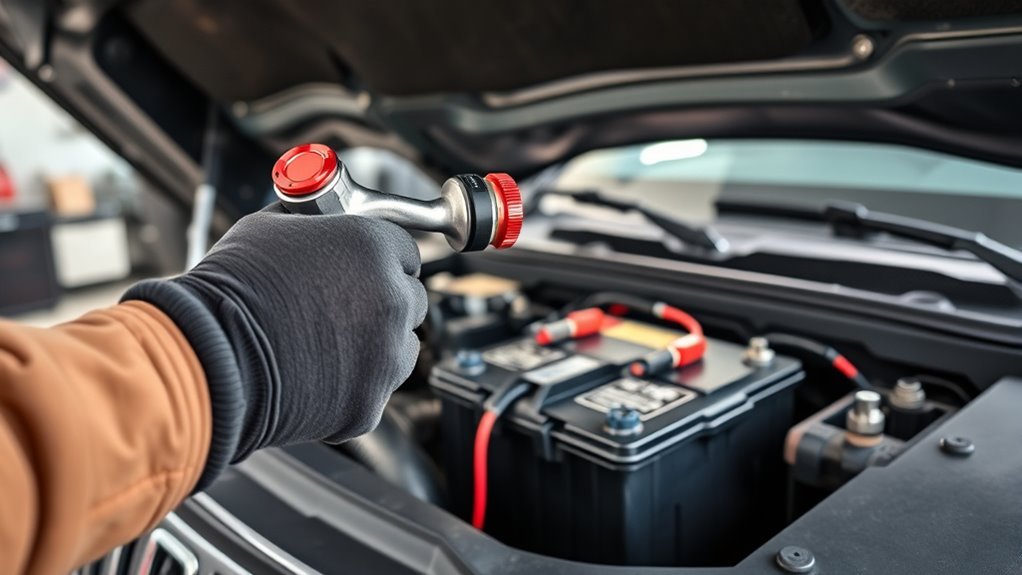
To change the battery in your Jeep Grand Cherokee, start by locating it—it’s typically under the rear passenger seat or in the engine bay. Gather your tools, including a 10mm socket and 13mm socket. Disconnect the negative terminal first, followed by the positive. Remove the hold-down bracket, clean the area, and place the new battery in. Reconnect the terminals, applying dielectric grease for corrosion protection. If you follow these steps carefully, you’ll guarantee reliable performance and discover more maintenance tips.
Locate the Battery in Your Jeep Grand Cherokee
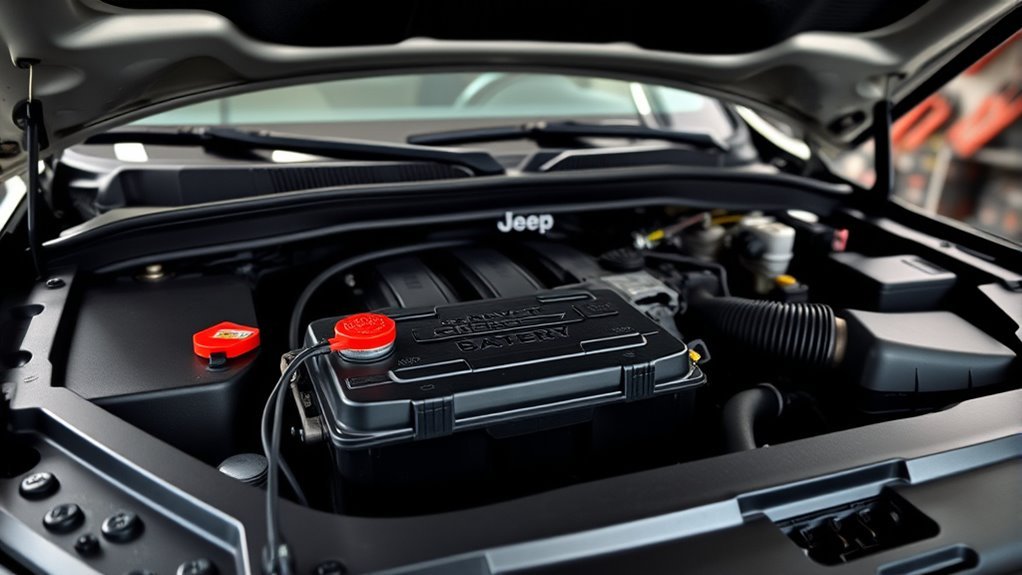
To locate the battery in your Jeep Grand Cherokee, start by identifying your model year, as the battery’s position varies. For 2011 and newer models, you’ll typically find the battery in the seating compartment under the rear passenger seat. Access it by removing the cover carefully. In the 2021-2023 models, the battery location may shift to the engine bay or under the vehicle, depending on the specific configuration. Be ready to remove components like the air filter housing or plastic engine cover for some configurations. Always consult your vehicle’s owner’s manual for precise details and diagrams tailored to your model year. Before you begin, verify the vehicle is turned off and keys are removed. Understanding the battery location is essential for successful maintenance and replacement, empowering you to take control of your vehicle’s performance.
What Tools and Gear You’ll Need?
Before starting the battery replacement, gather the necessary tools and gear to guarantee a smooth process. You’ll need a 10mm socket and a 1/4 ratchet for removing battery terminal bolts and components. A 13mm socket, 3″ extension, and 3/8 ratchet are essential for securing the battery hold-down bracket. To access and remove covers without damage, a plastic trim removal tool is useful. A flathead screwdriver may help pry off stubborn components.
It’s important to have a torque wrench on hand to make certain all bolts are tightened to the manufacturer’s specifications—this is a critical safety precaution. Remember that different battery types may require specific handling techniques, so familiarize yourself with your new battery’s requirements. By preparing these tools and gear, you’ll guarantee a safe and effective battery replacement process in your Jeep Grand Cherokee.
Follow the Step-by-Step Process to Replace Your Battery
Start by sliding the passenger seat forward to access the battery under the seat. Remove the battery access cover carefully. Begin disconnecting the terminals, starting with the negative terminal; wrap the cable end in a shop rag to prevent accidental contact. Next, disconnect the positive terminal. Use a 10mm or 13mm socket to remove the battery hold-down bracket. Lift the battery out using proper lifting techniques to avoid strain.
Before installing the new battery, clean the battery tray and inspect the cables for corrosion. When placing the new AGM battery in position, follow these installation tips: reconnect the positive terminal first, then the negative terminal. Verify everything is secure. After installation, start the engine to check the operation of electronics and recalibrate the steering angle sensor if necessary. This process guarantees your Jeep runs smoothly with the correct battery types for peak performance.
Reconnect Battery and Verify Functionality
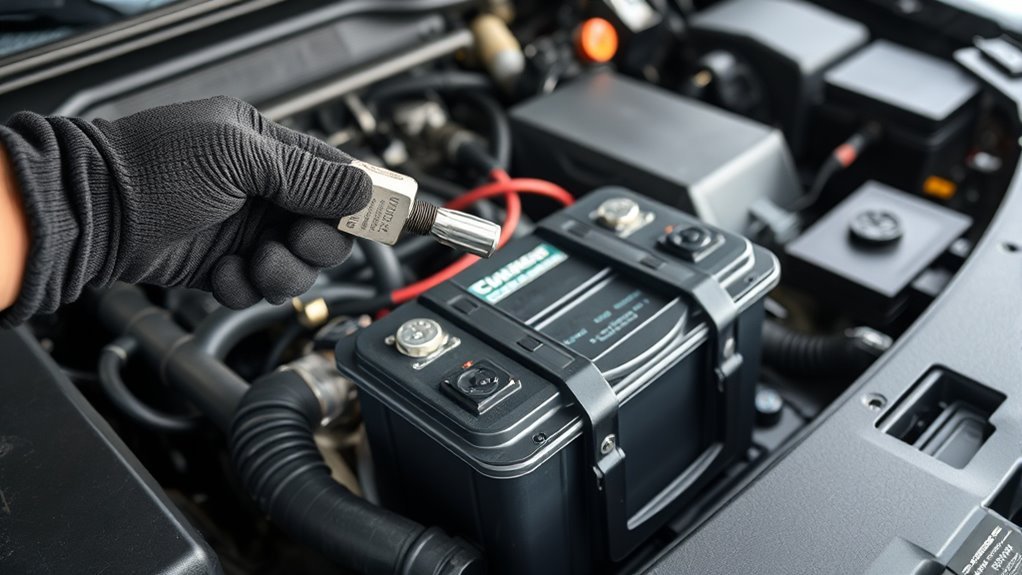
Once you’ve securely connected the battery terminals, double-check that all connections are tight to prevent electrical issues. Start the engine to guarantee the dashboard lights function properly, confirming a successful installation. Next, test the interior electronics, like power windows and seats, to verify everything is working as it should.
Check Terminal Connections
Reconnect the battery by attaching the positive terminal first, followed by the negative terminal. This prevents short circuits and guarantees connection security. Before connecting, inspect the terminals for any terminal corrosion. If you find any, clean them thoroughly to maintain peak conductivity.
Follow these steps for a secure connection:
- Use a 10mm socket to tighten the positive terminal bolt.
- Tighten the negative terminal bolt using the same socket.
- Double-check that both connections are firm and free of corrosion.
- Start the engine and verify all electrical components, including lights and radio, function correctly.
If warning lights appear on the dashboard, you may need to recalibrate systems or recheck connections.
Test Electrical Systems
After replacing the battery, it’s essential to verify that all electrical systems function properly. Start the engine to guarantee it runs smoothly and that all systems power up correctly. Conduct thorough battery testing by checking the operation of interior electronics like lights, power windows, and infotainment systems. Next, turn the steering wheel lock-to-lock to recalibrate the steering angle sensor, which may be necessary after a battery disconnect. Drive the vehicle for 10–15 minutes to allow the onboard computer to recalibrate and clear any warning lights. Finally, remember to reset any lost radio presets, time settings, and seat/mirror memory that may have reverted to default during the process. This step is vital for complete electrical diagnostics.
Identify and Resolve Common Battery Issues
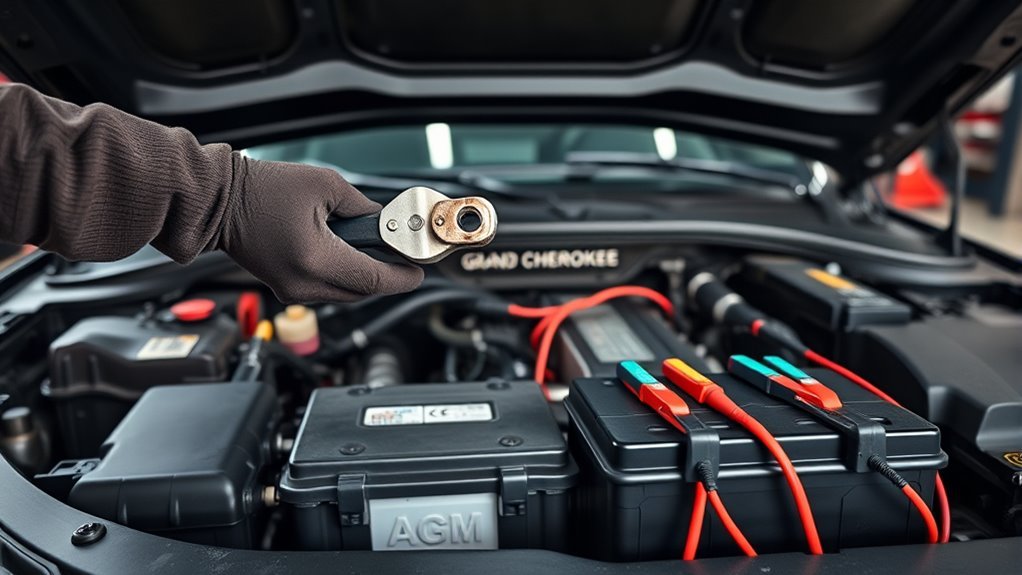
If you notice dimming headlights or slow power seat operation, your battery might be nearing the end of its life. Regularly checking for terminal corrosion and replacing AGM batteries every 4 to 7 years can help maintain peak performance. By addressing these common issues early, you can prevent more significant electrical problems down the line.
Symptoms of Battery Failure
Recognizing the symptoms of battery failure is essential for maintaining your Jeep Grand Cherokee’s performance. A weakening battery can lead to various issues, so keep an eye out for these signs:
- Dimming headlights – Reduced brightness indicates a failing battery.
- Slow engine cranking – If your engine struggles to start, your battery may be nearing its end.
- Malfunctioning electronics – Power seats or other systems acting sluggishly can signal a weak battery.
- Warning lights – Dashboard alerts, like the battery or check engine light, require immediate attention.
A typical battery lifespan is around 7 years, but signs of chemical breakdown can emerge after just 4. Regular electrical diagnostics can help you identify potential failures before they lead to breakdowns.
Maintenance Tips for Longevity
To guarantee the longevity of your Jeep Grand Cherokee’s battery, regular maintenance is essential. Start with routine inspections of battery terminals for corrosion. Clean them using a mixture of baking soda and water. Keep an eye on the battery’s age; a lifespan of 4-7 years is typical, so replace it proactively. Use a multimeter for voltage monitoring; a healthy battery should read around 12.6 volts or higher when fully charged. Confirm vent plugs on AGM batteries are sealed to maintain efficiency. Finally, drive your Jeep regularly to keep the battery charged and prevent discharge, especially in cold weather.
| Action | Frequency | Purpose |
|---|---|---|
| Inspect terminals | Monthly | Prevent corrosion |
| Voltage check | Every 3 months | Confirm battery health |
| Clean terminals | As needed | Optimize connection |
| Drive vehicle | Weekly | Maintain charge |
Maintain Your Battery for Long-Lasting Performance
Maintaining your Jeep Grand Cherokee’s battery is essential for guaranteeing long-lasting performance and reliability. With proper battery care, you can prevent unexpected failures and enhance your vehicle’s efficiency. Here are some performance tips to keep your battery in prime shape:
- Check Water Levels: Regularly inspect the water levels in your battery, topping up as needed.
- Clean Terminals: Confirm battery terminals are clean and free from corrosion for ideal electrical connections.
- Consider AGM Batteries: Upgrade to an AGM battery for improved longevity and performance over traditional lead-acid options.
- Use Dielectric Grease: Apply dielectric grease to terminals to protect against corrosion and enhance connectivity.
Additionally, keep your battery charged, especially during periods of inactivity, using a trickle charger or portable jump starter. By following these steps, you can maximize your battery’s lifespan and performance.
Frequently Asked Questions
Can You Replace a Jeep Battery Yourself?
Yes, you can replace a Jeep battery yourself. With proper tools and safety precautions, you’ll find DIY battery replacement straightforward. Remember to follow battery maintenance tips to guarantee peak performance and longevity for your vehicle.
How to Reset a Jeep Grand Cherokee After Battery Replacement?
After replacing the battery, recalibrate your Jeep’s spirit by turning the steering wheel lock-to-lock. Conduct electrical system checks, drive for 10–15 minutes, and reset your settings for smooth operation and enduring freedom on the road.
Conclusion
Changing your Jeep Grand Cherokee’s battery isn’t as intimidating as it seems. With the right tools and our step-by-step guide, you’ll have your vehicle up and running in no time. Curiously, many drivers find that a simple battery change can coincidentally resolve other electrical issues they didn’t even realize existed. By maintaining your battery properly, you’ll not only boost performance but also prolong its lifespan, ensuring your Jeep stays reliable on every adventure.







Leave a Reply