
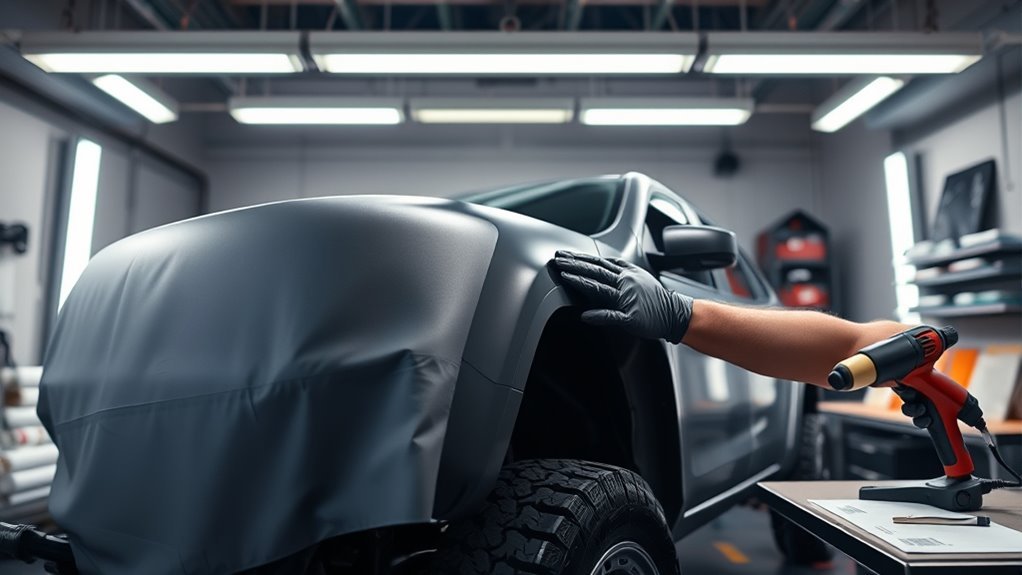
You’ll typically pay $3,000–$5,000 for a high‑quality full wrap on a Jeep Cherokee, with lower $250–$800 partials available for small areas. Costs rise with larger trims, specialty finishes (matte, chrome, metallic), extra prep or old‑wrap removal, and installer labor; expect 55–60 ft of film plus $1,500–$5,000 in labor depending on experience. Vinyl lasts about 3–5 years with care. Keep quotes itemized and watch for lowball offers—more details follow below.
Quick Price Ranges for Wrapping a Jeep Cherokee (What $3K–$5K Covers)
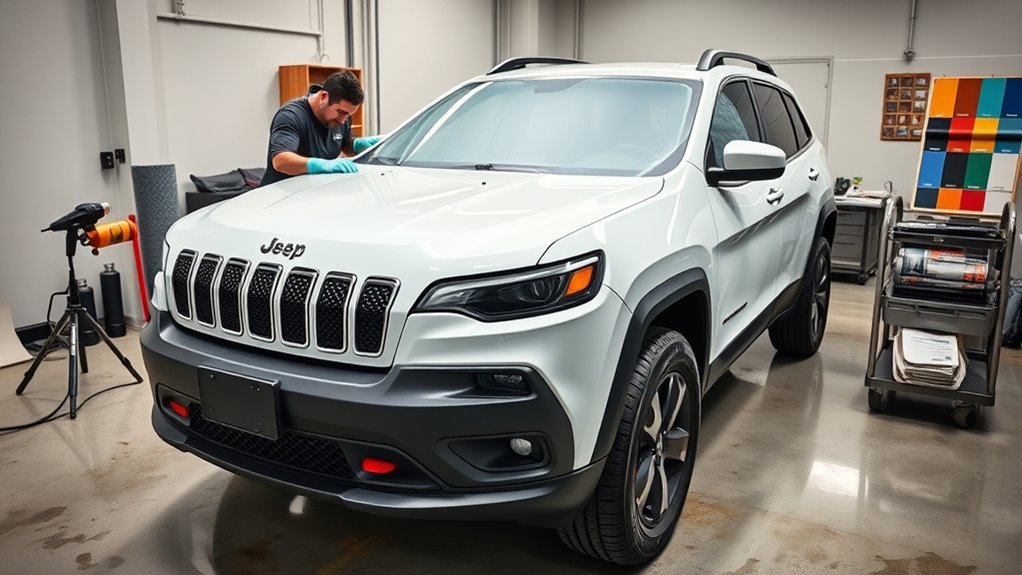
If you’re budgeting for a full wrap on a Jeep Cherokee, expect to pay roughly $3,000–$5,000 for complete coverage using high-quality cast vinyl; that price typically includes material, color-matched seams, and professional installation but can shift based on design complexity and installer rates. You’ll get durable, long-lasting protection and a factory-like finish that aligns with current design trends, yet you’ll want to pick color preferences that resist fading and suit resale goals. Expect labor to be a meaningful portion of the cost—experienced installers charge more, and regional rates vary. If you’re cost-conscious, consider partial wraps at $250–$800 for targeted visual change or protection. Material grade matters: cast vinyl justifies higher spend for flexibility and lifespan. Plan for accurate estimates by communicating your desired finish, edge detailing, and pattern complexity up front. That clarity frees you to choose a wrap that balances budget, durability, and the visual freedom you’re after.
How Cherokee Size and Trim Affect Wrap Costs
Because trim level and vehicle size determine how much vinyl and labor you need, wrapping a Cherokee can shift noticeably in price: plan on about 55–60 feet of film for a full wrap, with larger or feature-heavy trims like the Limited requiring more material and time, which moves costs toward the $3K–$5K end (overall ranges run $1,500–$5,000).
You’ll assess Cherokee size and trim complexity first. Bigger bodies and extra trim pieces increase film usage and mounting points, so wrapping techniques must adapt: more pattern matching, edge tucking, and panel seams add labor. Simple color changes on base trims often finish in 1–2 days; intricate designs or trims with moldings can stretch installation time and hourly labor, raising the price. Design impact also matters — high-detail graphics demand precision cuts and overlap, increasing waste and time. Geographic labor rates further modulate costs; urban shops usually charge more. If you want freedom from cookie-cutter results, budget for trim-driven complexity and select a shop skilled in advanced wrapping techniques.
Cost Breakdown: Full Wrap vs Partial Wrap for a Cherokee
Deciding between a full wrap and a partial wrap comes down to coverage goals and budget: a full Jeep Cherokee wrap typically runs $1,500–$5,000 (often averaging $3,000–$6,000 for custom or specialty finishes), while partial wraps—covering areas like the hood, roof, or doors—start around $250 and usually top out near $800. You’ll weigh cost against impact: full wraps maximize visual change and protection; partials target accents or damage concealment.
| Scope | Typical Cost |
|---|---|
| Full wrap | $1,500–$5,000 |
| Partial wrap | $250–$800 |
| Avg. custom | $3,000–$6,000 |
Focus on variables that free you from uncertainty: wrap materials quality, installation labor, design complexity, and geography. Higher-quality vinyl and intricate designs raise price but extend life and distinctiveness. If you want liberation from frequent repainting or want a bold statement, invest in a full wrap; if you want economical customization or repairs, choose targeted partials.
How Different Finishes Change Price: Gloss, Matte, Metallic, Chrome
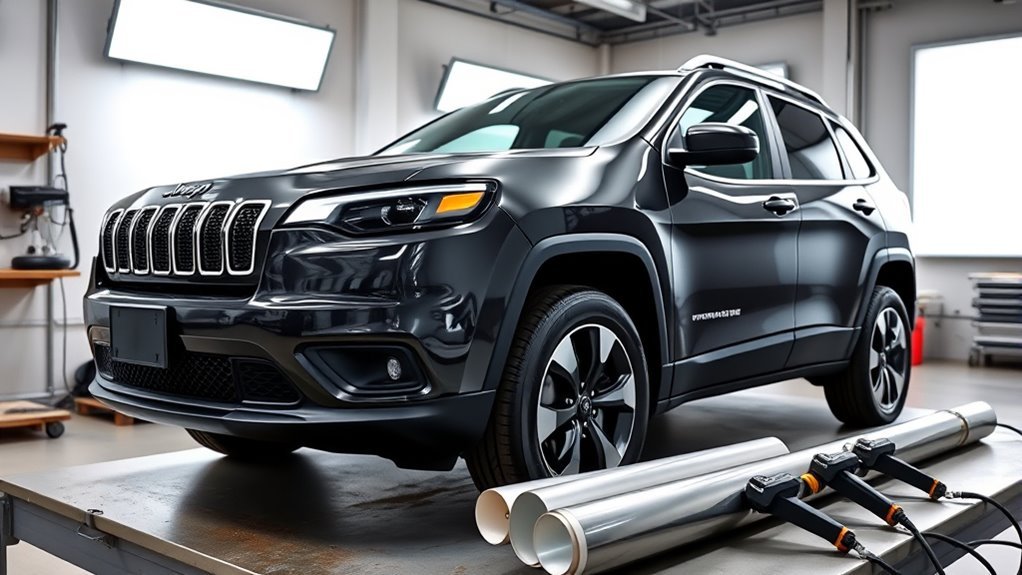
When choosing a finish for your Cherokee, you’ll see price swings: gloss runs about $2,500–$5,000, matte $3,000–$5,000, metallic by roll pricing (roughly $159–$169 per 5×10 ft roll) with final cost depending on coverage, and chrome typically $4,000–$6,000+. You should factor durability and maintenance into the budget—matte hides minor scratches but can stain, metallic adds texture but may need more labor, and chrome is both costly and delicate. Compare upfront cost versus expected upkeep to pick the finish that matches your budget and use case.
Finish Type Price Differences
If you’re comparing finish types, know that price varies with material and visual effects: gloss and matte sit at the lower end, typically $149–$169 and $149–$159 per 5×10 ft roll respectively. For cost-conscious liberation, that means you can change appearance without overspending. Metallic and chrome elevate price trends slightly—both usually $159–$169 per roll—because they add sparkle or mirror-like reflectivity. Specialty textures like carbon fiber run about $169 per roll, often chosen for a bold, technical look. When budgeting your Jeep Cherokee wrap, add installer labor and waste allowance to material costs. Choose the finish type that matches your aesthetic goals and budget constraints; small per-roll differences compound across the vehicle, so prioritize visual impact per dollar.
Durability And Maintenance
Because finish choice affects both lifespan and upkeep, plan your budget around material-specific durability and maintenance needs. You’ll use a durability comparison to weigh cost versus longevity: gloss lasts up to seven years and is cheapest to maintain and install ($2,500–$6,000). Matte and specialty finishes cost more ($3,000–$5,500), need delicate handling, and raise labor time. Metallic and chrome exceed $4,000, demand expert installation, and have shorter practical lifespans.
- Choose gloss for lower ongoing costs and straightforward maintenance tips.
- Pick matte if you accept higher install fees and careful cleaning.
- Expect premium pricing for metallic/chrome and specialized upkeep.
- Factor labor-driven price increases when seeking visual liberation.
How Much Vinyl Does a Jeep Cherokee Actually Need?
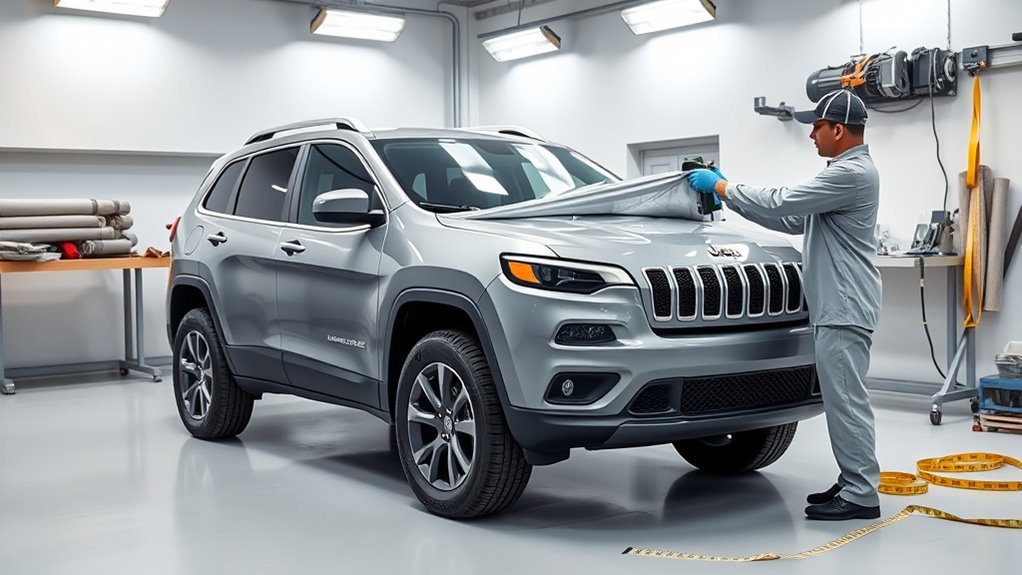
For a full wrap on a Jeep Cherokee you’ll typically need about 55 to 60 linear feet of vinyl, though exact needs depend on model year and trim; partial wraps generally require roughly 20 to 30 linear feet for areas like the hood or side panels. You’ll plan material by measuring painted surface area plus extra for seams, curves, and errors. Choose vinyl types with liberation in mind: cast vinyl offers conformability for tight contours but may need more precise cuts and slightly more material; calendared is cheaper but limits complex applications.
Design complexity drives added waste — multi-panel graphics, color changes, or matching patterns increase yardage and cost. When budgeting, factor unit cost per linear foot and anticipated overage (typically 10–20%). Buy slightly more than calculated to avoid patchwork. This lets you control final cost and maintain the freedom to iterate on style without surprise shortages.
Labor, Prep, and Common Hidden Fees to Watch For
Now that you know how much vinyl to order, plan for the labor and prep that will shape the final price. You’ll face labor costs that typically range $1,500–$5,000; choose experience to reduce risk and protect your freedom from repeat work. Installation time is usually 1–2 days, but complexity or surface issues extend both time and cost. Prep tasks — cleaning, removing old wrap, fixing paint — add fees; get these itemized. Ask about warranties on material and installation to avoid surprise expenses.
- Get a detailed quote: line items for labor, prep, and materials.
- Confirm installation time: shop schedules can inflate hourly charges.
- Inspect for hidden repairs: rust, dents, or adhesive residue raise costs.
- Verify warranty terms: coverage limits affect long-term value.
Be direct: clarify customization fees and specialized material surcharges before work starts so you retain control and predictable spending.
DIY Jeep Cherokee Wrap: Costs, Tools, Time, and Common Mistakes
If you’re taking on a DIY Jeep Cherokee wrap, expect to spend roughly $100–$800 on vinyl plus $50–$300 on essential tools, and plan for extra material—two rolls for a 2-door or three for a 4-door—to cover mistakes. You’ll choose vinyl types (cast, calendared, textured) based on durability and finish; premium options raise cost but reduce rework. Your tool list should include squeegee, utility knife, heat gun, masking, and surface cleaners. Plan several hours to multiple days: simple panels go faster, wrap around hinges and mirrors takes time.
Follow installation tips: clean thoroughly, measure twice, cut minimally, and heat-shrink panels for curves. Common mistakes are poor surface prep, misalignment, and underestimating difficult areas—these cost time and extra vinyl. If you want freedom from shop fees, accept the learning curve and budget materially and temporally for fixes; that’s how you keep control and stay cost-effective.
How to Get Accurate Quotes: Exact Questions and Red Flags
When you request a quote, ask for a detailed cost breakdown showing material type (cast vs. calendared), labor hours, and any extra fees for custom work or prep. Confirm estimated install time (usually 1–2 days) and whether surface prep or paint repairs are included. Treat unusually low estimates as a red flag—they often mean cheaper vinyl or inexperienced installers that raise risk and long-term cost.
Ask For Detailed Breakdown
Why ask for a line‑item quote? You gain control: transparency exposes where money goes so you can choose value, not emotion. Ask for material costs with vinyl types specified, and get a quote comparison that lists brand, finish, and cost per square foot.
- Material: brand, vinyl types, quantity, unit price — no vague “premium” labels.
- Labor: hours, rate per hour, and complexity adjustments for panels and seams.
- Prep/removal: surface work, old wrap removal, paint correction — itemized fees.
- Warranty/insurance: material warranty length, installation guarantee, and who pays for faults.
Reject vague totals. Demand documented line items to liberate your budget and minimize surprise expenses.
Watch For Unusually Low Estimates
After you demand a line‑item quote, watch for estimates that sit well below the typical $2,500–$5,000 range for a Cherokee — those low numbers usually mean cheaper vinyl, less experienced labor, or skipped prep. You should ask which vinyl brand they’ll use; premium names like 3M or Avery raise material cost but protect longevity and resale freedom. Require an itemized breakdown covering materials, labor, design, and warranty lines so you can compare bids objectively. Low bids often lack quality assurance steps—surface prep, post‑wrap inspection, or written guarantees. Check reviews and portfolio to verify installer experience; inconsistent past work is a red flag. Opt for transparent shops even if they cost more; your vehicle’s finish and future options depend on it.
Lifespan and Maintenance: When to Repair or Replace a Cherokee Wrap
Anyone considering a Cherokee wrap should expect vinyl to last about 3–5 years under normal conditions, with higher-quality films and careful upkeep pushing longevity toward the top end. You’ll want to track wrap durability and follow maintenance tips to protect value and freedom from frequent repairs. Gentle washing, avoiding harsh chemicals, and covered parking extend life; bubbling, peeling, or fading signal intervention.
- See minor lifts? Repair edges fast to prevent spreading and save money.
- Spot discoloration or large bubbles? Replace affected panels to restore protection.
- Significant damage across panels? Full replacement prevents paint exposure and resale loss.
- Unsure? Seek professional assessment to choose repair vs. replace and control costs.
Be practical: repairs cost less short-term but can compound. Replacing at the right time preserves your Jeep’s appearance and liberates you from ongoing touch-ups. Prioritize professional evaluation for accurate, cost-effective decisions.
Wrapping vs Painting vs Paint Protection Film for a Cherokee: Cost and Resale Impact
If you’ve been tracking wrap wear and repair needs, it’s worth comparing wrapping, repainting, and paint protection film (PPF) for cost and resale impact before committing. Wrapping runs $1,500–$5,000, gives broad aesthetic options and lets you experiment with color selection without permanent commitment. High-quality repainting often exceeds $7,000, yields a factory look that appeals to conservative buyers, and is permanent—less freedom if you crave change. PPF starts around $1,500, focuses on preserving original paint from chips and scratches, and won’t alter appearance or offer design variety.
For resale trends, wraps and PPF both protect underlying paint and can improve value versus unprotected surfaces; wraps attract buyers seeking unique styling, PPF appeals to those prioritizing factory condition. If you want liberation through customization at controlled cost, choose a wrap. If long-term originality and minimal visual change are priorities, invest in PPF or high-end paint. Budget and target buyer profile should drive your decision.
Frequently Asked Questions
How Long Do Jeep Wraps Last?
You’ll typically get 3–7 years of wrap durability. Choose high-quality cast vinyl and professional install, follow maintenance tips like gentle cleaning and UV protection, and you’ll maximize lifespan while keeping replacement costs and hassle lower.
How Much to Wrap a Jeep Cherokee?
Like upgrading freedom’s armor, you’ll pay roughly $1,500–$5,000 for Jeep wrap costs; full wraps run $3,000–$5,000, partials $250–$800. You’ll get Jeep wrap benefits: protection, customization, resale value enhancement.
Conclusion
You’ll pay roughly what you’d expect for a Jeep Cherokee: more for size, trim, specialty finishes, and pro labor; less if you DIY and accept imperfect seams. Ironically, the color that makes your Cherokee look brand‑new also hides the exact cost until you ask the right questions. Get line‑item quotes, check installer experience, and weigh lifespan versus resale. Treat wraps like measured investments—not impulsive style statements—and budget for upkeep.




Leave a Reply