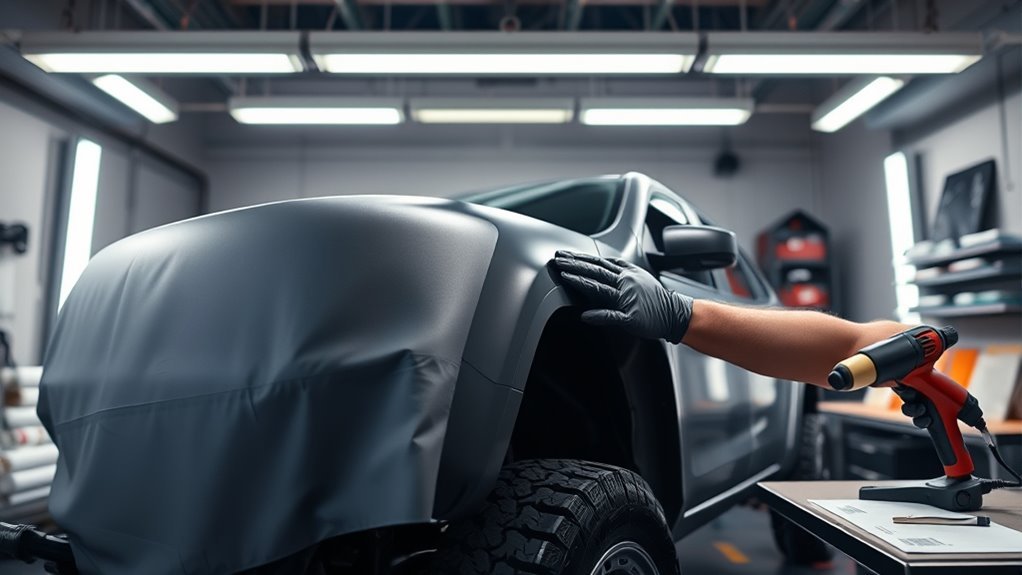
Wrapping a Jeep Cherokee can change its color without committing to permanent paint, but the final price depends on the exact model year, coverage, film, paint condition, and installer. A standard professional color change usually falls in the mid-thousands, while specialty films, door jambs, repairs, and old-wrap removal can add significantly to the bill.
Quick Answer
A professional full color-change wrap for a Jeep Cherokee usually costs about $3,000–$5,000. Small accents may start near $250–$700, while hood, roof, chrome-delete, or larger partial jobs often run $500–$2,500. Specialty films, door jambs, old-wrap removal, paint repair, and difficult trim can push a full job above $5,000.
Key Takeaways
- Use $3,000–$5,000 as a realistic planning range for a professional Cherokee color change with standard premium cast vinyl.
- A quoted full-wrap price normally includes film and installation labor; labor should not automatically be added a second time.
- Your exact year matters because an older XJ, a 2014–2023 KL, and the all-new 2026 Cherokee have different bodies, trim, paint conditions, and sensor layouts.
- Door jambs, old-wrap removal, paint correction, roof rails, badges, custom graphics, specialty finishes, and difficult disassembly are common extra charges.
- A well-maintained wrap may remain presentable for roughly three to seven years, but roofs, hoods, specialty finishes, and hot climates can shorten that period.
At a Glance
| Time Required | About 2–4 days for many professional full wraps; approximately 3–7 days for a first-time DIY project |
| Difficulty | Moderate for a simple hood or roof; high for a full SUV color change |
| Tools Needed | For DIY: felt-edge squeegee, heat gun, infrared thermometer, knifeless tape, wrap gloves, magnets, sharp blades, microfiber towels, and approved cleaners |
| Cost | About $3,000–$5,000 professionally or roughly $700–$1,500 for DIY film and basic tools before mistakes or replacement panels |
Jeep Cherokee Wrap Cost by Coverage
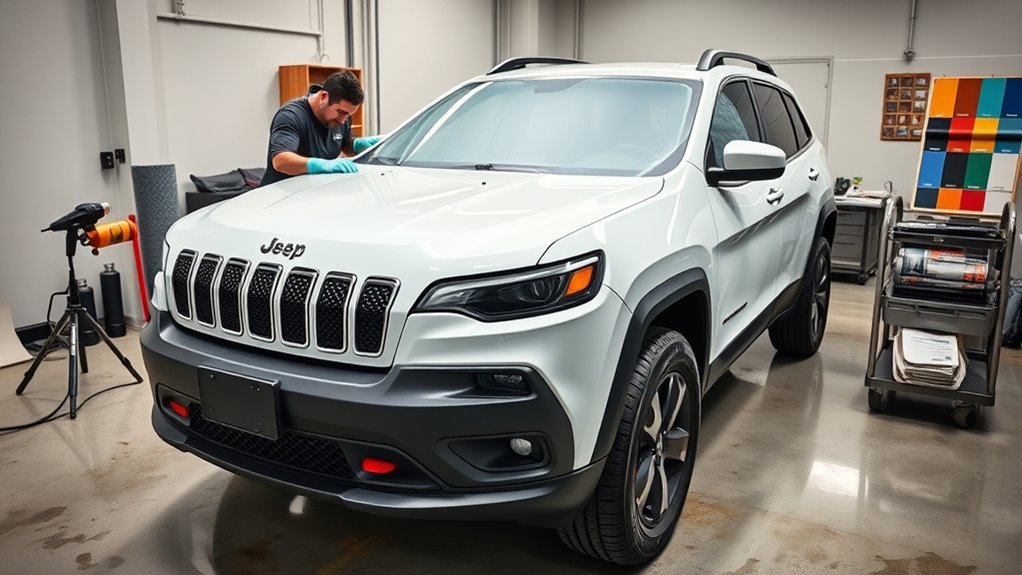
A professional full color change on a Jeep Cherokee commonly lands around $3,000–$5,000 when the vehicle has sound paint and the job uses a standard premium cast film. A current Jeep pricing guide from film manufacturer TeckWrap places many Jeep wraps between $2,500 and $5,000, with size, finish, design, and labor affecting the final price.
The ranges below are planning estimates rather than fixed national prices. Labor markets, shop skill, film availability, taxes, and vehicle condition vary by location.
| Coverage | Planning Range | Typical Examples |
|---|---|---|
| Small accents | $250–$700 | Mirror caps, fuel door, small trim pieces, or stripes |
| Single large panel | $500–$1,200 | Hood or roof in a standard finish |
| Chrome delete or several accents | $600–$1,500 | Window trim, grille details, rails, handles, or contrasting pieces |
| Large partial or two-tone wrap | $1,200–$2,500 | Upper or lower body, front clip, several doors, or a roof-and-pillars package |
| Full color change | $3,000–$5,000 | Most exterior painted panels in gloss, satin, or matte cast vinyl |
| Specialty or extended-coverage full wrap | $5,000–$8,000+ | Chrome, color-shift, textured film, printed graphics, door jambs, difficult disassembly, or major prep |
Note: A professional full-wrap quote normally includes the vinyl and installation labor. Do not add a separate $1,500–$5,000 labor estimate unless the shop has clearly excluded labor from its advertised price.
What a Full Cherokee Wrap Usually Includes
A standard full color-change wrap normally covers the visible exterior painted panels. That often includes the hood, roof, fenders, quarter panels, doors, hatch, bumpers, and mirror housings when those surfaces are suitable for film.
“Full wrap” does not automatically mean every visible surface changes color. Ask the installer to identify each included and excluded area in writing.
Commonly Included
- Exterior painted body panels
- Painted bumper sections that can hold film properly
- Exterior mirror caps
- Fuel door
- Basic badge removal and reinstallation when agreed in advance
- Normal washing, decontamination, and surface preparation
- Edge finishing and post-heating in high-stress areas
Commonly Excluded or Priced Separately
- Door jambs, inner door edges, and the painted areas visible when doors are open
- Underhood surfaces and the underside of the hatch
- Wheel wells and underbody components
- Textured black plastic that does not provide a reliable adhesive surface
- Roof rails, spoilers, running boards, handles, grilles, and complex trim
- Paint repair, dent repair, rust removal, and clear-coat correction
- Old-wrap removal and adhesive cleanup
- Replacement emblems, clips, fasteners, and one-time-use trim pieces
- Custom artwork, printing, lamination, or commercial branding
- Ceramic coating or wrap-specific protective coating
Pro Tip: Ask the shop to mark the exact coverage on photographs of your Cherokee. Written panel-by-panel scope prevents disputes about jambs, bumpers, mirrors, rails, badges, and exposed original paint.
How Model Year, Body Style, and Trim Affect Price
The exact model year matters more than the trim name alone. Classic XJ Cherokees, 2014–2023 KL models, and the all-new 2026 Jeep Cherokee have different dimensions, contours, trim systems, paint ages, and technology.
Cherokee vs Grand Cherokee
A Jeep Cherokee and a Jeep Grand Cherokee are different vehicles. The Grand Cherokee is generally larger and can require more material, panel time, and disassembly. Make sure every quote lists the full model name, year, trim, and any aftermarket equipment.
What the Trim Can Change
A Limited or other upper trim is not automatically a larger body than the base trim from the same year. It may still cost more to wrap when it has:
- Roof rails or a contrasting roof
- Additional painted cladding
- A larger spoiler
- More chrome trim
- Parking sensors, cameras, or radar modules
- Complex wheels-arch trim or lower bumper pieces
- Aftermarket lights, racks, flares, armor, or accessories
Older Cherokees can also require more prep because of oxidation, rust, stone chips, failing clear coat, old body repairs, or brittle plastic clips.
Full Wrap vs Partial Wrap
A full wrap is the better choice when you want a complete color change and consistent finish. A partial wrap makes more sense when you want contrast, a repairable accent, or a lower-cost visual change.
| Option | Best For | Main Limitation |
|---|---|---|
| Small accent | Testing a color or changing mirrors and trim | Limited visual impact |
| Single-panel wrap | Black roof, contrasting hood, or replacement of one wrapped panel | May not match older film perfectly |
| Large partial | Two-tone designs or commercial graphics | Original paint remains visible in planned transition areas |
| Full color change | A complete new exterior appearance | Higher cost and more disassembly |
A partial wrap should not be used simply to conceal rust, peeling clear coat, or deep damage. Film follows the surface beneath it, so defects normally remain visible and may worsen.
How Gloss, Matte, Metallic, Chrome, and Textured Films Change Price
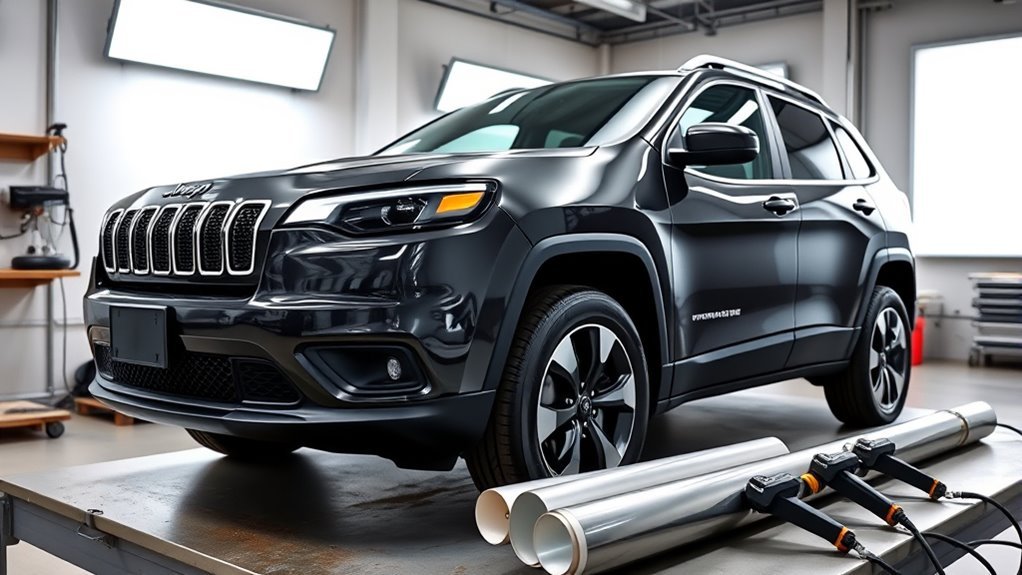
Finish affects the price through material cost, waste, installation difficulty, panel direction, and expected service life. Retail prices for small sheets change frequently and are not a reliable way to estimate a full SUV installation.
| Finish | Relative Price | What to Know |
|---|---|---|
| Gloss | Baseline | Usually the easiest finish to clean and visually inspect |
| Satin or matte | Baseline to moderate premium | Needs gentle cleaning; fingerprints, stains, and abrasion can be difficult to correct |
| Metallic or pearlescent | Moderate premium | Directional appearance requires consistent panel orientation and may increase waste |
| Color-shift | High premium | Color changes with viewing angle; panel direction and lot consistency are critical |
| Carbon fiber or textured film | High premium | Thicker texture can be harder to stretch, cut, edge, and clean |
| Chrome or mirror film | Highest | Delicate, highly visible defects, difficult installation, and often shorter practical life |
The current Avery Dennison SW900 product data makes an important distinction: durability changes with color, finish, environment, surface orientation, preparation, and maintenance. Specialty metallic, textured, and color-shift products should not be assumed to last as long as every standard gloss color.
A warranty maximum is not a promise that every panel will look new for that long. Roofs and hoods receive more sun than vertical doors and often age first.
Note: Matte film does not make scratches disappear. It reduces reflections, but abrasion can remain visible and cannot usually be polished away like light defects in gloss paint.
How Much Vinyl Does a Jeep Cherokee Need?
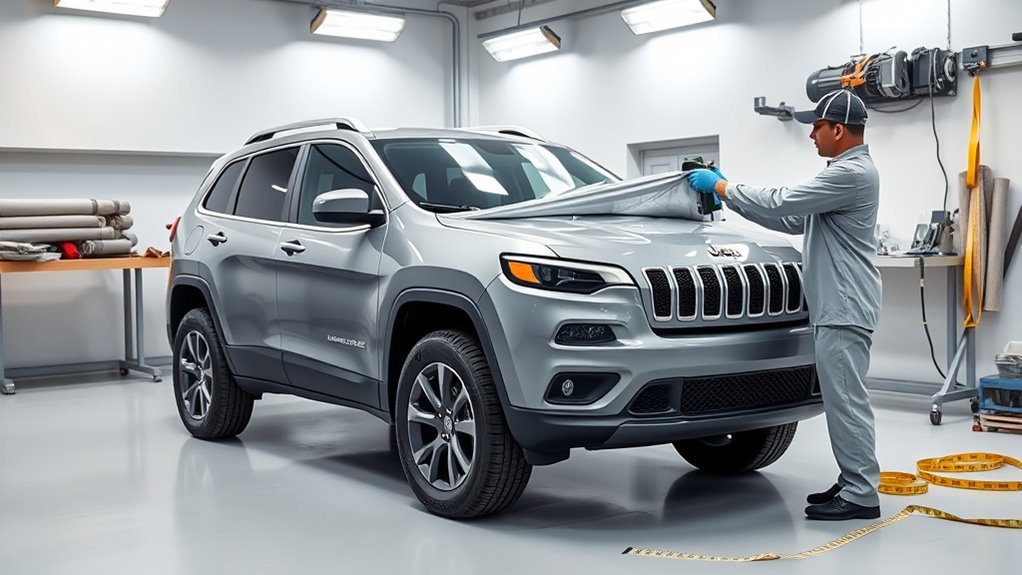
There is no single film quantity that fits every Cherokee. As a planning estimate, a full Cherokee-sized SUV may require approximately 60–75 linear feet of 60-inch-wide film. A skilled installer may use less on a simple body, while a beginner, directional finish, printed design, or complex model may require more.
3M Wrap Film Series 2080 is available in 60-inch-wide rolls so many vehicle panels can be covered without a seam. The same bulletin recommends using one production lot for the entire vehicle and keeping directional films oriented consistently.
How to Estimate Material
- Measure the maximum length and width of each painted panel.
- Add several inches around each side for gripping, trimming, and edge finishing.
- Plan each panel on the roll before cutting.
- Add at least 10% waste for a professional plan and 15%–20% for a first-time DIY job.
- Add more material for metallic, color-shift, textured, or pattern-matched film.
- Order enough from the same production lot to avoid visible color differences.
Do not estimate a modern Cherokee by “two-door versus four-door” rules intended for other Jeep models. Use the exact year, body, accessories, and measured panels.
Pro Tip: A complete 75-foot roll can be safer for a first-time full wrap than several smaller purchases. It reduces the risk of running short or receiving a visibly different production lot later.
Labor, Preparation, and Hidden Fees
Professional wrapping is labor-heavy. The shop must inspect the paint, clean and decontaminate the vehicle, remove selected trim, plan the panels, apply the film, post-heat stressed areas, reassemble the vehicle, and perform a final inspection.
The price may increase for any of the following:
- Old vinyl or adhesive removal
- Tree sap, tar, wax, oil, or heavy road contamination
- Ceramic coatings that interfere with adhesion
- Peeling clear coat, oxidation, stone chips, rust, or body filler
- Dents or deep scratches that require bodywork
- Fresh repainting that has not fully cured
- Fragile badges, clips, handles, flares, rails, lights, or trim
- Door jambs and other extended-coverage areas
- Complex printed artwork or pattern alignment
- Chrome, texture, or direction-sensitive film
- Aftermarket racks, armor, lights, flares, or accessories
Warning: Do not wrap over rust, peeling clear coat, loose paint, or uncured body repairs. Film may fail early, and later removal can lift weak or poorly bonded paint. A reputable shop should inspect and document the surface before installation.
How Long Professional Installation Takes
Many professional full wraps require about two to four days. A simple exterior color change on clean paint may be faster. Old-wrap removal, body repair, printed graphics, extensive disassembly, door jambs, or a difficult specialty film can extend the project to a week or more.
Ask whether the stated turnaround includes:
- Vehicle washing and decontamination
- Drying and indoor temperature stabilization
- Trim removal and reassembly
- Post-heating
- Final edge inspection
- A follow-up inspection after the film settles
Old-Wrap Removal Costs
Removal is usually priced by condition or labor time. A healthy wrap may come off in several hours. An old, cracked, sun-baked wrap can break into small pieces, leave adhesive, and take much longer.
Removal can cost a few hundred dollars for a straightforward job or more than $2,000 when the film is brittle, heavily bonded, layered, or installed over poor paint. Ask the shop to inspect the old film before agreeing to a fixed removal price.
Cameras, Radar, and Vehicle Sensors
Newer Cherokees may have cameras, radar units, parking sensors, and driver-assistance hardware in bumpers, mirrors, grilles, and windshields. 3M advises that film should not be applied over sensors or similar equipment unless compatibility and function have been validated.
Warning: Never let an installer cover a camera, radar face, ultrasonic sensor, required lamp, identification label, or safety marking merely to make the wrap look seamless. Confirm that every driver-assistance feature works before accepting the vehicle.
DIY Jeep Cherokee Wrap Costs, Tools, and Process
Wrapping one flat panel can be a manageable DIY project. Wrapping an entire Cherokee is advanced work because an SUV has large panels, bumpers, mirrors, recesses, trim, sensors, and many edges that can lift if they are stretched or heated incorrectly.
Realistic DIY Budget
Premium cast film, extra material, cleaners, tools, and replacement blades can bring a full DIY budget to roughly $700–$1,500. That figure can rise quickly if you ruin a hood, bumper, or quarter-panel piece and must order more material.
Cheap calendared sign vinyl may appear to lower the price, but it is generally less suitable for a complex, long-term full-vehicle color change than conformable cast wrap film.
Recommended Tools
- Felt-edge wrap squeegee
- Wrap gloves
- Heat gun with controlled output
- Infrared thermometer
- Knifeless tape
- Sharp precision blades and a safe holder
- Magnets or low-tack positioning tape
- Measuring tape and washable marking pencil
- Microfiber towels
- Film-approved surface cleaner
- Nitrile gloves and eye protection for chemical preparation
- Bright indoor lighting and a clean work area
Basic DIY Process
- Inspect the paint. Stop if you find loose clear coat, rust, uncured paint, or unstable repairs.
- Wash and decontaminate. Remove wax, grease, sap, tar, and road film with products approved for the substrate and wrap system.
- Dry the vehicle completely. Water hidden around handles, trim, lights, and seals can contaminate adhesive.
- Remove only the trim you can reinstall safely. Keep clips and fasteners organized.
- Plan the panels. Maintain the same film direction, especially with metallic or color-shift finishes.
- Dry-apply the film. Follow the film maker’s temperature and application instructions.
- Conform curves gradually. Spread stretch over a larger area instead of concentrating it at an edge or recess.
- Use knifeless tape near paint. Avoid cutting directly on the body.
- Post-heat required areas. Follow the specific film bulletin rather than guessing at temperature.
- Reassemble and inspect. Check edges, seams, lights, cameras, sensors, handles, and weather seals.
Warning: Use a heat gun rather than an open-flame torch. Never cut directly on painted panels, work around fuel vapors, or use solvents without ventilation and protective equipment. Removing a film liner can also create static discharge, so keep the work area free of flammable vapor.
How to Get Accurate Jeep Cherokee Wrap Quotes
Send each installer the same vehicle details and scope so the estimates are comparable. A low total is not automatically bad, but a vague quote is difficult to evaluate.
Questions to Ask Every Installer
- Is this quote for a Jeep Cherokee or a Jeep Grand Cherokee, and which model year is listed?
- What exact film brand, product line, color, and finish will be used?
- Is it cast color-change film or lower-cost calendared sign vinyl?
- Does the price include material, labor, tax, design, printing, and lamination?
- Which painted panels are included?
- Are door jambs, inner edges, handles, mirrors, roof rails, badges, and spoilers included?
- Will bumpers, lights, trim, or door handles be removed?
- Is old-wrap removal included or billed by the hour?
- What paint defects must be corrected first?
- Has a ceramic coating or paint sealant been applied that must be removed?
- How will cameras, radar, parking sensors, and other driver-assistance equipment be handled?
- Where will seams be placed?
- How long will the vehicle remain at the shop?
- What material warranty and workmanship warranty apply?
- Are roofs, hoods, specialty finishes, and hot-climate exposure covered for the same period?
- Is a post-installation inspection included?
- What will professional removal cost at the end of the film’s life?
Wrap Quote Red Flags
- The quote says only “premium vinyl” without naming a manufacturer and product line.
- The shop does not inspect the paint before accepting the job.
- No written list shows what is included and excluded.
- The installer promises that vinyl will hide dents, rust, or peeling clear coat.
- The shop guarantees that removal can never affect paint.
- A blanket 10-year warranty is promised for every finish, panel orientation, and climate.
- The installer plans to cover cameras or radar units.
- There is no clean, dry, temperature-controlled installation area.
- The shop cannot explain its edge, seam, post-heating, or reinspection process.
- The installer plans to use a knife directly on visible paint instead of a safer cutting method.
Pro Tip: Compare final scope rather than headline price. A $3,800 quote that includes proper disassembly, premium cast film, edge work, warranty, and reinspection may offer better value than a $2,700 quote with exposed edges and excluded trim.
Wrap Lifespan and Maintenance
A well-installed, well-maintained wrap commonly remains useful for about three to seven years. That is a practical range rather than a guarantee. Film type, finish, color, sun exposure, climate, parking, cleaning, panel orientation, and paint condition all affect the result.
Some premium products advertise longer warranty periods on qualifying vertical surfaces. For example, 3M lists up to eight years of protection for certain vertical applications. Horizontal surfaces such as the hood and roof normally receive more sunlight and heat and may age sooner.
How to Wash a Wrapped Cherokee
Avery Dennison’s wrap-care guidance recommends waiting approximately 48 hours after installation before cleaning, then washing regularly with gentle methods.
- Rinse loose dirt before touching the film.
- Hand wash with mild soapy water and a soft cloth or sponge.
- Work from the top down.
- Avoid hard scrubbing and abrasive products.
- Rinse thoroughly and dry with a soft microfiber towel or silicone squeegee.
- Avoid automatic brush washes because brushes can scratch film and catch loose edges.
- Do not aim a pressure washer directly into edges, seams, or lifted areas.
- Remove bird droppings, insects, tree sap, fuel, and road tar promptly.
- Park under cover when practical to reduce UV and heat exposure.
- Use only waxes, sealants, and coatings approved for the exact film and finish.
Cleaning every two weeks, or whenever the vehicle becomes dirty, is a useful target for a daily-driven Cherokee. Matte and satin finishes need special care because incompatible waxes and polishes can create shiny patches or uneven color.
When to Repair or Replace the Wrap
- Repair promptly: Small lifted edges, isolated scratches, or damage limited to one panel.
- Replace one panel: A hood, roof, door, or bumper has severe fading, tearing, staining, or bubbling while the rest remains serviceable.
- Plan full removal: Film is brittle, cracking, shrinking, heavily faded, or breaking into small pieces.
- Seek professional inspection: Paint is visible, adhesive is exposed, or the film has lifted near lights, sensors, glass, or moving parts.
Do not leave visibly degraded film in place indefinitely. Old film can become harder and more expensive to remove.
Vinyl Wrap vs Paint vs PPF
| Option | Main Purpose | Best Choice When |
|---|---|---|
| Color-change vinyl | Temporary color and finish change | The existing paint is sound and you want a reversible new look |
| Repaint | Permanent finish or restoration | The paint is damaged, rusted, peeling, or needs lasting body repair |
| Clear paint protection film | Stronger protection from chips, scratches, and stains | You want to retain the factory color and prioritize physical protection |
| Colored protection wrap film | Color change plus thicker polyurethane protection | You want more impact resistance than standard vinyl and accept a premium price |
Standard vinyl provides limited protection from light scuffs and environmental exposure, but it is not a substitute for chip-resistant PPF. Newer products also make the old vinyl-versus-PPF distinction less simple. 3M Protection Wrap Film, for example, combines color customization with polyurethane film that the manufacturer describes as at least 70% thicker than typical vinyl.
A repaint is the better route when the Cherokee has rust, failing clear coat, or widespread damage. Vinyl should not be used instead of necessary body and paint repair.
Resale, Insurance, and Color-Change Reporting
A wrap does not guarantee a higher resale value. It may help preserve sound factory paint from light wear, but poor installation, damaged film, exposed edges, or difficult removal can reduce buyer confidence.
Keep the installer invoice, film product information, warranty, care instructions, and photographs of the paint taken before installation. These records help a future buyer understand what is underneath the film.
Tell your insurer about substantial vehicle modifications. Registration rules for major color changes vary by state, so check with your state motor-vehicle agency rather than assuming no update is required.
Frequently Asked Questions
How much does a full Jeep Cherokee wrap cost?
A professional full color-change wrap commonly costs about $3,000–$5,000. Specialty film, door jambs, old-wrap removal, damaged paint, custom printing, or complex trim can raise the price above $5,000.
How much does a partial Cherokee wrap cost?
Small accents may cost about $250–$700. A hood, roof, chrome delete, or several panels often costs $500–$1,500, while a large two-tone or partial-body design may reach $1,200–$2,500.
How long does a Jeep Cherokee wrap last?
A quality wrap may remain presentable for roughly three to seven years. The roof and hood may age sooner because they receive more sunlight. Climate, finish, cleaning, storage, installation, and film choice all affect lifespan.
How much vinyl is needed for a Jeep Cherokee?
A full Cherokee-sized SUV may require roughly 60–75 linear feet of 60-inch-wide film. The exact amount depends on model year, panel layout, accessories, finish direction, installer skill, and the amount reserved for mistakes.
Can a Cherokee be wrapped if the paint is damaged?
Minor stable scratches may be acceptable, but rust, peeling clear coat, loose paint, deep dents, oxidation, and uncured repairs should be corrected first. Vinyl follows surface defects and may pull weak paint during removal.
Are door jambs included in a full wrap?
Usually not. A standard full wrap commonly covers visible exterior painted panels. Door jambs, inner door edges, underhood areas, and the inside of the hatch are often optional because they require extra material, disassembly, and labor.
Can a wrapped Jeep Cherokee use an automatic car wash?
Hand washing is safer. Automatic brushes can scratch the film or catch an edge. A touchless wash may be acceptable when the film manufacturer permits it, but high-pressure spray should not be aimed into seams or edges.
Will wrap removal damage the paint?
Quality film removed professionally within its intended service period is less likely to harm sound factory paint. Risk increases with failing clear coat, repainting, poor repairs, excessive age, incorrect adhesive, or improper removal.
Is vinyl wrap better than paint protection film?
They serve different goals. Standard vinyl is mainly for color and styling. Clear PPF is thicker and better for chip protection. Colored protection films combine both benefits but usually cost more than standard vinyl.
Conclusion
Plan on spending about $3,000–$5,000 for a professional Jeep Cherokee color change with premium cast vinyl and normal exterior coverage. Small accents cost less, while specialty finishes, door jambs, old-wrap removal, paint repair, difficult trim, and extensive disassembly can push the total well above $5,000.
The best quote is not always the lowest. Confirm the exact model year, film product, covered panels, paint preparation, sensor handling, warranty, removal plan, and follow-up inspection before authorizing the work. A clear written scope is the most reliable way to protect both your budget and your Cherokee.
Sources
- TeckWrap Jeep Wrap Cost Guide — current Jeep pricing factors and professional cost range
- Official 2026 Jeep Cherokee — current model-year and all-new Cherokee context
- 3M Wrap Film Series 2080 Product Bulletin — cast-film width, application, directional-film, sensor, cleaning, removal, and warranty guidance
- Avery Dennison SW900 Product Data Sheet — durability variables, finish limitations, surface preparation, and warranty conditions
- Avery Dennison Supreme Wrap Care Instructions — hand washing, cleaning frequency, contaminant removal, and matte-film care
- 3M Protection Wrap Film Product Bulletin — colored polyurethane protection film, installation, sensor, and maintenance guidance



Leave a Reply