
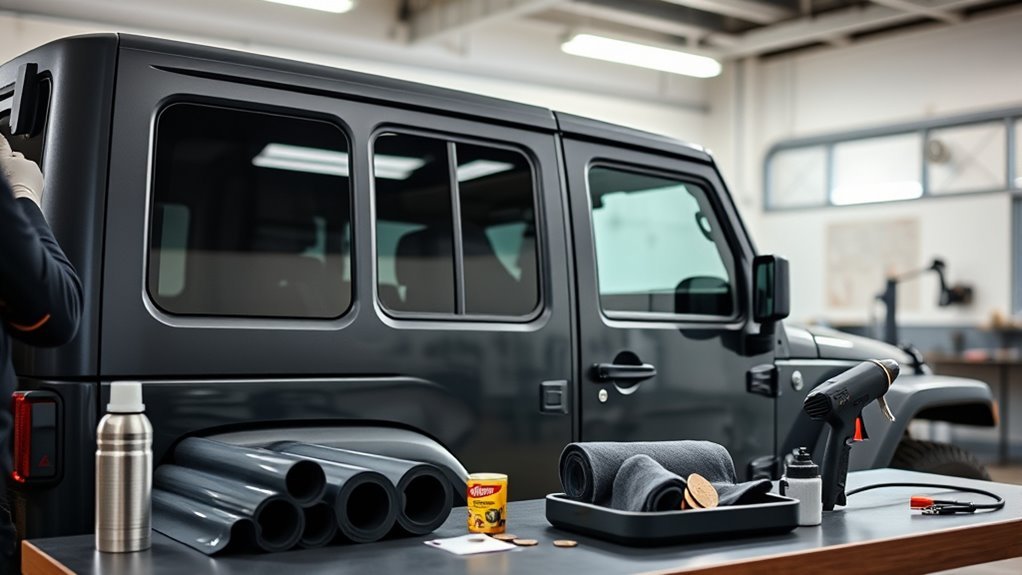
You’ll typically pay $200–$500 to tint a Jeep Wrangler, with full‑vehicle and premium ceramic jobs rising to $350–$900 depending on film, coverage, and labor. Dyed runs $150–$300, carbon $250–$500, and ceramic $400–$900. Expect front‑window jobs at $125–$250, full coverage $279–$750, windshield or sunroof $60–$300, plus removal, custom curves, warranties, and $50–$100/hr labor. Model, window count, and installer quality affect totals — continue for a full cost breakdown and tips.
Jeep Wrangler Tinting: Quick Price Snapshot
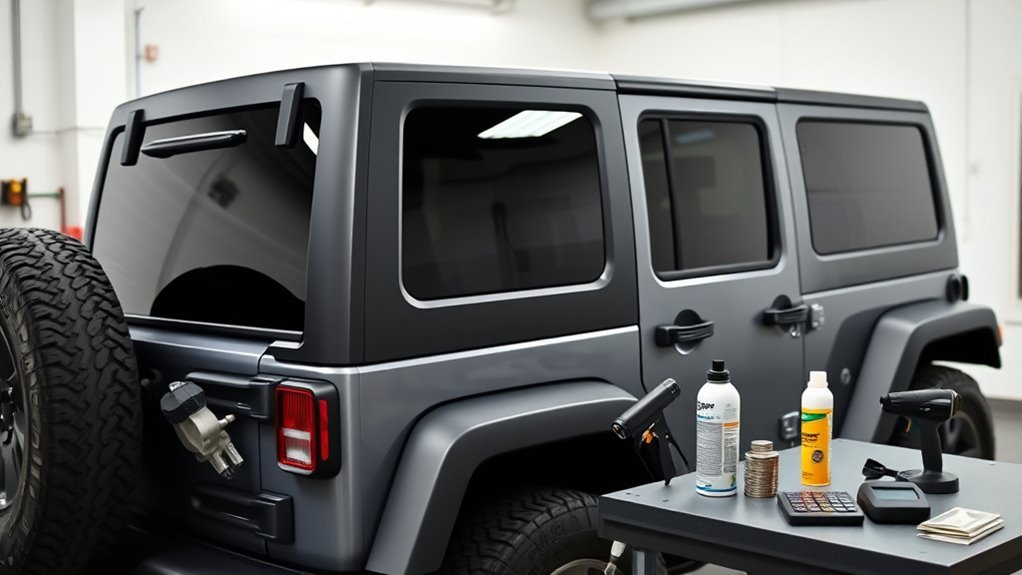
Although prices vary with film type and coverage, you can expect Jeep Wrangler tinting to run roughly $200–$500 for most jobs. You’ll see full-window jobs quoted between $279 and $750, with premium ceramic options at the high end; front-window-only work typically falls in the $125–$250 range. DIY material costs are lower—roughly $60–$125—but professional installations usually start around $99 and often use higher-quality 3M or Llumar films that push complete coverage toward $350–$900.
Focus on measurable tinting benefits: UV reduction, heat rejection, glare control, and privacy—each has quantifiable impact on cabin comfort and material longevity. When planning, use precise installation tips: clean substrate thoroughly, measure and cut panels to specified tolerances, maintain controlled temperature and humidity during application, and allow full cure time per manufacturer spec. Choose professional installers when tolerances and warranties matter to your autonomy and long-term performance.
Cost by Film Type : Dyed, Carbon, Ceramic (Prices & Tradeoffs)
When choosing film for your Jeep Wrangler, you’ll weigh dyed film‘s low cost ($150–$300) and basic UV/privacy benefits against its tendency to fade and limited heat rejection. Carbon film ($250–$500) gives a measurable upgrade in heat rejection and longevity for a moderate price, offering the best value-for-performance balance. Ceramic film ($400–$900) is the premium option with superior heat/UV rejection, optical clarity, and a 10–20+ year lifespan, though it carries the highest upfront cost and may increase labor on complex Wrangler windows.
Dyed Film Pros Cons
If you’re comparing tint types for a Jeep Wrangler, dyed film offers the lowest upfront cost—typically $130–$250—while sacrificing heat rejection and long-term durability compared with carbon and ceramic options. You’ll appreciate dyed film advantages: strong UV blockage (up to 99%), improved privacy, and an affordable, sleek aesthetic that aligns with a liberating, budget-conscious build. But dyed film disadvantages matter: minimal infrared heat rejection, a 2–5 year lifespan with potential fading, and greater vulnerability to scratches and bubbling. You should get professional installation to minimize defects and guarantee legal VLT compliance. Technically, dyed film is a tactical, low-cost solution if you prioritize appearance and UV protection over thermal performance and longevity.
Carbon Film Value
Choose carbon film when you want a midrange balance of upfront cost and long-term performance: for a Jeep Wrangler, carbon runs about $320–$550, sits between dyed ($180–$350) and ceramic ($450–$900), and delivers noticeably better infrared/heat rejection and scratch resistance than dyed film without the premium ceramic price. You’ll get measurable carbon film advantages: improved heat rejection, reduced cabin UV load, and matte stability that resists fading. Installation complexity mirrors quality—precision cutting and edge sealing maximize carbon film longevity, typically extending service life beyond dyed options. For liberation-seeking owners, carbon offers cost-effective protection that preserves interiors and resale value while avoiding ceramic’s premium. Budgeting should include professional labor to realize the material’s full performance.
Ceramic Film Premium
Having covered carbon’s midrange balance, it’s time to compare the premium ceramic option and how its higher upfront cost translates to long-term performance for your Jeep Wrangler. Ceramic films run $600–$900, versus dyed $250–$400 and carbon $400–$600. You’ll get superior heat and UV rejection, longer life (7–10+ years), improved optical clarity, and no electronic interference. Those ceramic benefits reduce cabin temperature and protect occupants and interior surfaces, justifying the premium if you prioritize comfort and longevity. For installation tips, insist on experienced technicians, clean-room prep, precision patterning for curved panels, and heat-free curing to avoid distortion. Expect higher initial spend but lower lifetime replacement frequency—freedom from recurring fades and degraded performance.
Coverage Costs: Front, Full Vehicle, Windshield & Sunroof
One clear way to budget for Jeep Wrangler tinting is to break costs down by coverage: front doors typically run $50–$120 depending on film type, a full-vehicle job ranges $300–$600 based on film quality and installer skill, the windshield costs about $100–$300 when you opt for specialty UV-clear films, and sunroofs are generally $60–$150 depending on size and film. You’ll assess trade-offs: durability, heat rejection, and visibility for each zone. Front window choices prioritize legal visibility and IR/UV control; sunroof tinting focuses on glare and cabin heat without compromising structural fittings.
- Front doors/front window: $50–$120 — prioritize compliant visibility and baseline UV protection.
- Full vehicle: $300–$600 — cohesive aesthetic, highest cost-effectiveness for full coverage.
- Windshield (specialty UV-clear): $100–$300 — targeted UV/IR control, often optional.
- Sunroof tinting: $60–$150 — reduces heat/load through glass; size dictates price.
Choose configurations that maximize autonomy over comfort and protection.
Extra Charges to Expect: Removal, Custom Curves, Warranties, Labor
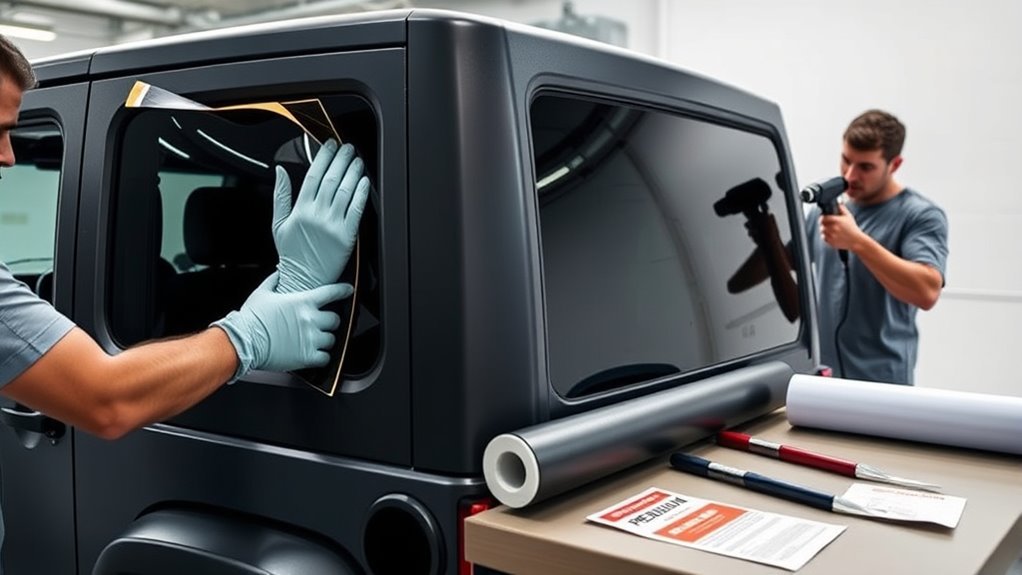
After you pick coverage zones and film types, factor in extra charges that can materially raise the final bill. You’ll pay $50–$150 to remove old tint if present; degraded film requires solvents and scraping, which extends labor. Custom curves and complex shapes common on Wranglers typically add $30–$100 per window because installers use advanced installation techniques, heat-shaping, and pattern development to fit contours precisely. Labor runs $50–$100 per hour; expect 2–4 hours total, so estimate labor costs against job complexity. Choosing warranties adds $100–$200 for defect protection and durability guarantees—worth it if you want long-term freedom from rework. Specialty films (ceramic/infrared) can tack on $100–$400 for performance gains. Factor these line items into your budget and negotiate bundled pricing where possible. After installation, follow clear tint maintenance tips: avoid rolling windows for 48–72 hours and clean with non-ammonia solutions to protect adhesion and preserve your liberated driving experience.
How Wrangler Model & Window Count Affect the Final Price
Your Wrangler’s model size directly changes the scope of the job: a two-door has fewer panels and typically takes less film and labor than a four-door, so you’ll pay less. Count every window (rear quarter, tailgate, windshield, sunroof) because each additional pane adds material and installation time that push costs from the $200–$600 range toward premium levels. If you opt for specialty films like ceramic or windshield/sunroof coverage, expect another $100–$400 per large panel, which compounds with higher window counts.
Wrangler Model Size
Vehicle size and window count directly drive your Wrangler’s tinting price because larger glass area and extra panels mean more material and labor. You’ll evaluate wrangler features and window shapes to estimate cost: body style (2-door vs 4-door) expands surface area; removable tops add irregular panels; rear glass curvature and vent windows demand precision cuts; and aftermarket accessories alter fitment. Larger models push you toward higher material usage and longer install time, shifting dyed-film estimates ($200–$500) upward and ceramic installs ($600–$1,200) even more. Installer reputation multiplies labor rates when complexity rises. Choose film type deliberately to control scope and cost, and pick an installer skilled with Wrangler geometries to secure durable, liberating results.
- Body style impacts total glass area and labor.
- Top configuration adds nonstandard panels.
- Complex window shapes increase install time.
- Film selection scales material and labor cost.
Number Of Windows
Model size sets the stage, but window count determines how much film, cutting time, and seam work you’ll actually pay for. You’ll typically face five windows on a Wrangler (two fronts, two rear sides, rear glass); extra pieces like sunroofs or cargo glass add material and labor. Variations in window dimensions and shapes change waste factor, cutting complexity, and potential removal fees for old tint. Expect full tinting to run roughly $300–$800; premium films and additional surfaces push cost higher. You want control and clarity—choose films balancing tint visibility and heat rejection.
| Window Count | Typical Impact |
|---|---|
| 3 | Minimal cost |
| 5 | Standard quote |
| 6–7 | Higher labor |
| Sunroof | Premium add-on |
| Old tint | Removal fees |
Choosing an Installer: Warranties, Certifications, and Money-Saving Tips
Although price matters, prioritize certified shops that follow local tinting laws and offer written warranties, since certifications indicate adherence to standards and warranties protect against defects and installation failures. You’ll want to verify installer reputation and confirm the specific tinting materials they use; certifications and documented processes reduce risk of bubbling, peeling, or legal noncompliance.
- Request multiple quotes — compare labor, film brand, and warranty duration to quantify value.
- Inspect warranties — ascertain they cover delamination, adhesive failure, and UV degradation with written terms.
- Verify certifications and local compliance — demand proof of training, equipment calibration, and knowledge of window-visibility limits.
- Seek legitimate discounts — ask about seasonal promotions or fleet rates, but avoid prices that imply inferior films or inexperienced technicians.
Make decisions that free you from future hassle: prioritize documented quality over lowest cost, and lock protection with clear, transferable warranties.
Frequently Asked Questions
How Much Is Window Tinting for a Jeep Wrangler?
You’ll pay roughly $200–$750 depending on film and coverage; DIY kits start near $50. Choose premium for tinting benefits and check tinting regulations to stay legal, ensuring professional install for durability and protection.
What Is the Best Tint for a Jeep?
Ceramic tint’s 90%+ heat and UV rejection makes it best; you’ll get superior UV protection and 10–20 year tint longevity. You’ll choose ceramic for clarity, signal safety, durability, and maximum comfort and freedom.
How Much Should a Full Tint Job Cost?
A full tint job should cost roughly $200–$900 depending on cost factors and tint options you choose; expect $250–450 for dyed, $400–600 for carbon, and $600+ for premium ceramic, plus installation time.
How Long Does It Take to Fully Tint a SUV?
Want efficiency and control? You’ll typically spend 2–4 hours to fully tint an SUV, longer if old film’s removed; tinting materials and meticulous installation techniques (ceramic films, prep, shop wait) dictate added time.
Conclusion
You’re close to nailing the right tint for your Wrangler: expect dyed films to be the gentle, budget-friendly option, carbon to offer solid midrange performance, and ceramic to be the premium, keep-your-cool choice. Factor in coverage scope, model-specific glass counts, and possible extras like removal or custom curves. Pick an installer with clear warranties and certifications to avoid surprises, and consider bundled work or seasonal promos to shave costs without cutting corners.


Leave a Reply