
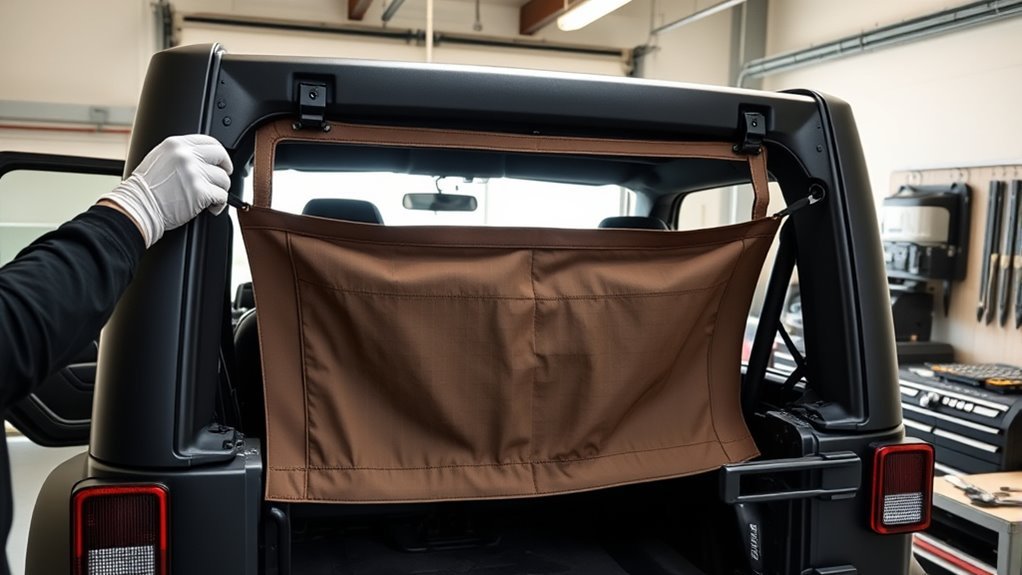
Installing a soft top on a Jeep Wrangler is manageable at home, but the correct parts, hardware, and sequence depend on the Wrangler’s model year, door count, and top design. Before turning a fastener, confirm that the top fits your exact Jeep and open the instructions supplied with the vehicle or soft-top kit.
Quick Answer
To install a Jeep Wrangler soft top, verify the top’s fitment, inventory every bracket and retainer, remove the hard top if necessary, install the model-specific door rails and mounting hardware, attach the top assembly, fit the windows and tailgate bar, then inspect every latch, seal, and fastener before driving.
Key Takeaways
- Confirm the model year, Wrangler generation, door count, top brand, and part number before installation.
- Do not assume every Wrangler uses the same brackets, Torx bits, screws, knobs, or installation order.
- Use the torque values in the exact vehicle or top manual; overtightening can strip door-rail fasteners.
- Warm fabric is easier to stretch and fit, but you should never force a cold window, zipper, latch, or retainer.
- Do not drive until the header, windows, retainers, bows, brackets, and tailgate bar are fully secured.
At a Glance
| Time Required | About 1–3 hours for a complete first-time setup; less when the frame and brackets are already installed |
| Difficulty | Moderate; a second person is strongly recommended for lifting and aligning a complete top assembly |
| Tools Needed | The Torx bits or sockets specified by the manual, ratchet, low-range torque wrench, gloves, protective blankets, and possibly a trim tool |
| Cost | No additional cost if the complete top, hardware, and tools are present; replacement rails, brackets, windows, or missing hardware vary by model and kit |
Confirm Your Jeep and Soft-Top Fitment
“Jeep Wrangler soft top” is not one universal design. A top made for a two-door JK will not fit a four-door JL, and replacement fabric normally cannot be installed unless the matching frame, bows, brackets, door surrounds, and retainers are already on the vehicle.
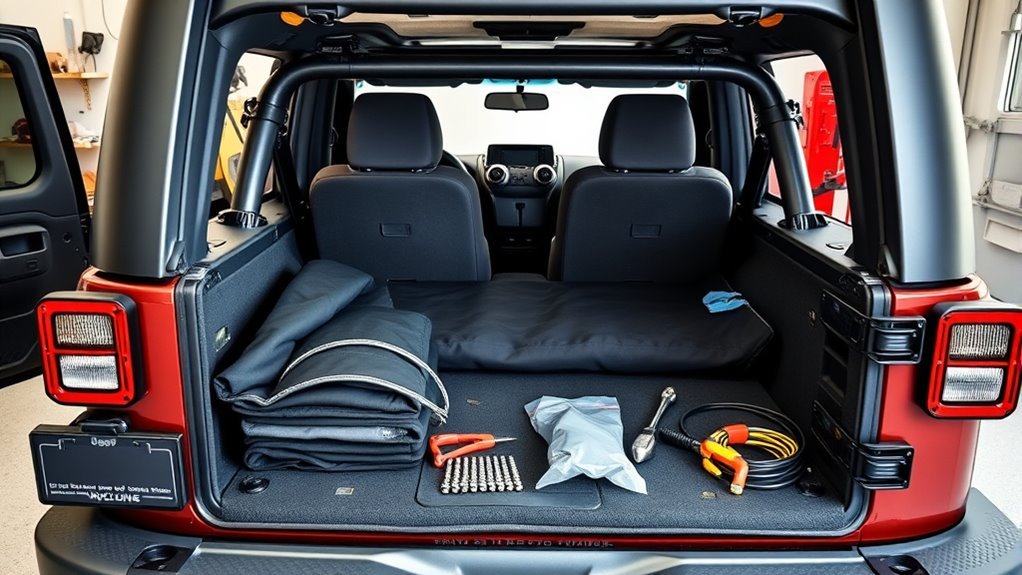
Before opening the kit, confirm all of the following:
- Model year and generation: TJ, JK, and JL tops use different frames, rails, windows, and mounting systems.
- Door count: Two-door and four-door tops are not interchangeable.
- Top type: Identify whether it is a factory-style framed top, frameless top, slant-back top, replacement skin, or complete conversion kit.
- Part number: Match the manufacturer’s part number to the exact Jeep application.
- Existing hardware: Determine whether the kit includes the bows, header, door surrounds, brackets, windows, tailgate bar, and fasteners or expects you to reuse them.
Use the Mopar owner-manual resource to locate instructions for your model year. For an aftermarket top, the part-number-specific manufacturer instructions take priority over a general guide.
Note: Even the door-frame sequence changes by generation. The 2017 JK four-door manual starts with the rear door frame, while the 2024 JL four-door manual starts with the front door rail. Follow the order listed for your exact Jeep.
What You Need for a Successful Soft Top Installation
Lay out every component on a clean blanket and compare it with the kit’s illustrated parts list. A complete installation may include more than fabric and windows.
Common soft-top components include:
- Fabric top or complete bow-and-fabric assembly
- Front header and header latches
- Left and right door surrounds or door rails
- Rear door frames on applicable four-door models
- Pivot brackets, lift-assist brackets, or roll-bar mounting brackets
- Tailgate bar and left and right tailgate retainers
- Left and right quarter windows
- Rear window
- Belt-rail, zipper, hook-and-loop, or channel retainers
- Door-frame knobs, Torx screws, bolts, washers, clips, and straps
- Window-storage bag or protective sheets, when supplied
The original-style parts list of right and left door rails, rear frames, eight Torx screws, two rear retainers, and two top brackets may be correct for a particular kit, but it must not be assumed for every Wrangler.
Common tools include:
- The exact Torx drivers or sockets named in the manual
- A ratchet and suitable extension
- A low-range inch-pound or newton-meter torque wrench
- Gloves and safety glasses
- Clean blankets or fender covers
- A plastic trim tool, if the kit instructions call for one
- A second person for lifting and alignment
Warning: Never substitute a nearly fitting Torx bit. A loose bit can round the fastener, and excess torque can strip the screw or threaded insert. Match the tool and torque to the exact manual.
Preparing Your Jeep for Soft-Top Installation
Park on a level surface, set the parking brake, switch off the ignition, and clear enough space to walk around the Jeep. Keep children and pets away from the work area.
- Read both manuals completely. Review the vehicle’s roof-removal procedure and the soft-top kit instructions before taking anything apart.
- Check the weather. Work in a dry, well-lit area. Fabric stretches more easily when warm. Some Bestop instructions recommend temperatures above 72°F for easier initial fitting, but the exact kit manual controls.
- Protect the Jeep. Place clean blankets over painted edges and create a safe storage area for the hard top, windows, and loose hardware.
- Remove the hard top when required. Disconnect any rear-window electrical plug and washer hose exactly as directed by the vehicle manual. Cap, secure, or store them in their designated holders.
- Inspect seals. Confirm that windshield-header and door-opening seals are clean, undamaged, and lying flat.
- Inspect the top. Look for bent bows, torn seams, broken zippers, cracked windows, missing clips, or corroded hardware.
- Clear nearby wiring. On JK procedures that place the folded top near the left-rear corner, verify that the wiring harness is not tangled in the bows. On other models, inspect the surrounding area for hoses, wiring, and trim that could be pinched.
The exact vehicle and top instructions are part of the installation—not optional background reading. A correct part installed in the wrong sequence can still leak, bind, or become damaged.
Jeep Wrangler Soft-Top Installation Steps
The following sequence is a general workflow for installing a complete factory-style top. Your model-specific manual may place individual steps in a different order.
-
Inventory and identify every part.
Separate left- and right-side components and confirm that all windows, brackets, rails, bows, retainers, screws, knobs, and washers are present. Do not begin if structural hardware is missing.
-
Remove the hard top and incompatible hardware.
Follow the Wrangler manual for panel and hard-top removal. Store the top upright or on an approved cart or stand. Remove only the trim or hard-top hardware that the soft-top instructions identify.
-
Install the door surrounds or door rails.
Seat each locating pin in the correct body opening and place the rail against the windshield or sport-bar seal without folding or pinching the rubber. Use the model-specific order. For example, the 2017 JK manual begins a four-door installation with the rear frame, while the 2024 JL manual begins with the front rail.
-
Start the door-rail fasteners by hand.
Thread each screw or knob several turns before tightening anything fully. If a fastener does not turn smoothly, stop and realign it rather than forcing it. On the 2024 JL, Jeep specifies a T40 driver and a 9 N·m target for the documented door-rail screws. Do not apply that value to a different model or aftermarket kit.
-
Install the soft-top mounting brackets and tailgate retainers.
Attach the pivot, lift-assist, roll-bar, belt-rail, or tailgate brackets included with the kit. Confirm left and right orientation before tightening. Never drill the body unless the exact manufacturer instructions explicitly require it.
-
Position the top assembly.
With a helper, lift the folded top into the cargo area or over the sport bar as directed. Keep the bows controlled and avoid dragging brackets across paint, trim, seats, or seals.
-
Attach the pivots or lift-assist mechanism.
Align the top’s hinge or pivot brackets with the installed vehicle brackets. Start all fasteners by hand, then tighten them in stages using the specified tools and torque.
-
Raise the frame and engage the front header.
Move the bows forward in the order shown by the manual. Set the header above the windshield and engage the latches without forcing them. If the header is several inches short, recheck the bow positions, bracket alignment, and fabric temperature.
-
Attach the side fabric and retainers.
Seat belt-rail edges, plastic channels, hook-and-loop strips, straps, or zipper sections gradually. Work from the location specified by the top manufacturer so tension remains even.
-
Install the quarter windows.
Keep each window level while sliding it into a guide track or starting its zipper. Engage the front, top, rear, and lower retainers in the order shown by the instructions. Do not pull a window by the clear plastic.
-
Install the rear window and tailgate bar.
Slide or clip the rear window into its top retainer, connect any zippers or channels, attach the tailgate bar to the bottom edge, and seat the bar into both side retainers.
-
Set final tension and torque.
Confirm that the bows are fully seated, the fabric is centered, the seals are flat, and the windows are not twisted. Tighten hardware to the specified value only after everything aligns correctly.
Pro Tip: When new fabric feels too tight, place the Jeep in warm shade or indirect sun and allow the material to relax. Apply steady, even pressure to the retainers. Do not use a heat gun, boiling water, pliers, or excessive latch force.
Safety and Pre-Drive Inspection
Before driving, walk around the Jeep and inspect the complete top. A loose window, partially engaged retainer, or unlatched header can be damaged by airflow and may create a road hazard.
| Inspection Point | What to Confirm |
|---|---|
| Front header | Both latches are fully engaged and the header sits evenly against the windshield seal. |
| Door surrounds | Rails are seated, seals are flat, and every fastener is installed and torqued correctly. |
| Windows | Guides, zippers, clips, tabs, and lower retainers are fully engaged. |
| Tailgate bar | The bar is correctly oriented and locked into both side retainers. |
| Fabric and bows | No fabric, strap, wiring, or seal is pinched, twisted, or hanging outside the body. |
| Loose items | Tools, removed fasteners, windows, and storage bags are secured outside the passenger area or cargo space. |
Warning: Do not drive with loose brackets, unsecured windows, partially latched headers, or an improperly stowed top. A fabric top is weather protection; it is not a substitute for seat belts, doors, or the vehicle’s structural safety systems.
Troubleshooting Common Soft-Top Installation Issues
| Problem | Likely Cause and Fix |
|---|---|
| The top will not reach the windshield | Confirm every bow and pivot is in the correct position. Warm the fabric gradually and check that no strap, window, or rear retainer was installed too early. |
| The header latches are extremely tight | Do not use extra leverage. Recheck bracket orientation, bow position, fabric centering, and temperature. New fabric may need time to relax. |
| A door opening leaks | Look for a folded windshield seal, pinched sport-bar cover, loose door rail, twisted window pillar, or retainer that has not fully entered its channel. |
| The rear window will not fit | Verify that both quarter windows are seated correctly and the tailgate bar is oriented properly. Keep the window level and avoid forcing a zipper or guide track. |
| The top flaps or makes excess wind noise | Inspect bow locks, header latches, side retainers, windows, tailgate bar, straps, and fabric centering. Some wind noise is normal, but loose movement is not. |
| A screw will not start | Back it out immediately. Support and realign the rail or bracket, inspect the threads, and start the fastener by hand. Replace damaged hardware rather than forcing it. |
| The top does not sit flush near the rear corner | Check for trapped straps, wiring, trim, or folded fabric. On applicable JK procedures, inspect the left-rear wiring harness near the bows. |
Tips for a Tight, Leak-Free Seal
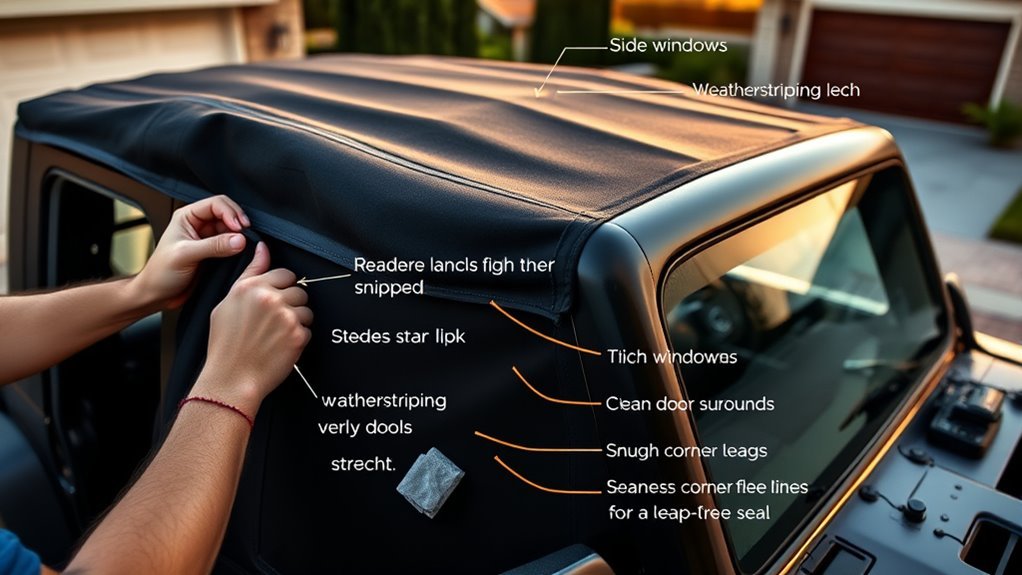
A leak-resistant installation depends on clean seals, correct alignment, even tension, and properly tightened hardware. Adding sealant is rarely the right first response to a new leak.
- Clean dirt, leaves, adhesive residue, and old protectant from sealing surfaces.
- Make sure each rubber seal lies flat and follows the door or windshield opening without a fold.
- Confirm that door surrounds meet adjoining rails evenly.
- Seat window pillars and lower retainers along their entire length.
- Tighten connections only to the specified torque.
- Close the doors and tailgate gently, then inspect the seals from inside and outside.
- Allow new fabric time to settle before making unnecessary adjustments.
After installation, perform a controlled water test with a garden hose and gentle flow. Start low and work upward while another person watches from inside. Do not aim a pressure washer directly at seams, zippers, window edges, or the windshield header.
Note: A leak at one location may begin somewhere higher. Trace the first wet point rather than assuming the nearest visible gap is the source.
Essential Maintenance Tips for Your Soft Top
Regular cleaning and inspection help the top retain its fit, appearance, and weather resistance. Follow the care directions for the exact fabric and window material because vinyl, sailcloth, twill, and clear plastic do not all use the same products.
Clean the fabric safely:
- Remove loose dust with water or a soft brush.
- Use a mild soap or cleaner approved by the top manufacturer.
- Work with a soft-bristled brush or clean sponge.
- Rinse thoroughly so soap does not remain in seams or fabric.
- Let the top dry before folding or long-term storage.
- Apply only a protectant approved for the exact material.
Protect the windows:
- Rinse away grit before wiping clear plastic.
- Use a soft, clean cloth and a window cleaner approved by the top manufacturer.
- Do not use household glass cleaner unless the manufacturer specifically permits it.
- Do not scrape ice from plastic windows.
- Store removable windows flat or in a padded window bag with clean dividers.
- Avoid folding, creasing, or placing heavy items on the windows.
Inspect the top regularly:
- Look for torn fabric, frayed stitching, damaged seams, and cloudy or cracked windows.
- Check zippers, guide tracks, clips, retainers, header latches, brackets, and screws.
- Inspect rubber seals for cuts, flattening, displacement, or trapped debris.
- Correct loose hardware using the specified torque rather than overtightening it.
- Repair damaged parts before high-speed driving or severe weather.
What to Know After Installation
A complete first-time soft-top installation often takes roughly one to three hours, but the actual time depends on the design, temperature, existing hardware, and installer experience. A simple replacement skin may take less time when the correct frame is already installed, while a full hard-top-to-soft-top conversion can take longer.
Proper bracket alignment and flat seals are more important than pulling the fabric as tight as possible. The top should be tensioned and secure, but excessive force can damage latches, zippers, retainers, threaded inserts, and clear windows.
Use the operating procedure in the owner’s manual whenever raising, lowering, or partially opening the top. Secure the folded top with the supplied straps and store removed windows as directed.
Frequently Asked Questions
What do I need to put a soft top on my Jeep Wrangler?
You need a top that matches the exact model year and door count, plus all required bows or frame parts, door surrounds, brackets, windows, tailgate bar, retainers, seals, and fasteners. A replacement fabric kit may not include the structural hardware. Compare the kit with its illustrated parts list before removing the hard top.
Can I install a soft top if my Wrangler came with only a hard top?
Yes, but you normally need a complete conversion kit rather than replacement fabric. The kit must include the model-specific frame, brackets, rails or door surrounds, windows, tailgate hardware, and fasteners that a hard-top-only Jeep may not have.
How long does a Jeep Wrangler soft-top installation take?
Plan on approximately one to three hours for a first-time complete installation. A top with hardware already mounted may take less time. Cold fabric, unclear instructions, missing parts, or a full hard-top conversion can extend the job.
Can one person install a Wrangler soft top?
Some tops can be installed by one experienced person, but a helper makes it safer to lift, center, and hold a complete bow assembly without scratching the Jeep or pinching fingers. Use two people whenever the manufacturer recommends assistance.
Why is my new soft top too tight to latch?
New or cold fabric can contract. Confirm that the bows, pivots, windows, straps, and retainers were installed in the correct order, then allow the top to warm gradually. Never force the header with extra tools or apply concentrated heat.
Can a Jeep Wrangler with a soft top go through an automatic car wash?
Hand washing is the safest choice. Jeep’s fabric-top care guidance says not to use an automatic car wash because the windows may scratch and wax may build up. Brush-style washes are especially risky. Use a touchless wash only when the exact top manufacturer expressly allows it.
How do I stop a newly installed soft top from leaking?
Check for folded seals, loose rails, misaligned door surrounds, incomplete window retainers, a twisted tailgate bar, or fabric trapped beneath a bracket. Correct the fit before adding sealant. Test with gentle hose flow to locate the highest point where water enters.
Will a JK soft top fit a JL Wrangler?
No. JK and JL tops use different body dimensions, rails, brackets, windows, and operating mechanisms. Use a top whose manufacturer specifically lists your model year, generation, and door count.
Conclusion
A successful Jeep Wrangler soft-top installation starts with correct fitment, not force. Verify the model and kit, inventory the hardware, follow the specified door-rail and bracket sequence, and use the published torque values. Once the top is installed, inspect every latch, seal, window, and retainer before driving. Careful installation and regular maintenance will help the top stay secure, operate smoothly, and resist leaks.
Sources
- Mopar Jeep Wrangler Owner’s Manual Resources — model-year-specific vehicle and roof instructions
- 2024 Jeep Wrangler Owner’s Manual — JL door-rail installation, torque, sealing, operation, and fabric-top care
- 2017 Jeep Wrangler Owner’s Manual — JK door-frame, pivot-bracket, wiring-harness, and first-time soft-top procedures
- Bestop Frequently Asked Questions — manufacturer guidance on soft-top use, washing, and care
- Bestop Trektop NX Twill Installation Instructions — installation-time example, tool guidance, warm-fabric fitting, and safety warnings
- Bestop Supertop NX Installation Instructions — fabric, protectant, and clear-window maintenance guidance







Leave a Reply