
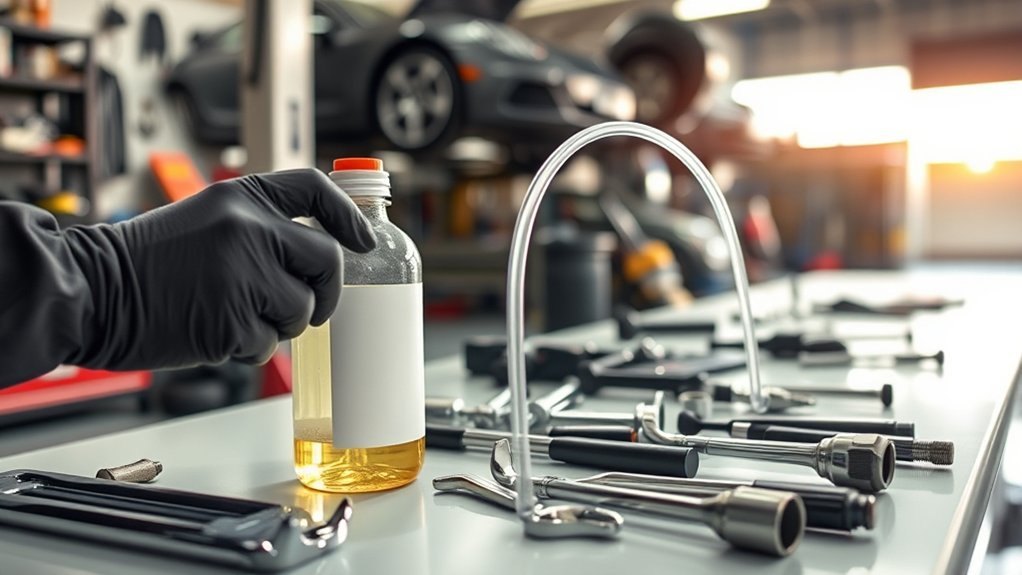
Brake fluid maintenance is essential for your vehicle’s safety. Degraded brake fluid can decrease performance and lead to brake fade. To flush fluid, gather tools like a brake bleeder kit and wear safety gear. Replace old fluid from the reservoir and bleed each wheel in order, checking for air bubbles. It’s advised to flush every three years or 30,000 miles. For peak performance, you’ll want to understand the signs of degradation and best practices—discover these important details next.
Why Brake Fluid Maintenance Is Crucial for Your Safety
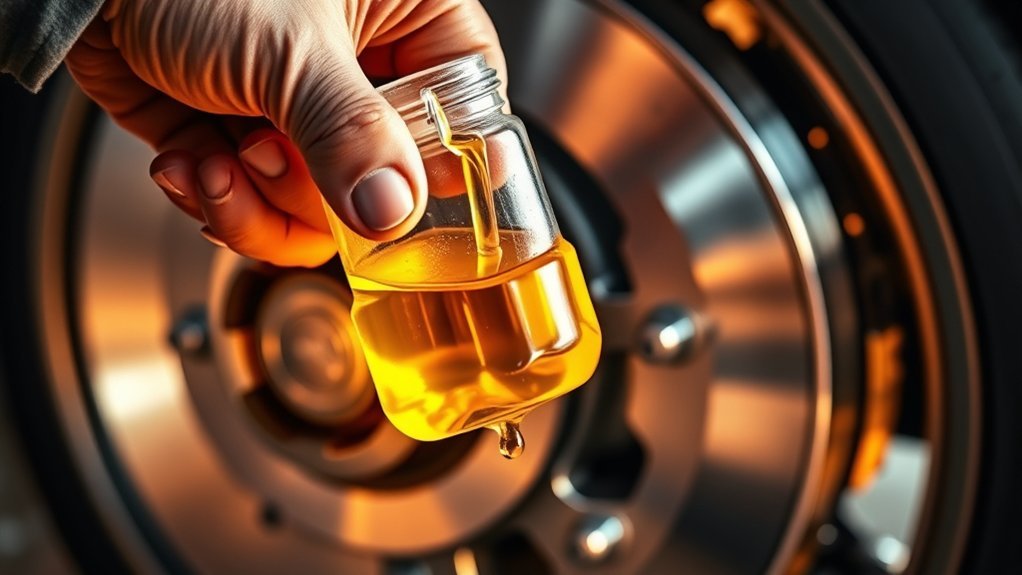
When you overlook brake fluid maintenance, you put your safety at risk. Brake fluid is hygroscopic, meaning it absorbs moisture, which can corrode brake system components over time. This degradation lowers the boiling point, increasing the likelihood of brake fade during critical moments.
You might notice signs like a spongy pedal or discolored fluid—these indicate potential failure and require immediate action.
Regular maintenance, including flushing the brake fluid every three years or 30,000 miles, is essential. This guarantees peak brake performance and enhances the longevity of your brake system.
What Happens When Brake Fluid Degrades?
When brake fluid degrades, it increases the risk of corrosion within your braking system, leading to potential damage of critical components.
The fluid also absorbs moisture, which lowers its boiling point and can cause brake fade during operation. As a result, you may notice a spongy brake pedal and diminished braking response, signaling the need for immediate attention.
Increased Corrosion Risk
As brake fluid degrades, it becomes increasingly corrosive, posing significant risks to your vehicle’s braking system. This hygroscopic fluid absorbs moisture from the air, leading to corrosion of critical components like calipers and wheel cylinders.
As moisture accumulates, you’ll notice a color change from clear to rusty brown, signaling degradation. Regular fluid inspection is crucial; a spongy brake pedal and poor response are clear indicators of corrosion-related issues.
To mitigate these risks, practice corrosion prevention through routine brake fluid flushing every three years or 30,000 miles. This maintenance guarantees peak brake performance and extends the life of your braking system, liberating you from costly repairs and enhancing safety on the road.
Lower Boiling Point
Degradation of brake fluid leads to a critical issue: a lowered boiling point that can severely impact braking performance. Fresh DOT 3 brake fluid boasts a boiling point of approximately 205°C (401°F).
However, as it absorbs moisture from the air, this boiling point can plummet to around 140°C (284°F). This reduction heightens the risk of brake fade during intense braking, compromising your ability to stop effectively.
Additionally, the fluid changes color from clear to rusty brown, signaling corrosion within the brake system. Increased moisture not only jeopardizes brake performance but also invites corrosion, risking caliper and wheel cylinder seizure.
Recognizing these signs is essential; they indicate the urgent need for maintenance to preserve your vehicle’s braking integrity.
Spongy Brake Pedal
A spongy brake pedal can signal a serious issue within your braking system, often linked to degraded brake fluid. When brake fluid absorbs moisture, it lowers its boiling point and introduces air into the brake lines, compromising pedal feel.
You might notice the fluid changing color from clear to rusty brown, indicating corrosion in system components and decreased braking efficiency. As moisture content increases, you risk experiencing brake fade, where your vehicle’s response diminishes under heavy use, further contributing to that spongy sensation.
Additionally, worn components like calipers or wheel cylinders may seize due to old fluid corrosion. To maintain ideal brake performance and prevent spongy pedal issues, flush and replace your brake fluid every three years or 30,000 miles.
How to Flush Brake Fluid: A Step-by-Step Process
When you’re ready to flush your brake fluid, start by using a turkey baster or syringe to remove the old fluid from the master cylinder reservoir. Refill it with fresh brake fluid to prevent air entry during the process. Next, attach clear tubing to the brake caliper’s bleeding nipple, directing it into a catch container to monitor fluid cleanliness.
| Step | Action |
|---|---|
| 1. Start Bleeding | Begin at the wheel farthest from the master cylinder. |
| 2. Apply Pressure | Firmly press the brake pedal to release air bubbles. |
| 3. Repeat | Bleed each wheel multiple times, checking fluid levels frequently. |
After completing the flush, inspect all brake lines and calipers for leaks, ensuring clear, fresh fluid flows through the system. Using the right brake fluid types and effective bleeding techniques enhances your vehicle’s braking performance and safety.
Choosing the Right Brake Fluid for Your Vehicle
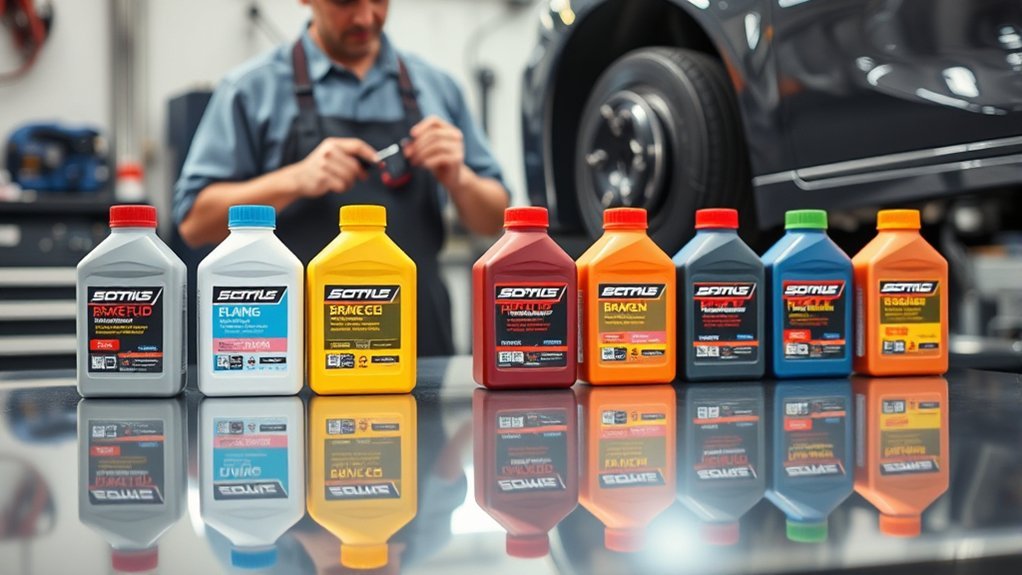
After flushing your brake fluid, selecting the appropriate type for your vehicle is vital for maintaining ideal braking performance.
Selecting the right brake fluid type after flushing is crucial for optimal braking performance.
You’ll encounter two primary brake fluid types: DOT 3 and DOT 4. DOT 3 is suitable for standard vehicles, while DOT 4 is designed for high-performance or heavier vehicles due to its higher boiling point.
It’s important to check your vehicle specifications, often located on the reservoir cap, to guarantee you’re using the correct fluid. Using the wrong brake fluid can lead to damage to brake components, as each type has distinct chemical compositions and performance characteristics.
Keep an eye on your brake fluid condition; discolored or degraded fluid signals contamination, indicating it’s time for a flush or replacement.
Essential Tools for a Brake Fluid Flush
To effectively perform a brake fluid flush, you’ll need a few essential tools, including a brake bleeder kit and clear tubing for fluid collection.
Don’t forget safety gear like gloves and protective eyewear to shield against brake fluid’s corrosive properties.
Additionally, make certain you have the correct type of brake fluid on hand, as specified for your vehicle, to maintain system compatibility.
Necessary Tools Overview
Gathering the right tools is essential for a successful brake fluid flush, as it guarantees efficiency and safety throughout the process.
Start with a brake bleeder kit, which includes a one-way valve to prevent backflow of old fluid. Clear vinyl tubing is vital for directing expelled brake fluid into a catch container, allowing you to monitor fluid cleanliness effectively.
Use a turkey baster or large syringe to remove old brake fluid from the master cylinder reservoir before adding fresh fluid. Wrenches are needed to loosen and tighten the bleeder nipples on each brake caliper or drum.
Safety Gear Requirements
When tackling a brake fluid flush, prioritizing safety gear is essential for protecting yourself from the corrosive effects of brake fluid.
Start with high-quality rubber or nitrile gloves, as these glove types provide a reliable barrier against harsh chemicals. Next, don protective eyewear options like safety goggles or face shields to shield your eyes from splashes. It’s vital to have these safeguards in place before you begin.
Additionally, familiarize yourself with the brake line locations and the specified brake fluid for your vehicle, ensuring you’re prepared for the task.
Having a turkey baster or large syringe, a wrench for the bleeder nipple, and clear vinyl tubing to manage fluid will enhance safety and efficiency throughout the process.
Step-by-Step Guide: Flushing Your Brake Fluid Safely
Flushing your brake fluid is an essential maintenance task that guarantees your braking system operates efficiently and safely.
Flushing your brake fluid is crucial for maintaining a safe and efficient braking system.
Follow these steps for a thorough flush, ensuring the best performance of your brake system components:
- Use a turkey baster or large syringe to extract old fluid from the master cylinder reservoir.
- Connect a brake bleeder kit with clear vinyl tubing to the bleeder nipple on each caliper.
- Start with the wheel furthest from the master cylinder, applying firm pressure on the brake pedal to push fluid and release air bubbles.
Repeat the bleeding process for each wheel, checking the master cylinder fluid level frequently.
Maintain it above the minimum mark, and look for clear fluid flowing through the tubing.
After the flush, inspect all brake lines for leaks or damage and confirm that your brake pedal feels firm before taking your vehicle for a test drive.
Mistakes to Avoid When Flushing Brake Fluid
To guarantee a successful brake fluid flush, it’s crucial to avoid common mistakes that can compromise your braking system’s performance.
First, always check brake fluid compatibility; using the wrong type can damage components and reduce efficiency.
Next, prepare your work area properly—ensure adequate ventilation and protect surfaces, as spilled brake fluid can cause corrosion.
During the bleeding process, don’t neglect to check for air bubbles; they can create a spongy brake pedal, leading to unsafe conditions.
Keep the master cylinder reservoir filled throughout the flush; letting it run dry can introduce air into the system, requiring further bleeding.
Finally, never skip a post-flush inspection. Look for leaks and damage, as overlooking these issues can result in brake failure.
How Often to Flush Brake Fluid?
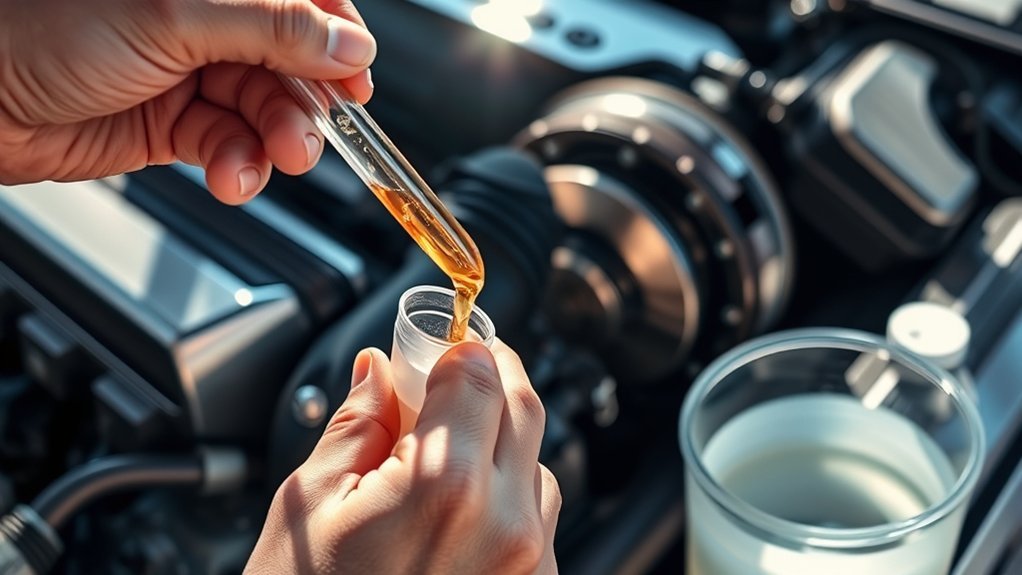
Every three years or 30,000 miles, you should consider flushing your brake fluid to guarantee peak performance and safety. This regular maintenance helps prevent moisture-related degradation that can corrode brake system components, ensuring reliable braking efficiency.
Additionally, flushing is essential whenever you replace brake pads or shoes, often every 35,000 to 60,000 miles, to avoid brake fade and potential failure.
- Monitor for signs like discolored fluid or spongy brake pedals.
- Understand the different brake fluid types and their specific properties.
- Prioritize proactive maintenance, as many manufacturers don’t specify fluid change intervals.
When to Check Your Brake Fluid?
You should check your brake fluid every three months or 3,000 miles as part of your regular maintenance schedule.
Pay attention to the fluid’s color; clear indicates it’s in good condition, while rusty brown shows it’s time for a flush.
Additionally, watch for any signs of spongy pedals or reduced braking response, which could indicate moisture or air in the system.
Regular Maintenance Schedule
While regular maintenance of your brake fluid is often overlooked, it plays an essential role in ensuring your vehicle’s braking system functions effectively.
To maintain ideal performance, consider the following schedule:
- Flush brake fluid every 3 years or 30,000 miles.
- Replace brake fluid whenever you change brake pads or shoes (typically every 35,000 to 60,000 miles).
- Regularly check brake fluid levels and condition to monitor moisture content.
Since manufacturers rarely specify brake fluid change intervals, establishing a maintenance frequency is important for safety.
Different brake fluid types can absorb moisture at varying rates, increasing the risk of brake fade and component failure.
Signs Of Degradation
When brake fluid degrades, it can lead to critical issues within the braking system, which is why regular checks are essential.
Look out for brake fluid discoloration; if it shifts from clear to rusty brown, it signals potential corrosion in your brake components.
A spongy brake pedal feel often indicates air contamination in the brake lines or degraded fluid, compromising your stopping power.
If you notice poor braking response, where your vehicle feels unresponsive, that’s a critical sign to inspect the fluid.
An illuminated ABS warning light can also hint at degraded fluid affecting system performance.
Finally, unusual brake noises like grinding or squeaking may indicate that your brake fluid isn’t performing at its best, warranting immediate inspection.
Essential Post-Flushing Checks for Optimal Brake Performance
After flushing the brake fluid, conducting essential post-flushing checks is crucial to guarantee peak brake performance.
Start by performing a thorough caliper inspection and confirming there’s no fluid leakage. Check the brake lines for any signs of damage, as this may compromise your system’s integrity.
Begin with a detailed inspection of the calipers, ensuring no fluid leaks and checking for any damage to the brake lines.
Next, verify that clean fluid flows through the system by inspecting the fluid color in the bleeder tubing. If it’s clear, you’ve successfully removed the old fluid and air.
Frequently monitor the master cylinder reservoir’s fluid level during the bleeding process to avoid introducing air back into the system.
Finally, before taking your vehicle for a test drive, confirm that all four corners of the brake system have been properly bled. A firm brake pedal indicates that you’re ready to hit the road safely.
- Perform caliper inspection.
- Conduct thorough leak detection.
- Confirm fluid clarity in bleeder tubing.
Frequently Asked Questions
Can I Flush Brake Fluid Myself or Should a Professional Do It?
You can flush brake fluid yourself if you understand brake fluid types and have the right tools. However, for ideal safety and precision in DIY maintenance, consider consulting a professional, especially if you’re unsure.
How Much Does a Brake Fluid Flush Typically Cost?
A brake fluid flush typically costs between $70 and $120. However, remember, the type of brake fluid and additional services can impact this cost considerably, highlighting the irony of saving money versus ensuring safety on the road.
What Are the Signs That My Brake Fluid Needs Flushing?
If you notice a spongy brake pedal, unusual noises, or dark, cloudy fluid, it’s time for a brake fluid flush. These are signs of brake fluid deterioration, essential for effective brake system maintenance. Don’t ignore them!
Is It Safe to Mix Different Types of Brake Fluid?
It’s not safe to mix different types of brake fluid. Brake fluid compatibility is vital; mixing can lead to detrimental mixing consequences, such as reduced performance and potential brake failure. Always use the manufacturer’s specified fluid.
What Should I Do if I Accidentally Spill Brake Fluid?
If you spill brake fluid, act swiftly—like a flame extinguishing smoke. Prioritize safety: wear gloves, absorb the spill with rags, and dispose of them properly. Clean the area thoroughly to avoid damage and guarantee brake fluid safety.
Conclusion
To sum up, maintaining your brake fluid isn’t just a routine task; it’s a lifeline that keeps you safe on the road. By regularly flushing and checking your brake fluid, you guarantee your vehicle responds when you need it most, like a trusted friend in a moment of crisis. Don’t overlook this essential maintenance—take action today and drive with confidence, knowing your brakes are ready to perform at their best when it matters most.







Leave a Reply