

Muffler deletes are illegal across the U.S. because of noise regulations in all 50 states. Each state has specific rules; for instance, California enforces a strict 95 dB limit while others, like Tennessee, cap it at 84 dB. Violating these laws can lead to hefty fines and failed inspections. If you’re considering modifying your exhaust, understanding your state’s regulations is essential. Stick with us to discover more about compliant alternatives and the risks involved.
What Is a Muffler Delete and How Does It Work?
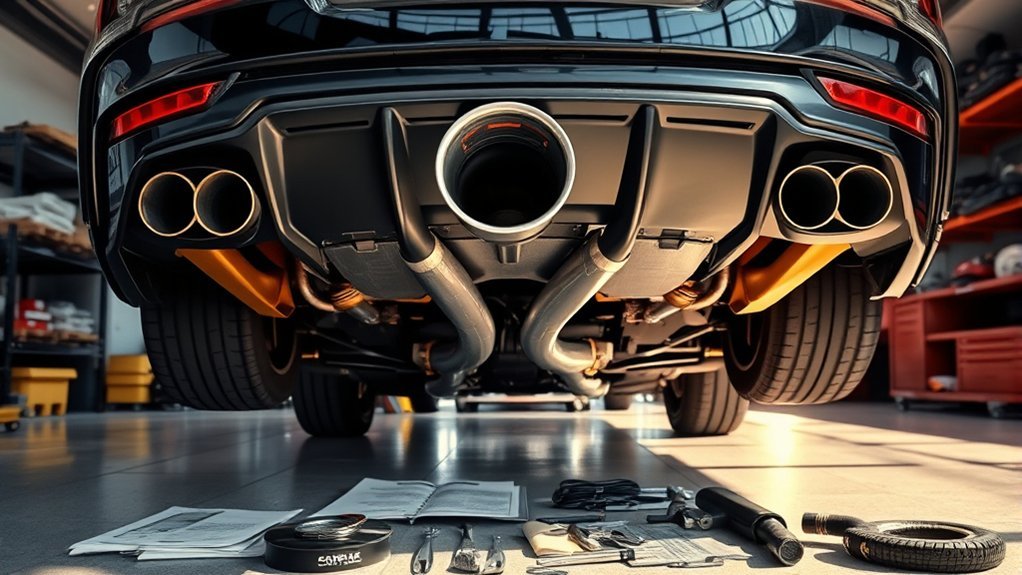
A muffler delete is a popular modification among car enthusiasts that involves removing the vehicle’s muffler and replacing it with a straight pipe. By eliminating this component, you greatly boost sound levels, creating a more aggressive and exhilarating engine roar.
Mufflers come in various types, each designed to dampen noise through chambers and baffles, but with a muffler delete, you strip away those barriers, letting your engine’s true voice shine.
While this modification offers a thrilling driving experience, it can negatively impact backpressure, potentially affecting engine performance. You’ll enjoy a heightened auditory experience, but be aware that it could come with trade-offs.
Why Are Muffler Deletes Generally Considered Illegal?
While many car enthusiasts revel in the exhilarating sound of a muffler delete, the modification is often deemed illegal due to stringent noise regulations across the U.S. Muffler function is critical for controlling sound levels, and deleting it can lead to excessive noise pollution.
Many states enforce specific decibel limits, with California setting a threshold of 95 decibels—levels that muffler deletes frequently surpass. This creates a nuisance for communities, leading to stricter enforcement of noise ordinances.
If you opt for a muffler delete, be aware that you might face penalties, including fines ranging from $10 to $500 or even failed vehicle inspections. The thrill of a louder engine comes with risks, as the law aims to guarantee that all vehicles maintain an acceptable noise level.
Opting for a muffler delete may lead to fines or failed inspections, as noise regulations enforce acceptable sound levels.
Ultimately, while the roar may be tempting, it’s essential to navigate these legal waters wisely.
Explore State-Specific Muffler Delete Regulations
When it comes to muffler deletes, understanding the specific regulations in your state is essential.
Each state has its own noise limits and enforcement practices, which can greatly impact your vehicle’s legality on the road.
Knowing these nuances can help you avoid fines and guarantee you’re compliant with local laws.
Muffler Delete Legalities Overview
Understanding the legal landscape surrounding muffler deletes is essential for vehicle owners who consider modifications to their exhaust systems. Muffler deletes are illegal in all 50 states as they violate regulations requiring a functioning exhaust system that controls noise levels.
States like California and Texas specifically mandate that your vehicle must have a working muffler, restricting modifications that exceed factory-installed noise levels. Noise limits vary; for instance, Tennessee allows 84 dB, while California caps it at 95 dB for vehicles under 6,000 pounds.
Additionally, states such as Georgia prohibit exhaust cutouts and bypass devices. Ignoring these laws can lead to fines and failed inspections, highlighting the need for you to understand local regulations before making changes to your exhaust system.
State-Specific Noise Limits
The legality of muffler deletes varies considerably across the U.S., largely due to state-specific noise regulations.
In California, for instance, a strict sound limit of 95 decibels makes muffler deletes illegal, as they typically exceed this threshold.
Meanwhile, Tennessee sets a maximum of 84 decibels at 25 feet for passenger cars, prohibiting any modifications that surpass this limit.
Georgia takes a hard stance, outright banning cutouts and bypass devices, which encompasses muffler deletes.
In Michigan, excessive noise can lead to citations, with regulations measuring sound levels from a distance.
Local enforcement can also differ; in Los Angeles, over 500 citations are issued monthly for modified exhaust systems, primarily targeting those muffler deletes.
Stay informed about your state noise regulations to avoid penalties.
What Are the Risks of Performing a Muffler Delete?
While you might be tempted to perform a muffler delete for a more aggressive sound or improved performance, there are significant risks to contemplate.
The legal implications can be serious; many states enforce strict noise regulations, meaning you could face police stops or hefty fines for excessive community noise. If your area has annual vehicle inspections, the absence of a muffler might lead to a failure, forcing you to incur costly repairs to comply with the law.
Furthermore, the loudness associated with a muffler delete can trigger complaints from neighbors, potentially resulting in legal repercussions.
Ultimately, this modification could hurt your vehicle’s resale value as potential buyers may shy away from a car known for its illegal status and noise levels.
Before jumping into a muffler delete, weigh these risks carefully to avoid unforeseen challenges.
How Do Muffler Deletes Affect Vehicle Performance and Emissions?

When you consider a muffler delete, it’s important to weigh the potential performance gains against the impact on emissions and backpressure.
While older vehicles might see slight improvements in throttle response, modern engines are engineered for peak performance with mufflers intact.
Additionally, removing the muffler doesn’t affect emissions filtering, leaving you with the same exhaust pollutants but often with a lot more noise.
Performance Gains Overview
Removing the muffler can offer some performance gains, particularly in older vehicles where reducing exhaust backpressure might enhance engine efficiency.
However, performance misconceptions abound—many enthusiasts chase the louder sound without realizing that modern vehicles often yield negligible improvements.
In fact, optimizing exhaust systems means that your ride mightn’t benefit at all, and you could even disrupt the finely tuned backpressure essential for peak performance.
While you might enjoy a more aggressive growl, the actual horsepower gain typically hovers below 5%.
It’s important to remember that mufflers don’t filter pollutants; catalytic converters do.
Emissions Control Impact
Muffler deletes can greatly impact your vehicle’s emissions control and overall performance, particularly depending on local regulations and the specifics of your vehicle.
While you might think removing the muffler enhances performance, especially in older models, modern cars often see little benefit. The catalytic converter handles emissions control, so your vehicle can still meet emissions standards, regardless of muffler presence.
However, it’s important to note that many states enforce strict noise regulations. Exceeding these limits could lead to failed inspections, affecting your vehicle’s legality.
Backpressure Considerations
The effect of muffler deletes on backpressure can greatly influence your vehicle’s performance and emissions. While you might think decreasing backpressure could enhance performance, modern engines rely on specific backpressure levels for ideal exhaust optimization.
In older vehicles, you may experience slight gains, but for most, a muffler delete can be counterproductive, leading to diminished efficiency. Additionally, removing the muffler won’t improve emissions control, as that’s primarily the job of catalytic converters.
Some states even mandate a minimum backpressure level for legality, so you could inadvertently violate regulations. Ultimately, the performance impact you’re chasing is often minimal, with marginal horsepower gains overshadowed by potential legal and operational challenges.
Consider these backpressure effects before making any changes.
Legal Alternatives to Muffler Deletes You Should Consider
While many car enthusiasts might consider muffler deletes for a more aggressive sound, there are several legal alternatives that can enhance your vehicle’s audio experience without the risk of fines or violations.
Cat-back exhaust systems replace components from the catalytic converter back, providing a louder sound while staying compliant with noise regulations. If you’re looking for something less invasive, axle-back systems upgrade only the rear section, offering enhanced audio without legal issues.
For sound customization, high-flow mufflers from brands like SPELAB can boost performance while adhering to noise limits.
Additionally, electric exhaust cutout valves let you control your exhaust sound at the touch of a button or through an app, providing flexibility without breaking the law.
Finally, consider aftermarket mufflers designed to reduce drone and improve tone, ensuring you enjoy a thrilling sound without the drawbacks of muffler deletes.
Tips for Complying With State Muffler Regulations
Understanding your state’s muffler regulations is essential before making any exhaust modifications. Start by researching specific noise regulations, as states like California impose strict 95 dBA limits on vehicles.
Familiarizing yourself with your state’s muffler regulations is crucial before altering your exhaust system.
You’ll want to check local noise ordinances too; enforcement varies greatly between urban and rural areas, and excessive noise can lead to fines.
When considering muffler types, remember that all states require a functional exhaust system to prevent excessive noise. Many prohibit modifications that amplify noise beyond factory specifications.
To stay compliant, consider professional installation of aftermarket mufflers that meet state laws, helping you avoid legal issues and ensuring your vehicle passes annual inspections.
Always consult your local DMV or transportation authority for guidelines on exhaust modifications, as some states may require decibel testing or have specific regulations about the modifications you can make.
Staying informed empowers you to enjoy your vehicle’s performance while keeping it legal.
How to Choose a Compliant Aftermarket Muffler
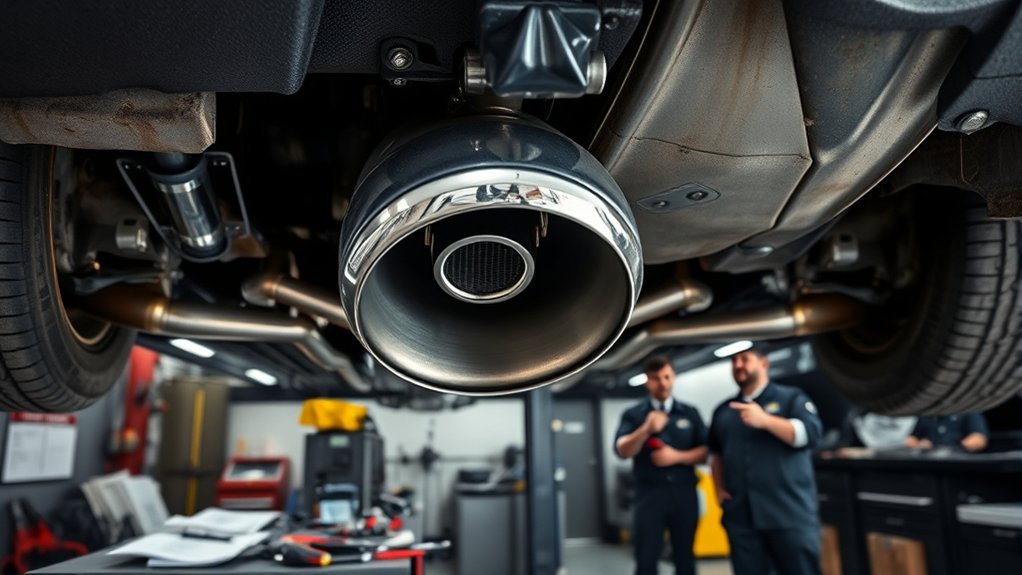
Choosing a compliant aftermarket muffler can greatly enhance your vehicle’s performance and sound without running afoul of state regulations. Start by verifying your state’s noise limits, like California’s maximum of 95 decibels for vehicles under 6,000 pounds.
Look for high-flow muffler types that boost sound enhancement without exceeding factory levels, as some regions prohibit any noise amplification.
Research local laws, as enforcement can vary greatly. Some places may even require sound level testing for compliance.
To simplify your search, consult certified modification shops that know the ins and outs of state regulations; they can recommend mufflers tailored to your specific vehicle.
Finally, opt for reputable brands that offer performance mufflers designed to improve sound quality while maintaining backpressure and emissions compliance. This guarantees you strike the perfect balance between exhilarating sound and legal responsibility.
What to Keep in Mind Before Modifying Your Exhaust?
Before diving into modifications, it’s essential to reflect on how your changes will align with local regulations and affect your vehicle’s performance. Understanding exhaust modification considerations is key to avoiding legal troubles and ensuring your ride remains enjoyable.
| Factor | Considerations | Impact on Performance |
|---|---|---|
| Noise Regulations | Research state-specific limits | Potential fines for violations |
| Vehicle Age | Older vehicles may see slight gains | Modern systems often optimized |
| Modification Type | Muffler deletes may be louder | Balance between sound and legality |
Stay aware of noise regulation awareness in your area. While a roar can feel liberating, it might impact resale value or attract unwanted attention. Consulting with experienced professionals can help navigate these waters, ensuring your modifications celebrate your freedom without the headache of legal repercussions.
Frequently Asked Questions
Which States Allow Muffler Deletes?
You won’t find any states that officially allow muffler deletes due to strict state regulations. Exhaust modifications often lead to noise violations, so it’s essential to check local laws before making any modifications.
Will Cops Pull You Over for Muffler Delete?
Yes, cops will pull you over for a muffler delete if your exhaust sound violates regulations. The consequences can be hefty fines, especially in urban areas where noise complaints echo through the streets. Stay aware!
Are Muffler Deletes Street Legal?
Muffler deletes aren’t street legal due to noise regulations. While you might love the aggressive muffler delete sound and potential performance benefits, risking fines or police stops isn’t worth it. Stay informed and compliant!
In What States Is Modified Exhaust Illegal?
In many states, modified exhaust systems can run afoul of noise regulations. You’ll find strict rules in places like California and Georgia, where excessive noise from exhaust modifications isn’t just frowned upon; it’s illegal.
Conclusion
So, while you might think a muffler delete is the ultimate way to release your vehicle’s roar, you’re actually flirting with legal trouble in many states. Ironically, the very sound you crave could lead to fines or even a failed inspection. Instead of risking it all for noise, why not explore compliant alternatives that keep your ride both thrilling and street-legal? After all, a little sound can still turn heads without landing you in hot water.







Leave a Reply