

A muffler delete removes the factory muffler and replaces it with straight exhaust tubing. It may make a vehicle much louder, but that does not mean it is legal for street use. Many states require a working muffler, prohibit excessive or unusual noise, ban exhaust bypass devices, or use a combination of those rules.
The exact answer depends on your vehicle, state statute, city or county noise ordinance, inspection program, and how the exhaust is tested. Before changing anything, check the current rules where the vehicle is registered and driven.
Quick Answer
A muffler delete is commonly illegal or legally risky on a street-driven vehicle because many states require an operating muffler or prohibit excessive exhaust noise. There is no single nationwide decibel rule. Your state law, local ordinance, vehicle class, inspection rules, and approved test procedure determine compliance.
Key Takeaways
- Many states require a functioning muffler even when the vehicle stays below a stated sound limit.
- California’s 95 dBA provision is a test-based compliance rule for qualifying vehicles, not blanket permission to remove the muffler.
- Tennessee currently uses a 95 dB provision for non-motorcycles, not the often-repeated 84 dB-at-25-feet figure.
- Removing only a rear muffler is different from removing a catalytic converter, diesel particulate filter, SCR system, sensor, or other emissions control.
- A quality axle-back or cat-back system with a real muffler is usually a safer choice than a muffler delete or exhaust cutout.
Legal note: This article provides general information, not legal advice. Exhaust laws and local ordinances can change. Confirm the current statute, inspection rule, and municipal code that apply to your vehicle before modifying it.
What Is a Muffler Delete and How Does It Work?
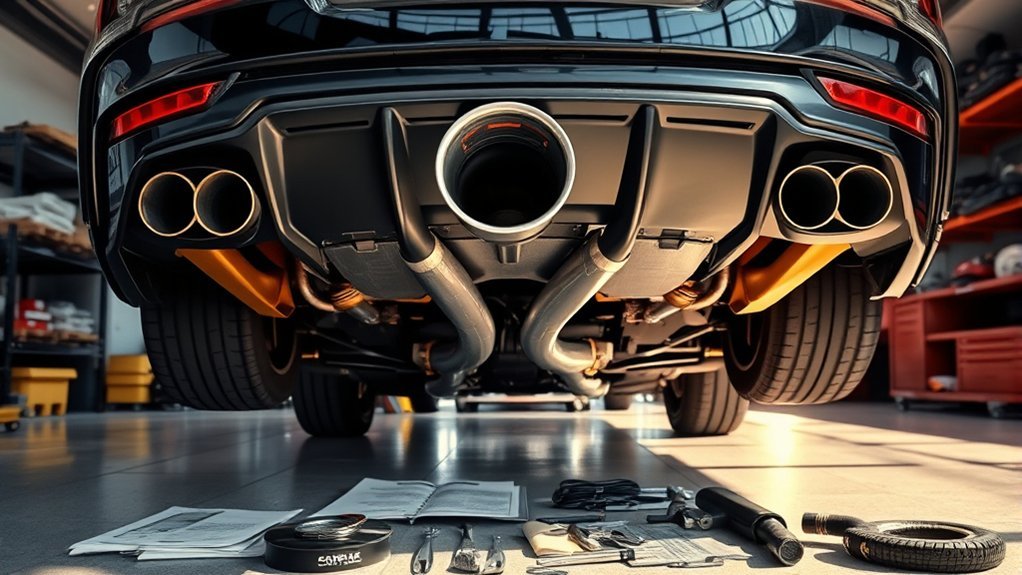
A muffler delete removes the sound-reducing muffler from the rear portion of an exhaust system. A shop normally cuts or unbolts the muffler and installs a section of pipe in its place. The catalytic converter, resonator, oxygen sensors, and other parts may remain, depending on the vehicle and where the work is performed.
Mufflers use chambers, perforated tubes, packing material, or a combination of designs to reduce sound waves. Removing that component usually creates a louder cold start, sharper acceleration noise, and more sound inside the cabin.
The modification may also create low-frequency drone at steady highway speeds. Results vary widely because turbochargers, resonators, pipe diameter, engine displacement, cylinder layout, active exhaust valves, and cabin insulation all affect the final sound.
Why Are Muffler Deletes Generally Considered Illegal?
Muffler deletes are commonly unlawful on public roads for one of three reasons:
- The law requires a muffler. Removing it violates the equipment rule even when the driver believes the vehicle is not excessively loud.
- The law prohibits excessive or unusual noise. A deleted system may be cited because of its sound, especially during acceleration or a cold start.
- The law prohibits cutouts, bypasses, or noise-increasing modifications. These rules can apply even when the vehicle has other exhaust components.
Some jurisdictions use a specified sound test. Others allow enforcement based on a missing muffler, an officer’s observation of excessive noise, comparison with similar vehicles, or a local nuisance ordinance. A phone decibel app does not normally replace the test procedure named in a statute.
Passing an informal sound check does not automatically make a muffler delete legal when the applicable law separately requires a working muffler.
Examples of State-Specific Muffler Delete Laws
State rules are not written the same way. The examples below show why a single “legal in these states” list can be misleading.
| State | What the Law Says | Practical Meaning |
|---|---|---|
| California | Vehicle Code §27150 requires an adequate muffler in constant operation. §27151 prohibits exhaust modifications that create noncompliance or exceed applicable limits. | For qualifying vehicles with a manufacturer’s GVWR below 6,000 pounds, excluding motorcycles, 95 dBA or less under the current SAE test complies with §27151. That does not cancel the separate muffler requirement. |
| Tennessee | Tennessee Code §55-9-202 requires a muffler in good working order and constant operation and prohibits muffler cutouts. | For non-motorcycles, the statute’s definition includes noise that is noticeably louder than similar vehicles and exceeds 95 dB. It also provides an SAE-based defense when the muffler does not exceed 95 dB. |
| Texas | Transportation Code §547.604 requires a muffler in good working condition that continually prevents excessive or unusual noise. | The statute also prohibits muffler cutouts, bypasses, and similar devices. A quiet reading on an app does not replace the required equipment. |
| Washington | RCW 46.37.390 requires a working muffler, prohibits cutouts and bypass devices, and restricts modifications that increase noise above the original muffler. | The modification restriction has a limited exception for vehicles at least 25 years old, but the statute should not be read as blanket permission to operate any vehicle without a functioning muffler. |
City and county ordinances may be stricter than the state rule. They may regulate nighttime noise, unnecessary acceleration, idling, sound near homes, or noise that is plainly audible at a stated distance.
Muffler Delete vs. Other Exhaust Modifications
Not every modified exhaust is a muffler delete. The type of change matters for noise, emissions, inspection, and legality.
| Modification | What Changes | Main Concern |
|---|---|---|
| Muffler delete | The muffler is removed and replaced with pipe. | May violate a direct muffler requirement and create excessive noise or drone. |
| Resonator delete | A resonator is removed while the muffler remains. | May still increase noise beyond state or local limits. |
| Axle-back system | Rear piping, muffler, and tips are replaced behind the rear axle area. | Usually a lower-risk option when it retains an effective muffler and stays within noise rules. |
| Cat-back system | Components behind the catalytic converter are replaced. | Noise compliance still matters, and installation must not disturb emissions equipment or sensors. |
| Straight pipe | One or more sound-control components are replaced with straight tubing. | The phrase is vague; a full straight pipe may also remove illegal-to-delete emissions controls. |
| Exhaust cutout | A valve allows exhaust to bypass part of the system. | Many state laws expressly prohibit cutouts, bypasses, or similar devices on public roads. |
| Catalytic or diesel-emissions delete | A catalytic converter, DPF, SCR system, EGR component, sensor, or related calibration is removed or defeated. | This raises separate federal emissions-tampering issues and is not the same as a rear muffler change. |
What Are the Risks of Performing a Muffler Delete?
The loudest consequence is not always the most expensive one. A muffler delete may create several practical problems:
- Traffic stops or citations: An officer may notice excessive noise, a missing muffler, or a prohibited bypass device.
- Repair orders: You may have to reinstall compliant equipment and provide proof of correction.
- Inspection problems: Where safety or equipment inspections apply, missing or poorly installed exhaust parts may cause a failure.
- Cabin drone: Low-frequency resonance can make highway driving tiring even when the exterior sound seems acceptable.
- Resale concerns: Buyers may discount a car that has been cut, welded, or repeatedly cited for noise.
- Warranty disputes: The entire warranty is not automatically void because an aftermarket part is installed, but coverage may be denied for damage caused by a defective part or poor installation. The Federal Trade Commission recommends keeping maintenance and repair records.
- Active-exhaust faults: Disconnecting a factory valve or actuator may create a warning message or diagnostic trouble code on some vehicles.
Warning: Exhaust leaks or an incorrectly positioned tailpipe can allow carbon monoxide into the passenger compartment. The CDC warns that even a small exhaust-system leak can cause CO buildup inside a vehicle. Have all joints, hangers, clearances, and outlet locations checked, and never run a vehicle in an attached garage.
How Do Muffler Deletes Affect Vehicle Performance and Emissions?
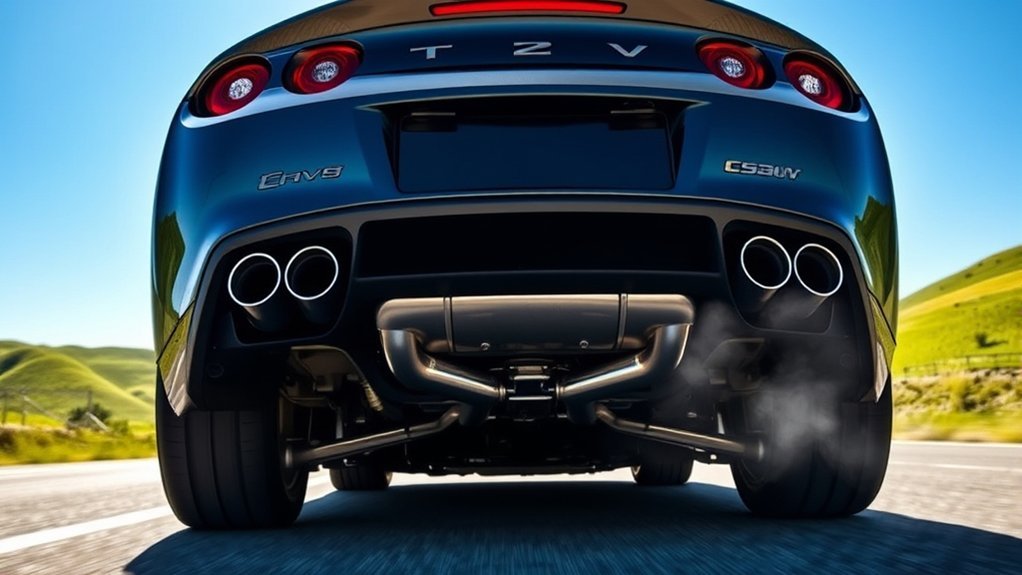
Performance Gains Are Not Guaranteed
A muffler delete changes sound more reliably than it changes power. The result depends on the original muffler, pipe diameter, engine output, turbocharger, exhaust routing, calibration, and the rest of the system.
Removing a restrictive component can reduce pressure loss at high exhaust flow, but simply installing the largest or least restrictive pipe is not always better. Gas velocity, pulse timing, scavenging, turbine response, and usable low-speed torque can suffer when the system is poorly matched to the engine.
Do not rely on a universal horsepower percentage. A valid comparison requires testing the same vehicle under controlled conditions before and after the change.
Emissions-Control Impact
The muffler primarily reduces sound. Catalytic converters, oxygen sensors, diesel particulate filters, selective catalytic reduction systems, EGR systems, and engine calibrations perform different emissions-control functions.
Removing only a rear muffler does not automatically remove a catalytic converter. However, exhaust work must not remove, relocate, damage, disconnect, or defeat required emissions equipment. The U.S. Environmental Protection Agency states that the Clean Air Act prohibits tampering with emissions controls and the manufacture, sale, or installation of defeat devices.
A rear muffler delete also does not guarantee that a vehicle will pass every inspection. A program may inspect equipment condition, exhaust leaks, diagnostic readiness, emissions hardware, or other safety items in addition to tailpipe pollutants.
Backpressure, Pipe Size, and Exhaust Tuning
An engine does not benefit from restriction merely because it is called backpressure. What matters is a complete system that moves exhaust efficiently while maintaining suitable gas speed and pulse behavior for the engine’s operating range.
A professional exhaust builder should consider pipe diameter, bends, merge points, resonators, muffler design, turbocharger outlet size, ground clearance, heat shielding, and tailpipe placement. A system that is too large or poorly routed can be louder without producing useful power.
Legal Alternatives to Muffler Deletes You Should Consider
You can often improve exhaust tone without removing every sound-control component.
- Vehicle-specific axle-back system: Replaces the rear muffler and tips with a tuned system that still includes effective sound control.
- Vehicle-specific cat-back system: Replaces the piping behind the catalytic converter while retaining a muffler and, in many designs, a resonator.
- Performance muffler: Changes the tone and flow characteristics while preserving the muffler required by many statutes.
- OEM performance exhaust: A manufacturer-designed option may integrate properly with active valves, hangers, heat shields, and drive modes.
- Resonator or tip adjustment: May refine tone, though it can still violate noise rules if the final system is excessive.
Avoid assuming that an electric or manual cutout is a legal solution. Many state statutes prohibit cutouts or bypass devices even when the valve is normally kept closed.
Pro Tip: Ask the installer for the exact part number, whether the system retains a functioning muffler, whether factory exhaust valves remain operational, and whether the finished vehicle has been checked for leaks and cabin drone.
Tips for Complying With State Muffler Regulations
- Identify the vehicle correctly. Record the VIN, model year, engine, body style, manufacturer’s GVWR, and whether the vehicle has an active exhaust.
- Read the current state statute. Search for muffler, exhaust, excessive noise, unusual noise, bypass, cutout, and sound-level provisions.
- Check local ordinances. A city or county may impose nighttime, distance-based, nuisance, or anti-revving rules.
- Review inspection requirements. Determine whether your registration area checks exhaust equipment, leaks, OBD readiness, or emissions components.
- Preserve emissions controls. Do not remove or defeat catalytic converters, oxygen sensors, DPF, SCR, EGR, or required control software.
- Choose a system with a real muffler. A vehicle-specific axle-back or cat-back system is generally easier to defend than a section of straight pipe.
- Use a qualified installer. Require secure hangers, proper clearances, sealed joints, correct tailpipe placement, and functional factory valves.
- Keep documentation. Save the receipt, part number, installation invoice, sound-test paperwork, and original exhaust components.
Do not assume that a seller’s words such as “street,” “touring,” or “legal” override the law where you drive. Product descriptions do not replace statutory equipment requirements or an approved sound test.
How to Choose a Compliant Aftermarket Muffler
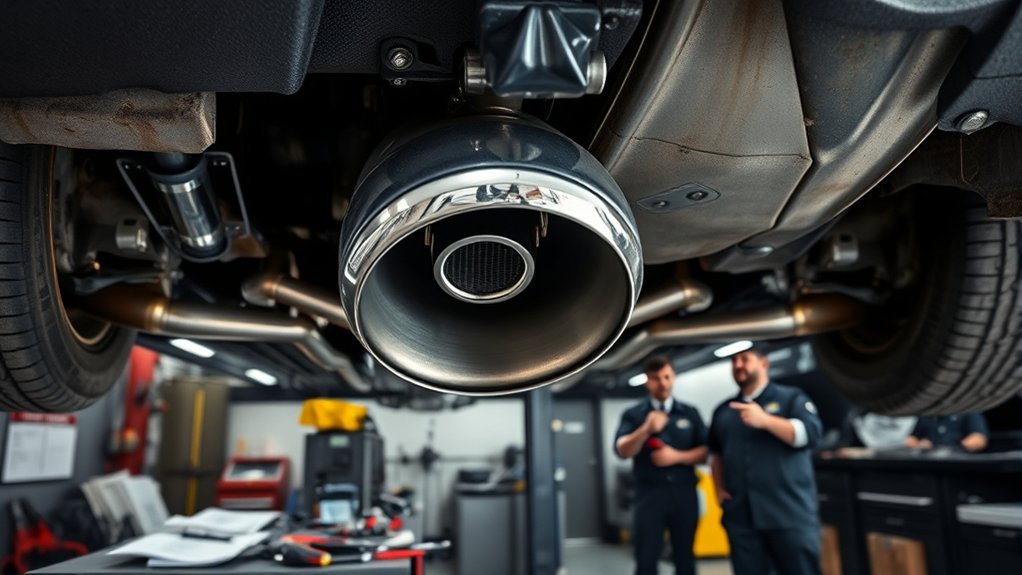
Start with fitment, not sound clips. Videos are affected by microphones, editing, engine load, recording distance, and speakers, so they do not reliably show how loud a system will be on your vehicle.
Look for the following:
- A vehicle-specific part number for your exact engine, body, wheelbase, and model year.
- A functioning muffler rather than a hollow pipe or bypass.
- Compatibility with factory exhaust valves and actuators.
- Correct pipe diameter and flange or clamp locations.
- Clearance around fuel lines, brake lines, wiring, bumpers, suspension, and heat-sensitive panels.
- A tailpipe that exits in a safe factory-like location rather than under the passenger compartment.
- A written return policy in case the system creates excessive drone or fails local requirements.
- Installation by a shop willing to perform a leak and clearance inspection.
Where a formal sound limit applies, ask which test procedure the law requires. Sound readings can change with engine speed, microphone angle, test distance, background noise, surface type, vehicle load, and weather.
What to Keep in Mind Before Modifying Your Exhaust
| Factor | Question to Ask | Lower-Risk Choice |
|---|---|---|
| State equipment law | Does the statute require an operating muffler? | Keep a real muffler in the system. |
| Noise rule | Is compliance based on a decibel test, unusual noise, factory sound, or several tests? | Choose a quiet or touring system and verify the prescribed test. |
| Emissions equipment | Will any catalyst, filter, sensor, valve, or calibration be disturbed? | Leave all emissions controls intact. |
| Daily use | Will cold starts or highway drone disturb you or nearby homes? | Select a resonated system with a larger sound-control case. |
| Reversibility | Can the stock system be reinstalled without major welding? | Use a bolt-on system and store the factory parts. |
The most reliable street setup is rarely the loudest one. A properly designed system should fit securely, control noise, avoid warning lights, preserve emissions equipment, prevent leaks, and remain comfortable during normal driving.
Frequently Asked Questions
Which states allow muffler deletes?
No state should be treated as granting blanket permission for every street-driven muffler delete. Some states directly require a working muffler, while others regulate excessive noise, factory sound levels, bypass devices, or specific vehicle classes. Verify the current state code and local ordinance for your exact vehicle.
Will police pull you over for a muffler delete?
They may. A stop can result from excessive or unusual noise, a plainly missing muffler, a visible bypass device, aggressive revving, or a local noise complaint. Whether a citation is issued depends on the applicable law and the officer’s observations or test results.
Are muffler deletes street legal?
A true muffler delete is often not street legal where the law requires an operating muffler. Even in a jurisdiction focused mainly on sound, the vehicle can still violate excessive-noise or local nuisance rules.
In what states is a modified exhaust illegal?
A modified exhaust is not automatically illegal in every state. A compliant axle-back or cat-back system may be permitted when it retains required equipment and stays within noise rules. The problem is usually the missing muffler, excessive sound, prohibited bypass, unsafe installation, or altered emissions control.
Is a resonator delete the same as a muffler delete?
No. A resonator changes selected sound frequencies, while a muffler provides broader noise reduction. Removing a resonator may leave the legally required muffler in place, but the final vehicle can still be too loud under state or local law.
Will a muffler delete cause a check-engine light?
Not necessarily. A simple rear muffler often sits downstream of the oxygen sensors, but some vehicles use active exhaust valves, pressure monitoring, or actuator feedback. Disconnecting those parts or disturbing a sensor can trigger a fault.
Does a muffler delete make a vehicle fail an emissions test?
Removing only the rear muffler may not change tailpipe emissions, but that does not guarantee a pass. Inspection programs can check exhaust condition, leaks, diagnostic readiness, required equipment, and emissions-control hardware. Removing a catalytic converter, DPF, SCR system, sensor, or related control is a separate and much more serious issue.
Does an aftermarket exhaust void the vehicle warranty?
An aftermarket exhaust does not automatically cancel the entire warranty. However, a manufacturer or dealer may deny coverage for damage caused by a defective part, improper fitment, poor welding, wiring damage, overheating, or another installation problem. Keep the part information and installation records.
Is an exhaust cutout legal when it stays closed?
Do not assume so. Several states prohibit the cutout, bypass, or similar device itself rather than only prohibiting its use in the open position. Check the exact statutory wording before installing one on a street vehicle.
Conclusion
A muffler delete delivers more noise, but it also creates avoidable legal, comfort, inspection, and resale risks. Many states require a functioning muffler, and a decibel reading alone may not excuse missing equipment.
For a street-driven vehicle, a properly fitted axle-back, cat-back, OEM performance system, or quality performance muffler is usually the better approach. Keep the emissions equipment intact, verify state and local law, use a qualified installer, and retain the original parts in case the vehicle must be returned to stock.
Sources
- California Vehicle Code §27150 and §27151 — muffler requirements, exhaust modifications, and the 95 dBA test provision.
- Tennessee Code §55-9-202 — working-muffler requirement, cutout prohibition, 95 dB provision, and penalty classification.
- Texas Transportation Code §547.604 — working-muffler and bypass-device requirements.
- Washington RCW 46.37.390 — muffler, cutout, bypass, noise-increase, and vehicle-age provisions.
- U.S. Environmental Protection Agency — Clean Air Act rules covering emissions tampering and defeat devices.
- Centers for Disease Control and Prevention — vehicle exhaust and carbon-monoxide safety; Federal Trade Commission — aftermarket parts and vehicle warranty coverage.







Leave a Reply