
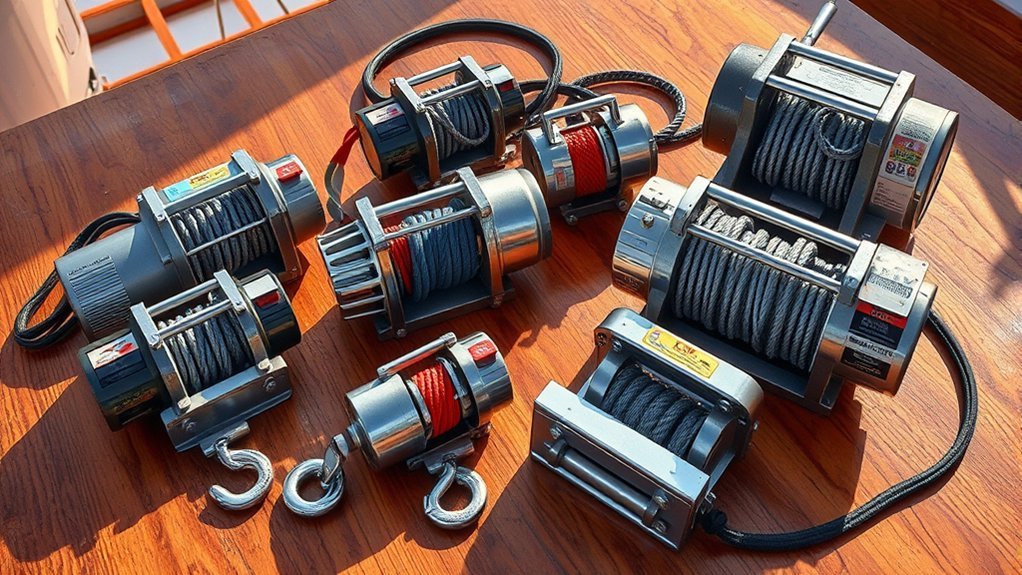
Choosing the right winch size is essential for your off-road adventures. Guarantee your winch has a pulling capacity of at least 1.5 times your vehicle’s Gross Vehicle Weight Rating (GVWR) to handle recovery situations effectively. To calculate your GVWR, add your curb weight, passengers, and cargo. Consider terrain types, as they impact your winch selection. Essential features and safety tips enhance reliability. Want to know more about winch sizes and applications? Keep exploring!
Understanding Winch Size and Its Importance for U.S. Drivers
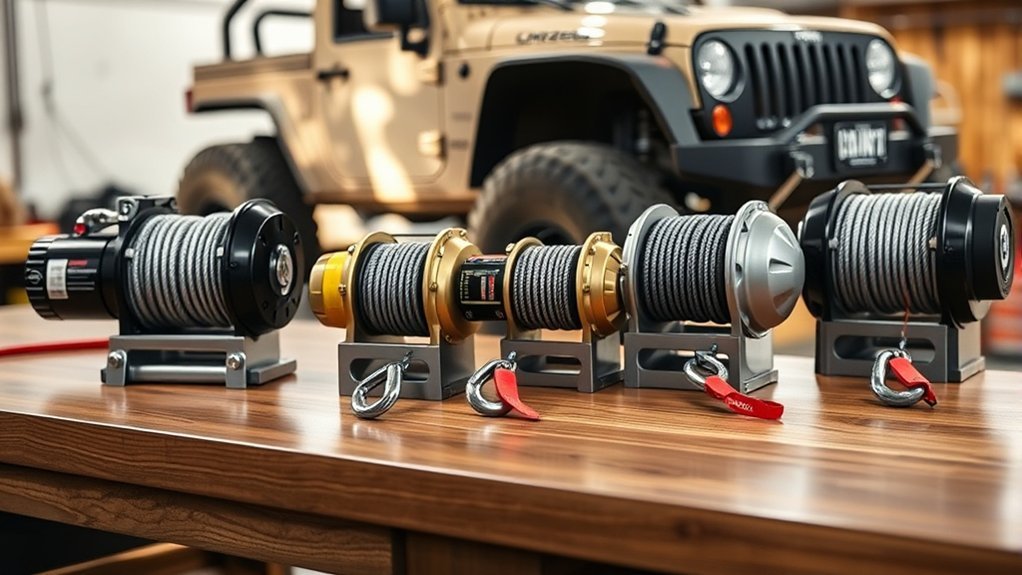
When you’re out on the trails, understanding winch size is critical to guarantee you’re prepared for any recovery situation. Selecting the right winch types for your vehicle isn’t just a matter of preference; it’s vital for effective recovery.
Ideally, your winch should pull at least 1.5 times your vehicle’s Gross Vehicle Weight Rating (GVWR). For instance, if you have a Jeep Wrangler Rubicon with a GVWR of 5,000 pounds, a winch with a minimum capacity of 7,500 pounds is necessary.
Your winch should pull at least 1.5 times your vehicle’s GVWR for optimal recovery.
Remember, winching techniques can be impacted by the layers of cable on the drum, so choose a winch that maintains its strength even with less cable extended. Off-road vehicles typically need winches in the 8,000 to 12,000-pound range, especially when factoring in accessories and modifications that add weight.
This guarantees you’re ready for any challenge the trails throw your way.
How to Calculate Your Vehicle’s Gross Vehicle Weight Rating (GVWR)
Calculating your vehicle’s Gross Vehicle Weight Rating (GVWR) is essential for ensuring you choose the right winch for recovery situations. To determine your GVWR, you need to evaluate several GVWR factors, including your vehicle’s curb weight and the weight of passengers and cargo. The formula is straightforward:
| Factor | Weight (pounds) |
|---|---|
| Curb Weight | 4,000 |
| Passengers (4 @ 150) | 600 |
| Cargo Weight | 400 |
| Total GVWR | 5,000 |
How to Choose the Right Winch Capacity for Your Vehicle?
Choosing the right winch capacity for your vehicle can make all the difference in recovery situations, especially if you frequently tackle challenging terrains.
Start by calculating your vehicle’s Gross Vehicle Weight Rating (GVWR) and multiply it by at least 1.5. For off-road adventures, consider a winch that exceeds your GVWR by 30% to 50% to account for extra gear and inclines.
For instance, a typical 4×4 weighing around 5,000 pounds should ideally use a winch with at least 7,500 pounds of capacity, making a 10,000-pound winch a solid choice.
When selecting winch types, look for trusted winch brands that cater to your specific needs.
Keep in mind that winch pulling power decreases with multiple layers of cable on the drum, so factor that in as well.
Ultimately, choosing the right winch capacity empowers you to conquer any obstacle in your path.
How Terrain Affects Your Winch Selection?
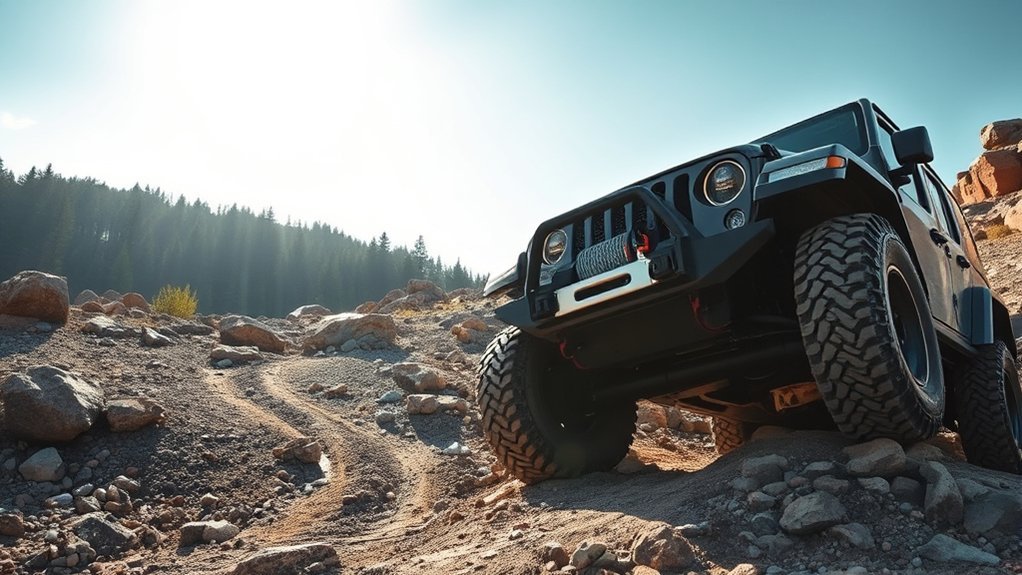
When choosing a winch, consider the terrain you’ll be traversing.
Steep inclines and slippery surfaces can drastically change the pulling power you’ll need, so it’s essential to select a winch that can handle these challenges.
Evaluating your typical trail conditions guarantees you’re prepared for any situation you might encounter.
Terrain Type Considerations
As you explore different terrains, it’s essential to recognize how they impact your winch selection. Each terrain presents unique challenges that dictate the appropriate winch types for your needs.
For instance, if you’re tackling muddy or soft soil, you’ll need a winch with at least 30% more pulling capacity to overcome increased friction. In snowy conditions, aim for a winch rated at 1.5 times your vehicle’s weight to guarantee effective recovery on slippery surfaces.
Rocky terrains require a robust winch with a durable cable to navigate unpredictable obstacles. By understanding these terrain challenges, you can choose a winch that not only meets your vehicle’s demands but also enhances your off-road adventures with confidence and safety.
Incline and Surface Effects
Understanding how incline and surface conditions affect your winch selection is essential for successful recovery operations.
The incline impact can greatly increase the force required, especially when pulling uphill. Here are some key considerations:
- A steep slope can demand a winch rated at least 1.5 times your vehicle’s weight.
- Harsher surfaces like mud or snow elevate surface friction, necessitating a higher-capacity winch.
- Regularly inspect your winch to make sure it’s suited for the terrain.
- The cable’s interaction with the surface can reduce effective pulling power.
- Adjust your winch capacity based on both incline and friction to prevent failures.
Essential Features to Ensure a Reliable Winch
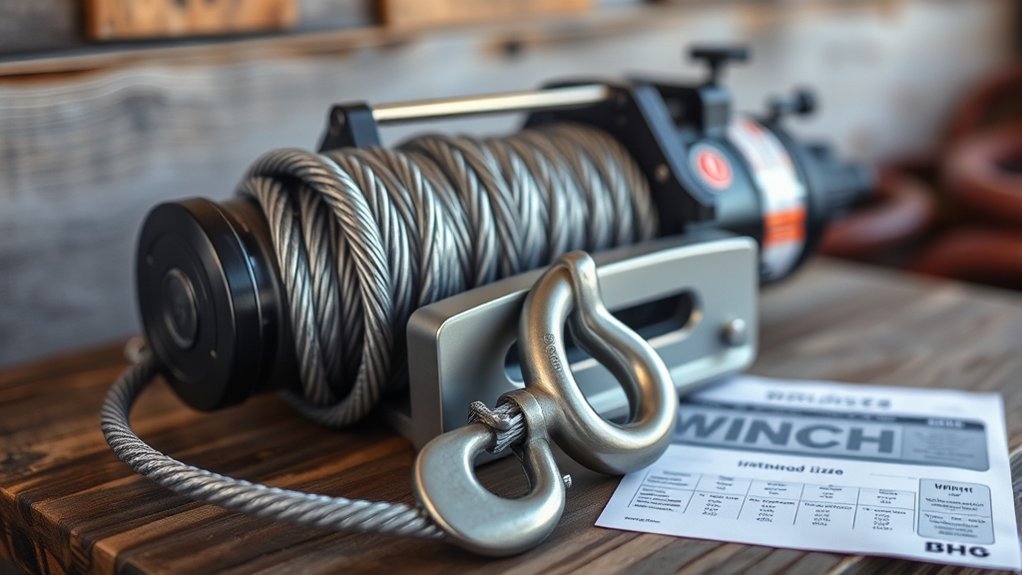
To guarantee a reliable winch, it’s essential to take into account several important features that enhance performance and safety. First, verify the pulling capacity is at least 1.5 times your vehicle’s Gross Vehicle Weight Rating (GVWR). A robust motor, preferably a planetary gear winch, guarantees efficiency and strength. Internal braking systems are significant; they allow you to release the cable safely during recovery situations.
Consider the cable material: synthetic cables are lighter and easier to handle, while steel cables provide durability but may rust over time. Regular maintenance, including inspections for frays and checking electrical systems, is key to reliability.
| Feature | Importance | Considerations |
|---|---|---|
| Pulling Capacity | Strength in recovery | At least 1.5x GVWR |
| Motor Type | Efficiency and durability | Planetary vs. worm-and-gear |
| Cable Material | Performance and handling | Synthetic vs. steel |
With these features, you’re equipped for effective recovery techniques and safe winching.
Common Winch Sizes and Their Applications
Choosing the right winch size is essential for ensuring effective recovery in various situations. Each winch type serves a specific purpose, and understanding their applications helps you make informed choices.
Here are some common winch sizes and their uses:
- 2,500 to 3,500 pounds: Perfect for ATVs, pulling quad bikes from mud or steep inclines.
- 3,500 to 4,500 pounds: Ideal for UTVs, accommodating added weight from passengers and gear.
- 8,000 pounds: Excellent for small trucks and SUVs, combining power with manageable weight.
- 10,000 pounds: The go-to size for larger SUVs and trucks, tackling various recovery scenarios effortlessly.
- 12,000 pounds and above: Recommended for heavy vehicles, ensuring you’re prepared for extreme situations.
When selecting your winch, consider the materials and construction to guarantee durability, making your adventures truly liberating.
Top Safety Tips for Winching on Your Off-Road Adventures
When you’re winching on your off-road adventures, safety should be your top priority.
Always wear protective gear, maintain a safe distance from the winching area, and inspect your equipment regularly to guarantee everything’s in good working order.
These simple steps can help prevent accidents and make your experience much safer.
Wear Protective Gear
Even the most experienced off-roaders can face unexpected hazards during winching, so it’s crucial to prioritize safety by wearing the right protective gear.
By doing so, you greatly reduce the risk of injury and guarantee a smoother adventure. Here’s what you should consider:
- Leather gloves for hand safety against cuts and abrasions
- Protective clothing to shield against debris and rough terrain
- Safety glasses to protect your eyes from flying debris
- Sturdy boots with good traction to prevent slips
- A hard hat if you’re in a high-risk area
Equip yourself with this protective gear, and you’ll be ready to tackle any winching challenge while keeping safety at the forefront of your off-road adventures.
Maintain Safe Distance
After gearing up with the right protective equipment, it’s important to focus on maintaining a safe distance during winching operations.
Always keep at least 50 feet away from the winching area to protect yourself and bystanders from potential cable snap hazards. Use leather gloves when handling the winch cable to shield your hands from cuts.
Before applying power, secure all hooks and shackles to guarantee a successful recovery without unexpected releases. Employ a winch weight or damper over the cable midpoint to minimize injury risk from a broken line.
Finally, never position yourself behind a vehicle being winched uphill, as the potential for sudden movement increases considerably.
Following these safety protocols enhances your winching techniques and keeps everyone safe.
Inspect Equipment Regularly
To guarantee a safe and successful winching experience, regularly inspecting your equipment is essential.
Proper winch maintenance starts with thorough cable inspection. Look out for frays or kinks that could lead to unexpected failures. Don’t forget to assess other gear too.
- Confirm hooks and shackles are undamaged.
- Check straps for wear and tear.
- Inspect the winch’s electrical system, including battery connections.
- Test the winch operation with no load to confirm smooth performance.
- Maintain a safe distance of at least 50 feet from the winching area for everyone’s safety.
Frequently Asked Questions
How Do You Figure Out What Size Winch You Need?
To figure out what size winch you need, calculate your vehicle’s total weight, including accessories. Choose a winch type with a pulling capacity of at least 1.5 times that weight for effective recovery in various terrains.
What Size Winch Rope for a 12000 Lb Winch?
You’ll need a winch rope at least 3/8-inch thick for your 12,000 lb winch. This guarantees you safely harness its weight capacity, allowing you to conquer even the toughest recovery challenges with confidence.
Will a 2000 Lb Winch Pull a Car on a Trailer?
No, a 2,000 lb winch won’t pull a car on a trailer. Consider the total trailer weight—most vehicles exceed this capacity. Opt for a winch with a higher capacity for safe, effective towing.
What Size Winch for a 5000 Lb Truck?
To guarantee you’re ready for any adventure, a winch with at least 7,500 lbs capacity is ideal for your 5,000 lb truck weight. This provides the freedom to conquer tough terrains confidently and safely.
Conclusion
In summary, selecting the right winch is vital for your off-road adventures. By understanding your vehicle’s weight, the terrain you’ll navigate, and essential features, you can make an informed choice. Remember, a well-chosen winch isn’t just a tool; it’s your trusty steed in the wilds. So, gear up and embrace the thrill of the journey, knowing you’re prepared for whatever challenges lie ahead. After all, fortune favors the bold, especially when it comes to off-roading!






Leave a Reply