

Wheel alignment is essential for your vehicle’s safety and performance. It guarantees proper tire contact with the road, maximizing handling, stability, and fuel efficiency. Misalignment can cause uneven tire wear and increased tire replacement costs. Regular checks are recommended after new tire installations or impacts. Key alignment angles include camber, toe, and caster, each affecting how your vehicle drives. Understanding these factors can help maintain tire longevity and enhance overall performance. There’s more to explore about the alignment process and its benefits.
Why Is Wheel Alignment Crucial for Your Vehicle?

When your vehicle’s wheels are properly aligned, you not only enhance handling and safety but also maximize performance and efficiency.
Alignment benefits extend beyond mere convenience; they include improved tire longevity and fuel economy. Misalignment can lead to uneven tire wear, causing premature replacements and unnecessary costs. Additionally, it can decrease fuel efficiency due to increased rolling resistance, burdening your wallet over time.
Common alignment misconceptions suggest that it’s a one-time fix, but regular checks are essential for maintaining peak performance.
Pay attention to signs of misalignment, such as a crooked steering wheel or vibrations while driving. Ignoring these symptoms can strain suspension components and result in costly repairs.
By prioritizing wheel alignment, you liberate your vehicle’s potential, ensuring a smooth, safe, and economical driving experience.
Don’t let neglect hold you back; embrace the benefits of proper alignment for a more efficient journey.
The Wheel Alignment Process: Step-By-Step Guide
To start the wheel alignment process, you’ll need an initial vehicle inspection to evaluate the suspension system and alignment status.
Technicians will then use specialized equipment to adjust the wheel angles—camber, toe, and caster—to meet your vehicle’s specifications.
Once adjustments are made, an alignment machine will verify the settings to guarantee your vehicle performs at its best.
Initial Vehicle Inspection
A thorough initial vehicle inspection is essential for ensuring accurate wheel alignment. During this phase, you’ll undergo a detailed suspension inspection, examining your vehicle’s steering and suspension components. Technicians identify any signs of wear, such as worn-out bushings or bent components, that could affect alignment. They’ll also check for uneven tire wear patterns that indicate underlying issues.
| Inspection Area | Signs of Trouble | Action Required |
|---|---|---|
| Suspension | Worn bushings | Replace components |
| Tires | Uneven tire wear | Rotate or replace tires |
| Wheels | Bent rims | Repair or replace rims |
| Alignment Angles | Incorrect camber/toe/caster | Adjust settings |
This inspection establishes a baseline for necessary adjustments, ensuring your vehicle is safe and ready for alignment corrections.
Adjustment and Verification Steps
Following the initial vehicle inspection, adjustments to the wheel alignment are critical for restoring optimal handling and tire longevity.
Technicians employ precise adjustment techniques to modify the camber, toe, and caster angles, guaranteeing they align with manufacturer specifications. After making these adjustments, the next step is to use an alignment machine for verification methods, confirming that the new settings fall within the preferred range. This process assures that the corrections are effective.
To further guarantee peak performance, a road test is conducted to evaluate the vehicle’s handling and the effectiveness of the adjustments.
Regular alignment checks, ideally every 6,000 to 10,000 miles or after significant impacts, are essential for maintaining safety and performance.
Key Wheel Alignment Angles: Understanding Camber, Toe, and Caster
Understanding key wheel alignment angles is essential for ideal vehicle performance and safety.
Camber adjustments refer to the angle of your tires relative to the road surface; negative camber leans the tires inward for better cornering grip, while positive camber leans them outward, risking uneven tire wear.
Toe settings measure the direction your tires point compared to your vehicle’s centerline. Toe-in means the front of the tires angles toward each other, enhancing stability, while toe-out can improve agility but may accelerate tire wear.
Caster angles involve the steering axis; positive caster tilts back toward you, promoting stability and a straight-line return of the steering wheel.
Using alignment tools, you can make these adjustments to manufacturer specifications, ensuring balanced tire wear and improved handling.
Regular checks are vital, as improper settings can lead to increased tire wear, decreased fuel efficiency, and compromised vehicle safety.
How to Know If Your Car Needs a Wheel Alignment?
How can you tell if your car needs a wheel alignment? Pay attention to specific signs that indicate misalignment. Here are some key indicators:
| Indicator | Description |
|---|---|
| Uneven Tire Wear | Look for excessive wear on one side of the tire. |
| Vehicle Drift | If your car pulls to one side while driving straight, it’s a strong sign of misalignment. |
| Vibrating Steering Wheel | A vibrating steering wheel often signals misalignment, affecting your driving experience. |
| Crooked Steering Wheel | If the steering wheel is crooked when driving straight, your wheels need adjustment. |
Regularly inspect your alignment, especially after installing new tires or hitting a pothole, as these can greatly impact your vehicle’s alignment. Addressing these tire wear patterns and steering issues promptly will help maintain your car’s performance and safety.
Benefits of Regular Wheel Alignment: Enhancing Safety and Performance
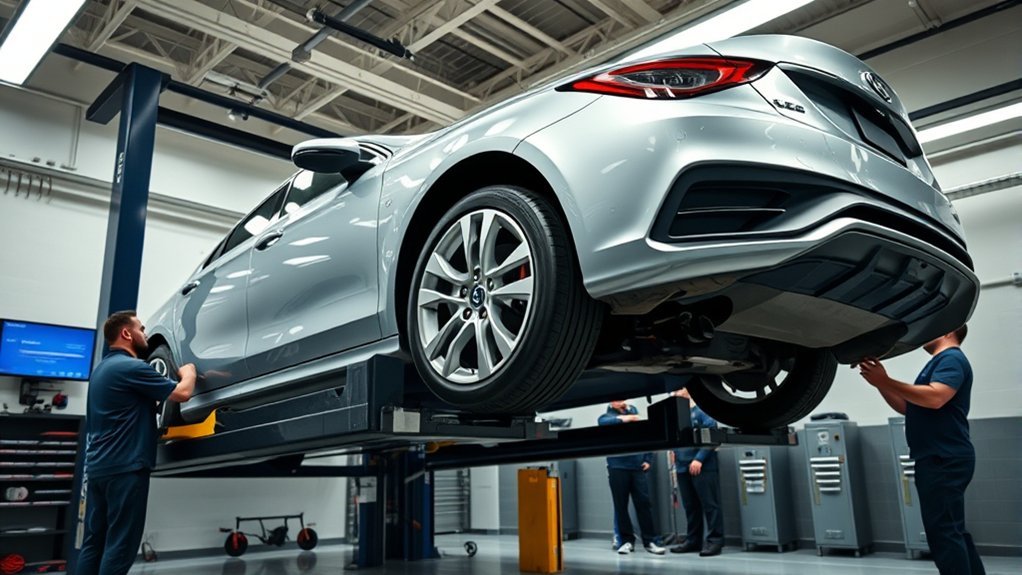
Regular wheel alignment greatly enhances your vehicle’s handling and stability, allowing for smoother steering and better control.
By ensuring your tires wear evenly, you can also extend their lifespan, reducing the frequency of replacements.
This proactive maintenance not only boosts performance but also contributes to your overall safety on the road.
Improved Vehicle Handling
When you keep your vehicle’s wheels properly aligned, you greatly enhance its handling, making for a safer and more efficient driving experience.
Regular wheel alignment guarantees your wheels are positioned correctly, which maximizes handling dynamics and promotes smoother steering response. This precision minimizes steering wheel vibrations and prevents the vehicle from pulling to one side, allowing for a comfortable ride.
Using advanced alignment technology to adjust camber, toe, and caster angles helps maintain ideal tire contact, maximizing grip and reducing tire slippage during maneuvers.
Additionally, a well-aligned vehicle reduces strain on suspension and steering components, enhancing their lifespan and reliability.
Altogether, these factors contribute considerably to your vehicle’s overall safety and driving performance.
Extended Tire Lifespan
Maintaining proper wheel alignment not only enhances vehicle handling but also plays an essential role in extending tire lifespan.
Regular wheel alignment prevents uneven wear patterns caused by misalignment, saving you from frequent tire replacements. With proper alignment, rolling resistance decreases, potentially improving fuel efficiency by up to 10%—a significant cost savings over time.
A well-aligned vehicle guarantees even tire contact with the road, improving traction and handling, which is critical for safety and performance. Neglecting alignment can lead to premature tire wear within just a few thousand miles.
To maximize tire longevity, implement alignment checks every 6,000 to 10,000 miles or after significant impacts, securing peak performance and enhancing overall vehicle safety.
What Myths Are Out There About Wheel Alignment?

What misconceptions do many drivers hold about wheel alignment? Let’s clarify some common myths to help you maintain your vehicle’s performance. Many believe that alignment is only necessary when new tires are installed, but it should be checked regularly, especially after impacts. Some think alignment is required only if the car pulls to one side; however, symptoms like a vibrating steering wheel can also indicate issues.
Here’s a quick reference table for myth clarification:
| Myth | Reality |
|---|---|
| Only needed with new tires | Should be checked regularly |
| Pulling to one side = misalignment | Vibrating steering wheel can also indicate it |
| Alignment is a one-time service | Regular checks every 6,000 to 10,000 miles are essential |
| Alignment = balancing | Alignment focuses on angles, balancing on weight |
| New parts don’t need alignment | Even new parts can be misaligned |
Understanding these alignment misconceptions can empower you to take better care of your vehicle.
When to Schedule Wheel Alignment?
Understanding the myths surrounding wheel alignment can help you recognize the right times to schedule this important service.
You should schedule a wheel alignment after installing new tires to guarantee peak performance and prolong their lifespan. If you replace any steering or suspension components, an alignment is necessary to maintain proper vehicle handling.
Pay attention to any drivability issues, like your vehicle drifting to one side or having an off-center steering wheel; these are clear signals for an alignment check.
Drivability issues like drifting or an off-center steering wheel signal it’s time for an alignment check.
Regularly inspect your tires for irregular wear, as this often indicates alignment problems that need addressing. After experiencing significant impacts, such as hitting a pothole or being in an accident, don’t wait—get an alignment check to guarantee safety and performance.
Keeping track of alignment frequency based on these factors will help you adapt to varying driving conditions and enhance your vehicle’s longevity.
DIY vs. Professional Wheel Alignment: Which Is Right for You?
When considering whether to tackle wheel alignment yourself or seek professional help, it’s important to weigh the pros and cons.
DIY techniques can save you money, but they often lack the adjustment precision of professional equipment, which can cost upwards of $80,000. While you might handle minor adjustments if you’re experienced, improper DIY alignment can lead to uneven tire wear and significant safety implications.
Professional services, recommended every 15,000 to 20,000 miles, guarantee that your vehicle aligns with manufacturer specifications, enhancing performance and safety. Additionally, professional technicians conduct a thorough inspection of suspension components, identifying issues that DIY methods may overlook.
Ultimately, while DIY might seem appealing for cost considerations, investing in professional alignment can save you from higher long-term expenses related to tire wear and maintenance schedules.
Assess your experience level carefully before deciding.
How Wheel Alignment Affects Tire Safety and Performance
Proper wheel alignment greatly impacts tire safety and performance, ensuring that your tires maintain perfect contact with the road. When your wheels are aligned correctly, it enhances grip and stability, leading to improved vehicle handling.
Misalignment can cause uneven tire wear, making tires wear out in just a few thousand miles, which not only increases replacement costs but also reduces their lifespan. A well-aligned vehicle also maximizes fuel efficiency by minimizing rolling resistance, potentially saving you up to 10% on fuel costs.
Additionally, neglecting alignment can result in your vehicle pulling to one side, compromising steering response and increasing accident risk. Regular alignment checks, ideally every 6,000 to 10,000 miles or with new tires, are essential to maintain peak tire performance and safety.
Frequently Asked Questions
How Does Wheel Alignment Affect Fuel Efficiency?
Proper wheel alignment minimizes tire wear and optimizes fuel consumption. When your wheels are aligned, your vehicle rolls smoothly, reducing drag and improving efficiency. This not only saves you money but also enhances your driving experience.
Can Wheel Alignment Fix Steering Wheel Vibrations?
If your steering wheel vibrates like a restless dancer, wheel alignment can often resolve steering issues. Misalignment is a common vibration cause, and correcting it helps restore smooth, stable handling and enhances your driving experience.
What Tools Are Needed for DIY Wheel Alignment?
For DIY wheel alignment, you’ll need alignment tools like a tape measure, level, and string or a specialized alignment kit. These tools help you utilize effective DIY techniques for precise adjustments and guarantee peak vehicle performance.
How Long Does a Wheel Alignment Take?
A wheel alignment typically takes about 30 minutes to an hour, depending on your vehicle’s condition and the technician’s expertise. Factors like service time can vary, so always check with your service provider for specifics.
Is Wheel Alignment Necessary After Replacing Tires?
Yes, after tire replacement, you should get a wheel alignment. Proper alignment guarantees even tire wear, improves handling, and enhances safety. Neglecting this step can lead to premature tire damage and reduced performance.
Conclusion
To sum up, keeping your wheel alignment in check is like ensuring a ship’s sails catch the wind just right—without it, you risk veering off course. Regular alignments not only enhance your vehicle’s safety and performance but also prolong tire life, saving you money in the long run. By staying proactive and addressing alignment issues early, you’re steering your vehicle towards a smoother, safer ride. Don’t wait for the signs; make wheel alignment a priority.







Leave a Reply