
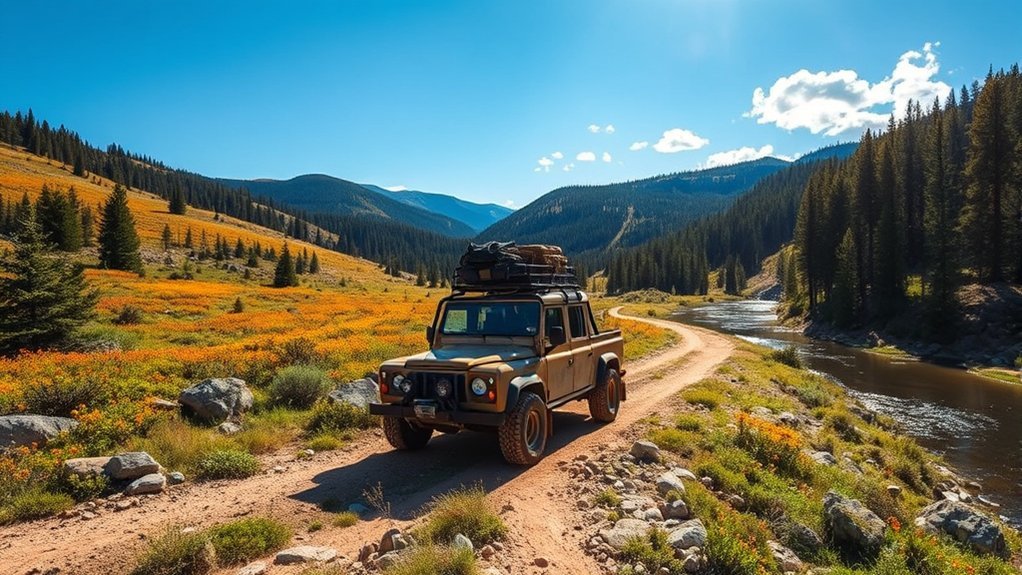
Overlanding is a thrilling way to explore remote destinations, blending adventure with self-reliant travel and camping. It focuses on long-distance journeys, combining off-road driving with a love for nature. You’ll embrace sustainability while traversing rugged terrains in a reliable 4×4 vehicle, equipped with essential gear like recovery equipment and camping supplies. Whether you’re a seasoned adventurer or just starting, there’s so much more to uncover about this fascinating lifestyle and the exciting journeys that await you.
What Is Overlanding and Why Is It Gaining Popularity?
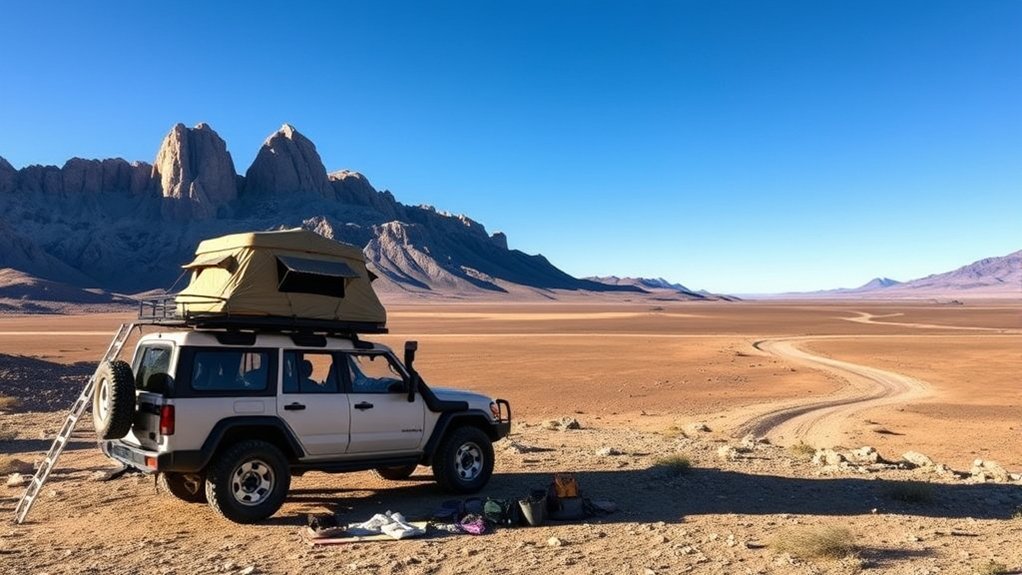
Overlanding is more than just a travel trend; it’s an adventure that invites you to explore the great outdoors on your own terms. Defined as self-reliant travel to remote destinations, overlanding emphasizes exploration and adventure over mere transportation.
This movement has exploded in popularity, especially on social media, where the vibrant overlanding community shares enchanting journeys reminiscent of the #vanlife lifestyle. Originating from Australian cattle drivers, overlanding now flourishes in stunning locales like Utah, Colorado, and Montana.
With an adventure mindset, you embrace the unknown and prepare for challenges, discovering not just new places but also parts of yourself.
As more people gravitate towards outdoor experiences, overlanding reflects a societal shift towards sustainable travel and a deeper appreciation for nature. You’ll find liberation in every mile traveled, forging connections and memories that last long after the journey ends.
How Overlanding Differs From Off-Roading and Camping
While both overlanding and off-roading embrace adventure, they cater to different experiences and mindsets. Overlanding is all about long-distance travel to remote destinations, emphasizing self-sufficiency and exploration. You’ll find yourself traversing rugged terrains while packing overlanding essentials for extended stays in undeveloped areas.
In contrast, off-roading often delivers quick thrills, taking you on adrenaline-fueled rides over unpaved paths but returning you to a base camp afterward.
Camping typically involves settled nights at designated sites with amenities, while overlanding requires constant movement and adaptability. You’ll need to embrace adventure planning, as the journey can stretch for days, weeks, or even months.
The complexity of overlanding lies in its combination of off-road driving and camping, pushing you to navigate unpredictable conditions and make the most of the wild, liberating spirit of exploration.
Key Vehicle Requirements for Your Overlanding Adventures
When you’re gearing up for your overlanding adventures, choosing the right vehicle is vital.
You’ll want a reliable 4×4 that can handle rugged terrains while offering enough storage for all your essential gear.
With the right modifications and self-sufficiency equipment, you can guarantee your journey isn’t just possible but incredibly enjoyable.
Vehicle Capability and Reliability
Choosing the right vehicle for your overlanding adventures is essential, as it directly impacts your experience on rugged terrains. You’ll want a reliable vehicle that can handle long distances and challenging environments without frequent breakdowns.
Here are some key features to take into account:
- High ground clearance for obstacle navigation
- Off-road tires for better grip on varied surfaces
- Four-wheel drive (4WD) capability for enhanced traction
- Ample storage for camping gear, food, and water
- Proven durability, like the Toyota 4Runner or Jeep Wrangler
Prioritizing vehicle maintenance and terrain adaptability guarantees your journeys are liberating and worry-free.
With the right vehicle, you’ll confidently explore the great outdoors, knowing you’re ready for whatever lies ahead.
Essential Gear and Modifications
To fully embrace the thrill of overlanding, equipping your vehicle with essential gear and modifications is crucial for traversing unpredictable terrains and guaranteeing a comfortable experience.
Start with overlanding modifications like robust suspension systems and off-road tires, giving you the height and grip needed for tough landscapes. Don’t forget recovery gear, such as winches and tow straps, which can save you from getting stuck in challenging situations.
Reliable navigation tools, including GPS devices and satellite communication, keep you safe in remote areas. Consider adding a rooftop tent for quick shelter, along with water storage and portable cooking equipment to boost your self-sufficiency.
Regular maintenance checks guarantee everything’s in top shape before you hit the road.
Essential Gear for Your Overlanding Trip
Starting on an overlanding adventure requires careful preparation, and having the right gear can make all the difference in your experience. Equip yourself for the challenges of the wild with these essentials:
Preparing for an overlanding adventure is crucial; the right gear transforms your experience in the wild.
- Recovery equipment: Tow straps, recovery boards, and a full-size spare tire keep you safe and prepared for unexpected situations.
- Camping gear: A rooftop or ground tent gives you flexibility in sleeping arrangements.
- Cooking essentials: Portable stoves and utensils make meal prep a breeze.
- Water storage and filtration: Aim for at least one gallon of water per person per day to stay hydrated.
- First aid kit and communication device: Tailor your first aid kit to your route, and carry a satellite communicator for areas with no cell service.
With these items, you’ll feel liberated and ready to embrace the great outdoors!
Planning Your Overland Journey: Safety Tips and Enjoyment
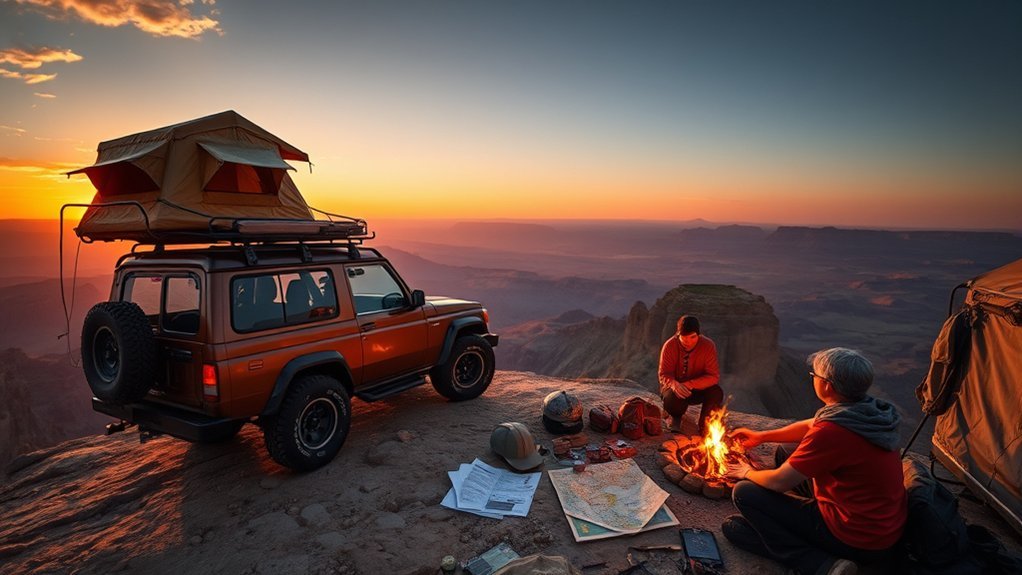
With your gear packed and ready, the next step in planning your overland journey is guaranteeing both your safety and enjoyment throughout the trip.
Start with route planning—research terrain conditions, weather forecasts, and local regulations to avoid surprises. Regular vehicle inspections are essential; keep maintenance up-to-date and pack vital recovery gear like tow straps and a full-size spare tire.
Don’t forget emergency preparedness! Assemble a thorough first aid kit tailored to your specific routes and familiarize yourself with basic first aid procedures.
Navigation tools are your best friends; use GPS devices alongside physical maps and a compass for backup.
Lastly, establish a reliable communication plan. If you’re heading into areas with limited cell service, GMRS radios or satellite phones can keep you connected.
Inform someone back home about your travel plans to guarantee peace of mind. Enjoy the freedom of the open road, knowing you’re ready for anything!
Best Overlanding Routes for Beginners in the U.S
If you’re just starting your overlanding journey, you’ll want routes that offer both adventure and accessibility.
From the stunning landscapes of Moab to the coastal trails of South Core Banks, there are plenty of beginner-friendly options to explore.
Let’s look at some popular trails, essential safety tips, and gear recommendations to guarantee your first overlanding experience is unforgettable.
Popular Beginner Trails
As you commence your overlanding journey, exploring beginner-friendly trails across the U.S. can be an exhilarating way to connect with nature and build your skills.
Here are some trail recommendations that promise unforgettable beginner experiences:
- Moab, Utah: Stunning landscapes and well-maintained routes for stock 4×4 vehicles.
- Trans-New Hampshire Overland Adventure Route: Scenic beauty of New England’s forests and mountains.
- South Core Banks, North Carolina: Soft-sand trails with easy access to camping and coastal views.
- Trans-Wisconsin Adventure Trail: A 600-mile route showcasing diverse terrains for gradual challenges.
- Mojave Road, California: A mix of historical intrigue and off-road driving for those looking to level up.
These trails provide the perfect blend of excitement and accessibility for budding overlanders.
Safety Tips For Beginners
While starting on your overlanding adventure, understanding safety tips is essential to guarantee a smooth and enjoyable experience.
Choose well-traveled routes like Moab, Utah, or the Trans-New Hampshire Overland Adventure Route to build confidence. Familiarize yourself with navigation techniques, whether using a GPS or traditional maps, to stay oriented.
Don’t overlook emergency preparedness—ensure your vehicle is in good working order and carry essential supplies. If you’re venturing into tougher terrains like the Mojave Road, be ready for challenges, but don’t shy away from simpler paths like South Core Banks in North Carolina.
Each journey is a chance to learn and grow, so embrace the freedom of the open road while prioritizing your safety. Adventure awaits!
Essential Gear Recommendations
When planning your overlanding adventure, having the right gear can make all the difference between a memorable trip and a frustrating experience.
Your gear selection should reflect the unique challenges of beginner-friendly routes like Moab, the Trans-New Hampshire Adventure Route, or the scenic South Core Banks.
Focus on effective packing strategies to guarantee you’re prepared. Here are five essential items to pack:
- Reliable tent for shelter
- Sleeping bag suited for the season
- Portable stove for cooking
- First-aid kit for emergencies
- Navigation tools, like GPS or maps
With these essentials, you’ll navigate diverse landscapes, from the Mojave Road to the Trans-Wisconsin Adventure Trail, confidently and comfortably.
Embrace the journey and let the adventure unfold!
Frequently Asked Questions
What Types of Vehicles Are Best Suited for Overlanding?
For overlanding, you’ll love rugged SUVs or trucks with vehicle modifications for durability. Consider terrain—4×4 capabilities shine in rough landscapes. Choose vehicles that inspire freedom and adventure, allowing you to explore every hidden path.
How Much Does an Overlanding Trip Typically Cost?
An overlanding trip can range from a few hundred to several thousand dollars. With careful budget planning and a detailed cost breakdown, you’ll find freedom in the adventure without breaking the bank. Enjoy the journey!
Are There Specific Licenses Required for Overlanding?
You might need overlanding permits and off-road certifications, depending on your destination. Research local regulations to guarantee you’re compliant, and embrace the freedom of the open road while staying safe and responsible.
Can Families Participate in Overlanding Adventures?
Families can enjoy overlanding adventures together, fostering family bonding while exploring the great outdoors. With careful adventure planning, you’ll create unforgettable memories that strengthen your connections and inspire a sense of freedom in nature.
How Do I Find Overlanding Communities or Groups?
You can find overlanding communities by exploring online forums and joining local meetups. These spaces connect you with like-minded adventurers, sharing tips and experiences that ignite your passion for exploration and the open road.
Conclusion
Overlanding isn’t just about reaching a destination; it’s a journey that deepens your connection with nature and yourself. As you traverse diverse landscapes, you’ll discover the thrill of adventure and the joy of self-sufficiency. Embracing the unpredictability of the road can lead to unforgettable memories and personal growth. So pack your gear, choose your route, and hit the trail—each mile offers a chance to explore not just the world around you, but the one within.






Leave a Reply