
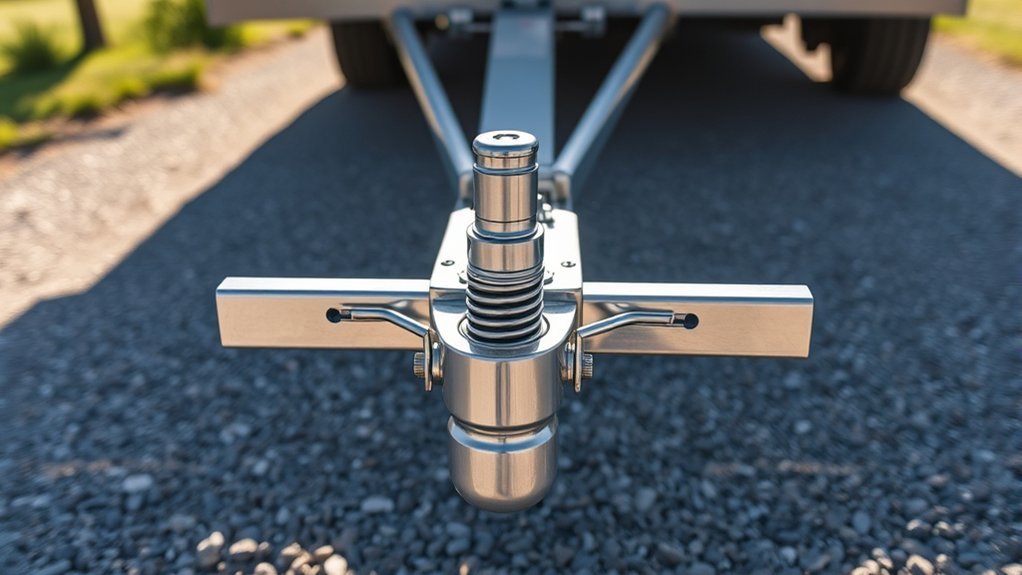
A weight distribution hitch redistributes trailer tongue weight, enhancing your vehicle’s stability and safety while towing heavy loads. If your trailer’s weight exceeds 50% of your truck’s weight, or if you experience sagging or sway, you might need one. Proper installation is essential for performance, and maintenance guarantees longevity. By using this hitch, you’ll enjoy better handling and control on the road. Continue on to explore detailed installation and maintenance tips to maximize your towing experience.
What Is a Weight Distribution Hitch and How Does It Work?
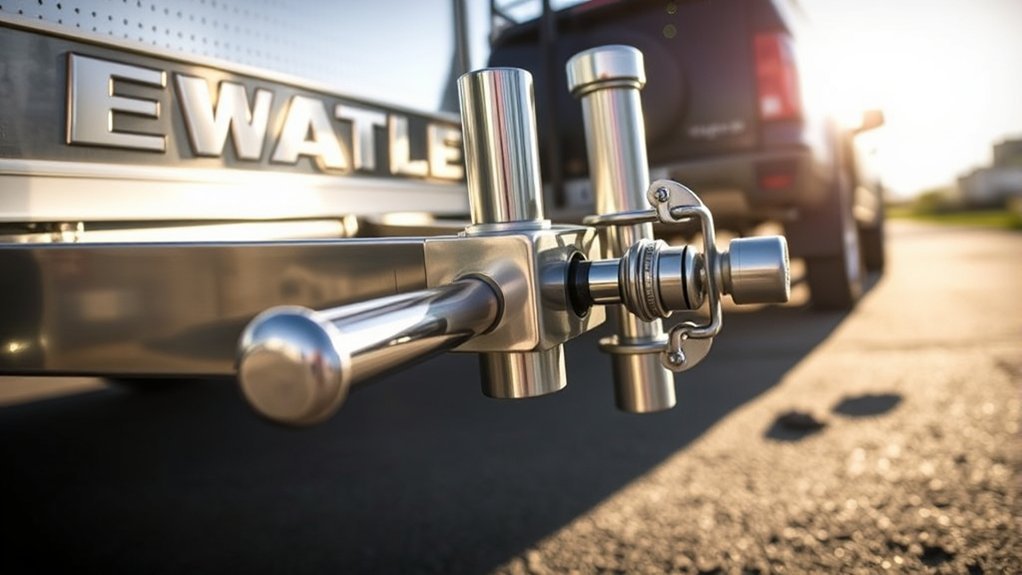
When you’re towing a heavy trailer, a weight distribution hitch can make all the difference in maintaining control and stability. This specialized hitch redistributes the trailer’s tongue weight across both your tow vehicle and the trailer axles, enhancing towing safety.
It uses adjustable spring bars that counteract excess tongue weight, preventing the hitch from squatting and ensuring your vehicle maintains an upright posture. Typically recommended for trailers over 5,000 lbs, weight distribution hitches are essential for larger cargo trailers like campers and toy haulers.
Proper installation is key; you’ll need to measure the heights of your vehicle and trailer, ensuring the hitch head is angled correctly for ideal performance.
When utilized effectively, a weight distribution hitch greatly reduces trailer sway and improves braking, keeping the front axle of your tow vehicle properly loaded. This not only enhances your driving experience but also empowers you to travel confidently.
How to Determine if You Need a Weight Distribution Hitch?
Towing a heavy trailer can present challenges, and knowing whether you need a weight distribution hitch is vital for safe and stable travel.
If your trailer weight exceeds 50% of your truck’s weight, it’s usually recommended to use a weight distribution hitch. Look for signs like a sagging rear end on your truck when attached to the trailer; it’s a clear indicator that balance is off.
Additionally, if you’re experiencing trailer sway, difficulty steering, or your headlights point upward while towing, a weight distribution hitch can greatly enhance control.
Consult your truck’s manual—most recommend using one for trailers over 5,000 lbs, especially larger cargo trailers like campers.
Also, verify your tongue weight is 10%-15% of the Gross Trailer Weight (GTW) to maintain ideal towing performance.
Top Advantages of Employing a Weight Distribution Hitch for Safe Towing
A weight distribution hitch is essential for safe and stable towing, especially with heavier loads. By redistributing excess tongue weight, it prevents your tow vehicle from sagging, ensuring proper braking and traction.
This hitch employs adjustable spring bars to level your trailer, enhancing overall vehicle handling and greatly reducing sway during towing.
When you’re hauling over 5,000 lbs, which many manufacturers recommend, a weight distribution hitch boosts towing stability, allowing for confident steering and braking responses. It minimizes the “teeter-totter” effect caused by trailer weight, promoting safer maneuvers on the road.
Furthermore, it maintains your trailer’s tongue weight between 10%-15% of the Gross Trailer Weight (GTW), optimizing stability and performance.
Installing Your Weight Distribution Hitch: A Step-by-Step Guide
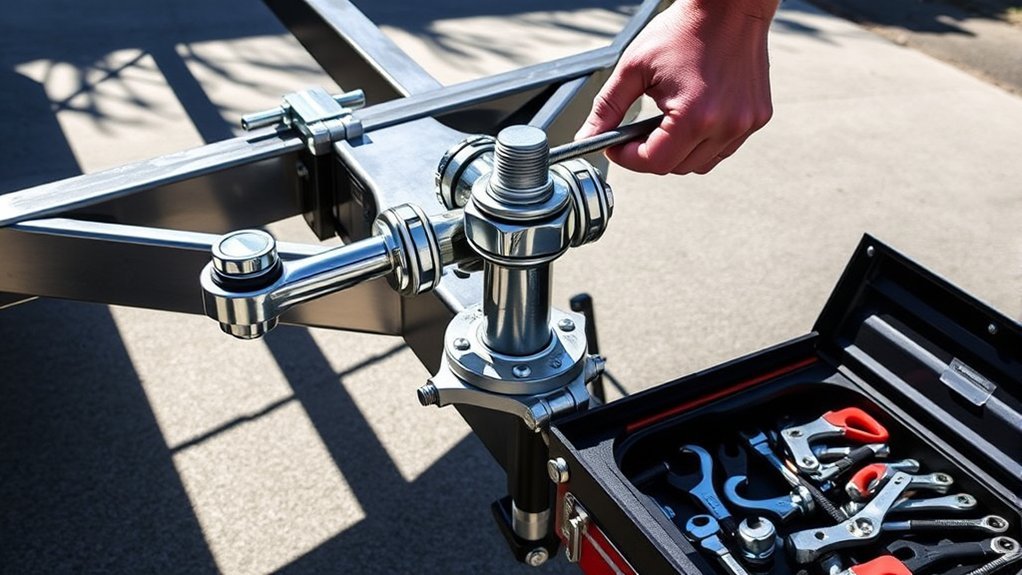
Having established the advantages of a weight distribution hitch, it’s time to tackle the installation process to confirm you can reap those benefits effectively.
Follow these hitch installation tips to enhance your trailer towing safety:
- Measure the heights of your trailer coupler, vehicle rear, and front bumper for accurate setup.
- Secure the weight distribution shank in the receiver tube with a hitch pin, attaching the head unit 1-3 inches above the coupler.
- Adjust the hitch head’s angle using washers, securing it with bolts to establish proper tension for the spring bars.
- After coupling the trailer, engage and lock the hook-up brackets in place for stability.
Once everything’s in place, re-measure the vehicle heights with the trailer attached, confirming adjustments keep within 1/2 inch of the original values.
Avoid These Common Mistakes When Using Your Weight Distribution Hitch
Many trailer owners make critical mistakes when using a weight distribution hitch, which can jeopardize safety and performance on the road. One common error is failing to measure and adjust the height of both the trailer coupler and tow vehicle, resulting in unsafe towing conditions.
Neglecting to torque all hardware to the manufacturer’s specified values can lead to loose connections, heightening the risk of hitch failure.
Additionally, maintaining proper tongue weight is crucial; it should be between 10%-15% of the Gross Trailer Weight (GTW) to prevent trailer sway and guarantee effective braking.
Regular inspections of hitch components for wear and tear are essential, as overlooking this can lead to unexpected failures.
Finally, always readjust your weight distribution hitch when loading changes occur in the trailer. Ignoring these factors can compromise your control and safety on the road.
How to Troubleshoot Issues With Your Weight Distribution Hitch?
If you’re experiencing issues with your weight distribution hitch, it’s essential to identify common symptoms like excessive sway or improper vehicle height.
You can make adjustments by checking the spring bar tension and ensuring your tongue weight is within the recommended range.
Regular inspections of your hitch components will also help maintain towing stability and safety.
Common Symptoms Identified
When towing a trailer, it’s vital to recognize the common symptoms that indicate issues with your weight distribution hitch, as these can directly affect driving safety and vehicle performance.
Here are some signs to watch out for:
- The rear of your tow vehicle sags considerably, suggesting improper adjustment or undersized hitch for the tongue weight.
- A noticeable upward tilt of the truck headlights indicates excessive tongue weight, leading to unsafe conditions.
- Experiencing trailer sway may mean the hitch isn’t properly engaged or that additional sway control is needed.
- A difference greater than 1/2 inch in bumper height before and after coupling signals a need for hitch adjustment.
Stay vigilant to guarantee a safe towing experience!
Adjustment Techniques Explained
Troubleshooting issues with your weight distribution hitch involves several key techniques that can enhance your towing experience.
Start by confirming the hitch’s installation aligns with the manufacturer’s guidelines, checking the height of both vehicle and trailer before and after coupling. If your tow vehicle’s rear dips or the front rises, use adjustment methods like tension balancing by adding or removing chain links to level your stance, keeping the height within ½ inch of its uncoupled state.
Inspect spring bars and brackets for wear, as damaged parts can disrupt stability. If sway occurs, verify the sway control system’s installation and verify tongue weight is 10%-15% of total trailer weight.
Regularly re-measure after altering your load for peak performance.
How to Maintain Your Weight Distribution Hitch for Longevity
Maintaining your weight distribution hitch is essential for guaranteeing its longevity and safe towing performance. Implement these maintenance tips to keep your hitch in top shape:
Proper maintenance of your weight distribution hitch ensures its durability and safe towing capabilities. Regular inspections and care are key.
- Inspect regularly: Check for cracks, rust, or loose components to guarantee safe operation.
- Clean thoroughly: Use a non-corrosive cleaner on the shank, head, and spring bars to prevent rust and maintain functionality.
- Lubricate moving parts: Apply suitable grease to the spring bars and attachment points to reduce friction and ease installation and removal.
- Follow torque specs: Adhere to the manufacturer’s torque specifications for bolts and connections to maintain structural integrity during towing.
Frequently Asked Questions
Can I Use a Weight Distribution Hitch With Any Trailer?
You can’t use a weight distribution hitch with just any trailer. Verify trailer compatibility by checking weight ratings and hitch types. Proper matching enhances stability and handling, making your towing experience safer and more enjoyable.
How Much Weight Can a Weight Distribution Hitch Handle?
A weight distribution hitch can typically handle between 5,000 to 20,000 pounds, depending on the hitch capacity and load limits. Always check manufacturer specifications to verify peak performance and safety for your towing needs.
Is Professional Installation Necessary for a Weight Distribution Hitch?
Professional installation isn’t strictly necessary for a weight distribution hitch, but it offers installation benefits like ideal setup. Consider your DIY skills and comfort with technical adjustments before deciding on self-installation versus hiring a pro.
How Often Should I Check My Weight Distribution Hitch?
You should check your weight distribution hitch every few months as part of your maintenance schedule. Regular safety checks guarantee peak performance and reduce risks, helping you enjoy your travels with peace of mind and freedom.
Will a Weight Distribution Hitch Affect My Vehicle’s Warranty?
Yes, a weight distribution hitch can have warranty implications. While many manufacturers accept vehicle modifications, it’s essential you check with your dealership to guarantee your hitch doesn’t void your warranty. Stay informed and enjoy the freedom of towing!
Conclusion
In wrapping up your weight distribution hitch journey, remember: it’s not just a fancy contraption to make your trailer look good. It’s your trusty sidekick in the wild world of towing, ensuring you don’t accidentally turn your truck into a seesaw. So, keep it maintained, avoid common blunders, and embrace the art of leveling! After all, who doesn’t want their trailer to ride as smoothly as a well-rehearsed dance number? Safe travels, and may your hitch be forever balanced!






Leave a Reply