
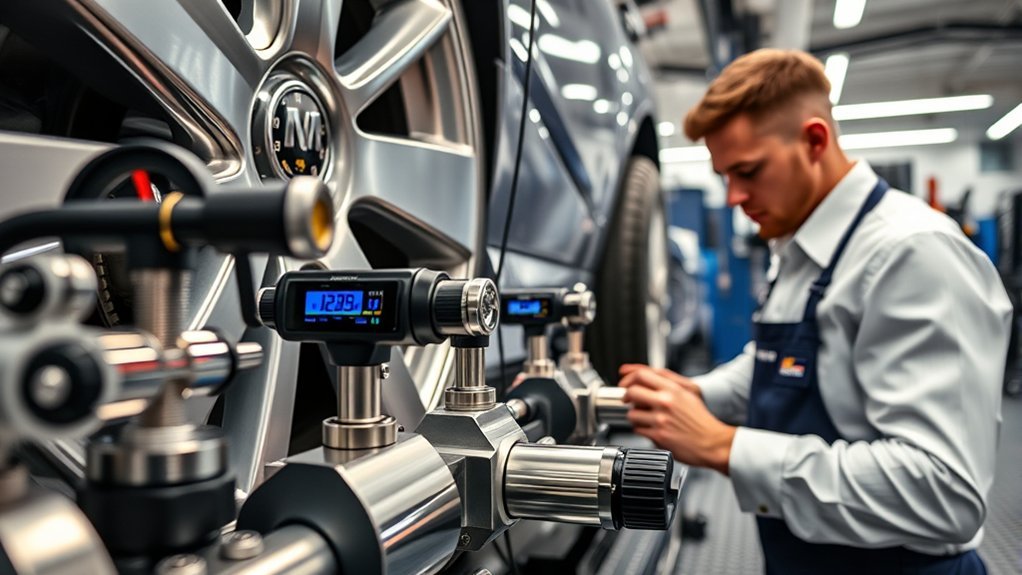
Track alignment settings play a vital role in optimizing your vehicle’s performance on the track. Start by adjusting camber between -2.0° and -3.5° for the front wheels and -1.5° to -3.0° for the rears, ensuring maximum tire contact. Set caster angles between 4° and 6° for better steering stability. For toe, aim for a slight toe-out at the front (0.05–0.10°) and toe-in at the rear (0.10–0.20°). There’s more to explore regarding fine-tuning your setup.
Getting to Know Track Alignment Basics

When you’re tuning your vehicle for ideal performance on the track, understanding track alignment basics is fundamental. The alignment fundamentals revolve around three primary adjustments: camber, caster, and toe. Each plays a significant role in how your car handles and performs.
Camber settings optimize tire contact during cornering, with front angles typically between -2.0° and -3.5° and rear settings from -1.5° to -3.0°.
Optimizing tire contact during cornering is crucial, with front camber angles typically set between -2.0° and -3.5°.
Caster adjustments enhance steering feel and stability, where higher values boost turn-in response.
For toe settings, a slight toe-out in the front (around 0.05–0.10° total) enhances turn-in, while a slight toe-in at the rear (about 0.10–0.20° total) increases stability.
Regularly checking tire temperatures and wear after alignment adjustments is essential. This guarantees your setup effectively supports both handling and performance, paving the way for a liberating driving experience on the track.
How to Optimize Camber for Improved Tire Performance
Optimizing camber settings is crucial for enhancing tire performance, especially during cornering. Start by setting your front wheels between -2.0° and -3.5° and your rear wheels between -1.5° and -3.0°. These camber adjustments maximize the tire contact patch, improving grip.
However, be cautious—too much negative camber can reduce straight-line traction and increase tire wear.
After track sessions, check tire temperatures and wear patterns. Ideal settings should show even temperatures across the tread surface. If you notice excessive wear on the inner or outer shoulders, it’s time for adjustments.
Make small changes to your camber and re-evaluate frequently, particularly after altering ride height or suspension geometry. Regular validation of your camber settings guarantees consistent performance and handling characteristics, allowing you to liberate your driving experience with confidence.
Setting Caster for Better Steering Response and Stability
Setting the right caster angle is vital for enhancing your vehicle’s steering response and stability on the track. Positive caster angles, typically between 4 to 6 degrees, greatly improve straight-line stability and turn-in feel. You’ll notice a more responsive car thanks to the dynamic camber gain during cornering.
When using caster adjustment techniques, it’s important to maintain equal left and right caster for balanced handling, especially if you’re optimizing for a specific track direction. Be mindful of the steering axis impact; verify there’s enough clearance to prevent interference with suspension components during full steering lock.
Proper caster settings not only improve your steering but also reduce tire wear and enhance cornering grip. By fine-tuning your caster angle, you release your vehicle’s full potential, giving you that thrilling liberation as you conquer every turn on the track.
Dialing in Front and Rear Toe for Enhanced Stability and Cornering
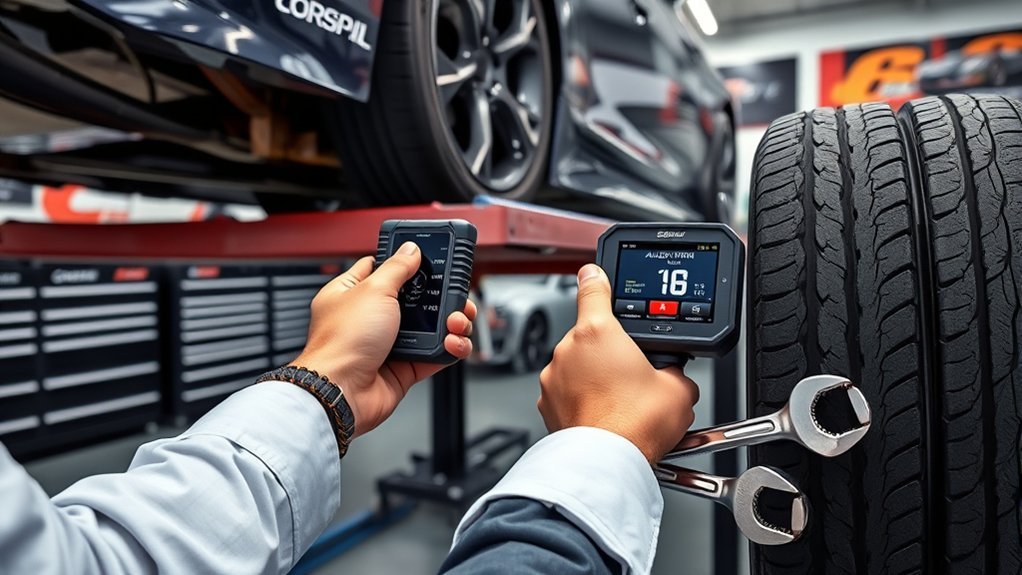
To achieve enhanced stability and cornering performance, dialing in the front and rear toe settings is essential.
Start with a slight toe-out of 0.05 to 0.10 degrees at the front, which boosts turn-in responsiveness while keeping stability intact.
For the rear, aim for a slight toe-in of about 0.10 to 0.20 degrees, improving vehicle stability during acceleration and cornering.
Reassessing Alignment After Track Testing?
After track testing, reassessing your alignment is essential for fine-tuning your vehicle’s performance. Here are key steps to take:
- Check Tire Temperature: Measure temperatures across the contact patch. Aim for a 10-15°F range between inside and outside tires to guarantee maximum grip.
- Evaluate Wear Patterns: Inspect tires for excessive wear on the inner or outer edges. This can indicate misalignment issues that need immediate attention.
- Monitor Car Behavior: Pay close attention to how the car handles during entry, mid-corner, and exit phases. Adjust alignment settings to support your desired handling characteristics.
- Validate Ride Height and Suspension: Confirm that ride height and suspension components are consistent post-testing, as any changes can impact alignment and overall vehicle dynamics.
Document all observations and adjustments made after track testing. This detailed record will help you refine your alignment setup over time.
Frequently Asked Questions
How Often Should I Check My Track Alignment Settings?
You should check your track alignment settings regularly, ideally every few months. Routine checks help maintain alignment stability, ensuring your equipment performs efficiently and liberating you from unexpected issues that can disrupt your workflow.
Can Alignment Settings Vary by Weather Conditions?
Yes, alignment settings can vary due to weather conditions. Rain, snow, or extreme temperatures can impact alignment precision. You should regularly check and adjust your settings to guarantee peak performance and safety in changing weather.
What Tools Do I Need for Track Alignment Adjustments?
For track alignment adjustments, you’ll need alignment tools like laser levels and measuring tapes, along with adjustment techniques such as shimming and tightening. These guarantee precision, helping you achieve ideal track performance and safety.
How Do Alignment Settings Affect Tire Lifespan?
Think of your tires as dancers; alignment precision guides their steps. When misaligned, they wear unevenly, leading to premature tire wear. Keeping them aligned guarantees every performance lasts longer, giving you freedom on the road.
Is Professional Alignment Necessary for Track Performance?
Yes, professional alignment’s essential for track performance. It optimizes your vehicle’s handling and stability, enhancing grip and reducing tire wear. By ensuring precise alignment, you release significant performance benefits, allowing you to fully enjoy your driving experience.
Conclusion
In conclusion, mastering track alignment settings transforms your driving experience. By optimizing camber, setting caster, and dialing in toe, you enhance tire performance, steering response, and cornering stability. After testing your setup, reassess to fine-tune your ride. Embrace the process, adapt to the feedback, and enjoy the thrill of a perfectly aligned vehicle. With each adjustment, you’ll feel the difference on the track, leading to improved lap times and greater confidence behind the wheel.







Leave a Reply