
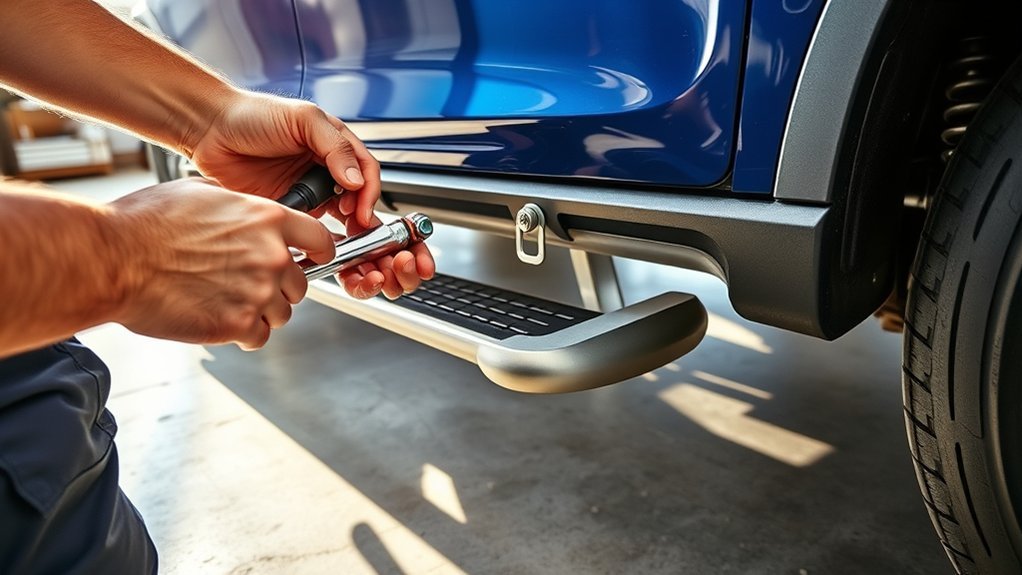
To install running boards, gather essential tools like a ratchet set, box end wrenches, and safety gear. Start by organizing parts and aligning bolt plates in factory holes. Next, finger-tighten the brackets, then secure them with an impact driver. Position the running boards with threaded sections facing downward. Regular checks for alignment and hardware tightness are vital for safety. This will guide you through setting up running boards effectively and maintaining their performance over time.
How to Install Running Boards: A Step-by-Step Guide
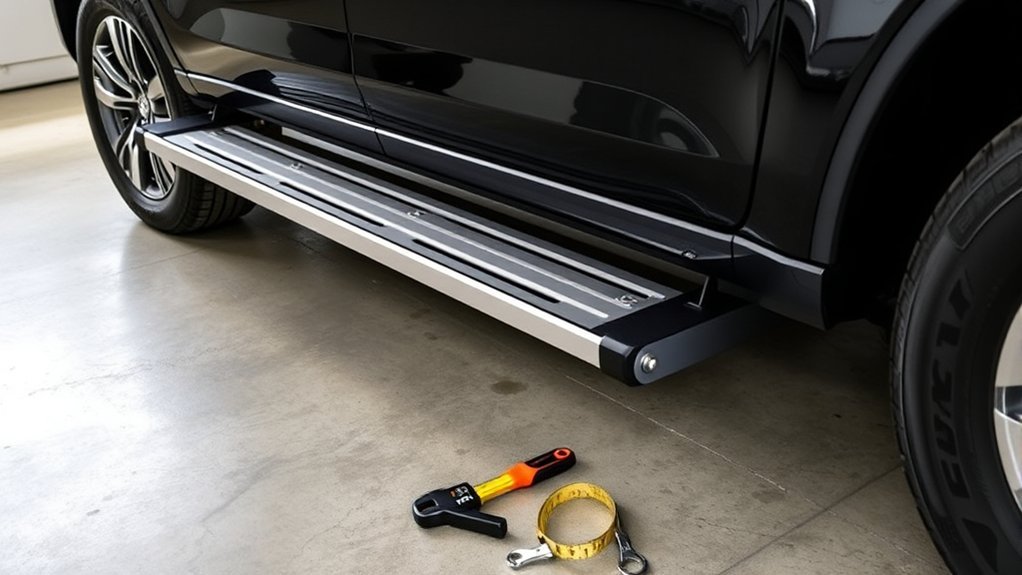
Installing running boards can be a straightforward process if you follow these steps. First, gather your tools: a ratchet and socket set, box end wrenches, and safety gear like glasses and gloves. This guarantees a smooth installation process.
Next, lay out all parts and fasteners from your running board package, checking for completeness and organizing them by installation steps.
Start by installing bolt plates into factory-drilled holes for secure bracket attachment. Finger-tighten the front, center, and rear brackets for later adjustments.
Position the running boards onto the brackets, ensuring that the threaded portions face downward and aligning the bolts with the bracket slots. Firmly secure them in place.
Lastly, after installation, regularly inspect the hardware for any loose bolts and re-tighten as necessary.
With various running board styles available, verify yours match your vehicle’s compatibility to enhance both aesthetics and functionality.
Why You Need Running Boards for Your Vehicle
Running boards enhance your vehicle’s functionality and appeal beyond just installation convenience. They offer significant accessibility benefits, particularly for larger vehicles like trucks and SUVs, making it easier for passengers, including children and pets, to enter and exit safely.
With their robust construction, running boards can support considerable weight, ensuring stability during use.
In addition to practicality, running boards provide aesthetic enhancements that elevate your vehicle’s overall design. Custom-engineered for specific models, they integrate seamlessly into your vehicle’s profile, adding a stylish touch without compromising functionality.
Many designs feature anti-slip surfaces, reducing the risk of slips and falls in adverse weather conditions, enhancing safety for all.
Ultimately, by investing in running boards, you’re not just improving accessibility; you’re also boosting your vehicle’s visual appeal, making it a more attractive and user-friendly option for everyone who rides with you.
Common Installation Mistakes and Troubleshooting Tips
During the installation of running boards, misaligned brackets can lead to fit issues and instability, so it’s vital to double-check their positioning.
Additionally, using incorrect hardware or skipping essential safety steps compromises the installation’s integrity.
Regular inspections post-installation can help catch any loose components before they become a bigger problem.
Misaligned Brackets Issues
When it comes to installing running boards, misaligned brackets can create significant issues that compromise both safety and functionality. To guarantee proper bracket alignment, always check that all brackets match the factory-drilled holes before tightening any bolts.
Even slight misalignments can destabilize the installation. Remember to position the threaded portions of the brackets facing down to avoid misalignment during board attachment.
If your running boards look skewed, loosen the bolts, adjust the brackets, and re-tighten securely. Use a level to confirm even positioning on both sides, as uneven installation affects both aesthetics and performance.
Regularly inspect your installation after initial use to catch any shifts or misalignments, maintaining installation stability and safety.
Incorrect Hardware Usage
Misaligned brackets can often stem from incorrect hardware usage, which is a common pitfall in running board installations.
Using mismatched bolts or failing to verify the appropriate bolt selection can weaken your installation and create safety hazards. Always check that the bolts meet the size and grade specified by the manufacturer to guarantee structural integrity.
Don’t underestimate washer importance; misplacing or omitting them can compromise stability, allowing the boards to loosen over time.
Additionally, double-check torque specifications during tightening—over-tightening can strip threads, while under-tightening may result in a loose fit.
If you encounter issues, consult the manufacturer’s instructions or customer support, as incorrect hardware usage frequently leads to installation errors.
Skipped Safety Steps
Skipping essential safety steps can lead to significant risks during running board installation. Always wear safety glasses and installation gloves to protect yourself from debris and tool injuries. Gather all necessary tools before starting to avoid interruptions that could lead to mistakes.
| Mistake | Solution |
|---|---|
| Skipping safety gear | Always wear safety glasses and installation gloves. |
| Misalignment of brackets | Double-check alignment before tightening bolts. |
| Loosened hardware | Regularly inspect all mounted hardware after installation. |
Be cautious when drilling holes; measure twice to confirm placement. These precautions not only guarantee your safety but also enhance the overall quality and functionality of your installation.
Maintain Your Running Boards
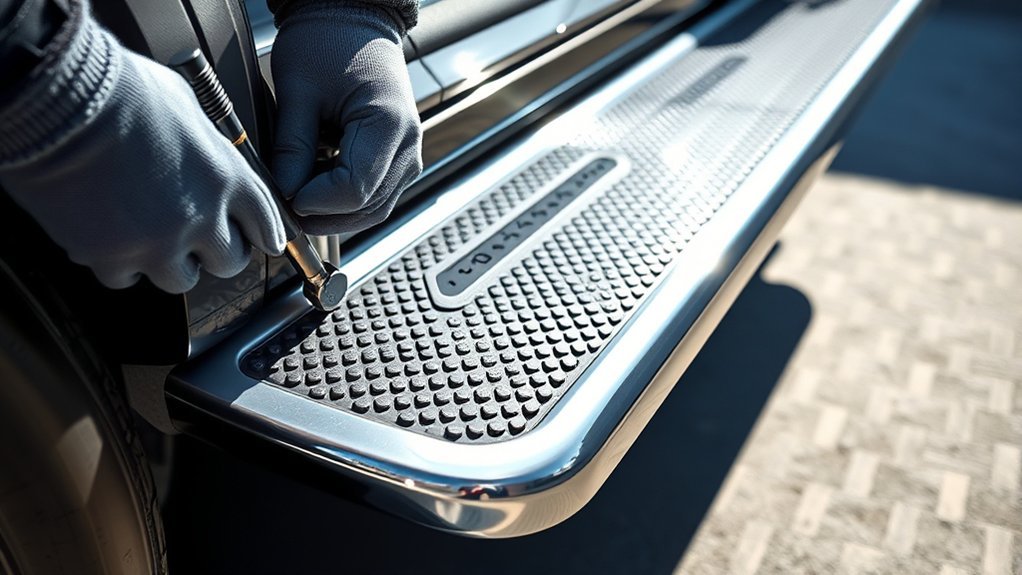
To keep your running boards in peak condition, establish a regular inspection schedule to check for loose hardware and guarantee all bolts are tight.
Use mild soap and water for cleaning, and choose appropriate products that won’t damage the finish.
Additionally, stay vigilant for any signs of wear or damage, addressing these issues promptly to maintain functionality and safety.
Regular Inspection Schedule
Regular inspections of your running boards every few months are essential for ensuring their safety and functionality. Stick to a consistent inspection frequency to catch any issues early. Here’s a maintenance checklist to guide you:
| Inspection Item | Recommended Frequency |
|---|---|
| Hardware Tightness | Every 3 months |
| Signs of Wear | Every 3 months |
| Alignment Check | Every 6 months |
| Rust or Corrosion | Every 3 months |
| Manufacturer’s Guide | As needed |
Look for signs of wear, especially rust or corrosion on metal parts, and address these promptly. Regular checks keep your running boards secure and effective, ensuring a safer driving experience for you and your passengers.
Cleaning Techniques and Products
Properly maintaining your running boards involves consistent cleaning to guarantee they stay in ideal condition.
Use a mild soap and water solution as your primary cleaning product; it effectively removes dirt and grime without harming the surface. Steer clear of abrasive cleaners or scrubbing pads, which can scratch the finish and shorten your running boards’ lifespan.
For metal boards, apply a protective wax or sealant every few months to fend off rust and corrosion. If your running boards feature a textured surface, a soft-bristle brush can help you reach tough spots.
As part of your maintenance tips, regularly inspect for loose hardware or signs of wear, tightening or replacing components when necessary to ascertain safety and performance.
Hardware Tightness Check
Consistent cleaning of your running boards lays the groundwork for effective maintenance, but hardware tightness is equally important for safety and performance.
Regularly inspect all hardware to guarantee bolts and fasteners remain tight and secure. After the initial installation, re-tighten everything following your first few uses, as vibrations can cause loosening.
It’s advisable to conduct a periodic check every few months to prevent safety hazards due to loose hardware. Use a torque wrench to tighten bolts to the manufacturer’s specified torque settings, promoting peak performance.
Document your hardware maintenance and safety inspections to track the condition and reliability of your running boards. This diligence enhances both safety and longevity, allowing you to enjoy your vehicle confidently.
How to Choose Running Boards for Your Truck
Choosing the right running boards for your truck can greatly enhance both functionality and safety. Start by evaluating your material selection; options like rubber, metal, and fiberglass each offer distinct advantages in durability and slip resistance. High-quality materials can support greater loads, improving safety when entering and exiting your vehicle.
Next, consider custom-engineered running boards designed specifically for your truck model to guarantee a perfect fit and peak functionality. Assess the features you need, such as lighted options for improved visibility or retractable designs for a cleaner look when not in use.
Brand comparison is essential, too. Reputable brands like Westin and Dee Zee provide a variety of styles and features tailored to different needs and preferences.
Tools You’ll Need for a Successful Installation
To successfully install running boards on your truck, you’ll need a few essential tools to streamline the process. Proper tool selection can make all the difference in guaranteeing a smooth installation.
| Tool | Purpose | Additional Notes |
|---|---|---|
| Ratchet & Socket Set | Tightening bolts | Essential for securing brackets |
| Wax Pencil | Marking mounting holes | Guarantees precise alignment |
| Impact Driver | Fastening brackets quickly | Saves time during installation |
| Drill | Making additional holes if necessary | Use appropriate bits for your model |
| Box End Wrenches | Loosening or tightening bolts | Useful in tight spaces |
| Creeper/Cardboard | Comfort while working underneath | Improves access and mobility |
Gather these tools before starting your project, and you’ll set yourself up for a successful running boards installation!
Frequently Asked Questions
Can I Install Running Boards Myself?
Yes, you can install running boards yourself with basic tools like a ratchet set and wrenches. This DIY installation is straightforward, requiring no drilling, but always check the hardware periodically for safety and stability.
What Holds Running Boards in Place?
Like a sturdy bridge, mounting brackets hold running boards in place. For installation, align the brackets with factory-drilled holes and secure them with bolts. Regularly check these connections for ideal safety and stability.
How Much Does It Cost to Install Running Boards on a Ram 1500?
Installing running boards on your Ram 1500 typically costs between $250 and $1,000. This includes parts and labor, with DIY options reducing installation costs considerably if you have basic tools and skills.
How to Use Running Boards for Beginners?
To use running boards effectively, step firmly on the surface, ensuring they align with your vehicle’s doors. Understand the different running boards types and their benefits for accessibility, safety, and comfort for all passengers.
Conclusion
To summarize, installing running boards can be a straightforward task if you follow the steps outlined in this guide. By avoiding common mistakes and selecting the right tools, you’ll guarantee a smooth installation process. Remember, maintaining your running boards is just as important as the installation itself; it keeps them looking sharp and functioning well. With a little patience and attention to detail, you’ll hit the ground running and enjoy the benefits of your new running boards.






Leave a Reply