
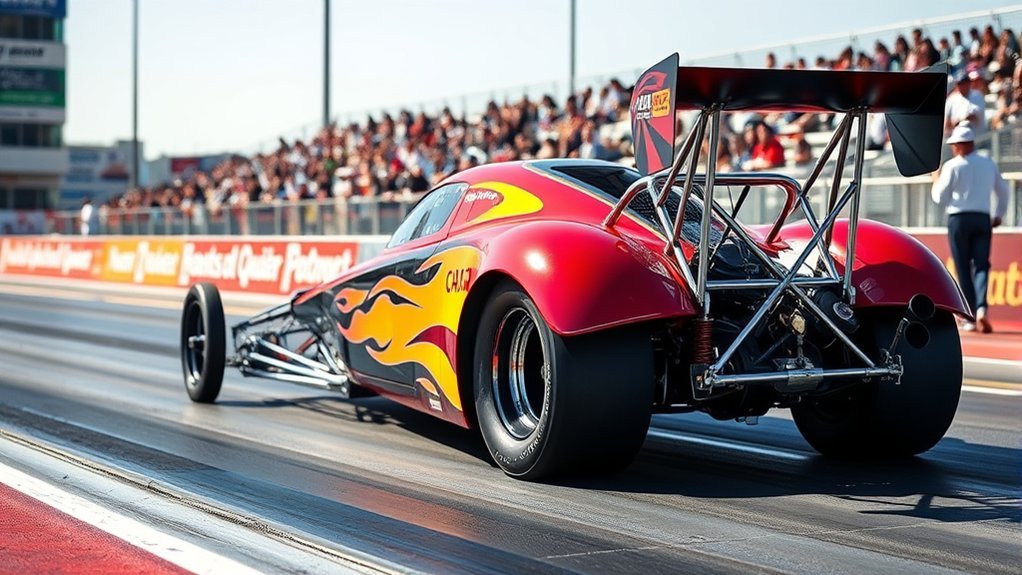
When it comes to roll cage requirements for drag racing in the U.S., it varies widely by state. Generally, a full roll cage is mandatory for vehicles racing 10.99 seconds or faster, while basic roll bars suffice for slower convertibles. States like California and Texas enforce strict standards, while others like Ohio allow basic roll bars with inspections. Understanding these nuances is essential for your safety and compliance. Stay tuned to discover more about vehicle preparation and potential consequences of non-compliance.
What You Need to Know About Roll Cage Requirements?

When it comes to drag racing, understanding roll cage requirements is essential for your safety and compliance.
If you’re racing your vehicle at 10.99 seconds or quicker in the quarter mile, you’ll need a sturdy roll cage constructed from approved roll cage materials like steel or chrome-moly.
For convertibles racing with the top down, roll bars are mandatory if you hit 13.49 seconds.
It’s critical to follow installation guidelines closely; padding must cover all metal surfaces above the dash line to protect against head injuries.
Keep in mind, if your roll cage extends into the rear passenger area, you can’t carry rear passengers, irrespective of seat belt availability.
Additionally, all rear seat passengers must have full lap sash seat belts for ideal safety.
Staying compliant with these regulations isn’t just smart; it’s essential for participating in racing events and ensuring your freedom on the track.
Key Differences Between Basic Roll Bars and Full Roll Cages for Safety Compliance
Understanding the differences between basic roll bars and full roll cages is important for ensuring safety compliance in drag racing.
Basic roll bar designs are generally sufficient for convertible vehicles racing slower than 13.49 seconds, focusing mainly on rollover protection. However, if you’re racing 10.99 seconds or faster or exceeding 135 mph, a full roll cage is necessary. These cages provide thorough structural support, essential for high-speed crashes.
Full roll cages must adhere to strict design standards and utilize high-strength cage materials, ensuring maximum protection. Unlike roll bars, which may allow rear seating, full cages restrict passengers due to safety concerns.
Compliance with these specifications is significant; failing to meet roll cage standards can impact your eligibility in sanctioned events across various states.
Ultimately, choosing the right structure can mean the difference between safety and serious injury on the track.
Roll Cage Regulations: State-by-State Variations
When it comes to roll cage regulations, you’ll find significant differences across states, impacting your racing experience.
Some states enforce strict standards based on vehicle speed, while others may offer exemptions or specific requirements for different car types.
To stay safe and legal, you need to understand your state’s regulations and guarantee compliance with local safety inspections and licensing requirements.
Regional Roll Cage Standards
While you might think that roll cage requirements for drag racing are uniform across the country, they actually vary considerably from state to state. Understanding these regional differences is crucial for your safety and compliance. Some states follow NHRA guidelines strictly, while others are more lenient.
| State | Roll Cage Requirement | Additional Safety Standards |
|---|---|---|
| California | Required for 13.49 seconds | – |
| Texas | Variations allowed | – |
| Florida | Required under 10.99 seconds | Padding must be included |
Compliance with these safety standards guarantees you’re not only competitive but also protected on the track. Ignoring local regulations could lead to disqualification and increased risks during races.
State-Specific Licensing Requirements
Each state has its own licensing requirements that intertwine with roll cage regulations, influencing your eligibility to compete.
For instance, California and Texas enforce stringent standards, demanding compliance with both NHRA and local guidelines based on your vehicle’s performance.
In contrast, Florida and Ohio offer more lenient options, allowing basic roll bars but still requiring inspections for safety compliance.
New York takes it a step further, necessitating detailed documentation for vehicles racing under 11.49 seconds.
These state licensing rules and compliance variances can considerably affect your racing journey.
As a result, it’s essential to research your state’s specific regulations on roll cages to guarantee you meet all necessary criteria and maintain your competitive edge.
Knowledge is power on the track!
Local Safety Compliance Regulations
Understanding local safety compliance regulations is essential for any drag racer aiming to navigate the complexities of roll cage requirements. Each state has its own rules—some mandate roll cages for vehicles running quicker than 11.49 seconds, while others may have different thresholds.
For instance, California and Texas enforce stricter regulations, requiring padding in specific areas. Conversely, Florida often has more lenient rules for amateur local racing, though adhering to NHRA standards is wise.
If you drive a convertible, be aware that some states demand a full roll cage for runs of 13.49 seconds or faster. Always check local laws before modifications, as these regulations can greatly impact your vehicle’s legality and safety during safety inspections.
Roll Cage Requirements Based on Vehicle Speed and Type

When it comes to drag racing, the roll cage requirements are essential for ensuring driver safety, especially as vehicle speed and type vary. Understanding the specific regulations can help you navigate the complexities of safety compliance.
| Speed/Type | Required Roll Cage Type |
|---|---|
| 10.99 seconds or faster | Full roll cage |
| Convertibles (top down) 13.49 seconds or faster | Roll bar |
| Full-bodied vehicles 11.49 seconds or faster | Roll bar |
| 10.00 to 10.99 seconds (unaltered) | May not need full roll cage |
| Padding on metal surfaces above dash | Mandatory safety feature |
The Importance of Compliance for Safety and Performance
When you’re racing, compliance with roll cage regulations isn’t just a formality; it’s a crucial aspect of your safety.
Meeting these standards not only protects you during high-speed runs but also enhances your vehicle’s performance capabilities, allowing you to push the limits with confidence.
Plus, adhering to local regulations guarantees you’re not only safe but also legally racing.
Ensuring Driver Safety Standards
Ensuring driver safety standards in drag racing isn’t just a regulatory requirement; it’s a fundamental aspect of protecting lives on the track. Compliance with roll cage requirements is essential, especially for vehicles running quicker than 11.49 seconds, where roll bars are necessary to safeguard against rollovers.
Each roll cage must meet NHRA standards, using specific materials designed to absorb impact effectively. Additionally, proper padding is important to prevent head injuries, emphasizing the significance of material selection.
If your roll cage extends into the rear passenger area, remember that safety takes precedence over capacity—no rear passengers allowed.
Ultimately, adhering to these standards not only fulfills regulatory compliance but also greatly enhances your safety and performance in high-stakes racing situations.
Enhancing Vehicle Performance Capability
Roll cages play a pivotal role in enhancing vehicle performance capability in drag racing. By improving chassis stiffness, they not only guarantee driver safety but also contribute to superior handling and stability at high speeds.
When you invest in performance upgrades, a well-designed roll cage becomes indispensable, especially for vehicles running 10.99 seconds or faster in the quarter mile. This structural enhancement allows your car to better absorb shock and maintain control during intense maneuvers.
Plus, compliance with safety regulations, like padding on metal surfaces, keeps you protected while maximizing your vehicle’s potential. Understanding local roll cage requirements is vital for both safety and competitive eligibility, helping you release your full racing prowess.
Meeting Regulatory Compliance Requirements
Understanding the importance of regulatory compliance is essential for anyone involved in drag racing. Adhering to roll cage safety standards not only protects you but also enhances your overall racing experience.
If your vehicle runs quicker than 11.49 seconds, it’s mandatory to have a roll bar for full-bodied cars, ensuring driver safety during high-speed runs. Regular roll cage inspections are vital; padding on all metal surfaces above the dash line helps prevent head injuries.
Remember, if your roll cage extends through the rear passenger area, you can’t carry rear passengers, regardless of seat belt availability. Implementing full lap sash seat belts for all rear occupants further minimizes risks.
Stay informed about updates to maintain compliance and safeguard your performance on the track.
How to Prepare Your Vehicle for Racing
Preparing your vehicle for racing is fundamental to guarantee both your safety and peak performance on the track. Effective racing preparation hinges on thorough vehicle maintenance, so follow these essential steps:
- Check for fuel, oil, or coolant leaks.
- Secure your battery with a proper hold-down clamp.
- Install a coolant overflow catch reservoir, if necessary.
- Inspect tires for good condition and verify all lug nuts are tightened.
- Confirm your roll cage meets NHRA specs, including padding on metal surfaces.
Additionally, gear up for tech inspection by gathering required safety equipment, like an approved helmet and fire-retardant gear.
Making sure your vehicle is in top shape not only enhances your racing experience but also minimizes risks on the track.
Stay vigilant, and don’t skip these fundamental steps—your safety and performance depend on it!
What Are the Consequences of Non-Compliance?

Failing to comply with roll cage requirements can have serious repercussions that extend far beyond just missing a race. You risk disqualification from events, crippling your competitive spirit and opportunities.
Penalties incurred can include hefty fines and mandated repairs, forcing you to invest time and money just to get back on the track.
Moreover, inadequate roll cages pose significant safety risks. In the event of an accident, you and your passengers could face severe injuries due to the lack of proper protection.
Tracks may also respond to non-compliance with stricter inspections, placing your vehicle under additional scrutiny in future races.
Continued non-compliance might even lead to a ban from specific venues, further limiting your racing prospects.
Ultimately, ensuring your roll cage meets requirements isn’t just about rules; it’s about safeguarding your passion and well-being in the exhilarating world of drag racing.
Frequently Asked Questions
What Are the NHRA Rules for Roll Cage?
NHRA requires you to use specific roll cage materials that meet safety standards for vehicles running 10.99 seconds or faster. Don’t forget, proper padding on metal surfaces is essential for your protection during races.
What Are the Requirements for the Roll Cage in SCCA?
For SCCA safety, your roll cage must use steel tubing, at least 1.5 inches in diameter and 0.095 inches thick. It should have a minimum of six attachment points and be padded where necessary.
What Are the Requirements for NHRA Roll Cage Certification?
You might think roll cage certification is overly complicated, but it’s essential for safety. Adhere to NHRA safety standards, ensuring your roll cage design meets material specifications, proper padding, and headroom requirements for maximum protection.
What Car Was Banned From the NHRA?
The NHRA has banned vehicles like the Ford Mustang II and Chevrolet Corvair due to safety concerns. These decisions reflect NHRA regulations aimed at ensuring fair competition and protecting drivers and spectators alike.
Conclusion
In summary, understanding and adhering to roll cage requirements is essential for your safety and performance on the track. Imagine a racer named Jake, who skipped proper roll cage installation and faced a devastating crash, leaving him sidelined for months. By ensuring your vehicle meets regulations, you not only protect yourself but also enhance your racing experience. Don’t take chances—invest in a quality roll cage and keep your passion for racing alive and well.






Leave a Reply