
When choosing between a full restoration and a restomod in 2026, weigh authenticity against modern performance. Restorations preserve historical details but can be costly and time-consuming. Meanwhile, restomods offer enhanced comfort and reliability with quicker turnaround but may depreciate faster. Your decision should align with your driving preferences, maintenance tolerance, and investment goals. Consider the long-term implications, and you’ll find factors that reveal which option suits your classic car vision perfectly. Explore further to uncover more insights.
What Is Full Restoration and How Does It Work?
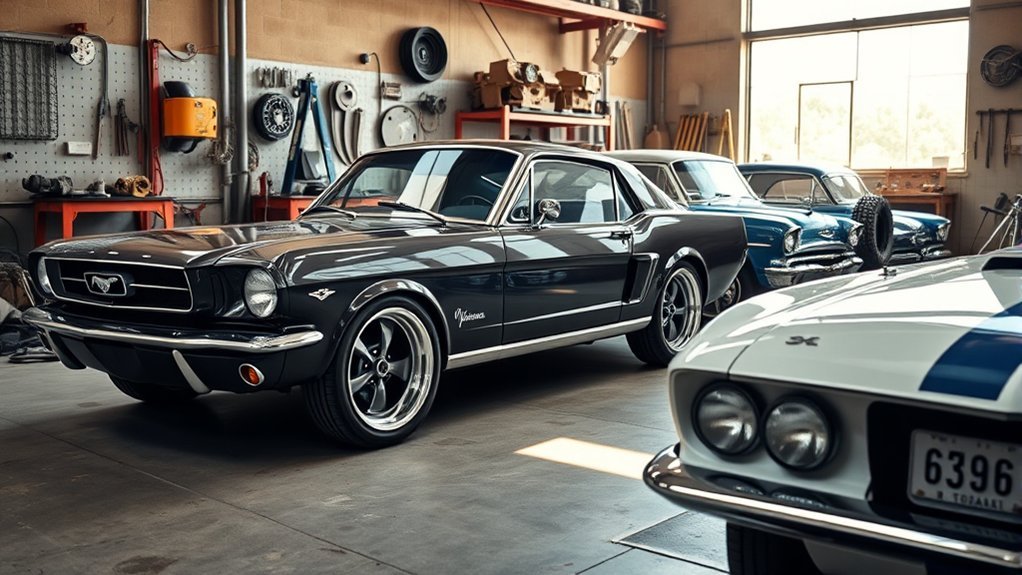
Full restoration is the art of bringing a classic vehicle back to its original glory, meticulously restoring every detail to match factory specifications.
You’ll dive deep into restoration techniques, starting with disassembly, evaluating each classic vehicle component for wear and authenticity. Body repair is essential, addressing rust and dents while ensuring the aesthetics remain true to the original design.
Delve into restoration techniques, meticulously disassembling and evaluating each component for authenticity while preserving the vehicle’s original beauty.
You’ll likely rebuild the engine, sourcing period-correct parts that align with the vehicle’s history. This labor-intensive process can take months or even years, depending on the condition of your classic.
However, for purists and collectors, it’s a labor of love that preserves the vehicle’s legacy for future generations.
While a full restoration can enhance value at shows, it also requires ongoing maintenance, as classic components may be more fragile than modern alternatives.
The journey is challenging but immensely rewarding, offering liberation through historical fidelity.
Benefits of Restoring Your Classic Car
Restoring your classic car offers a chance to preserve its historical accuracy, appealing to purists who cherish original craftsmanship.
Not only can a quality restoration boost your vehicle’s resale value, but it also retains the unique character that makes vintage cars so special.
Plus, the process connects you to automotive history, enriching your ownership experience.
Historical Accuracy Preservation
When you choose to restore a classic car to its original factory specifications, you’re not just reviving a vehicle—you’re preserving a piece of history. This commitment to historical accuracy maintains crucial details like paint color and upholstery, reflecting the era’s essence.
While authenticity challenges may arise in sourcing period-correct parts, overcoming these hurdles is necessary for achieving an authentic finish that speaks to purists and collectors alike. A meticulously restored vehicle retains its legacy, contributing to automotive history and allowing future generations to appreciate its craftsmanship.
Although full restorations require significant labor and financial investment, they guarantee your car remains true to its original character, enhancing its cultural significance and celebrating its historical importance.
Increased Resale Value
Investing in a classic car restoration can greatly boost its resale value, making it a compelling choice for enthusiasts and collectors alike.
Well-executed restorations often command higher prices at auctions, driven by market demand for authentic, historically significant vehicles. If you restore a rare model to factory specifications, you could see appreciation in value of 20% or more over your initial investment.
Purist buyers are willing to pay a premium for authenticity, often outpacing modified restomods. Additionally, having documentation of original parts and workmanship can push your car’s price well above similar models lacking restoration.
The robust resale market for fully restored vehicles underscores the desirability of pristine examples that showcase original design and engineering, ensuring a rewarding return on your investment.
Unique Character Retention
While many enthusiasts dream of transforming a classic car into a showpiece, preserving its unique character often takes precedence during restoration.
By focusing on character preservation, you maintain original paint, patina, and factory interiors, enhancing the vehicle’s historical authenticity. Minimal intervention allows you to keep the charm and quirks that define your car’s individuality, creating a deeper emotional bond with its heritage.
Using original components and factory-correct finishes not only retains this essence but also boosts appeal among collectors. Restorations that address mechanical and safety issues while preserving aesthetics guarantee your classic car’s unique character remains intact, offering future generations a glimpse into automotive history and a celebration of individuality enhancement.
Drawbacks of Full Restoration You Should Consider
When considering a full restoration, you need to be aware of the significant costs and time commitment involved.
Many projects can stretch for months or even years, draining both your wallet and patience.
Plus, the end result might limit how often you can actually use your classic car, as it may not be as practical for daily driving.
High Costs Involved
Before diving into a full restoration, it’s essential to understand the high costs involved that can quickly escalate your budget.
Full restorations can easily exceed $50,000, and unexpected expenses often arise, especially when sourcing rare parts. You’ll need to engage in thorough financial planning, as costs can balloon beyond your initial estimates.
Vintage components may require ongoing maintenance, leading to additional headaches and expenses down the line. Plus, the restoration process can take months or even years, adding to your financial strain with storage and maintenance costs during that time.
If you’re not prepared for these financial realities, your dream restoration could turn into a costly burden, overshadowing the joy of owning a classic vehicle.
Time-Consuming Process
Understanding the financial implications of a full restoration is just one piece of the puzzle; the time commitment required can be equally challenging.
A full restoration often demands a significant time investment, stretching from several months to years, depending on your car’s condition. You’ll face meticulous disassembly, body repairs, and sourcing original parts, which can lead to frustrating delays, especially when rare components are involved.
This labor-intensive process can quickly become overwhelming, requiring effective project management to coordinate with specialists and suppliers. If timelines aren’t met, frustration can set in.
Before diving into a restoration, consider whether you’re ready for this extensive journey, as the time commitment may affect your passion for the project.
Limited Daily Usability
While the allure of a fully restored classic car is undeniable, you’ll quickly find that its limited daily usability can be a significant drawback.
These cars often prioritize authenticity over modern usability, making daily driving a challenge. The original components may not align with today’s performance and safety standards, creating an outdated driving experience.
You might also struggle to source rare parts, leading to longer maintenance times and potential reliability issues. Additionally, the upkeep required can be time-consuming and costly, especially if you don’t drive the vehicle regularly.
Ultimately, the comfort and convenience of a fully restored car often fall short compared to restomods, which can diminish the joy of ownership for practical use.
How Does a Restomod Differ From Restoration?
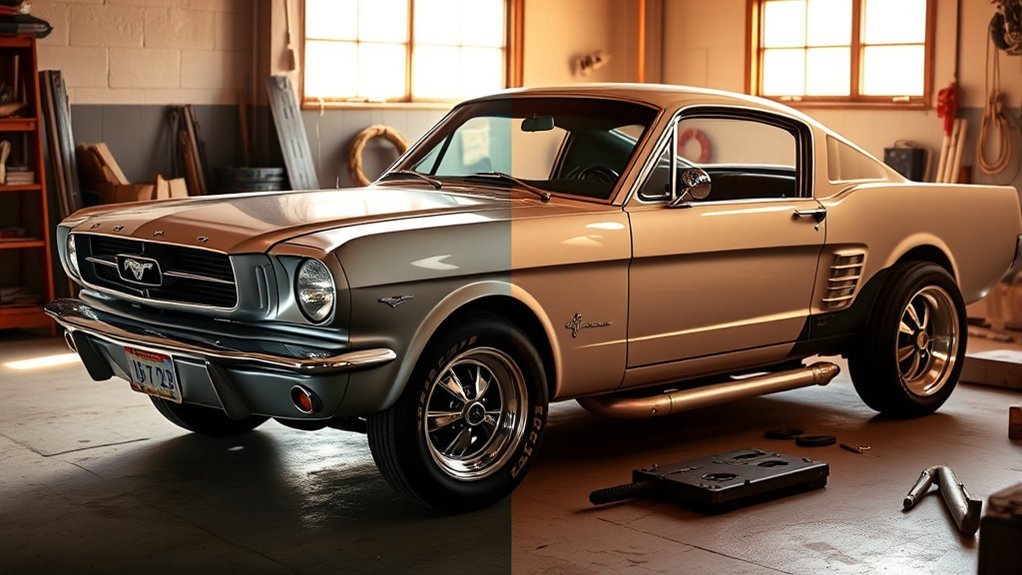
When considering classic cars, it’s essential to grasp how a restomod differs from a traditional restoration. A restomod combines classic vehicle aesthetics with modern upgrades, allowing you to enjoy restomod features like enhanced engines, fuel injection, and upgraded safety.
In contrast, restoration focuses on returning the vehicle to its original factory condition, utilizing period-correct parts and restoration techniques that may take considerable time and often cost more due to sourcing rare components.
Restomods generally offer improved comfort and reliability, making them better suited for daily driving and long trips.
Restorations, however, cater to purists who value historical accuracy, maintaining original paint, upholstery, and mechanical systems.
Ultimately, your choice hinges on whether you seek the allure of vintage style blended with modern functionality or the pure, unaltered essence of classic cars. Each approach has its merits, aligning with different passions and lifestyles.
Advantages of Choosing a Restomod for Your Classic Vehicle
Choosing a restomod for your classic vehicle opens the door to a world of advantages that blend nostalgia with modern convenience. Here are three compelling reasons to evaluate:
- Performance Upgrades: Restomods equip your classic ride with powerful engines and advanced suspension systems, enhancing speed and handling while ensuring reliability.
- Modern Technology: With features like air conditioning, power steering, and updated audio systems, restomods make daily driving a breeze, merging comfort with classic charm.
- Personalization: You can tailor every detail—from interior materials to tech features—creating a unique vehicle that reflects your style, all while enjoying better resale value than fully restored cars.
In just 12-14 weeks, you can transform your classic into a modern marvel, combining the best of both worlds.
Embrace the freedom of driving a vehicle that honors its heritage yet thrives in today’s world.
Downsides of Restomods: What to Know
Restomods certainly offer a fascinating blend of classic charm and modern performance, but they come with their own set of challenges that potential owners should consider.
One major downside is market demand; restomods often cater to a niche audience, which can lead to resale difficulties and lower demand compared to fully restored classics.
Additionally, while modifications enhance performance, they could detract from the original aesthetic that purists cherish, making your vehicle less appealing to certain buyers.
The value of restomods also tends to depreciate faster than their all-original counterparts, impacting your long-term investment returns.
Moreover, modification quality varies greatly depending on the builder’s craftsmanship, leading to inconsistencies in reliability.
Finally, satisfying both modern enthusiasts and traditional purists can prove tricky, as each group has its own distinct preferences.
Consider these factors carefully before diving into the restomod world.
Key Considerations for Choosing Between Restoration and Restomod
How do you envision your dream vehicle? When deciding between restoration and restomod, consider these key factors:
- Driving Experience: Do you prefer the authenticity of a classic ride or the modern performance and comfort of a restomod?
- Maintenance Tolerance: Are you ready to tackle restoration challenges that come with vintage components, or would you rather enjoy the reliability of restomod features?
- Long-Term Plans: Is your goal to invest for historical value, or are you looking for a daily driver that combines classic aesthetics with modern enhancements?
Making the Best Decision for Your Classic Car in 2026?
What factors should you prioritize when deciding on your classic car project in 2026? First, consider your driver preferences. If you crave modern performance and comfort, a restomod might be your best bet. They enhance your classic car with upgraded engines and safety features, offering an exciting driving experience.
On the other hand, if you value authenticity and historical accuracy, a full restoration could be more appealing, despite the longer timeline and higher costs.
Next, keep an eye on market trends. Restomods generally hold higher resale values due to their usability and modern features, making them a smart investment.
While restorations can exceed $50,000, restomods span a broader range from $40,000 to $100,000, depending on customization.
Ultimately, weigh your priorities against these factors to make an informed decision that aligns with your vision for your classic car.
Frequently Asked Questions
Are Restomods a Good Investment?
Yes, restomods are a great investment. Their advantages include modern performance and unique customization, appealing to a wider market. As demand grows, you’ll likely see significant returns on your investment over time.
Will 2026 Be a Better Time to Buy a Car?
Yes, 2026’s landscape is ripe for buying a car. With future car trends favoring EVs and better financing options, you’ll want to employ smart buying strategies to seize the moment and drive into a sustainable future.
Do Restomods Hold Value?
Yes, restomods can hold significant value retention, especially as market trends favor their blend of classic style and modern performance. Buyers increasingly appreciate these vehicles, often willing to pay a premium for quality enhancements and unique features.
Has Anyone Actually Won a Car From Restomods?
Yes, people have indeed won cars from restomod giveaways. These contests often feature modded vehicles that combine classic charm with modern upgrades, attracting enthusiastic participants keen to experience their dream cars firsthand.
Conclusion
In 2026, choosing between a restomod and a full restoration feels like picking between a classic vinyl record and a high-tech streaming service. Both have their charm, but it ultimately depends on your priorities. If you crave modern performance with vintage aesthetics, a restomod might be your jam. However, if authenticity speaks to your heart, a full restoration’s the way to go. Weigh the pros and cons carefully to guarantee your classic car reflects your unique vision.







Leave a Reply