
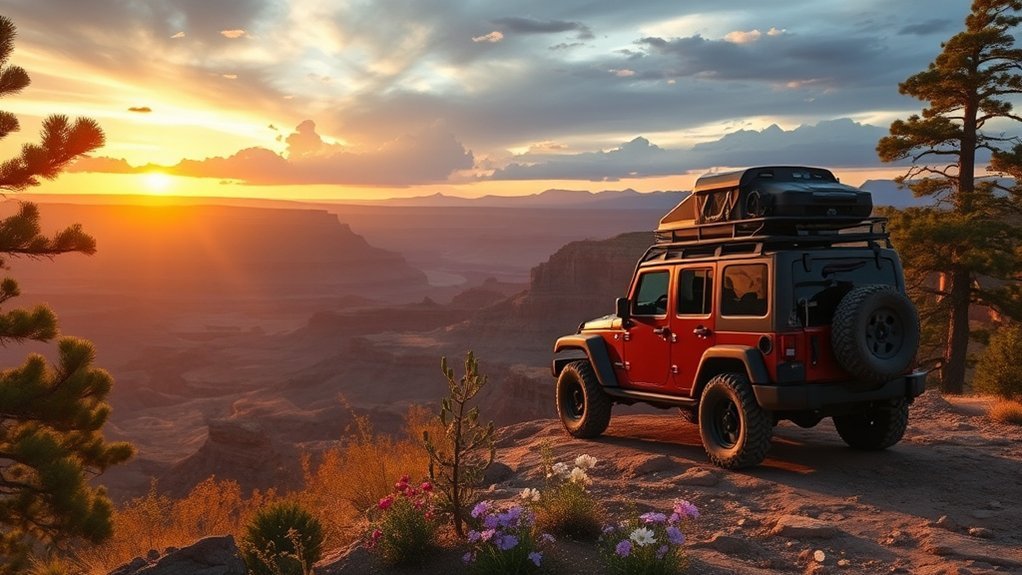
Overlanding in national parks offers an exhilarating blend of adventure and self-reliant travel. You’ll explore breathtaking landscapes and remote areas often overlooked by typical tourists. However, it’s vital to understand regulations and permits, as many parks require you to stick to designated trails and campsites. Equip yourself with the right gear, a high-clearance 4WD vehicle, and navigation tools to guarantee a safe journey. Keep going to discover the best practices and top parks for your overlanding adventure!
What Is Overlanding and Why It’s Great for National Parks?
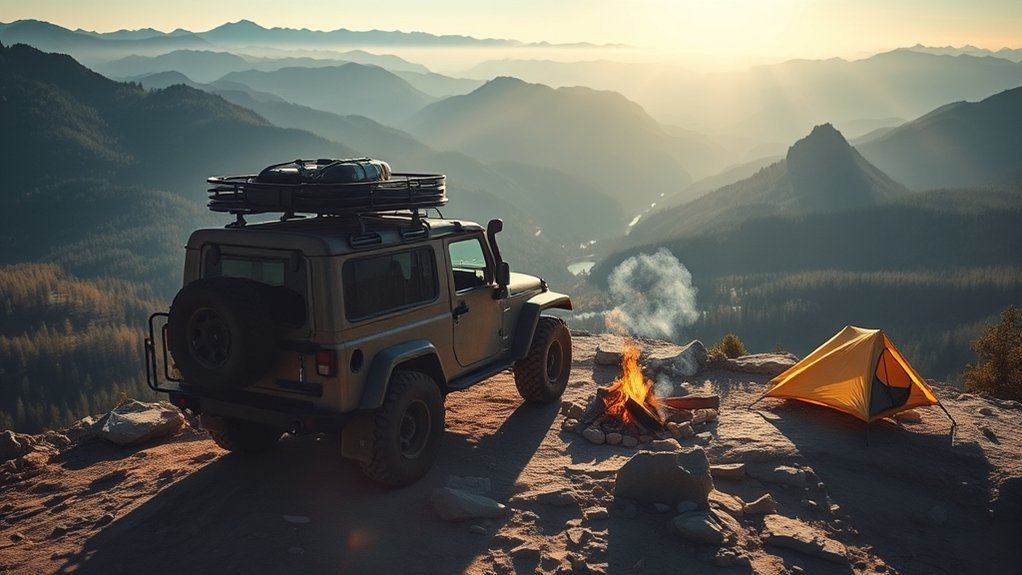
Overlanding is an exhilarating way to explore national parks, combining adventure with the freedom of self-reliant travel. Picture yourself traversing through rugged terrains, where places like Canyonlands offer hundreds of miles of unpaved roads perfect for your 4×4.
Overlanding benefits your spirit of exploration, allowing you to explore remote areas that typical tourists miss. You’ll camp under the stars, hike hidden trails, and connect deeply with nature, far from the bustling crowds.
As you embrace the backcountry experiences in parks like Death Valley and Big Bend, you’ll also discover the importance of sticking to designated trails and camping spots to protect the fragile ecosystems.
Engaging in overlanding adventures means supporting sustainable tourism, as you’ll likely follow Leave No Trace principles, ensuring that these breathtaking landscapes remain pristine for future generations.
Is Overlanding Allowed in National Parks?
Wondering if you can take your overlanding adventure into national parks? The answer is yes, but you’ll need to navigate some overlanding regulations and national park restrictions.
Yes, you can overland in national parks, but be mindful of regulations and restrictions to protect these stunning ecosystems.
Many parks allow overlanding, but it’s typically confined to designated roads and trails to safeguard fragile ecosystems. Some parks, like Death Valley and Canyonlands, provide specific areas for vehicle-based backcountry camping, while others, such as the Grand Canyon, require you to stick to designated campsites—no dispersed camping here!
Before you hit the road, it’s essential to research each park’s unique guidelines, permits, and road conditions. The National Park Service prioritizes preservation, so overlanding opportunities may be more limited compared to lands managed by the Bureau of Land Management.
Embrace the thrill of exploration, but remember that respecting the land guarantees these beautiful places remain for future adventurers like you!
Essential Gear and Supplies for Overlanding
As you prepare for your overlanding adventure, having the right gear and supplies can make all the difference between a smooth journey and a challenging one.
Here’s a quick checklist of overlanding essentials you shouldn’t forget:
- High-clearance 4WD Vehicle: Make sure it has at least 8 inches of ground clearance, low-range transfer case, and all-terrain tires.
- Comprehensive Camping Equipment: Pack a tent, sleeping bags, cooking gear, a first aid kit, and emergency items like a spare tire and duct tape.
- Water Management: Carry at least 1.5 gallons of water per person per day, plus extra for cooking and cleaning.
- Navigation Tools: Equip yourself with a dedicated GPS device featuring offline maps, and apps like GAIA GPS or OnX Offroad.
With these essentials, you’ll be set to explore the wild beauty of national parks while embracing the freedom of overlanding!
Navigating Permits and Regulations for Overlanding in National Parks
Before you hit the trails, it’s essential to familiarize yourself with the permits and regulations that govern overlanding in national parks. Each park has its own permit types, and many require advance reservations for backcountry camping or popular trails—often six months ahead through platforms like Recreation.gov.
You’ll find that the National Park Service enforces stricter guidelines compared to other agencies, limiting dispersed camping to designated sites to protect the environment.
Fees can vary; for instance, Joshua Tree charges $30 per vehicle for entry and $35 per night for camping.
Understanding regulation differences between the National Park Service and the Bureau of Land Management is key. While the former is more restrictive, the BLM often offers free camping options, giving you greater freedom.
Top National Parks for Overlanding Adventures
When you’re planning your next overlanding adventure, consider the unique terrains and regulations of top national parks that await your exploration.
From the remote landscapes of Death Valley to the rugged roads of Canyonlands, each park offers something special for the adventurous spirit.
Understanding the essential park regulations will guarantee you make the most of your journey while respecting these incredible environments.
Best Overlanding Parks
If you’re seeking an unforgettable overlanding experience, the United States boasts a variety of national parks that cater to adventure enthusiasts.
Here are some of the best overlanding parks that offer thrilling escapades and top camping spots:
- Death Valley National Park – With over 3.4 million acres and 31 unpaved roads, it’s perfect for extreme conditions.
- Canyonlands National Park – Explore hundreds of miles of unpaved roads, including the iconic 100-mile White Rim Road.
- Big Bend National Park – Enjoy maintained and primitive dirt roads, but remember, dispersed camping isn’t allowed.
- Joshua Tree National Park – Experience diverse landscapes and seven backcountry roads, with dispersed camping nearby.
These parks offer some of the best scenic routes, ensuring your overlanding adventure is both liberating and unforgettable!
Unique Terrain Features
Exploring the unique terrain features of national parks during your overlanding adventures opens up a world of stunning landscapes and breathtaking geological wonders. Each park boasts diverse terrain types that cater to your adventurous spirit. Here’s a glimpse of some top destinations:
| National Park | Unique Geological Features | Terrain Type |
|---|---|---|
| Death Valley National Park | Salt flats, sand dunes | Unpaved roads |
| Canyonlands National Park | Canyons, mesas, buttes | 4×4 routes |
| Big Bend National Park | Rugged mountains, rivers | Maintained/primitive |
| Joshua Tree National Park | Iconic rock formations | Backcountry roads |
| Arches National Park | Natural stone arches | 4×4 roads |
When you embrace these parks, you’ll discover a thrilling landscape that invigorates your soul.
Essential Park Regulations
Overlanding in national parks offers an exhilarating way to connect with nature, but it’s vital to understand the regulations that keep these pristine environments protected.
To guarantee you’re respecting park conservation, follow these essential park regulations:
- Stick to designated roads and trails—off-road travel harms ecosystems.
- Book permits for popular parks like Canyonlands up to 90 days in advance via Recreation.gov.
- Use only designated campgrounds in parks like Big Bend and Arches—dispersed camping isn’t allowed.
- Be ready for vehicle inspections to comply with ORV safety regulations.
Embracing overlanding etiquette not only enhances your adventure but also safeguards these treasured landscapes for future generations.
Choose the Right Vehicle and Gear for Overlanding
Choosing the right vehicle and gear for your overlanding adventure can make all the difference in traversing the rugged terrains of national parks. Opt for high-clearance vehicle types, ideally with at least 8 inches of ground clearance and a low-range transfer case. These features are vital for steering through challenging backcountry roads.
Equip your ride with all-terrain or aggressive tires for enhanced traction and stability.
Don’t forget to pack important gear options like recovery tools—think winches, tow straps, and shovels—to handle unexpected situations. Proper water management is key; carry a minimum of 1.5 gallons of water per person per day, plus extra for cooking and cleaning.
Also, utilize navigation tools like dedicated GPS units or apps like GAIA GPS and OnX Offroad to guarantee you stay on course.
With the right vehicle and gear, you’re set for an exhilarating journey through nature’s wild beauty.
Safety Tips for Overlanding in National Parks
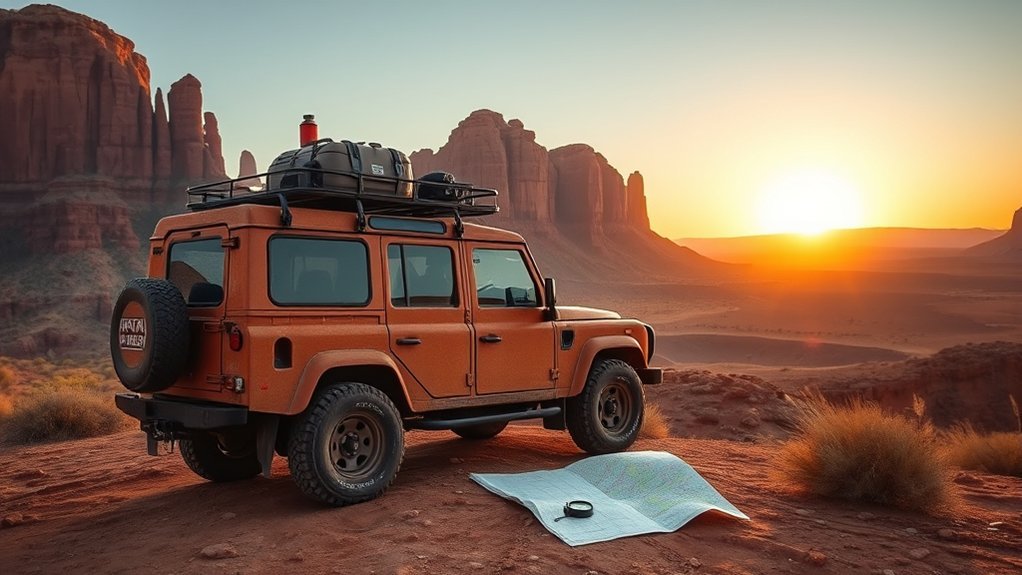
As you hit the rugged trails of national parks, staying safe should be at the forefront of your mind. Overlanding is an adventure, but it requires smart planning. Here are some essential safety tips:
- Know the Rules: Always check state and federal ORV regulations and park rules to avoid fines or penalties.
- Stay Hydrated: Carry at least 1.5 gallons of water per person each day, plus extra for cooking and cleaning.
- Be Vehicle-Ready: Make sure your 4WD vehicle has high-clearance capabilities, including locking differentials and all-terrain tires for traversing challenging terrains.
- Master Navigation Skills: Use dedicated GPS units or navigation apps with offline maps to avoid getting lost in remote areas where cell service may fail.
Best Practices for Leave No Trace Principles
When you hit the road for your overlanding adventure, planning ahead is essential to minimize your impact on the beautiful landscapes you explore.
Remember to dispose of waste properly and respect wildlife habitats, ensuring that both nature and fellow visitors can enjoy the experience just as much as you do.
Plan Ahead Effectively
Planning ahead effectively is essential for anyone enthusiastic to explore national parks while adhering to Leave No Trace principles.
To guarantee a fulfilling experience, follow these best practices:
- Research camping regulations and road use specific to your chosen park to stay compliant and protect delicate ecosystems.
- Travel on durable surfaces, like established trails and campsites, to minimize your impact and preserve vegetation.
- Leave what you find—refrain from collecting rocks, plants, or artifacts to safeguard the park’s natural beauty for future visitors.
- Respect wildlife by observing from a distance and securely storing food in bear-proof containers to avoid attracting animals to your campsite.
Proper Waste Disposal
Proper waste disposal is essential for protecting the stunning landscapes and diverse wildlife of national parks, ensuring that future visitors can enjoy these natural treasures just as you do.
Effective waste management involves packing out all trash, including food wrappers and leftover items, to prevent harm to wildlife and maintain the park’s beauty.
When it comes to human waste, always use designated restroom facilities or pack out with WAG bags in the backcountry to avoid water contamination.
Dispose of greywater at least 200 feet away from trails and water sources to safeguard the ecosystem.
Familiarize yourself with specific park regulations; they vary by location and camping type, but adhering to them greatly reduces your environmental impact.
Respect Wildlife Habitats
Maintaining the pristine beauty of national parks goes beyond just proper waste disposal; it also hinges on how you interact with the wildlife that calls these areas home.
To guarantee habitat preservation and enrich your wildlife encounters, follow these best practices:
- Keep a safe distance from all wildlife to reduce stress and avoid dangerous situations.
- Use bear-proof containers for food storage in bear-active areas to prevent animals from becoming habituated to human food.
- Never feed wildlife; it disrupts their natural foraging and harms their survival.
- Stay on designated trails to protect delicate ecosystems and avoid disturbing wildlife habitats.
Budgeting for Your National Park Overlanding Experience
While exploring the wild beauty of national parks through overlanding, budgeting effectively guarantees you can enjoy the adventure without financial stress.
Start with a budget breakdown: entry fees are about $30 per vehicle, but consider the $80 America the Beautiful pass for unlimited access.
Camping permits range from $6 to $45 per night, plus backcountry permits costing $5 to $25 per person.
For fuel, estimate costs based on your total driving distance and current gas prices, assuming 20 miles per gallon for your vehicle.
Don’t forget food—set aside $10 to $20 daily for groceries.
It’s wise to plan for unexpected expenses, so allocate an additional 10-15% of your total budget for contingencies.
Frequently Asked Questions
What Types of Wildlife Should I Be Aware of While Overlanding?
While overlanding, you should watch for bears, snakes, and coyotes. Wildlife encounters can be thrilling, but always take safety precautions. Keep your distance, store food properly, and respect their habitat to guarantee a safe adventure.
How Do I Charge Devices While Camping in Remote Areas?
You can charge devices in remote areas with solar chargers and portable batteries. Set up a solar charger during the day for free energy, or use portable batteries to keep your devices powered up whenever needed.
Are There Specific Overlanding Clubs or Communities for National Park Enthusiasts?
Yes, you’ll find various overlanding clubs and national park communities online. Joining these groups connects you with fellow adventurers, sharing tips, routes, and experiences that inspire your next thrilling journey through breathtaking landscapes.
What Time of Year Is Best for Overlanding in National Parks?
Spring’s splendid blooms and fall’s fiery foliage are the best seasons for overlanding in national parks. Consider weather conditions, as summer’s swelter can stifle your spirit, while winter’s chill can challenge your adventure.
Can I Bring My Pets Along on an Overlanding Trip?
Yes, you can bring your pets along! Just look for pet-friendly campsites and pack essential pet travel gear. With the right preparations, you’ll enjoy a liberating adventure together, creating unforgettable memories on the road.
Conclusion
So, as you commence your overlanding journey through the breathtaking landscapes of national parks, remember that every twist and turn offers a new adventure waiting to be discovered. Embrace the thrill of the open road, savor the beauty of nature, and leave nothing but footprints behind. With the right gear and a sprinkle of preparation, you’ll create unforgettable memories while cherishing the great outdoors. Now, it’s time to hit the trail and let the wilderness weave its magic!







Leave a Reply