
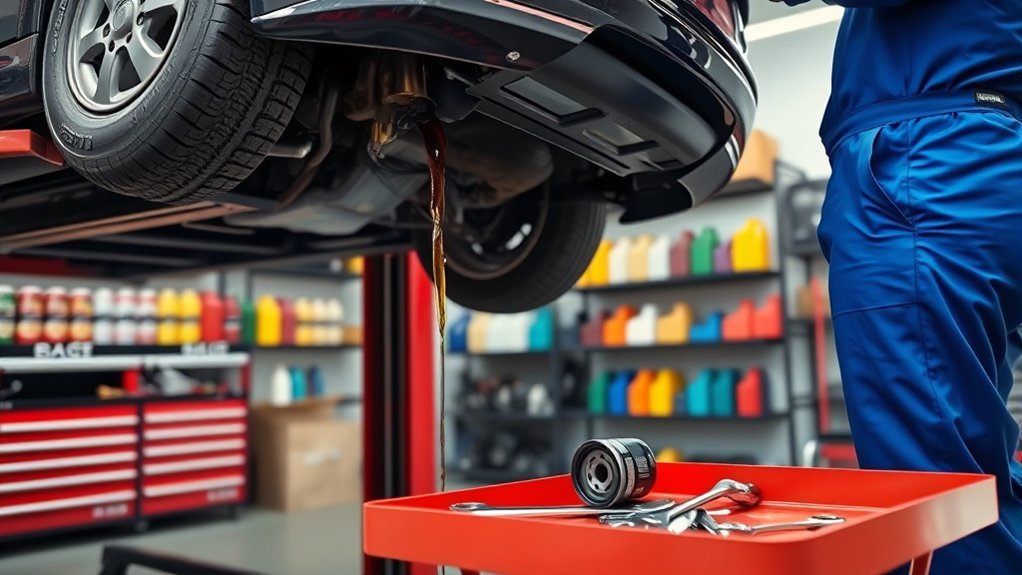
Changing your oil is essential for engine health. First, gather your tools: a socket set, oil filter wrench, gloves, an oil catch pan, and a funnel. Make certain your vehicle’s stable and use a jack if needed. Follow your owner’s manual for the right oil and filter. Lift your vehicle, drain the old oil, replace the filter, and add new oil. After changing, check levels and dispose of old oil responsibly. Keep exploring to master the process fully.
Essential Tools for Your Oil Change
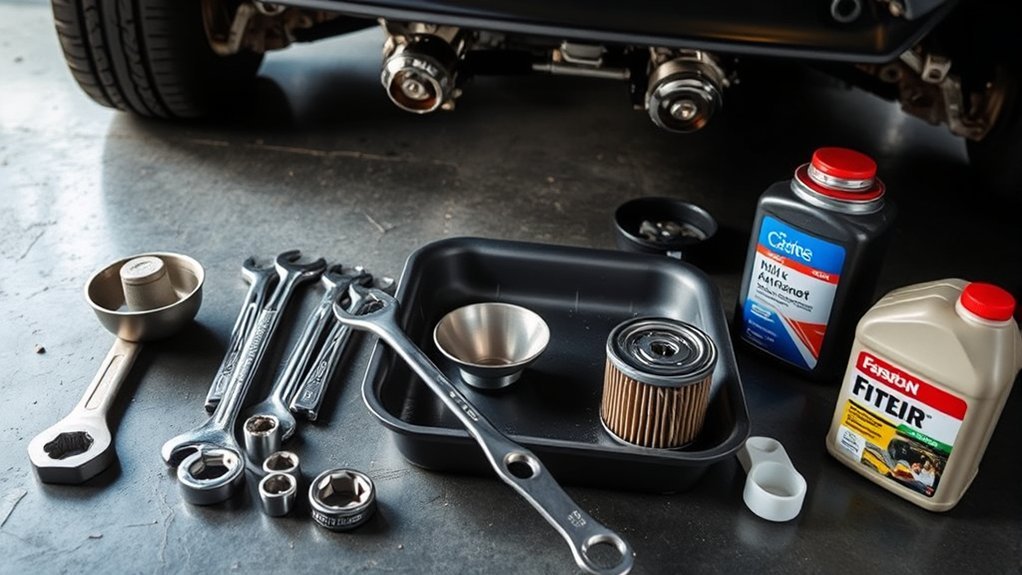
When preparing for an oil change, having the right tools is essential for a smooth and efficient process.
Start with a socket set, particularly a 14mm socket, which is important for loosening and tightening the drain plug. This will save you time and frustration.
An oil filter wrench is another key tool, allowing you to remove the old oil filter, which often proves challenging due to tightness and oil residue. Keep in mind that different filter types may require specific wrenches, so double-check compatibility.
To prevent skin contact with oil, always wear gloves and have paper towels on hand for any spills. An oil catch pan is crucial for collecting the old oil, ensuring proper disposal and preventing mess.
Finally, a funnel simplifies pouring new oil into the engine, helping you measure accurately and avoid spills.
With these tools, you’re set for a successful oil change.
Stay Safe: Essential Precautions for Oil Changes
To guarantee your safety during an oil change, it’s essential to take several key precautions. First, verify vehicle stability by blocking the rear tires and engaging the emergency brake. This prevents any unintended movement while you’re working underneath.
Use a jack at designated jacking points, and secure it with jack stands positioned under stable frame areas for added safety. After lowering the vehicle onto the stands, always place the jack back in position as a backup measure.
Don’t forget your safety gear. Wearing gloves protects your skin from oil contact, and having paper towels nearby aids in cleanup.
Alternatively, consider using ramps for easier access to the undercarriage, which can simplify the process and enhance your safety. By following these precautions, you can confidently tackle your oil change without unnecessary risk.
How to Choose the Right Oil and Filter for Your Vehicle
How can you assure you’re choosing the right oil and filter for your vehicle? Start by consulting your owner’s manual, which provides essential details on oil viscosity and capacity tailored specifically for your make and model.
For most newer vehicles, synthetic motor oil is the best option, offering superior performance and extended intervals between changes. Consider your climate and driving conditions; for instance, 0W-20 oil works well in cold weather, while 10W-30 may be better in warmer climates.
Next, select a high-quality oil filter from reputable brands like Pure Lator to guarantee effective contaminant removal and enhanced engine protection.
Finally, verify filter compatibility by checking both size and manufacturer specifications—using the wrong filter can lead to leaks and serious engine damage.
Step-by-Step Guide to Changing Your Oil

Changing your oil is a straightforward process that can be completed in just a few steps, guaranteeing your vehicle runs smoothly. Follow this guide to reap the oil change benefits while avoiding common mistakes:
Changing your oil is simple and essential for smooth vehicle operation; follow this guide to ensure success and avoid mistakes.
- Lift the Vehicle: Securely elevate your vehicle with jack stands or ramps, then drain the old oil through the oil drain plug beneath the car.
- Replace the Oil Filter: Use an oil filter wrench to remove the old filter. Pre-oil the new filter’s gasket and hand-tighten it for a leak-free fit.
- Add New Motor Oil: Using a funnel, pour in new oil per your owner’s manual, usually around 4.25 quarts.
- Check Oil Levels: Start the engine and monitor for oil lights. After five minutes, use a dipstick to guarantee the oil level is correct.
Post-Change Checks and Proper Oil Disposal
Once the oil change is complete, it’s essential to conduct post-change checks to confirm everything functions correctly. Start the engine and watch for any illuminated oil warning lights; they shouldn’t remain on.
After letting the engine sit for five minutes on level ground, use the dipstick to check the oil level, aiming for it to be at or near the high mark. If the level’s low, add oil gradually, avoiding overfilling, as excessive oil can cause engine issues.
For environmental responsibility, collect the drained oil in a suitable container, like an old oil bottle, to prevent spills. Dispose of the used oil properly by taking it to local auto parts stores or recycling centers, many of which accept it for free.
This confirms your oil change aligns with best practices and promotes engine diagnostics, safeguarding both your vehicle and the environment.
Frequently Asked Questions
How Often Should I Change My Oil?
You should change your oil every 3,000 to 7,500 miles, depending on your vehicle’s specifications. Always consult your owner’s manual for oil viscosity recommendations to guarantee peak performance and longevity of your engine.
Can I Mix Different Types of Motor Oil?
You shouldn’t mix different types of motor oil due to oil compatibility issues. Viscosity ratings can vary, affecting performance. Stick to one type to guarantee ideal engine protection and efficiency for your vehicle’s needs.
What Happens if I Overfill the Oil?
If you overfill the oil, it can lead to engine damage due to excess pressure and oil foaming. Always guarantee you respect your engine’s oil capacity to maintain peak performance and avoid costly repairs.
Can I Change Oil Without a Lift?
Yes, you can change oil without a lift. For DIY maintenance, use ramps or jack stands to elevate your vehicle safely. Confirm you have the right tools and follow proper procedures for an effective oil change.
What Tools Are Optional for Oil Changes?
While you can change your oil with minimal tools, consider optional items like a drain pan for mess-free disposal and an oil filter wrench for easier removal. These can make your experience smoother and liberating.
Conclusion
To sum up, changing your oil isn’t just maintenance; it’s essential for your engine’s longevity. Did you know that regular oil changes can extend your vehicle’s life by up to 150,000 miles? That’s like driving from New York to Los Angeles over five times! By following this guide, you guarantee your engine runs smoothly and efficiently. Remember, a well-kept engine not only performs better but also saves you money in the long run. So, get started on your oil change today!







Leave a Reply