
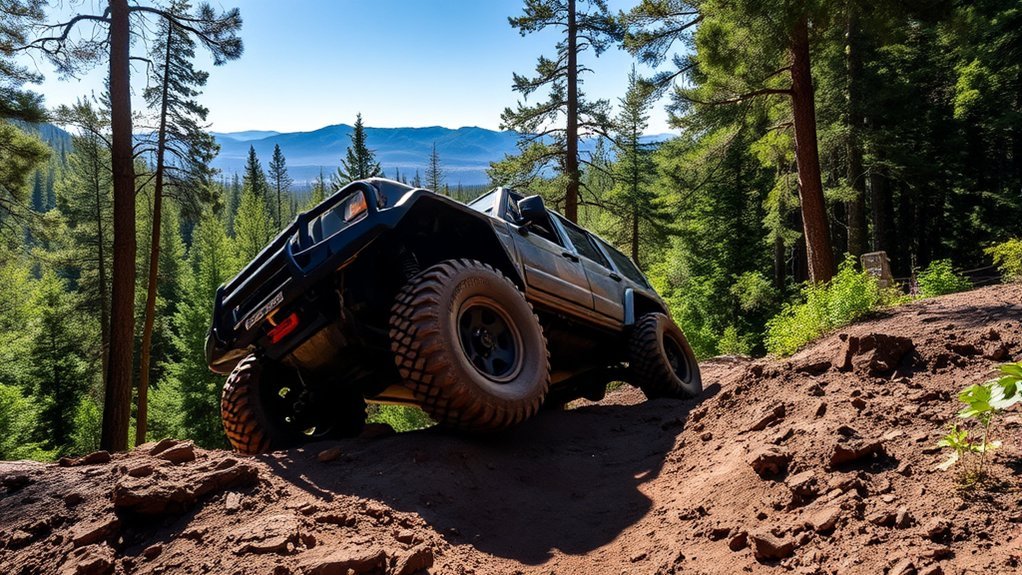
Off-roading can be an exhilarating adventure, but it requires preparation and skill. Start by equipping your vehicle with essential gear like recovery straps and a spare tire. Always maintain a steady speed, scout the terrain ahead, and engage low-range gearing when necessary. Remember to air down your tires for better traction. Don’t forget to follow trail etiquette and be mindful of your vehicle’s capabilities. Stick around to discover more tips that’ll enhance your off-roading experience.
What Is Off-Roading and Why Try It?
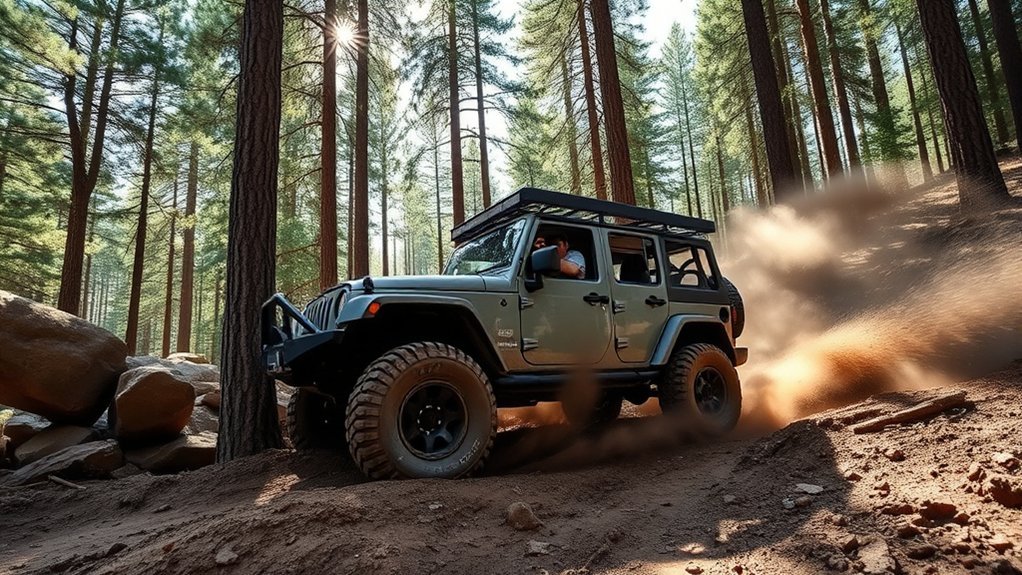
Off-roading is an exhilarating adventure that lets you explore the great outdoors by driving on unpaved or poorly established roads. This thrilling activity opens up a world of off-roading benefits, allowing you to access remote areas that standard cars simply can’t reach.
Picture yourself conquering dirt tracks and maneuvering through forests, deserts, and rocky hills—each journey is a unique adventure experience waiting to unfold.
Conquer dirt tracks and navigate through breathtaking landscapes—each off-roading journey is an unforgettable adventure waiting for you.
Trying off-roading can enhance your driving skills and build confidence in handling diverse terrains. It’s not just about the drive; it’s also a fantastic way to relieve stress, as you immerse yourself in nature’s beauty while overcoming challenges.
Plus, engaging in off-roading fosters a sense of community with fellow enthusiasts who share your passion. By respecting the environment and sticking to marked trails, you contribute to preserving these stunning landscapes.
Essential Gear You Need for Off-Roading Adventures
When you hit the trails, having the right gear can make all the difference in your off-roading experience.
You’ll want to focus on essential recovery gear, proper tire selection, and reliable communication devices to tackle any challenge that comes your way.
Let’s explore what you need to guarantee a safe and thrilling adventure.
Essential Recovery Gear
Having the right recovery gear can make all the difference in your off-roading adventures. Equip yourself with essential tools that guarantee smooth vehicle extraction and safety. Here’s a quick reference for must-have recovery gear:
| Gear Item | Purpose | Notes |
|---|---|---|
| Shackles | Connects recovery straps | Verify weight rating matches vehicle |
| Snatch Straps | For quick vehicle pulls | Don’t exceed load limits |
| Winch | For heavy-duty extractions | Choose electric or manual options |
| Recovery Boards | Provides traction in mud/sand | Can double as shovels |
Don’t forget a full-size spare tire, a repair kit, and a basic first aid kit. These essentials will keep you rolling and safe on your off-road journey!
Proper Tire Selection
Choosing the right tires can make or break your off-roading experience. Larger diameter tires with aggressive tread patterns enhance traction on various terrains like mud, sand, and rocky paths.
If you’re into light to moderate adventures, consider all-terrain tires for their balance of on-road comfort and off-road capability. For those extreme conditions, mud-terrain tires with deep, wide treads are your best bet, providing superior grip in slippery environments.
Don’t forget about tire pressure; airing down to 15-20 psi increases your tire’s footprint, boosting traction on soft surfaces. Regularly inspect your tires for tread depth, damage, and proper inflation to guarantee peak performance.
Trust reputable tire brands to help you tackle any off-road challenge with confidence!
Necessary Communication Devices
Communication is essential during off-road adventures, especially in remote areas where help might be far away.
To enhance your emergency preparedness, make certain you have the right communication devices:
- Two-way radio: This allows reliable communication with fellow off-roaders, even when cell service is out of reach.
- Satellite phone: As an emergency backup, it guarantees you can call for help in areas with no mobile reception.
- Hands-free device: Equip your vehicle with a communication device that promotes safety, letting you stay connected while keeping your focus on the trail.
Always make certain your devices are fully charged, and consider bringing extra batteries or charging options for longer trips.
Stay connected and adventurous!
Driving Techniques for Navigating Challenging Terrain
When tackling challenging terrain, mastering your driving techniques can make all the difference.
Always maintain a steady speed and use low gear for ideal power and control, especially on steep inclines or declines.
Plus, don’t forget to scout ahead to spot hazards and choose the safest path for your vehicle.
Maintain Steady Speed
Maintaining a steady speed is one of the top techniques for traversing challenging terrain effectively. It’s vital for speed management and ensuring traction control.
Here are three key reasons to keep your speed consistent:
- Prevents Wheel Spin: A steady pace helps avoid losing traction, especially on slippery surfaces like mud or snow.
- Enhances Control: Sudden changes in speed can lead to instability, increasing the risk of rollovers when maneuvering obstacles.
- Momentum in Climbing: On steep hills, maintaining momentum is imperative; slowing down can cause your vehicle to stall.
Use Low Gear
After ensuring a steady speed, the next important driving technique is to use low gear. Engaging low gear provides maximum torque and control, making it easier to navigate steep inclines and obstacles. Here are some low gear advantages and techniques to keep in mind:
| Low Gear Advantages | Techniques | Benefits |
|---|---|---|
| Maximum torque | Shift before obstacles | Focus on steering |
| Reduces wheel spin | Engage low-range gearing | Steady power delivery |
| Enhances engine braking | Use during descents | Prevents brake overheating |
| Minimizes clutch wear | Maintain low gear on slopes | Prolongs transmission life |
| Improves traction | Practice throttle control | Boosts confidence in tricky areas |
Using low gear not only enhances your control but also liberates you to tackle challenging terrains with ease.
Scout Ahead Regularly
Scouting ahead regularly is essential for traversing challenging terrain effectively. By conducting thorough trail reconnaissance, you’ll spot potential hazards and assess obstacles before they become issues. This proactive approach can save you time and prevent vehicle damage.
Here are three key points to evaluate:
- Walk the trail: Getting out and inspecting the terrain gives you insights into ruts, loose rocks, and other hazards that mightn’t be visible from your vehicle.
- Use a spotter: Having someone assist you can enhance obstacle assessment and guide you through tricky sections.
- Prioritize safety: Taking a few extra minutes to scout can prevent accidents and make your adventure more enjoyable in the long run. Always choose caution over speed on your off-road journey!
Essential Safety Tips for Off-Roading

When you venture off the beaten path, keeping safety at the forefront is essential to enjoying your adventure. Off-road safety starts with wearing your seatbelt—this simple act can greatly reduce injury risks in case of an accident.
Safety is key for off-road adventures; always wear your seatbelt to minimize injury risks in case of an accident.
Always carry a well-stocked first aid kit and recovery gear, like straps and shovels, to handle emergencies and recover your vehicle if it gets stuck. Maintain a safe distance of 3-4 car lengths from the vehicle ahead to allow for adequate stopping distance on unpredictable terrains.
Familiarize yourself with your vehicle’s 4WD systems; use 2WD for easy trails and switch to 4Lo for tough surfaces. Finally, scout the path ahead and rely on spotters when guiding through obstacles.
These precautions not only enhance your off-roading experience but also guarantee your vehicle’s maintenance stays in check, giving you the freedom to explore confidently.
Choosing the Right Trail for Your Skills
Choosing the right trail is essential for an enjoyable off-roading experience, especially if you want to build your skills gradually. To make the best choice, use these trail selection strategies:
- Assess Your Skills: Evaluate your driving experience and start with easier trails to boost your confidence.
- Research Trail Ratings: Use resources like Trails Offroad to understand the difficulty levels and guarantee they match your vehicle’s capabilities.
- Consult with Experts: Talk to experienced off-roaders or local clubs for recommendations on trails that fit your skill set and vehicle type.
Always consider the terrain type and current weather conditions, as they can drastically change the trail’s difficulty.
If you’re unsure about a trail’s suitability, don’t hesitate to join a guided group run. This way, you’ll gain experience while being supported by seasoned off-roaders, making the journey even more liberating.
Know Your Vehicle’s Capabilities and Limits
Understanding your vehicle’s capabilities and limits is essential for a successful off-roading adventure. Start by conducting a terrain assessment and familiarizing yourself with your vehicle specifications. Here’s a quick glance at key elements to take into account:
| Capability | Importance |
|---|---|
| Ground Clearance | Navigate obstacles effectively |
| 4WD System Options | Maximize torque in tough climbs |
| Weight Distribution | Guarantee stability on inclines |
| Approach/Departure Angles | Prevent damage and getting stuck |
Regularly check your tire pressure, too; lower pressures can boost traction on soft terrains. Knowing your vehicle’s specs empowers you to tackle challenges confidently. With the right knowledge, you can embrace the wild without fear, turning every off-road venture into a thrilling escape. So gear up, assess your terrain, and hit the trails—freedom awaits!
The Importance of Trail Etiquette and Environmental Responsibility
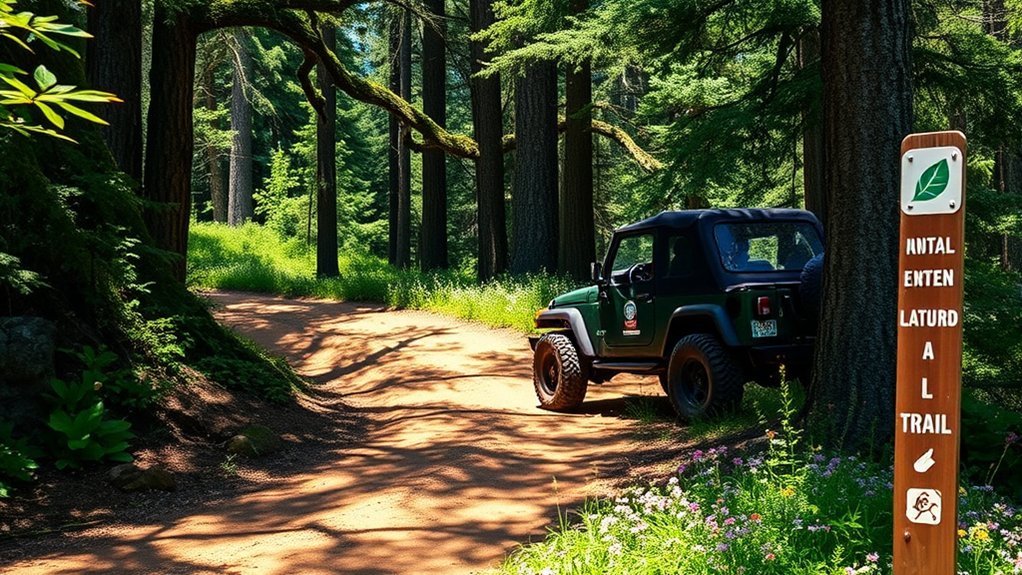
Trail etiquette and environmental responsibility are essential for preserving our natural landscapes while enjoying off-road adventures.
By practicing trail conservation, you guarantee that future generations can also experience the beauty of these areas. Here are some key points to remember:
- Stay on Marked Trails: Avoid creating new paths that can cause erosion and damage the environment.
- Respect Uphill Traffic: Yield to uphill users to enhance safety and foster a positive atmosphere on the trails.
- Leave No Trace: Always remove litter and minimize disturbance to preserve natural habitats.
Top 5 Mistakes to Avoid When Off-Roading
When you hit the trails, understanding the terrain and your vehicle’s capabilities is just as important as respecting the environment and fellow adventurers. To guarantee a smooth ride, here are the top five mistakes to avoid.
| Mistake | Consequence | Solution |
|---|---|---|
| Not Airing Down Tires | Decreased traction, getting stuck | Reduce tire pressure for grip |
| Ignoring Vehicle Limitations | Mechanical failures, damage | Know your vehicle’s strengths |
| Neglecting Spotter Communication | Misjudgments in tricky maneuvers | Use clear signals and instructions |
| Driving Too Fast | Loss of control, increased accidents | Maintain a steady, cautious pace |
| Failing to Scout the Trail | Unexpected hazards | Walk the trail before driving |
Frequently Asked Questions
What Is the 123 Rule in Driving?
The 123 rule in driving suggests you maintain a three-second gap from the vehicle ahead, promoting driving safety. This distance gives you time to react, reducing stress and enhancing awareness on the road.
What Are the 3 C’s of Driving?
The 3 C’s of driving are Control, Caution, and Common Sense. You’ve gotta steer with confidence, assess risks carefully, and communicate with your instincts. Master these, and you’ll navigate any terrain like a pro.
What Are Some Tips for Beginner Off-Roaders?
To start off-roading, lower your tire pressure for better traction, guarantee your vehicle’s maintenance is up to date, and always scout ahead. This’ll boost your confidence and help you navigate challenging terrains safely.
What Are the 4 D’s of Driving?
The 4 D’s of driving—Drive, Ditch, Deter, and Decide—shape your off-road adventures. Master driving dynamics, ditch new trails, deter risks, and decide wisely to release your freedom while ensuring safety measures guide your thrilling journeys.
Conclusion
Off-roading can be an exhilarating experience, with over 30 million Americans hitting the trails each year. By following these tips—like knowing your vehicle’s limits and practicing proper trail etiquette—you’ll not only enhance your skills but also enjoy your adventures responsibly. Remember, the great outdoors is meant to be preserved for everyone. So gear up, hit the trails, and make unforgettable memories while respecting nature and fellow off-roaders. Happy adventuring!







Leave a Reply