

To avoid penalties, you need to know that noise limits for vehicle exhausts often vary by city. In Florida, vehicles made after January 1, 1979, can’t exceed 72 dB A at speeds under 35 mph and 79 dB A over that. Local ordinances might be stricter, especially regarding modifications. Fines for violations can range from $50 to over $800 for repeat offenses. Understanding these regulations is essential for compliance. You’ll find more specifics and tips below.
How to Measure Your Vehicle’s Exhaust Noise: A Step-by-Step Guide
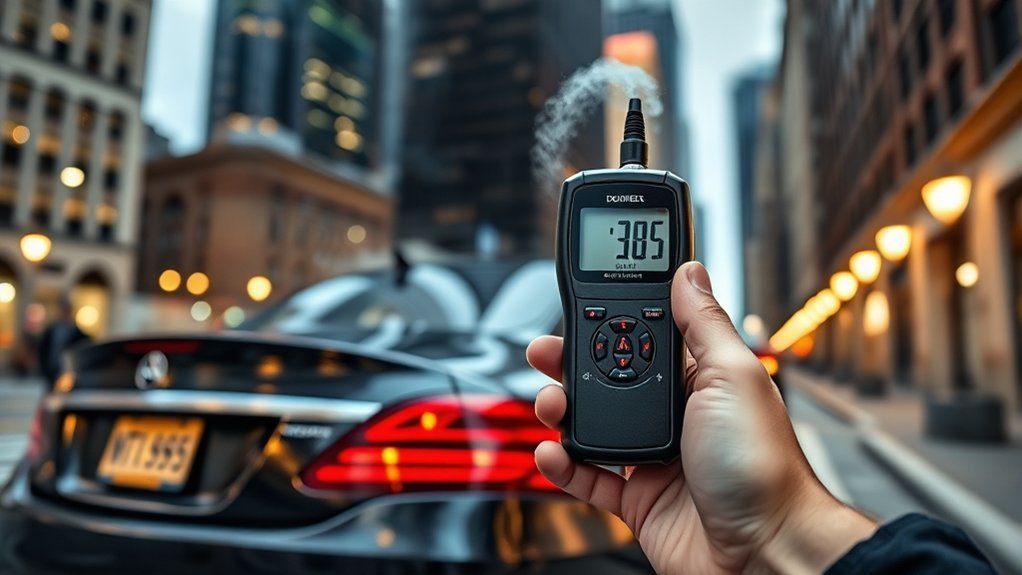
To accurately measure your vehicle’s exhaust noise, you’ll want to follow a systematic approach that guarantees reliable results.
Start by positioning your decibel meter at a distance of 19½ inches behind the tailpipe, angled at 45 degrees from the center of the muffler opening. This precise decibel meter placement guarantees you’re capturing the true sound profile.
Set the meter to A weighting to reflect human hearing frequencies, providing a relevant noise level reading. Rev your engine to 50% or 75% of its safe RPM limit; this simulates typical driving conditions for accurate readings.
Conduct your measurement in an open area, at least 25 feet from buildings, to minimize reflection interference. While you may notice fluctuations in readings, with variations of plus or minus ten decibels being common, following these exhaust measurement techniques will help you achieve consistent and trustworthy results.
What’s the Max Noise Level Your Vehicle Can Make?
To understand the maximum noise levels your vehicle can produce, you need to take into account Florida’s specific regulations.
Vehicles made after January 1, 1979, face strict decibel limits based on their speed, and modifications must comply with these standards.
Familiarizing yourself with these rules, along with local ordinances, can help you avoid penalties and guarantee your vehicle stays within legal noise limits.
Florida Noise Regulations Overview
While cruising through Florida, it’s crucial to be aware of the state’s noise regulations, as they dictate the maximum noise levels your vehicle can produce. Vehicles manufactured after January 1, 1979, have specific noise limits enforced under Florida regulations.
| Speed (mph) | Max Noise Level (dB A) |
|---|---|
| Under 35 | 72 |
| Over 35 | 79 |
Additionally, all vehicles must have a functioning exhaust system that includes a muffler to prevent excessive noise. Any modifications that exceed manufacturer noise levels are prohibited. If you violate these noise regulations, you could face fines or heightened scrutiny as a repeat offender. Always check local ordinances for additional noise enforcement to guarantee compliance.
Vehicle Type Noise Limits
Understanding vehicle type noise limits is essential for compliance with Florida regulations.
For car types manufactured after January 1, 1979, the maximum legal noise levels are 72 dB A at speeds under 35 mph and 79 dB A over that speed, measured from 50 feet away.
All vehicles must have a functioning exhaust system, including mufflers and tailpipes, to minimize excessive noise.
If you modify your exhaust, remember that noise levels mustn’t exceed the original manufacturer’s specifications; aftermarket parts that amplify sound beyond these limits are illegal.
Additionally, local noise regulations may impose stricter limits, so check with your municipality to guarantee compliance.
Violating these noise regulations can result in fines or inspections, so stay informed and compliant.
Measurement Techniques Explained
When measuring your vehicle’s noise levels, it’s essential to use the right techniques to guarantee compliance with Florida’s regulations.
Start by using a calibrated decibel meter designed for A-weighted sound levels. Position the microphone 19½ inches behind the tailpipe at a 45-degree angle for accurate readings.
Conduct tests in a controlled testing environment, maintaining engine revs at either 50% or 75% of the safe RPM limit to reflect typical conditions.
Be mindful that decibel readings can fluctuate, with variations of plus or minus ten decibels expected. As a result, performing multiple tests is critical to verify accurate results.
Understanding Exhaust Noise Regulations in Your Area
Exhaust noise regulations vary considerably across different regions, making it essential for vehicle owners to familiarize themselves with local laws.
Exhaust noise regulations differ widely by region; vehicle owners must understand local laws to ensure compliance.
For instance, in Florida, noise limits can range from 72 dB A for lower speeds to 79 dB A for faster ones, but local municipalities might impose stricter limits. Be aware of the exhaust modification risks; altering your vehicle’s exhaust system beyond factory specifications is illegal if it increases noise levels.
Regular vehicles must have functioning exhaust systems, including mufflers and tailpipes, to comply with state mandates.
Noise enforcement challenges arise when local authorities attempt to monitor and regulate these levels consistently. Noncompliance can lead to traffic infractions, fines, and inspections, especially for repeat offenders.
Understanding these regulations not only helps you avoid penalties but also contributes to a more peaceful environment, making your efforts towards compliance beneficial for the community at large.
Common Noise Violations and Penalties

When it comes to common noise violations, understanding the specific offenses and their penalties is essential for every driver.
In Florida, you’ll find that penalties can range from fines to citations, with local variations potentially adding to the complexity.
Being aware of these regulations not only helps you avoid infractions but also informs you about the consequences of repeat offenses.
Common Offenses Explained
In Florida, exceeding designated noise limits can lead to significant penalties for vehicle owners.
Common violations stem from exhaust modifications that push noise levels beyond legal thresholds: 72 dB A at speeds under 35 mph and 79 dB A at higher speeds, measured from 50 feet away.
If you’re receiving noise complaints, it’s essential to understand that such infractions are classified as noncriminal traffic violations, often resulting in fines or citations.
Local authorities can impose additional penalties, especially for repeat offenders.
The Department of Environmental Protection collaborates with local regulations to enforce these standards, ensuring compliance across the state.
Staying informed about these rules can help you avoid unnecessary conflicts and maintain your liberty on the road.
Penalty Structures Overview
Understanding the penalties associated with noise violations is essential for vehicle owners in Florida.
These infractions, categorized as nonmoving violations under Chapter 318 of the Florida Statutes, can lead to varying penalties based on local regulations.
Here’s a quick breakdown of common penalties:
- Fines range widely across municipalities.
- Vehicles post-1979 can exceed specific dB limits.
- Repeat offenders face increased scrutiny and penalties.
- Local authorities may impose stricter noise limits.
- Enforcement differences can lead to unexpected consequences.
Being aware of these fine comparisons and enforcement differences helps you navigate the legal landscape effectively.
Local Variations Noted
Local noise regulations can vary widely, with some cities enforcing limits that are much stricter than Florida’s state maximum of 72 dB A under 35 mph and 79 dB A over that speed. Common noise violations often stem from vehicles with aftermarket exhaust systems exceeding manufacturer specifications, leading to fines based on local ordinances.
| Violation Type | Typical Penalty |
|---|---|
| First Offense | $50 – $150 |
| Repeat Offense | $150 – $500 |
| Excessive Modifications | $200 – $800+ |
Awareness of city regulations is essential. Local authorities may conduct inspections, and repeat offenders could face stricter noise enforcement. Stay informed to avoid legal issues and hefty fines.
What to Do if You Get a Noise Violation?
Receiving a noise violation can be unsettling, especially if you believe it’s unwarranted. To effectively navigate this situation, follow these steps:
- Review local decibel limits: Understand the regulations behind your citation.
- Gather citation evidence: Collect decibel readings from a certified meter to support your case.
- Consult the Florida Statutes: Familiarize yourself with Chapter 318 to grasp penalties related to noise violations.
- Consider appealing: Attend a hearing or court date to contest the violation, bringing documentation and witness statements.
- Address repeat offenses: Recognize that penalties increase with multiple violations; act quickly to resolve noise issues.
Ensuring Compliance With Exhaust Noise Laws
Noise violations can have serious consequences, making it essential to confirm your vehicle complies with exhaust noise laws. In Florida, vehicles manufactured after January 1, 1979 must adhere to specific sound limits—72 dB A at speeds under 35 mph and 79 dB A above that.
Confirm your exhaust modifications don’t exceed these levels, as outlined in Florida Statute §316.293. Every motor vehicle must have a functioning exhaust system, including a muffler, manifold pipe, and tailpiping, to control noise.
Be aware that local regulations may impose stricter limits, so check your city or county ordinances for compliance. Violating these laws is a non-moving traffic infraction, leading to fines and penalties as per Chapter 318 of the Florida Statutes.
Frequently Asked Questions
What Is the Exhaust Noise Limit?
The exhaust noise limit for vehicles in Florida is 72 dB A under 35 mph and 79 dB A over. Guarantee your exhaust modifications comply with these sound regulations to avoid fines and maintain compliance.
Can Cops Stop You if Your Exhaust Is Too Loud?
You can get pulled over if your exhaust’s too loud. Remember, “Actions have consequences.” If you’ve made exhaust modifications, noise enforcement can lead to fines. Stay aware of local regulations to guarantee your freedom on the road.
What dB Is Too Loud for Exhaust?
Exhaust modifications exceeding 72 dB A under 35 mph or 79 dB A over 35 mph violate noise regulations in Florida. Always check local laws, as stricter limits may apply, risking fines and inspections.
How Much Is a Exhaust Ticket in Florida?
An exhaust ticket in Florida typically ranges from $50 to $250, depending on local laws. If you believe your ticket’s unjust, you can explore the ticket appeal process and understand exhaust modification laws better.
Conclusion
In steering through the maze of exhaust noise regulations, staying informed is your best ally. Just like a well-tuned engine, compliance can keep you running smoothly and avoid costly penalties. Remember, the roar of your vehicle should harmonize with the city’s symphony, not clash with it. By measuring your vehicle’s noise and understanding local laws, you can guarantee your ride remains a source of pride rather than a cause for concern. Drive responsibly and keep the peace.







Leave a Reply