
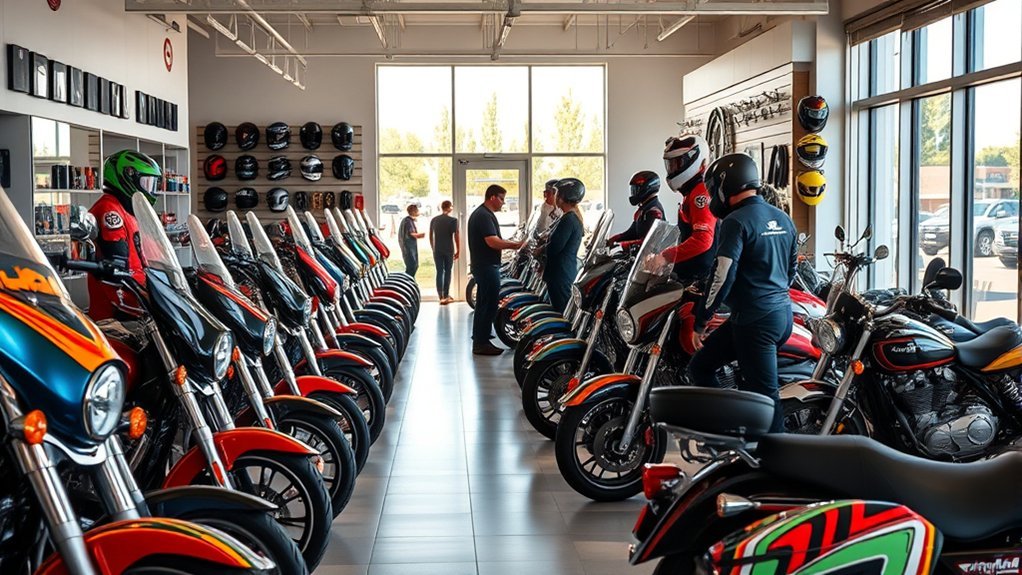
Finding a reputable Motorcycle Safety Foundation (MSF) course nearby is key to gaining essential riding skills. Look for providers with great reviews and certified RiderCoaches. Course fees typically range from $225 to $275, which may include use of motorcycles and safety gear. Be sure to understand the course structure, as many combine online learning with hands-on practice. If you want to know more about course benefits, pricing, and preparation tips, keep exploring further.
Top Benefits of Enrolling in an MSF Course for New Riders
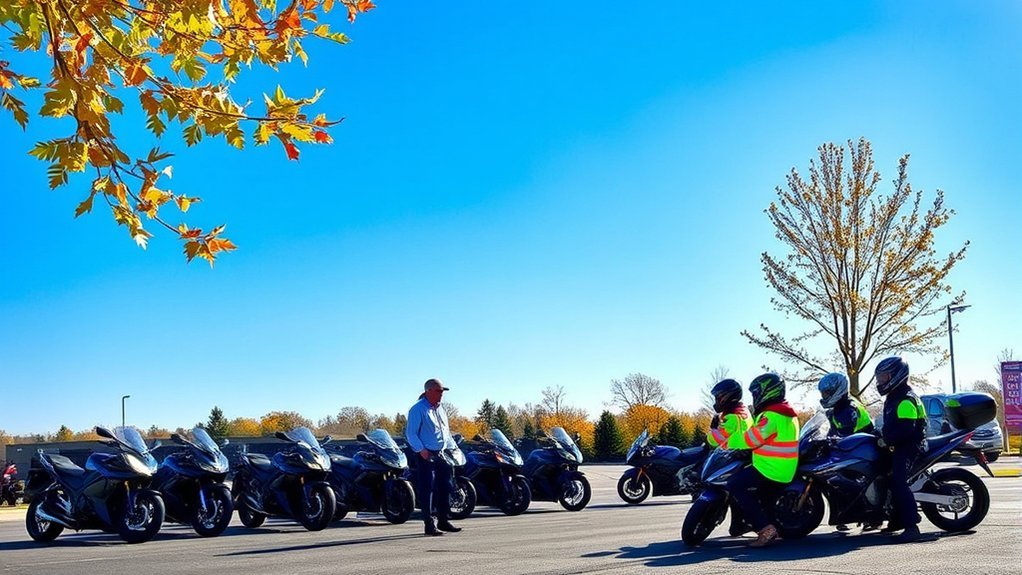
Enrolling in an MSF course can be a game-changer for new riders. This extensive program offers 15 hours of training, combining classroom education and hands-on practice.
You’ll learn essential riding skills and safety techniques that foster confidence building and safety awareness, empowering you to handle real-world riding scenarios with ease.
Upon successful completion of the Basic RiderCourse (BRC), you’ll typically bypass the DMV’s separate riding skills test, streamlining your path to getting licensed.
Plus, you might even qualify for insurance discounts, making this investment not just a safety measure but a financially savvy choice as well.
With immediate feedback from certified RiderCoaches, you’ll find a supportive learning environment that caters to your skill level.
This personalized approach boosts your confidence, ensuring you feel ready to hit the road.
Embrace the freedom of riding knowing you’ve got the skills and knowledge to do it safely.
Evaluating Course Pricing and Inclusions After Finding Reputable Shops
When you’ve pinpointed reputable MSF training providers, it’s time to compare course fees and assess what’s included.
Look closely at essential elements like whether the course covers motorcycle use, helmets, and gloves, as these can affect overall value.
Additionally, consider the flexibility of scheduling to guarantee the course fits your lifestyle.
Compare Course Fees
Comparing course fees for MSF-certified programs is essential once you’ve identified reputable training providers.
Understanding the costs involved helps you make informed decisions and guarantees you get the best value for your investment.
Here’s what to evaluate in your course fee comparison:
- Typical Range: Course fees usually range from $225 to $275, varying by provider and location.
- Additional Costs: Be aware of potential extra fees for eCourses, which may be prerequisites for hands-on classes.
- Reimbursement Programs: Some providers offer reimbursement options to help offset tuition costs.
Assess Inclusions Offered
After you’ve narrowed down reputable training providers and compared course fees, it’s time to assess what’s included in those prices.
Look for essential course amenities like loaner motorcycles, helmets, and gloves, which many certified programs provide at no extra cost.
Check the total hours of instruction, typically around 15 for MSF courses, to guarantee you’re getting value for your investment.
Also, confirm instructor qualifications; individualized feedback from RiderCoach instructors can greatly enhance your skills and confidence.
Don’t forget to inquire about whether the course completion card waives the DMV riding test, as this can save you time and hassle.
Finally, explore potential discounts that local providers may offer to maximize your savings.
Review Scheduling Flexibility
How can you guarantee your schedule aligns with the MSF course you want? Start by addressing potential scheduling challenges head-on.
Here are three key considerations:
- Availability: Recognize that many MSF-certified courses fill up quickly, especially in peak seasons. Plan ahead to secure your spot.
- Rescheduling Policies: Inquire about each provider’s policies. Some shops may impose strict no-refund rules or limited rescheduling options, which could complicate your plans.
- Course Structure: Understand the duration and format. Some courses combine online learning with hands-on training, impacting your overall time commitment.
What You Need to Know About MSF Course Structures
When you’re considering an MSF course, understanding the structure can greatly enhance your learning experience. The Basic RiderCourse (BRC) spans 15 hours, combining 5 hours of online learning with 10 hours of hands-on motorcycle training. This structure guarantees you grasp essential skills like emergency braking, swerving, and cornering techniques, crucial for your safety and confidence on the road.
Throughout the course, you’ll receive personalized feedback from certified RiderCoaches, focusing on low-speed maneuvers and foundational skills. This individualized attention helps you improve rapidly and effectively.
Plus, the training facility provides all necessary equipment, including motorcycles, helmets, and gloves, so you can focus entirely on your learning journey without the hassle of sourcing gear.
Completing the BRC may even waive specific state riding tests, paving your way toward obtaining a motorcycle license. Embrace this structured approach, and you’re well on your way to riding liberation!
Key Course Pricing and Inclusions
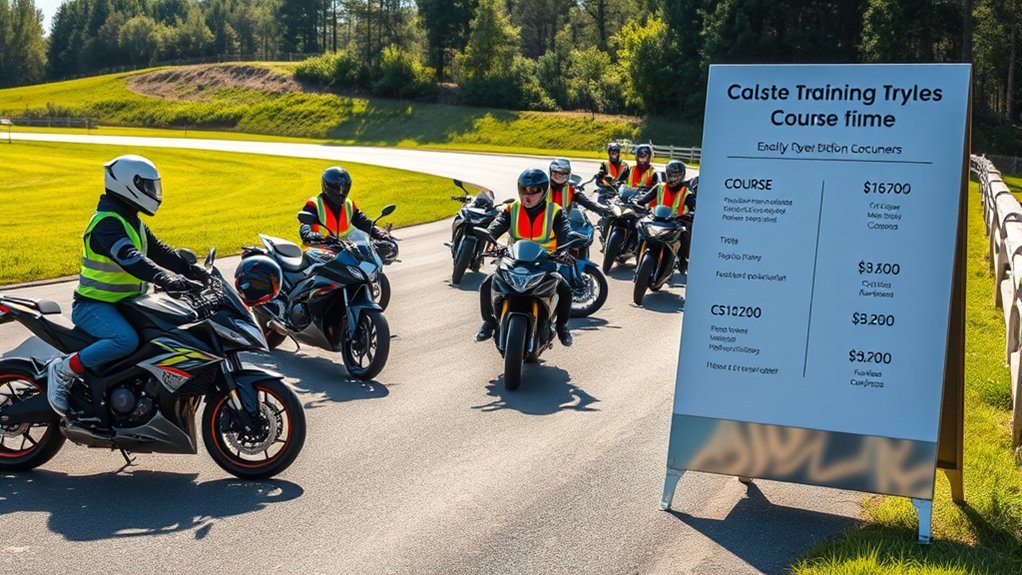
Understanding the financial aspects of an MSF course is just as important as grasping its structure. Knowing what to expect regarding pricing and inclusions can empower your decision-making.
- Tuition Costs: Prices typically range from under $100 to over $300, depending on your location. In Houston, certified programs cost between $225 and $275.
- Training Duration: The Basic RiderCourse (BRC) consists of 5 hours of online learning and 10 hours of on-motorcycle training, summing up to about 15 hours.
- Course Materials and Gear: Most training providers include motorcycles and safety gear in the course fee, ensuring you’re equipped for a thorough learning experience.
Additionally, completing an approved safety course can lead to discounts on insurance premiums and potential waivers for the DPS riding test, streamlining your path to motorcycle licensing.
Essential Safety Tips for New Riders
While riding a motorcycle can be exhilarating, it also demands a strong commitment to safety, especially for new riders. To guarantee a liberating experience, follow these essential safety tips:
| Tip | Details |
|---|---|
| Always wear proper riding gear | Use a DOT-approved helmet, long sleeves, sturdy pants, gloves, and boots. |
| Practice riding techniques | Hone skills like emergency braking and swerving to boost your control. |
| Stay visible | Wear bright or reflective clothing and utilize your motorcycle’s lights. |
Regularly inspect your motorcycle before each ride, checking tire pressure, brakes, and lights for accident prevention. Taking a Basic RiderCourse can also provide foundational skills and may help you bypass the DMV riding test in some states. By adhering to these tips, you’re not just riding; you’re empowering yourself for a safe journey!
Tips for Scheduling and Preparing for Your MSF Training
When you’re ready to schedule your MSF training, start by checking course availability using the MSF course locator tool at msf-usa.org.
Don’t forget to gather the necessary documents, like your valid driver’s license or motorcycle learner’s permit, to guarantee a smooth process.
Finally, prepare for riding practice by dressing appropriately and reviewing any pre-class materials your provider requires.
Check Course Availability
How can you guarantee you find the right MSF course for your needs? Start by using the MSF course locator tool at msf-usa.org to explore available course locations tailored to your schedule.
Then, reach out to local training providers directly to check class schedules, as they can fill up quickly, especially during peak seasons.
Finally, confirm the pricing, which typically ranges from $225 to $275, before beginning the registration process.
Here are three key tips to enhance your experience:
- Complete any required pre-class eCourse to assure smooth attendance.
- Monitor your email for confirmation details and eCourse access.
- Check your spam folder if you don’t see the email within 24 hours.
Gather Required Documents
Before you schedule your MSF training, it’s important to gather all required documents to guarantee a smooth registration process.
Start with your valid driver’s license or motorcycle learner’s permit, as these are prerequisites for enrollment. Document preparation is key; check with your training provider for specific identification and required forms to streamline registration.
Additionally, be ready for a knowledge test and skills evaluation, which can vary by state. Arriving early on the first day is advisable, allowing time for check-in and ensuring you have necessary gear, like a DOT-approved helmet and protective clothing.
Don’t forget to inquire about any potential reimbursement programs for course fees that may be available in your area.
Prepare for Riding Practice
Securing your spot in an MSF training course requires timely action and thoughtful preparation. To set yourself up for success, keep these tips in mind:
- Schedule Early: Book your training as soon as possible, especially during spring and summer when classes fill up quickly.
- Complete Prerequisites: Finish the required 5-hour eCourse before your hands-on training; it’s often mandatory in many states.
- Gear Up: Arrive equipped with essential riding gear, including long-sleeve shirts, sturdy footwear, and a DOT-approved helmet, which is critical for safety during practice sessions.
Frequently Asked Questions
How Much Does an MSF Course Usually Cost?
An MSF course usually costs between $100 and $300, depending on the provider. Course duration typically spans several days, combining classroom learning and riding practice, so you can become a confident, skilled rider.
Does Taking the MSF Course Make Insurance Cheaper?
Taking the MSF course is like finding gold; it often leads to insurance discounts that enhance rider safety. By improving your skills, you not only save money but also ride with confidence and peace of mind.
Is the MSF Course Difficult to Pass?
The MSF course isn’t overly difficult to pass. With focused practice and a positive mindset, you can excel in skill assessments. Embrace the learning process, and you’ll gain confidence and freedom on the road.
How Much Does It Cost to Learn to Ride a Motorcycle?
Learning to ride a motorcycle typically costs between $225 and $275, plus expenses for essential riding gear. Investing in motorcycle safety training can not only enhance your skills, but also potentially lower your insurance premiums.
Conclusion
In the grand adventure of motorcycling, enrolling in an MSF course is like revealing a treasure chest of skills and safety! By choosing the right shop and understanding course structures, you’re not just saving money—you’re investing in your future as a confident rider. So, gear up, schedule your training, and prepare to transform into the ultimate motorcycle maestro. The road awaits, and with the right preparation, you’ll conquer it like a pro!






Leave a Reply