
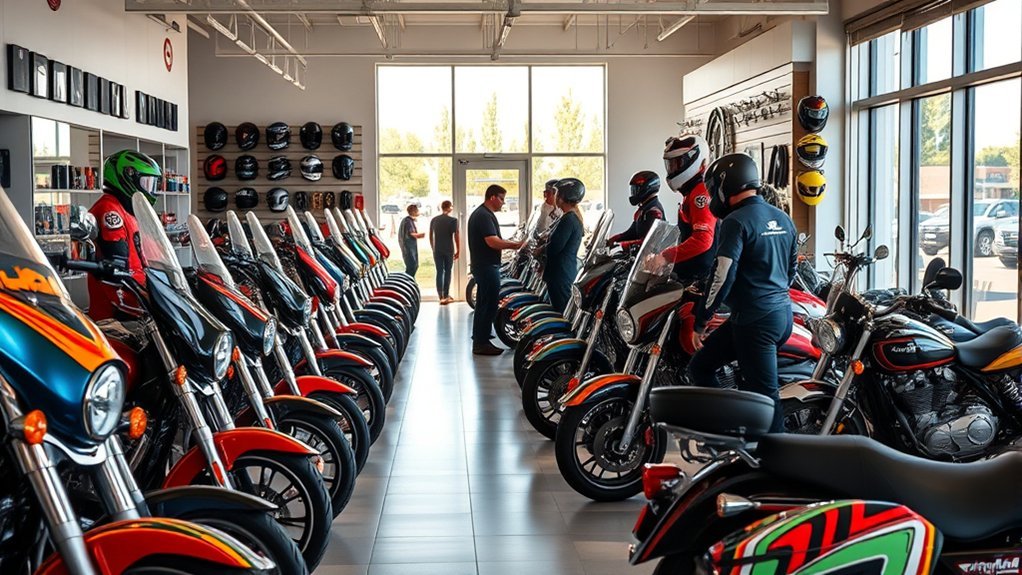
Finding a reputable Motorcycle Safety Foundation course near you is easier when you start with an official listing and verify the details before paying. The right class should match your experience level, meet your state’s licensing rules, explain every fee, and provide a clear gear list. This guide walks you through choosing, comparing, scheduling, and preparing for an MSF Basic RiderCourse.
Quick Answer
Use the official MSF Basic RiderCourse locator, enter your ZIP code, and compare nearby training providers. Before registering, confirm the course type, total price, included motorcycle and gear, cancellation rules, required documents, and whether your state accepts the completion card for any licensing-test waiver.
Key Takeaways
- Start with an MSF-listed provider, but also confirm that the course is recognized by your state licensing agency.
- MSF says tuition can range from under $100 to over $300, depending on location, age, and the local program.
- The standard Basic RiderCourse includes about five hours of classroom or online learning and 10 hours of on-motorcycle training.
- A completion card may waive part of the licensing test in some states, but it is not automatically a motorcycle license.
- Ask about the eCourse, gear, retest fees, weather policies, refunds, and rescheduling before you pay.
At a Glance
| Time Required | About 15 instructional hours for the standard BRC, often split between online learning and two riding sessions |
| Difficulty | Beginner-friendly, but physically active and skills-based |
| Tools Needed | ZIP code, provider contact information, required identification or permit, eye protection, long sleeves, durable pants, over-the-ankle boots, and full-finger gloves |
| Cost | Commonly under $100 to over $300; local pricing and included items vary |
How to Find a Reputable MSF Course Near You
The fastest way to narrow your options is to use the official MSF Basic RiderCourse page and course locator. Enter your ZIP code, review the listed providers, and then contact each provider directly. MSF develops the curriculum, but local providers manage schedules, enrollment, prices, refunds, and student records.
- Search by ZIP code: Start close to home, then widen the search radius if nearby classes are full.
- Choose the correct course: New or inexperienced riders generally need the Basic RiderCourse, not an experienced-rider skills class.
- Verify state recognition: Ask whether the completion card is accepted by the state where you will apply for your motorcycle endorsement.
- Confirm the instructor and range: The class should use MSF-certified RiderCoaches and a controlled training range.
- Compare the full price: Ask whether tuition includes the eCourse, training motorcycle, helmet, gloves, taxes, retests, and card fees.
- Read policies before paying: Check cancellation, transfer, late-arrival, weather, and no-show rules.
Pro Tip: Call at least two providers with the same questions. A slightly higher tuition price may be a better value if it includes the eCourse, gear, a flexible reschedule policy, and a convenient range location.
Top Benefits of Enrolling in an MSF Course for New Riders
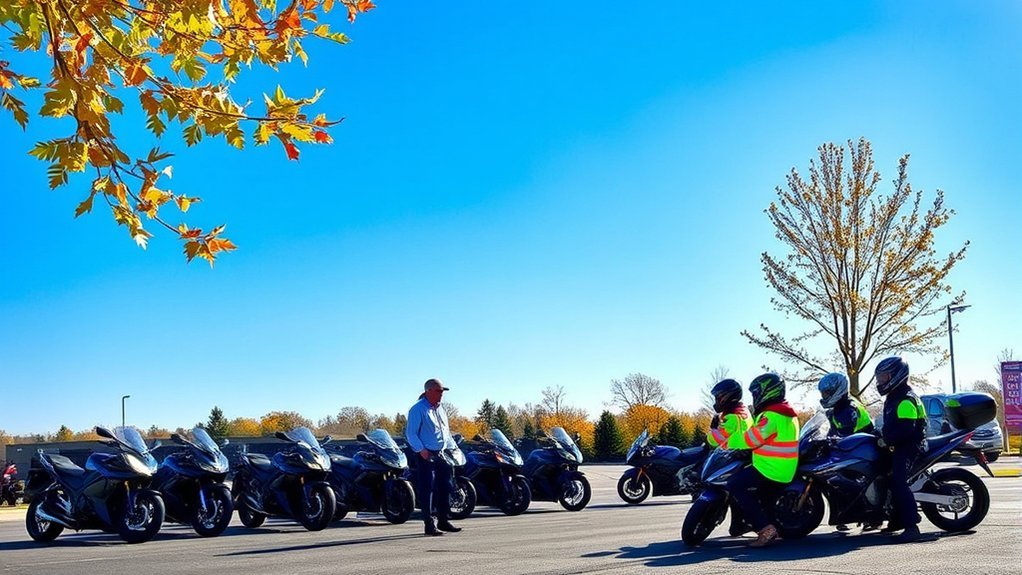
Enrolling in an MSF course gives a new rider structured practice in a controlled setting. The standard Basic RiderCourse provides about 15 hours of instruction, including roughly five hours of classroom or online learning and 10 hours of on-motorcycle training.
You learn essential riding skills such as starting, stopping, shifting, turning, cornering, low-speed control, obstacle crossing, braking, and swerving. These exercises build a foundation, but they do not make any rider ready for every traffic, weather, or road condition.
Successful completion may simplify licensing. In many states, a BRC completion card can waive the on-bike skills test and, in some locations, another part of the licensing process. Rules differ by state, and an out-of-state card may not be accepted.
You may also qualify for an insurance discount. Ask your insurer what proof it accepts and how long the discount lasts before assuming the course will lower your premium.
Certified RiderCoaches provide immediate feedback during range exercises. That supportive learning environment helps students correct habits early, choose a suitable training motorcycle, and practice at an appropriate pace.
A Basic RiderCourse completion card can be an important licensing document, but it is not automatically a motorcycle endorsement or permission to ride on public roads.
How to Compare MSF Course Pricing and Inclusions
Once you have found reputable MSF training providers, compare the course fees, included equipment, scheduling options, and policies. Avoid choosing by price alone. A low advertised price can cost more if the eCourse, retest, gear, or transfer fees are separate.
Compare Course Fees
MSF reports that local tuition can range from under $100 to over $300. Prices are set by states and training sites, so one national price does not apply.
Ask each provider for the final amount due and whether these items are included:
- Online coursework: Many providers include the required eCourse or give students a code or special registration link.
- Range training: Confirm the number of riding sessions and whether all evaluation fees are included.
- Retest or repeat fees: Ask what happens if you do not pass a knowledge or riding evaluation.
- Administrative fees: Check for card, booking, transfer, tax, or processing charges.
- Discounts or reimbursement: Ask about state subsidies, military pricing, youth rates, manufacturer programs, or employer reimbursement.
Assess Inclusions Offered
The standard BRC description says a training motorcycle or scooter, helmet, and gloves are provided. Models vary by location, and local availability can differ, so confirm before registration.
Also ask whether the provider supplies eye protection, rain gear, drinking water, printed materials, and a secure place for personal items. Bring your own properly fitting gear when allowed, especially if you prefer your own DOT-compliant helmet and gloves.
Confirm the total instructional time, RiderCoach credentials, student-to-coach setup, range address, parking instructions, and whether the completion card can be used in your state. Individual feedback is valuable, but no provider should promise that every student will pass.
Review Scheduling Flexibility
Popular classes can fill quickly during spring and summer. Check the full schedule before registering because the course may combine an online assignment with two fixed riding sessions.
- Availability: Search early and consider nearby cities if local classes are full.
- Rescheduling: Ask how much notice is required and whether moving to another date costs extra.
- Weather: Find out whether riding continues in rain, heat, or cold and how cancellations are communicated.
- Late arrival: Many skills-based programs cannot admit a student who misses a required briefing or exercise.
- Refunds: Read the no-show and withdrawal rules before paying.
What You Need to Know About MSF Course Structure
The standard Basic RiderCourse includes about five hours of classroom or online learning and 10 hours of on-motorcycle training. Local programs may arrange those hours differently, so use the provider’s schedule as the final authority.
Coursework covers risk awareness, controls, basic operation, turning, shifting, braking, cornering, lane changes, obstacle crossing, and swerving. On the range, you practice one exercise at a time and receive feedback from certified RiderCoaches.
The course normally includes a knowledge evaluation and a riding-skill evaluation. Passing standards, retest options, and licensing consequences depend on the local program and state rules.
| Course Stage | What to Expect |
|---|---|
| Before class | Registration, required documents, provider instructions, and any assigned eCourse |
| Knowledge learning | Motorcycle controls, risk management, roadway strategy, protective gear, and basic procedures |
| Range practice | Progressive exercises on a closed range with RiderCoach demonstrations and feedback |
| Evaluations | Knowledge and riding-skill checks required for course completion |
| After completion | Completion card, state licensing steps, insurance inquiry, and continued practice |
Note: The standalone MSF Basic eCourse is not a motorcycle license, learner permit, or license-waiver course by itself. Complete the exact online component assigned by your training provider.
Choosing the Right MSF Course for Your Experience Level
Registering for the wrong class can waste time and money. Compare the course description with your current ability and licensing goal.
- Basic RiderCourse: Best for new riders and riders with limited experience. A training motorcycle is normally provided.
- Basic RiderCourse 2 License Waiver: Intended for people who already know how to ride and need a licensing qualification in a participating state.
- Basic RiderCourse 2 Skills Practice: For licensed or permitted riders who want to refine existing skills, usually on their own motorcycle.
- 3-Wheel Basic RiderCourse: For riders seeking instruction on a three-wheel motorcycle.
If you cannot balance and ride a bicycle, have difficulty operating hand and foot controls, or are unsure which class fits, contact the provider before enrolling. The BRC is beginner-focused, but it still requires balance, coordination, attention, and repeated physical movement outdoors.
Key Course Pricing and Inclusions
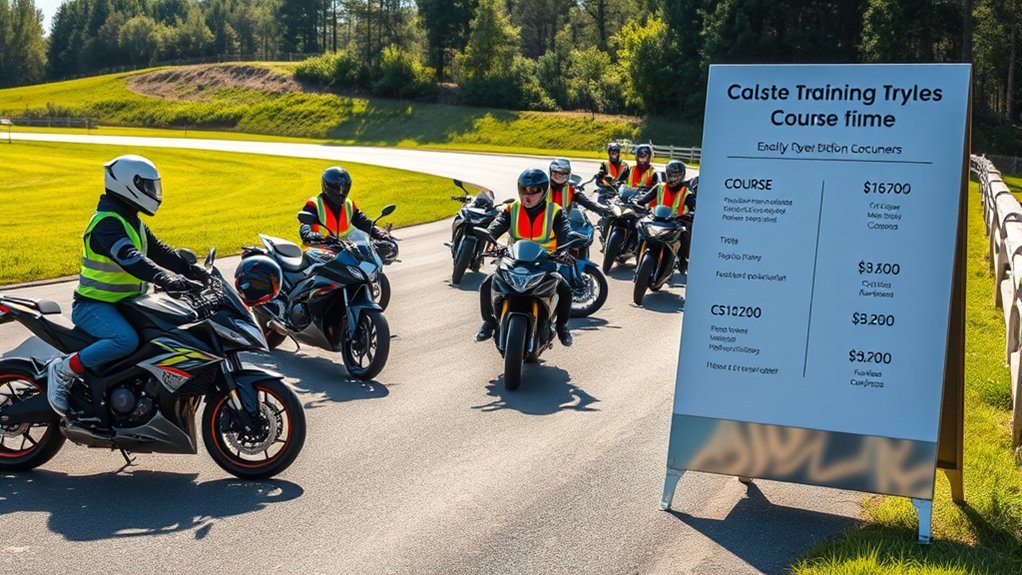
Understanding the complete cost is just as important as understanding the course structure. The national MSF FAQ says tuition ranges from under $100 to over $300, depending on location and student age. Some state-supported programs cost less, while private programs may cost more.
- Tuition: Ask for the full registration price, not just the deposit.
- Online learning: Confirm whether the assigned eCourse is included. Some providers send a no-cost code or registration link.
- Training motorcycle and gear: Standard BRC information says the motorcycle or scooter, helmet, and gloves are provided, but verify local details and sizing.
- Required personal gear: You may still need eye protection, long sleeves, durable long pants, over-the-ankle boots, and weather-appropriate layers.
- Retest, transfer, and cancellation fees: These are provider-specific and can change the real cost.
- Licensing expenses: State endorsement, permit, testing, and license fees are separate unless the provider clearly says otherwise.
Course completion may qualify you for an insurance discount or a state licensing-test waiver, but neither benefit is automatic. Confirm each one with the insurer and licensing agency that will make the decision.
Essential Safety Tips for New Riders
Motorcycle training is a starting point, not a substitute for licensing, protective gear, sober riding, good judgment, and continued practice. Use the following habits during training and after you begin riding on your own.
| Tip | Details |
|---|---|
| Wear complete riding gear | Use a properly fitting helmet marked as meeting DOT requirements, eye protection, long sleeves or a riding jacket, durable long pants, full-finger gloves, and sturdy over-the-ankle boots. |
| Practice core techniques | Build smooth braking, swerving, cornering, clutch control, and low-speed balance in a legal, controlled area. |
| Stay visible | Use bright or reflective gear, keep lights working, avoid blind spots, and position yourself where other road users can detect you. |
| Inspect the motorcycle | Check tires, wheels, controls, lights, fluid levels, chassis, and stands before riding. |
| Ride within your limits | Avoid traffic, passengers, poor weather, or unfamiliar roads until your skills and legal status are ready for them. |
The MSF T-CLOCS checklist gives riders a structured way to inspect tires and wheels, controls, lights and electrical equipment, oil and other fluids, chassis, and stands. NHTSA also recommends checking tire pressure and tread, brakes, lights, signals, fluid levels, and leaks before riding.
Warning: Do not ride on public roads until you have the license or endorsement required by your state, a legally compliant motorcycle, proper insurance where required, and enough supervised or controlled practice to manage the conditions safely.
Tips for Scheduling and Preparing for Your MSF Training
Good preparation reduces avoidable stress on course day. Follow the provider’s instructions exactly because local requirements may differ from the national BRC description.
Check Course Availability
Use the official MSF locator, then contact local training providers directly. Providers control their own schedules and enrollment, and classes can fill quickly during peak riding seasons.
- Confirm every class date, start time, and range address.
- Ask when the online course must be completed and how to submit proof.
- Save the confirmation email and provider phone number.
- Check your spam folder if registration or eCourse messages do not arrive.
- Review the provider’s weather and rescheduling policy.
Gather Required Documents
MSF lists the ability to balance and ride a bicycle and possession of either a driver’s license or motorcycle learner’s permit among standard BRC prerequisites, while also noting that requirements vary by jurisdiction. Your provider may require additional identification, forms, parental consent for a minor, proof of eCourse completion, or a state-specific permit.
Verify the exact list before class. Bring original documents when required, and make sure names and dates match your registration. Use the USAGov state motor vehicle directory to reach your state’s official licensing agency and confirm endorsement rules.
Prepare for Riding Practice
Finish all assigned online work before the deadline. Arrive rested, sober, hydrated, and early enough to check in without rushing.
- Helmet: Use a properly fitting helmet with the required DOT certification label if you bring your own.
- Eye protection: Wear a face shield, goggles, or approved protective eyewear.
- Upper body: Wear a long-sleeve shirt or jacket suitable for the weather.
- Lower body: Wear long, non-flare pants made from denim or a more durable material.
- Hands and feet: Wear full-finger gloves and sturdy over-the-ankle boots that are not canvas.
- Comfort: Bring water, food for breaks, sunscreen, and rain or cold-weather layers when allowed.
NHTSA explains that a helmet’s DOT marking represents the manufacturer’s certification that the helmet meets Federal Motor Vehicle Safety Standard No. 218; NHTSA does not pre-approve individual helmets. Avoid novelty helmets and suspicious or fake certification labels.
What to Expect on Course Days and During Evaluations
Riding sessions are progressive. Early exercises cover basic controls, starting, stopping, and straight-line riding. Later exercises add shifting, turning, U-turns, cornering, lane changes, braking, obstacle crossing, and swerving.
You will be outdoors for long periods and may repeat movements many times. Listen to the RiderCoach demonstration, ask questions before the exercise starts, and tell the coach if a motorcycle does not fit or feels too difficult to control. MSF notes that another training-bike style may be available at some sites.
The course is not impossible to pass, but passing is not guaranteed. Students must meet knowledge and riding-skill standards. Anxiety, missed instructions, unsafe actions, poor balance, fatigue, late arrival, or incomplete prerequisites can affect completion.
Note: Ask the provider in advance what happens if you do not pass. Policies may include a same-day retest, a later retest, repeating part of the course, repeating the full course, or paying another fee.
What to Do After Completing the Basic RiderCourse
- Protect your completion card: Store the original safely and keep a digital copy for your records.
- Finish the state licensing process: Take the completion card and required documents to the proper licensing agency before the card expires under local rules.
- Ask your insurer about discounts: Provide the completion certificate only after confirming eligibility and documentation requirements.
- Practice gradually: Begin in low-risk conditions and add traffic, speed, distance, night riding, rain, passengers, and cargo only as your skills improve.
- Continue training: Consider a BRC2 Skills Practice or another suitable class after gaining experience.
MSF’s national office may not hold your local student record. If you lose a completion card, contact the original training provider first. A replacement card generally shows the original training date rather than creating a new completion date.
Frequently Asked Questions
How much does an MSF course usually cost?
MSF says local tuition ranges from under $100 to over $300, depending on location and student age. Ask whether the quoted price includes the eCourse, training motorcycle, helmet, gloves, evaluations, taxes, and any retest or transfer fees.
Does taking the MSF course make motorcycle insurance cheaper?
It may. Some insurers offer a discount for approved rider training, but eligibility, proof, discount size, and duration vary. Ask your insurer before enrolling if the discount affects your decision.
Is the MSF Basic RiderCourse difficult to pass?
It is designed for beginners, but students must complete the required coursework and meet knowledge and riding-skill standards. Being able to balance a bicycle, arriving prepared, listening closely, and practicing each exercise safely improve your chances, but no provider can guarantee a pass.
How much does it cost to learn to ride a motorcycle?
The course may cost under $100 to over $300, but the full beginner budget can also include personal riding gear, permit or endorsement fees, insurance, and later practice or advanced training. You do not normally need to buy a motorcycle before taking the standard BRC.
Do I need my own motorcycle for the Basic RiderCourse?
Usually not. MSF’s standard BRC information says a motorcycle or scooter is provided. Available types and sizes vary by site, so contact the provider if you are concerned about fit, seat height, weight, or control layout.
Does passing the MSF course automatically give me a motorcycle license?
No. Passing gives you a course completion card. Your state may use that card to waive a written test, riding test, or both, but you still must follow the state’s application, identification, fee, age, permit, and endorsement rules.
What happens if I do not pass the MSF course?
The result depends on the local provider and state program. You may be offered a retest, a later skills session, or a repeat course. Ask about the exact process and cost before registering because national MSF does not control every local provider’s policy.
Sources
- Motorcycle Safety Foundation — Basic RiderCourse — course duration, exercises, prerequisites, provided equipment, required clothing, and potential licensing and insurance benefits
- Motorcycle Safety Foundation — FAQ — course locator guidance, price range, local scheduling, eCourse access, reciprocity, and replacement completion cards
- Motorcycle Safety Foundation — Course Enrollment and Licensing — completion-card and state-waiver limitations
- National Highway Traffic Safety Administration — Choose the Right Motorcycle Helmet — DOT labeling, FMVSS No. 218, and unsafe helmet warnings
- National Highway Traffic Safety Administration — Motorcycle Safety — protective gear and pre-ride inspection guidance
- Motorcycle Safety Foundation — T-CLOCS Checklist — structured pre-ride motorcycle inspection
Conclusion
A reputable MSF course near you should be easy to verify, clear about its total cost, and recognized for your licensing goal. Start with the official MSF locator, compare providers carefully, and confirm state rules before paying. Arrive prepared with the required documents and gear, treat the course as the beginning of your skill development, and continue practicing within your legal and personal limits after completion.




Leave a Reply