
Riding a motorcycle in windy conditions requires careful attention to stability and control. Opt for a heavier model for better handling, and secure your cargo to reduce wind resistance. Maintain a proper riding position, utilizing counter-steering techniques to adapt to gusts. Equip yourself with wind-resistant gear and gear that enhances visibility. Be mindful of buffeting from large vehicles and adjust your speed accordingly. There’s much more to master for a safer ride in the wind.
Understanding Wind Effects on Motorcycles
When you ride a motorcycle, understanding how wind affects your stability is essential for safe navigation. Strong winds can greatly impact motorcycle dynamics, especially if you’re on a lighter bike. Heavier models like Harley-Davidson® offer better resistance to wind forces, but that doesn’t mean you’re immune to sudden gusts.
Understanding wind’s impact on motorcycle stability is crucial, especially for lighter bikes facing sudden gusts.
These gusts can shift your trajectory unexpectedly, so mastering countersteering techniques—applying pressure to the upwind handgrip—is imperative for maintaining balance.
Your bike’s design, including windshields and fairings, can either help reduce wind pressure or create complications in crosswinds. Positioning yourself correctly is important; sitting upright and leaning slightly forward can enhance control and minimize wind resistance.
Also, be aware of larger vehicles that generate turbulent wind patterns. Staying strategically positioned in your lane will help you navigate these situations safely, ensuring your ride remains liberating and enjoyable.
Preparing Your Motorcycle for Windy Conditions
When preparing your motorcycle for windy conditions, it’s essential to choose a heavier model or one with a low center of gravity for better stability.
Adjust your packing to minimize wind resistance, avoiding tall or wide luggage that can act like sails.
Finally, inspect your windshield and fairings to make sure they’re designed for wind management but be cautious of how they might affect handling in crosswinds.
Choose Heavier Motorcycle Models
Choosing a heavier motorcycle model can greatly enhance your stability and control in windy conditions. Heavier bikes, like those from Harley-Davidson®, resist being pushed around by gusts, making your riding experience safer and more enjoyable.
When selecting your motorcycle, pay attention to its weight distribution and structure; these factors considerably impact performance in strong winds. A well-designed motorcycle can mitigate wind impact, but it’s essential to evaluate features like fairings and windshields for their effectiveness.
Adjust Packing for Stability
To guarantee your motorcycle remains stable during windy rides, it’s essential to adjust your packing strategy.
Avoid tall or wide luggage that can act like sails, catching the wind and compromising your balance. Focus on compact, aerodynamic packing materials to minimize wind resistance.
Distribute your luggage weight evenly across the bike, packing heavy items low and close to the center. This approach helps maintain stability, especially in strong gusts.
Securely fasten all cargo to prevent movement or flapping, which can impair handling.
Before hitting the road, check the weather forecast and adjust your packing accordingly.
Inspect Windshield and Fairings
A thorough inspection of your motorcycle’s windshield and fairings is essential for safe riding in windy conditions.
Start by ensuring your windshield is securely mounted and free of cracks; it’s vital for deflecting wind and enhancing comfort. Regular windshield maintenance helps maintain visibility and reduces drag from dirt.
Check your fairings for loose fittings or damage, as they greatly improve aerodynamic performance and stability.
Adjust the height and angle of your windshield to match your riding position for ideal wind protection.
If you often ride in strong winds, consider fairing upgrades, such as a larger or more aerodynamic windshield, to enhance stability and comfort.
Stay vigilant and ride free!
Key Factors Affecting Motorcycle Stability in Wind
While riding in windy conditions can be exhilarating, several key factors greatly affect your motorcycle’s stability. One of the most important aspects is your bike’s weight; heavier motorcycles, like those from Harley-Davidson®, provide better handling as they resist gusts more effectively.
Your riding position also plays a significant role; an upright stance offers improved control over a laid-back position.
Be mindful of how you pack your motorcycle; tall or wide luggage can act like a sail, making your ride less stable. Additionally, your tire pressure is essential; under-inflated tires can lead to decreased traction and control.
Finally, while windshields and fairings can protect you from wind, they may alter your bike’s aerodynamics, especially in crosswinds. Understanding these factors will empower you to navigate windy conditions with greater confidence.
Essential Techniques for Riding in Windy Conditions
When you find yourself riding in windy conditions, employing essential techniques can considerably enhance your stability and control.
First, maintain an upright riding position with slightly bent elbows; this improves your grip and helps counter wind resistance. Use counter-steering techniques by applying pressure to the upwind handgrip when gusts hit, stabilizing your motorcycle. Lean slightly into the wind to balance against its force and keep your trajectory steady.
Adjust your lane position to the side opposite the wind direction. This utilizes the lane’s width to manage gust effects more effectively.
As you ride, regularly check your bike’s handling; smooth adjustments to throttle and steering are vital. By mastering these techniques, you can ride confidently through windy conditions, embracing the freedom of the open road while maintaining your safety.
Adjusting Your Riding Position for Wind
To navigate windy conditions safely, start by maintaining an upright posture with a slight forward lean to cut through the wind more effectively.
Keep your elbows slightly bent to absorb gusts, which will enhance your control over the bike. This position not only improves stability but also helps you react quickly to sudden changes in wind direction.
Maintain Upright Posture
Maintaining an upright posture is essential for effective motorcycle riding in windy conditions, as it enhances your control and stability. This positioning provides significant posture benefits, allowing you to counteract the wind pressure and maintain balance.
With your elbows slightly bent, you can absorb wind force more efficiently and respond quickly to sudden shifts in wind pressure. An upright stance bolsters riding confidence, ensuring you navigate through gusty conditions without feeling overwhelmed.
Stay aware of your body positioning — a relaxed, unstable posture can lead to loss of control. By prioritizing an upright posture, you’ll maximize your handling capabilities, empowering you to embrace the freedom of the open road even when the winds howl.
Lean Forward Slightly
Adjusting your riding position by leaning forward slightly can greatly enhance your control in windy conditions.
This forward posture helps reduce wind resistance and improves your overall handling, allowing for better stability against gusts. By shifting your center of gravity, you maintain traction and control, essential for maneuvering unpredictable winds.
Keep a slight bend in your elbows while leaning forward; this allows you to absorb wind force while staying responsive to your bike’s movements. Engaging with your motorcycle in this manner not only improves balance but also facilitates quicker adjustments to sudden wind changes.
Embrace this rider posture to harness freedom on the road, ensuring your ride remains safe and exhilarating, even in challenging conditions.
Adjust Elbow Position
Your elbow position plays an essential role in managing your motorcycle during windy conditions. Keeping your elbows slightly bent enhances elbow flexibility, allowing you to absorb wind force and make quick adjustments. An upright riding position with relaxed elbows promotes overall stability, vital when facing gusty winds.
If you adjust your elbows to a more forward position, you can effectively reduce wind resistance, making it easier to control your bike against strong gusts.
Maintaining a flexible grip with bent elbows prevents fatigue and provides smoother steering inputs during unexpected wind shifts. By being mindful of your elbow position, you can greatly improve your response to wind pressure, leading to better balance and control on your ride.
Must-Have Gear for Riding in Windy Conditions
Riding a motorcycle in windy conditions demands the right gear to confirm both safety and comfort.
Start with a full-face helmet featuring a secure face shield; it’ll protect you from wind, debris, and noise, enhancing your overall riding experience.
A full-face helmet with a secure face shield is essential for protection against wind, debris, and noise while riding.
Opt for wind resistant clothing, like a waterproof jacket and pants, to stay dry and warm, as wind can rapidly lower your body temperature.
Layering your clothing helps regulate warmth and prevents flapping, which can destabilize your ride.
Sturdy gloves with a good grip are essential for maintaining control of the handlebars while protecting against wind chill.
Finally, consider high-visibility jackets or reflective vests to confirm other road users can see you, especially when the wind causes sudden changes in positioning.
Prioritizing this gear won’t only enhance your comfort but also keep you safer on the open road.
How to Stay Visible While Riding in Wind?
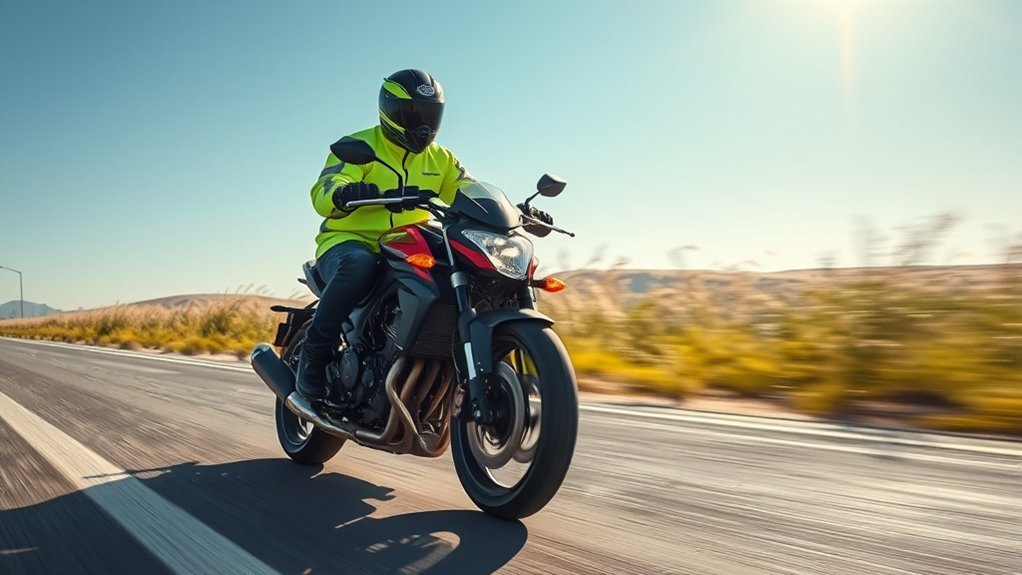
How can you guarantee you’re seen while steering through windy conditions on your motorcycle? Start with visibility techniques that truly make a difference.
Wear high-visibility jackets or reflective vests, especially in low-light environments. Bright, contrasting colors in your gear help you stand out against the landscape, enhancing your presence.
Ensure all lights on your motorcycle, including turn signals and brake lights, are functioning properly; they’re your first line of defense in alerting other drivers.
Position yourself strategically within your lane, avoiding areas where wind might obscure you from other vehicles.
Consider gear recommendations like additional lighting accessories, such as auxiliary lights, to further boost your visibility.
Managing Large Vehicles and Wind Effects
While maneuvering near large vehicles, it’s crucial to remain aware of the wind effects they create. Trucks and buses generate significant buffeting effects, often leading to turbulent air, known as the bow wave effect, which can destabilize your motorcycle.
To navigate safely, adjust your speed and lane position when close to these giants, minimizing their impact on your bike’s stability.
Maintain an increased following distance to allow for extra reaction time and avoid sudden gusts as they pass. Recognize that wind patterns can shift dramatically near large vehicles; stay vigilant and anticipate unexpected changes.
These shifts can drastically affect your motorcycle’s handling and wind resistance. By adapting your riding strategy, you’ll enhance your control and promote a smoother ride, liberating yourself from the stress of unexpected turbulence.
Stay alert, ride smart, and embrace the freedom of the open road while managing wind effects effectively.
Staying Comfortable and Hydrated on Your Ride
Wind can take a toll on your comfort and hydration during long motorcycle rides. To combat this, choose light, breathable clothing materials that enhance comfort and prevent overheating.
Remember, high winds can accelerate dehydration, so carry sufficient water and take regular hydration breaks. Implement effective hydration strategies to keep your body functioning well.
High winds can lead to dehydration; always pack enough water and take hydration breaks to stay energized.
In hot and windy conditions, cooling accessories like wet bandanas can help regulate your body temperature. Plan your rides to avoid peak heat hours, and seek shaded stops to escape direct sunlight.
Layering your clothing protects against wind chill, but make certain all gear is zipped and buttoned to minimize flapping that can distract you.
Frequently Asked Questions
How Much Wind Is Too Windy to Ride a Motorcycle?
Sustained winds over 25 mph can be too windy for you to ride safely. Always consider wind resistance and take safety precautions. If you feel unstable or uncomfortable, it’s best to postpone your ride.
What Is the 1% Rule in Motorcycles?
The 1% Rule in motorcycles means you should keep a following distance of one second for every 10 mph. Embrace this riding technique; it’s a safety precaution that grants you freedom to navigate unexpected hazards.
What Is the 12 Second Rule for Motorcycles?
The 12-second rule for motorcycles means you should look ahead and identify hazards at least 12 seconds out. This safety distance helps you react to obstacles, ensuring a smoother, safer ride in any conditions.
How to Ride a Motorcycle on Windy Days?
To ride a motorcycle on windy days, maintain an upright posture, lean into the wind, and use counter-steering techniques. Stay alert for wind resistance, adjust your speed, and secure your luggage to enhance stability.
Conclusion
Riding a motorcycle in windy conditions can be as unpredictable as maneuvering a choppy sea. By understanding how wind affects your bike and adjusting your riding techniques, you can enhance your safety and comfort on the road. Don’t forget to gear up and stay visible, especially around larger vehicles that can amplify wind effects. With preparation and mindfulness, you can tackle windy rides with confidence, ensuring your journey is as smooth as possible despite the gusts.







Leave a Reply