
Wind can turn an ordinary motorcycle ride into a demanding balance-and-control exercise. Crosswinds, sudden gusts, exposed bridges, mountain gaps, and the turbulent air around trucks can all move a bike off its intended line. The safest approach is to check conditions before leaving, prepare the motorcycle, use smooth control inputs, and stop when you can no longer hold a predictable path.
Quick Answer
To ride a motorcycle safely in wind, slow to a controllable speed, keep your upper body relaxed, grip the tank with your knees, and use small countersteering inputs to lean into a crosswind. Leave extra space around traffic, expect gusts near trucks and openings, and pull off safely if you cannot hold your lane.
Key Takeaways
- There is no universal wind-speed cutoff for every rider, motorcycle, route, and wind direction.
- Check both sustained wind and gust forecasts, plus weather alerts and conditions along exposed parts of your route.
- Use a relaxed posture and smooth countersteering; stiff arms and abrupt corrections can make the bike harder to control.
- Choose lane position for visibility, traction, and escape space rather than following a fixed “opposite side of the wind” rule.
- Create extra space around trucks, buses, recreational vehicles, barriers, bridges, and terrain gaps where airflow can change suddenly.
- End the ride when you cannot maintain a steady line, visibility falls, debris is blowing, or the wind is causing repeated control problems.
At a Glance
| Time Required | 5–10 minutes for the pre-ride check, plus continuous monitoring while riding |
| Difficulty | Intermediate; strong or gusty crosswinds may be unsuitable for new riders |
| Tools Needed | Local forecast, tire-pressure gauge, motorcycle owner’s manual, and properly fitted protective gear |
| Cost | Usually $0 when the motorcycle and riding gear are already road-ready; training or replacement gear costs extra |
Warning: No body position or steering technique can make severe wind safe. Postpone the ride or leave the road when wind, blowing dust, rain, debris, or poor visibility prevents you from maintaining a stable and predictable path.
Decide Whether the Wind Is Safe Enough to Ride
Do not rely on one number alone. A steady headwind on a sheltered road can feel very different from a gusty crosswind on a bridge. Your experience, motorcycle, luggage, passenger, route, traffic, temperature, and road surface all change the risk.
Check the hourly forecast for both sustained wind and gusts. Also review alerts from the National Weather Service. Wind Advisory and High Wind Warning criteria vary by local forecast office, so an alert is not a motorcycle-specific threshold. It is a clear reason to reconsider or postpone an exposed ride.
Risk rises when several of these conditions occur together:
- Gusts are much stronger than the sustained wind.
- The wind will strike from the side for long parts of the route.
- The route crosses bridges, open plains, ridgelines, mountain passes, or coastal roads.
- Rain, snow, ice, smoke, blowing sand, or dust reduces traction or visibility.
- You are riding an unfamiliar motorcycle, carrying a passenger, or using bulky luggage.
- You are already tired, cold, overheated, tense, or uncomfortable before departure.
Pro Tip: Check the forecast at exposed points along the route, not only at your starting location. A sheltered city forecast may not reflect conditions on a bridge, high pass, or open highway.
Understanding Wind Effects on Motorcycles
Wind affects both the motorcycle and the rider. A crosswind pushes sideways and may require the bike to lean slightly into the wind to continue traveling straight. A gust changes that force quickly, so the lean and steering pressure may need to change just as quickly—but still smoothly.
A windshield, fairing, top case, passenger, or tall luggage can increase the side area exposed to the wind. Motorcycle weight may influence how strongly a gust is felt, but weight alone does not determine stability. Chassis geometry, aerodynamics, tire condition, load placement, rider input, and wind direction also matter. A heavier motorcycle is therefore not an automatic solution.
Official motorcycle guidance warns that strong winds can affect a bike anywhere and that turbulence often develops near trucks, buses, and recreational vehicles. It recommends leaning into the wind with handlebar pressure, moving away from nearby vehicles, maximizing the space cushion, and parking safely when conditions become too dangerous. See the AAMVA Motorcycle Operator Manual.
The goal is not to keep the motorcycle perfectly upright. In a crosswind, a small controlled lean into the wind may be what keeps your path straight.
Where Sudden Gusts Are Most Likely
Expect abrupt changes where the airflow is blocked and then released. Common trouble spots include:
- Bridge entrances and exits
- Gaps between buildings, trees, sound walls, or rock cuts
- Open fields after a sheltered section
- Mountain passes, canyon mouths, and ridgelines
- Large oncoming vehicles on two-lane roads
- Areas beside trucks, buses, trailers, and recreational vehicles
- Storm outflow boundaries and areas with blowing dust or debris
Scan far enough ahead to notice these transitions before reaching them. The New York State motorcycle manual recommends scanning your path about 12 seconds ahead so you have time to identify hazards and prepare.
Preparing Your Motorcycle for Windy Conditions
A stable ride begins before the engine starts. The National Highway Traffic Safety Administration recommends checking tire pressure and tread, brakes, lights, signals, fluid levels, and leaks before every ride. It also advises riders to secure and balance cargo and adjust the motorcycle for added weight.
Pre-Ride Wind Checklist
- Tires: Check cold tire pressure against the motorcycle manufacturer’s specification, not the maximum number molded on the tire. Inspect tread and look for damage.
- Steering and suspension: Confirm the steering moves normally and that suspension settings match the rider, passenger, and load as directed by the owner’s manual.
- Windshield and fairings: Check for cracks, loose fasteners, damaged brackets, or unexpected movement.
- Controls: Make sure the throttle returns freely and that both brakes, the clutch, and the handlebars operate smoothly.
- Lights and visibility: Verify the headlight, brake light, and turn signals.
- Cargo: Keep the load compact, balanced, low, and securely attached. Remove loose straps and anything that can flap.
- Fuel and route: Plan stops so you do not have to search for fuel or shelter after conditions worsen.
Windshields, Fairings, and Accessories
Do not assume a larger windshield will always improve control. A windshield may reduce pressure on your chest while also changing how crosswinds act on the motorcycle. Use only manufacturer-approved parts and adjustment ranges, tighten hardware to the specified torque, and test any change in calm conditions before relying on it in wind.
Note: Never exceed the motorcycle’s load limit. Follow the owner’s manual for tire pressure, suspension settings, accessory limits, and cargo placement because the correct settings vary by model.
Passengers and Cargo in Wind
A passenger and luggage change steering response, braking distance, and the amount of side area exposed to wind. New riders should avoid combining strong wind with a passenger or heavy load. Explain that the passenger should sit close, keep both feet on the footrests, hold firmly, avoid sudden movement, and follow your lean. Increase your space cushion and begin slowing earlier.
Essential Techniques for Riding in Windy Conditions
Use a Relaxed, Stable Body Position
- Sit where you can steer without using the handlebars to hold up your body.
- Keep your elbows bent and shoulders relaxed.
- Hold the grips securely without squeezing them rigidly.
- Use your knees and lower body to connect with the motorcycle.
- Keep your head and eyes up, looking where you want to go.
- Lean forward only enough to remain comfortable and reduce strain; do not lock your arms or crowd the controls.
A tense upper body transfers every gust into the handlebars. A relaxed grip allows the front end to make small normal movements while you guide the motorcycle with deliberate inputs.
Countersteer Smoothly Into a Crosswind
At normal road speed, use gentle countersteering pressure to establish the lean needed to resist a crosswind:
- Identify the direction the wind is coming from.
- Apply light forward pressure to the handgrip on the windward side. For example, if wind comes from the left, press the left grip just enough to lean left.
- Keep your eyes up and hold a steady path with small corrections.
- Reduce pressure as the gust fades so the motorcycle does not drift toward the wind.
- Avoid abrupt steering, braking, or throttle changes unless an emergency demands them.
The amount of pressure changes with each motorcycle and gust. Practice only in manageable conditions and within your training and skill level.
Choose Lane Position for Space and Visibility
There is no single lane position that works for every crosswind. Use the full legal lane to improve sight lines, avoid blind spots, maintain traction, and preserve an escape path. Do not automatically ride on the side opposite the wind; that may leave you beside debris, a drop-off, a barrier, or oncoming traffic.
The AAMVA manual states that there is no single best lane position. It advises choosing the part of the lane where you are most visible and can maintain the largest space cushion. In wind, leave room for a temporary drift without placing yourself close to another vehicle or the road edge.
Manage Speed and Following Distance
Reduce speed gradually until steering corrections feel manageable and you still flow safely with traffic. Avoid panic braking during a gust. If more slowing is needed, straighten the motorcycle as much as conditions allow and use smooth, progressive braking.
Following distance is measured in time, not “one second for every 10 mph.” Current AAMVA guidance recommends that new riders maintain about a four-second gap and increase it to five seconds or more when stopping will take longer, visibility is limited, traffic is heavy, or the pavement is slippery. Windy conditions often justify extra space because they can affect your line and reaction time.
Adjusting for Crosswinds, Headwinds, Tailwinds, and Gusts
Crosswinds
Crosswinds create the greatest sideways movement. Use a small lean into the wind, keep your path flexible, and avoid riding beside another vehicle. Watch flags, vegetation, dust, and the lean of other riders for clues, but do not stare at them instead of scanning the road.
Headwinds
A headwind increases pressure on your body and can create fatigue. Reduce speed if needed, keep your arms relaxed, and use a windscreen or riding position only within the motorcycle manufacturer’s guidance. Expect stronger pressure when you leave the shelter of a truck, wall, tree line, or building.
Tailwinds
A tailwind may make the ride feel calmer while your ground speed creeps higher than expected. Check the speedometer, leave extra stopping space, and avoid allowing the wind to push you into a corner or traffic situation faster than planned.
Variable and Gusting Wind
Gusts demand repeated small adjustments. Do not try to predict every movement with large steering inputs. Hold a flexible lane position, look ahead, and respond after you feel the change. If the corrections become frequent, large, or exhausting, leave the road.
Managing Trucks, Buses, and Other Large Vehicles
Large vehicles block and redirect airflow. As you approach, pass, or are passed, you may move from open crosswind into sheltered air and then into turbulent wake. The force can change direction more than once.
- Increase your following distance before entering the vehicle’s disturbed air.
- Avoid lingering beside the cab, trailer, wheels, or rear quarter.
- Choose a lane position that gives you the most separation and an escape path.
- Keep a steady throttle and use smooth steering corrections.
- Complete a pass only when you have enough power, visibility, legal space, and clear road ahead.
- If the wake causes a major lane deviation, abandon the pass or take the next safe exit.
On a two-lane road, an approaching truck can produce a short wind blast. Move away within your lane before it arrives, reduce speed if needed, and keep your eyes on your intended path rather than the truck.
Bridges, Open Terrain, and Urban Wind Tunnels
Before entering an exposed bridge or open section, create space around your motorcycle and reduce speed while still on the sheltered approach. Expect a gust at the opening and another change when you leave it. On bridges, avoid metal grates, painted markings, debris, and wet surfaces when possible without making abrupt moves.
In cities, tall buildings can funnel wind through intersections. Watch for blowing trash, swaying signs, dust, and cyclists struggling to hold a line. In mountain terrain, wind may reverse or accelerate around ridges and canyon openings. Conditions can differ sharply within a short distance.
Must-Have Gear for Riding in Windy Conditions
Wear a properly fitted helmet that complies with the rules where you ride. In the United States, NHTSA advises choosing a helmet marked as compliant with FMVSS No. 218. A full-face or properly configured modular helmet can reduce wind, noise, and debris exposure, but the shield must be clean, secure, and appropriate for visibility.
- Eye and face protection: Use a closed face shield or shatter-resistant eye protection that will not lift in the wind.
- Jacket and pants: Choose abrasion-resistant motorcycle gear with closures that prevent flapping.
- Gloves: Wear full-finger gloves that preserve grip and control feel.
- Boots: Use over-the-ankle footwear with secure laces or closures.
- Hearing protection: Properly fitted earplugs can reduce wind-noise fatigue while still allowing awareness of important sounds.
- Layers: Add or remove layers to manage wind chill or heat without restricting movement.
How to Stay Visible While Riding in Wind
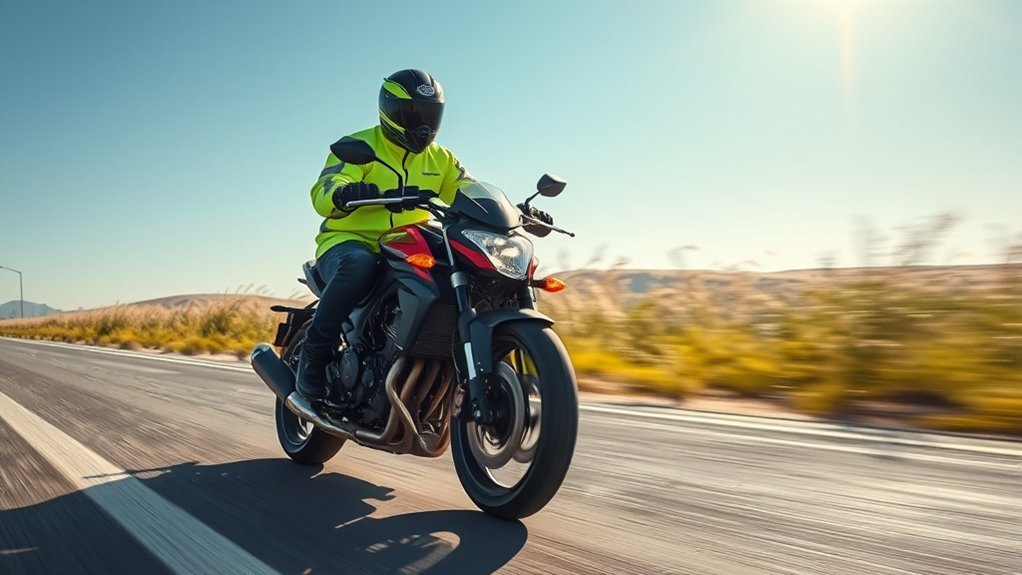
Wind may force you to change lane position, so make those changes predictable. Signal before changing lanes, check mirrors and blind spots, and avoid weaving in response to every small gust.
NHTSA recommends bright clothing with reflective material, working lights, adequate space, and lane positioning that helps other road users see you. Keep your headlight, brake light, and turn signals clean and functional. Avoid riding in blind spots, especially beside large vehicles that may also move within their lane during strong wind.
Staying Comfortable and Hydrated on Your Ride
Wind increases physical effort and can make temperature harder to judge. Cold airflow can reduce dexterity and reaction quality. Hot, dry airflow can increase fluid loss while making sweat less noticeable.
- Drink water before departure and at regular stops.
- Use breathable protective gear in heat rather than riding with exposed skin.
- Add a wind-blocking outer layer in cold conditions.
- Stop if you develop shivering, numb hands, dizziness, headache, confusion, unusual fatigue, or poor concentration.
- Do not use loose scarves, unsecured hood cords, or clothing that can flap into controls.
Plan shorter riding intervals in strong wind. Fatigue often appears as a tight grip, sore shoulders, delayed corrections, or fixation on the lane edge.
When to Stop Riding and Pull Over
End the ride before control deteriorates. Look for a safe exit, parking area, service station, or other protected location when:
- You cannot maintain your lane without repeated large corrections.
- Gusts push you close to traffic, a barrier, the shoulder, or the centerline.
- Blowing dust, smoke, rain, snow, or debris reduces visibility.
- Your hands, shoulders, or attention are tiring.
- The motorcycle develops headshake, unusual steering, loose bodywork, or shifting cargo.
- A Wind Warning, dust warning, severe thunderstorm warning, or other urgent alert affects your route.
Signal early, slow smoothly, and avoid stopping on a narrow or exposed shoulder when a safer exit is available. Park on firm, level ground away from falling branches, signs, loose objects, and passing traffic. Wait for conditions to improve or arrange another way to continue.
Warning: If blowing dust suddenly reduces visibility, do not stop in a travel lane. Reduce speed carefully, leave the roadway at the safest available place, and follow official emergency instructions for the area.
Practice and Training
Reading about wind control is not a substitute for coached practice. Build countersteering, braking, swerving, and low-speed control skills in a recognized rider course and a controlled environment. NHTSA recommends motorcycle rider education because motorcycles differ in handling and riders need practice before dealing with traffic and inclement conditions.
During calm-weather practice, learn how your motorcycle responds to light handlebar pressure, progressive braking, lane-position changes, and emergency stops. Do not use severe wind as a practice session.
Frequently Asked Questions
How much wind is too windy to ride a motorcycle?
There is no universal safe cutoff. Gust strength, crosswind angle, route exposure, motorcycle setup, rider skill, traffic, and weather all matter. Postpone the ride when an alert affects the route or when you cannot maintain a steady line with small, controlled inputs.
What is the 1% rule in motorcycles?
The “1% rule” is not a recognized motorcycle following-distance standard. Do not use one second for every 10 mph. AAMVA guidance recommends about four seconds for new riders and five seconds or more when traction, visibility, traffic, or stopping conditions are worse.
What is the 12-second rule for motorcycles?
It is a scanning guideline, not a following-distance rule. Look toward the area you expect to reach in about 12 seconds so you can identify traffic, surface problems, wind-exposed areas, and escape paths before they become urgent.
How do you ride a motorcycle on a windy day?
Check the forecast, inspect the motorcycle, secure cargo, reduce speed, relax your upper body, grip the tank with your knees, and use small countersteering inputs to lean into a crosswind. Leave extra space around traffic and stop if the corrections become large or frequent.
Is a heavier motorcycle always safer in strong wind?
No. Extra mass may reduce how quickly some gusts move a motorcycle, but weight is only one factor. Aerodynamics, steering geometry, tires, load placement, windscreen and luggage area, rider technique, and route conditions can be equally important.
Should you pass a truck in strong wind?
Only when the pass is legal, necessary, and clearly within your skill and the available space. Expect changing pressure beside and behind the truck, avoid lingering in its blind spot, and abandon the pass if turbulence prevents a stable line.
Conclusion
Safe motorcycle riding in wind depends on preparation, space, smooth control, and good judgment—not bravado or a single wind-speed number. Check gusts and alerts, keep the motorcycle and cargo properly set up, stay relaxed, use small countersteering inputs, and expect airflow changes near trucks and exposed terrain. Most importantly, treat pulling over or postponing the ride as a skilled safety decision.
Sources
- AAMVA Motorcycle Operator Manual — wind response, lane position, following distance, passengers, and cargo.
- National Highway Traffic Safety Administration: Motorcycle Safety — pre-ride checks, protective gear, visibility, training, passengers, and cargo.
- NHTSA: Choose the Right Motorcycle Helmet — helmet fit and FMVSS No. 218 labeling.
- National Weather Service: Wind Warnings, Watches and Advisories — alert meanings and the role of local criteria.
- New York State DMV Motorcycle Manual — 12-second scanning, body position, visibility, and space management.
- Iowa DOT Motorcycle Operator’s Manual — SEE strategy, hazard scanning, and smooth execution.







Leave a Reply