
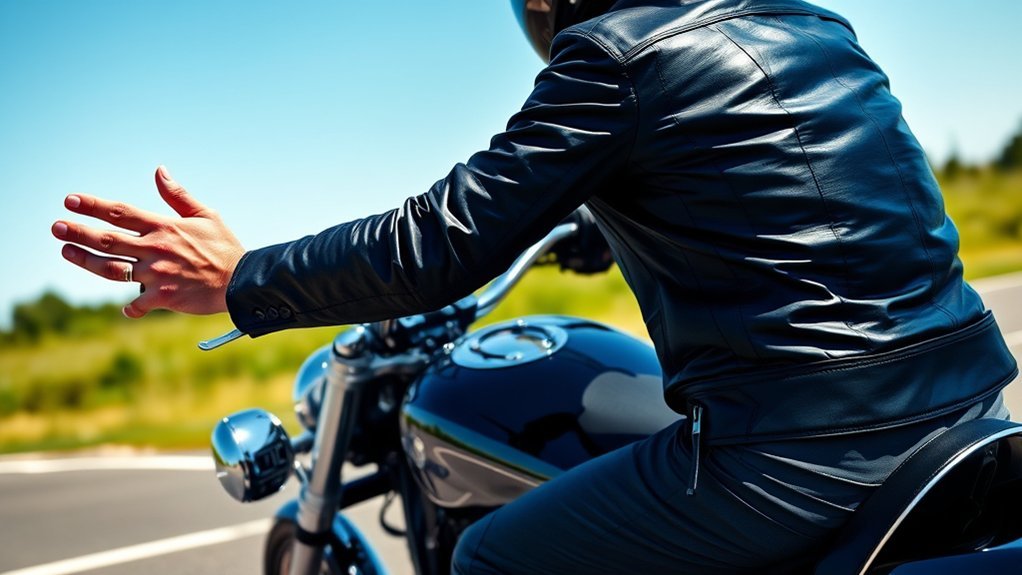
Motorcycle hand signals are crucial for safe riding and effective communication on the road. By using clear signals, like extending your left arm for a turn or raising your palm for a stop, you enhance safety and avoid accidents. Signal consistently and hold each gesture for 2–3 seconds to guarantee visibility. Practicing these signals, especially in group rides, fosters better coordination and camaraderie. Keep an eye on more important tips to master these signals effectively.
Why Motorcycle Hand Signals Matter
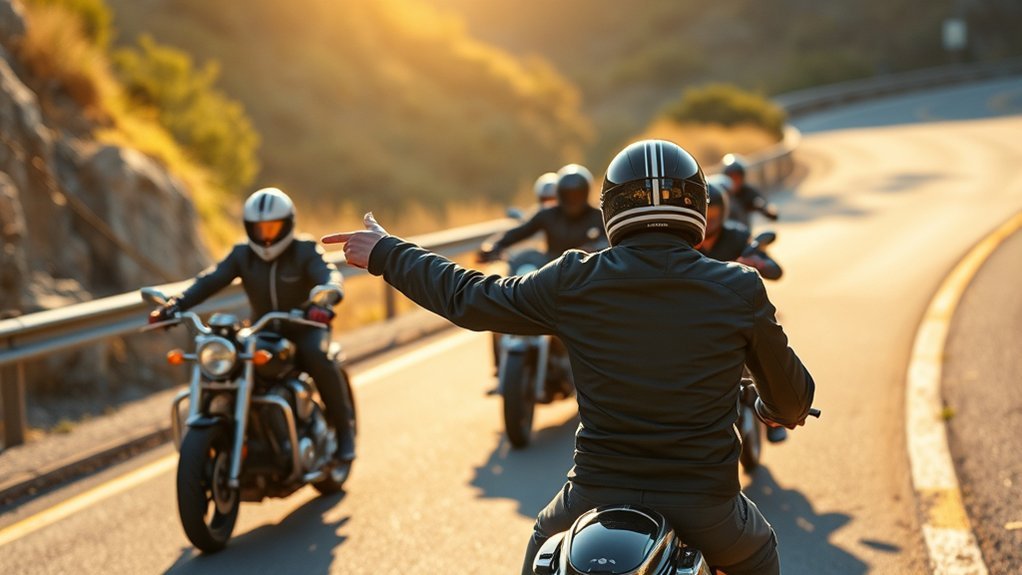
Motorcycle hand signals matter because they play an essential role in rider safety and communication on the road. Their importance lies in enhancing rider awareness and ensuring everyone on the road understands your intentions.
By using hand signals, you can keep your right hand on the throttle and front brake, maintaining better control of your motorcycle while signaling.
Using hand signals allows you to maintain control of your motorcycle while effectively communicating your intentions on the road.
Signaling before turns or lane changes—ideally at least 100 feet in advance—helps other road users anticipate your movements, considerably reducing the risk of accidents.
In group rides, clear hand signals foster camaraderie and coordination among riders, allowing you to stay aware of each other’s actions.
Consistent use of hand signals prevents miscommunication and misunderstandings with fellow motorcyclists and other drivers, promoting a safer riding environment.
Embracing this practice not only protects you but also elevates the collective safety of the riding community.
Essential Motorcycle Hand Signals for Safe Riding
Knowing essential motorcycle hand signals is vital for safe riding.
When you extend your left arm for a turn or signal with a raised arm in a group ride, you’re ensuring clear communication with other riders.
Mastering these signals can greatly enhance your safety and coordination on the road.
Basic Turn Signals
Effective communication on the road is essential for safe riding, and using hand signals can greatly enhance your visibility to other riders.
Mastering these basic hand signals not only guarantees your safety but also emphasizes the turn signal importance in group dynamics.
Here are the key signals you should know:
- Left Turn: Extend your left arm straight out, palm facing down for 2–3 seconds.
- Right Turn: Bend your left arm at a 90-degree angle with a clenched fist.
- Stop: Extend your left arm at a 90-degree angle, palm down to indicate a stop.
- Speed Up: Extend your left arm straight out, palm up, and lift it upward.
Using these basic hand signals fosters better communication and promotes safer riding experiences.
Group Riding Communication
When riding in a group, clear communication is essential for ensuring everyone’s safety and coordination. To enhance rider awareness, use standardized hand signals that all members understand.
For instance, extend your left arm straight up for “Follow Me” and make a clenched fist moving up and down for a “Comfort Stop.” To signal “Speed Up,” extend your left arm with your palm facing up and sweep it upward. Conversely, for “Slow Down,” extend your arm with the palm facing down and move it downward.
Don’t forget to tap your helmet for “Cops Ahead” and point left or right to indicate hazards. Prioritizing signal consistency fosters a safer riding experience for the entire group.
How to Use Motorcycle Hand Signals Effectively?
To use motorcycle hand signals effectively, you need to focus on timing and clarity.
Make certain you signal well in advance—typically 100 feet before a turn—to communicate clearly with other riders.
Practicing deliberate movements will help guarantee your signals are understood, enhancing overall group safety.
Signal Timing and Clarity
Proper timing and clarity in signaling are essential for ensuring safety on the road. To effectively use motorcycle hand signals, follow these tips:
- Signal Distance: Always signal your intentions approximately 100 feet before turning or changing lanes.
- Arm Positioning: Use clear, deliberate arm movements; keep your left arm free while maintaining throttle control with your right hand.
- Duration: Hold each signal for 2–3 seconds to give fellow riders enough time to recognize your intentions.
- Know the Law: Familiarize yourself with local regulations regarding signaling distances, as they may vary by state.
Group Communication Protocols
Effective communication within a motorcycle group relies heavily on a shared understanding of hand signals, ensuring everyone can respond swiftly and safely.
Establish a clear set of signals before you hit the road, emphasizing their hand signal importance for smooth riding group dynamics. Use specific gestures, like an extended left arm for a left turn or a bent left arm with a clenched fist for a right turn, to convey your intentions.
Always prioritize control of your motorcycle while signaling, keeping your right hand free for the throttle and brake. Hold each signal for 2–3 seconds to enhance visibility.
Regular practice fosters camaraderie and reinforces safety, making your rides not just exhilarating, but also secure for everyone involved.
Key Biker Communication Signals for Safe Riding
When riding a motorcycle, clear communication is essential for safety, especially since indicators can sometimes fail. Mastering hand signals not only enhances signal recognition but also fosters biker camaraderie among riders.
Here are four key signals you should know:
- Left Turn: Extend your left arm straight out, palm down.
- Right Turn: Bend your left arm at a 90-degree angle with a clenched fist.
- Stop: Extend your left arm down at a 90-degree angle with an open palm.
- Slowing Down: Move your left arm downward with the palm facing down.
Using these signals effectively can prevent misunderstandings while riding. They guarantee everyone knows your intentions, promoting a safer riding experience.
Effective use of hand signals prevents misunderstandings, ensuring all riders are aware of your intentions for a safer journey.
Plus, sharing these signals builds a sense of unity within the motorcycle community, allowing you to ride free and confident on the open road.
Group Riding Signals for Better Coordination
Riding in a group can be an exhilarating experience, but it also requires a high level of coordination among participants. Effective group dynamics depend on clear signal interpretation, guaranteeing everyone knows the group’s intentions. Here are some essential signals to enhance your ride:
| Signal | Description |
|---|---|
| Follow Me | Left arm raised straight up, palm facing forward. |
| Comfort Stop | Clenched fist moving up and down. |
| Single File | Left arm raised with index finger pointing up. |
| Hazard Warning | Pointing with the left hand for left hazards or using the right foot for right-side dangers. |
Using these hand signals not only promotes safety but also fosters a sense of unity among riders. By mastering these signals, you can guarantee a smooth and enjoyable ride, keeping everyone informed and engaged.
Best Practices for Using Hand Signals
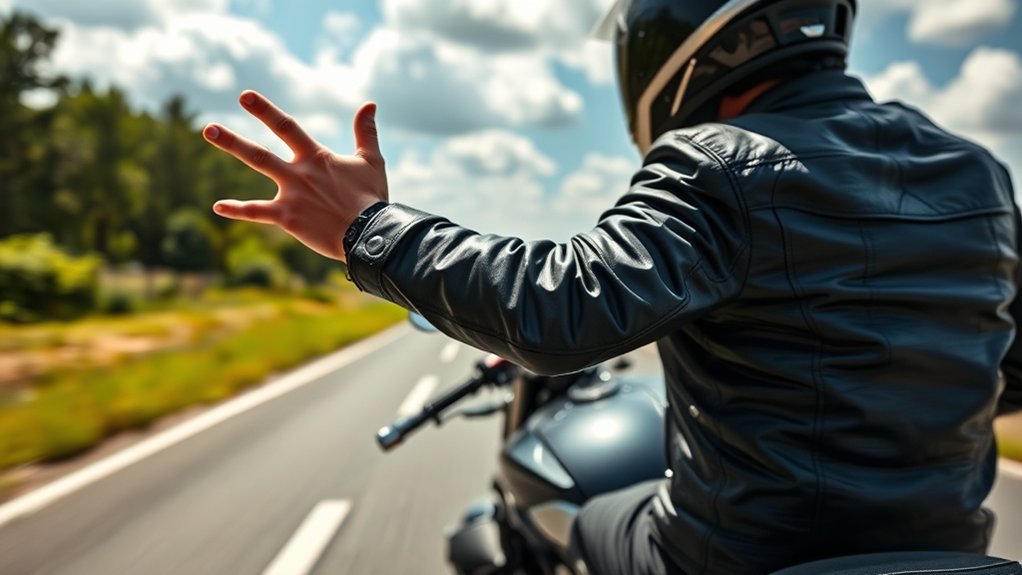
Clear communication is essential for a safe and enjoyable group ride, and using hand signals appropriately can make all the difference.
To effectively communicate with your fellow riders, consider these best practices:
- Use your left arm: This keeps your right hand on the throttle and front brake, ensuring better control.
- Hold signals for 2–3 seconds: This enhances signal visibility, allowing others to clearly understand your intentions.
- Signal early: Aim to signal at least 100 feet before turns or lane changes, adhering to local laws for longer distances if necessary.
- Maintain clear arm movements: Deliberate gestures avoid ambiguity and prevent miscommunication, keeping everyone safe.
Boosting Safety With Effective Communication
Effective communication is essential for enhancing safety during motorcycle rides, especially in group settings. By using hand signals, you achieve visibility enhancements that help prevent accidents and clearly indicate your intentions to others on the road.
| Signal | Description | Purpose |
|---|---|---|
| Left Turn | Left arm extended straight out | Indicate a left turn |
| Right Turn | Left arm bent at 90 degrees | Indicate a right turn |
| Slow Down | Left arm bent with palm facing down | Signal to slow down |
| Speed Up | Left arm bent with palm facing up | Signal to speed up |
When you’re riding in a group, it’s vital to maintain control while signaling, using your left arm for clarity. Familiarize yourself with local laws on signaling distances, ensuring you’re not only safe but also compliant. Effective communication can transform your riding experience into a safer, more liberated adventure.
Frequently Asked Questions
What Is the 1% Rule in Motorcycles?
The 1% rule in motorcycles emphasizes you should spend one minute preparing for every hour of riding. This practice enhances motorcycle safety and promotes riding etiquette, ensuring you’re ready for any hazards on the road.
What Does 2 Fingers Down Mean for Bikers?
When you see two fingers down, it’s a signal of biker camaraderie. This gesture fosters connection and respect among riders, embodying signal etiquette that enhances the sense of community and support on the road.
How to Properly Hand Signal on a Motorcycle?
To properly hand signal on a motorcycle, extend your left arm for left turns, bend it for right turns, and hold it down to stop. Prioritize safety by maintaining control and signaling clearly for visibility.
What Is the Unwritten Biker Code?
The unwritten biker code prioritizes safety and biker camaraderie during group riding. For example, when a rider breaks down, others stop to help, reinforcing the bond and shared responsibility among the motorcycle community.
Conclusion
Incorporating hand signals into your riding routine isn’t just for experienced bikers; it’s crucial for everyone, regardless of skill level. You might think verbal communication is enough, but hand signals offer a clear, immediate way to convey intentions in noisy environments. By mastering these signals, you enhance your safety and that of fellow riders. So, embrace these practices—your ride will be smoother, and your connection with the biking community will deepen. Stay safe and ride smart!







Leave a Reply