
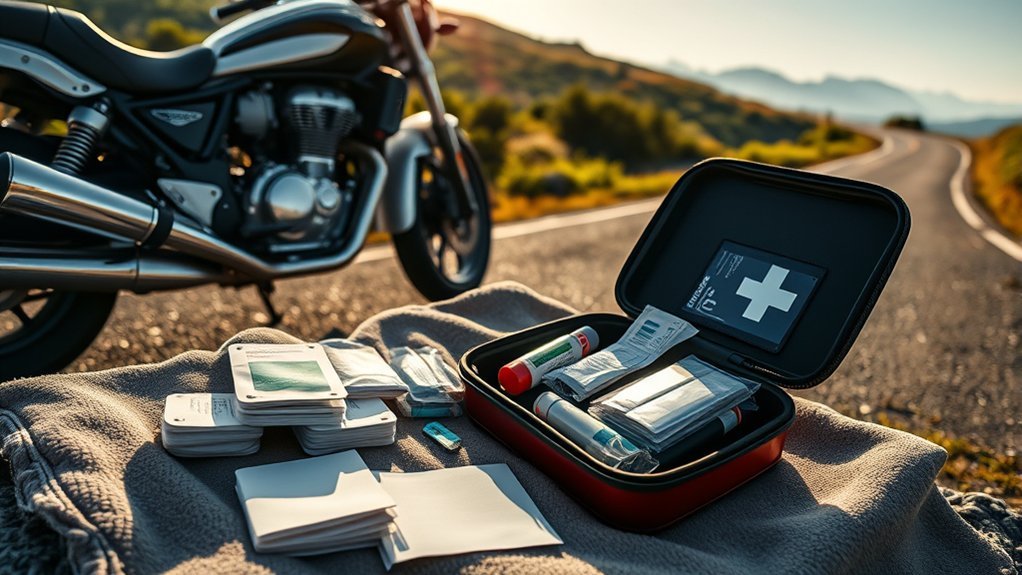
Every motorcyclist should carry a well-equipped first aid kit for safety on the road. Key items include adhesive bandages, antiseptic wipes, nitrile gloves, and quick clot gauze. Proper packing and maintenance are essential to keep your kit ready for emergencies. Regular training helps you use it effectively when it counts. Customize your kit based on your rides and conditions. Want to get detailed tips on packing and what to include? There’s more to explore!
Why Every Motorcyclist Needs a First Aid Kit
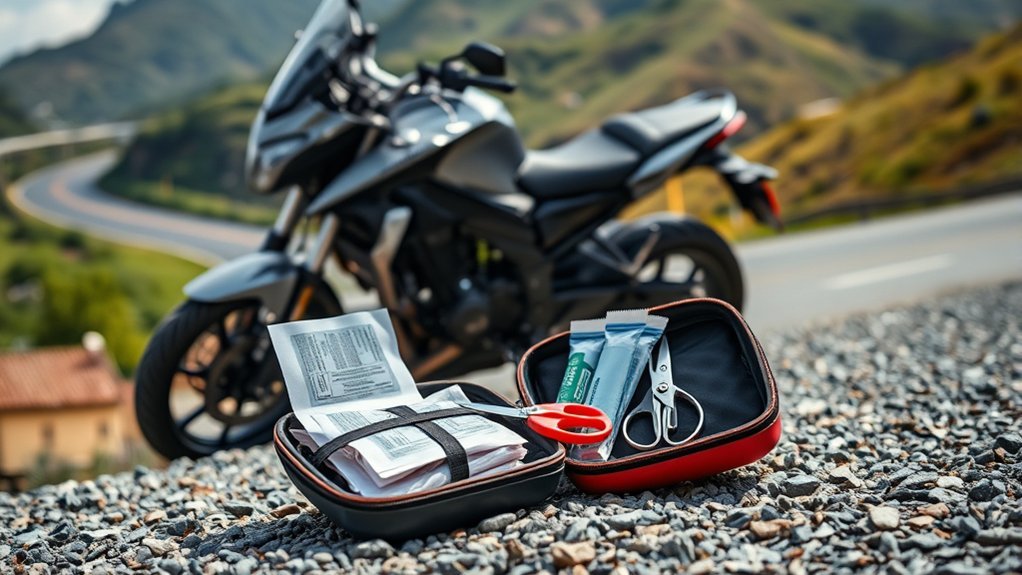
Riding a motorcycle can be exhilarating, but it also comes with risks that make having a first aid kit vital. Every motorcyclist should carry a kit to effectively manage injuries like scrapes, burns, and fractures that can happen on the road. Immediate care can prevent complications until professional help arrives, emphasizing the first aid importance in motorcycle safety.
Statistics show that only 48% of riders carry a first aid kit, which highlights a significant gap in preparedness. A well-equipped kit boosts your confidence, allowing you to respond effectively to emergencies. It’s not just for your use; it can provide critical support to fellow riders or bystanders in need, potentially saving lives.
Regularly checking and restocking your kit guarantees everything remains effective, as expired items can compromise your readiness. Embrace the freedom of the open road, but don’t forget the safety that a first aid kit brings.
Must-Have Items in Your Motorcycle First Aid Kit
Having a first aid kit is just the first step; knowing what to include makes all the difference.
To guarantee you’re prepared for any mishap on the road, pack essential gear like adhesive bandages, sterile gauze pads, and adhesive tape to treat cuts and scrapes efficiently.
Don’t forget antiseptic wipes and alcohol pads to clean wounds, reducing the risk of infection after an injury.
Nitrile gloves are a must; they protect both you and the injured party from contamination during treatment.
Instant cold packs are vital for managing swelling and pain from sprains or fractures, offering immediate relief.
Finally, include quick clot gauze to control severe bleeding, ensuring you’re ready for serious accidents.
This well-equipped kit not only aids in injury prevention but empowers you to handle emergencies confidently.
Stay safe, ride free, and be prepared for whatever the road throws your way!
Packing Your First Aid Kit Right
Packing your motorcycle first aid kit right is vital for quick access during emergencies.
Start by creating an essential items checklist and organizing your supplies for easy retrieval.
Don’t forget to regularly maintain and restock your kit to keep everything up-to-date and ready when you need it.
Essential Items Checklist
When you hit the road on your motorcycle, ensuring your first aid kit is well-stocked with essential items can make all the difference in an emergency.
Start with adhesive bandages, sterile gauze pads, and adhesive tape for treating common injuries. Pack antiseptic wipes and nitrile gloves to prevent contamination during first aid.
Include quick clot gauze or hemostatic powder for controlling severe bleeding, along with instant cold packs to reduce swelling and pain.
Don’t forget personal medications like pain relievers and any prescribed emergency meds tailored to your needs.
Regularly check and restock your kit to keep all items within expiration dates, ensuring you’re prepared for any emergency scenarios and enhancing your injury prevention efforts on the road.
Organization and Accessibility Tips
Storing your first aid kit in a consistent, quick-access location on your motorcycle is vital for addressing emergencies effectively. A saddlebag or under the seat works well. Use a waterproof bag to protect your supplies from the elements. Implement an organizational system, like color-coded bags, to enhance efficiency. Check out the table below for effective storage solutions:
| Color | Purpose | Example Items |
|---|---|---|
| RED | Critical Items | Bandages, Tourniquets |
| GREEN | General Supplies | Gauze, Adhesive Tape |
| BLUE | Medication | Pain relievers, Antiseptics |
| YELLOW | Tools | Scissors, Tweezers |
| WHITE | Instructional | First aid manual |
Keep your kit tailored to your needs and make sure it’s always ready for action!
Regular Maintenance and Restocking
To keep your first aid kit ready for emergencies, you need to regularly check and restock its contents. Establish a restocking schedule that includes routine kit inspections to assess expiration dates and item quantities.
Maintain a checklist of essential items, ensuring you’re prepared for any situation. Store your kit in a consistent, easily accessible location on your motorcycle for swift access.
Utilize waterproof bags to protect crucial components from moisture, keeping bandages and medications effective. Treat restocking like a safety drill—practice it often to reinforce your familiarity with the kit.
This proactive approach empowers you to handle emergencies confidently, ensuring you’re always ready to ride freely and safely.
Training for Effective First Aid Use on the Road
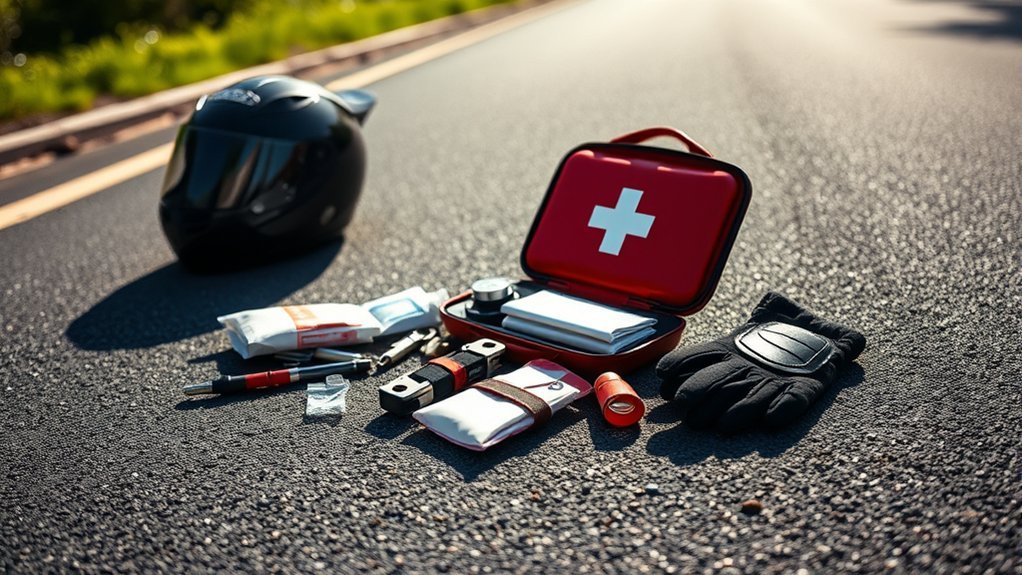
How can you guarantee you’re ready to respond effectively in an emergency while on the road? Start by enrolling in CPR courses or community emergency response team training.
These programs provide hands-on experience and the essential skills needed for managing emergencies. Regularly practice using your first aid kit items to build familiarity and confidence.
Enroll in hands-on emergency response training and regularly practice your first aid skills to boost confidence and readiness.
Incorporate simulated scenarios, like mock accidents, into your training to enhance your improvisation skills and maintain calmness when it counts.
Remember, while it’s important to know basic first aid, professional procedures like advanced wound care should be left to trained individuals.
Keep a printed motorcycle accident victim checklist in your kit for quick reference; this guarantees you’re prepared to assess and respond promptly in emergencies.
Customizing Your First Aid Kit for Specific Motorcycle Rides
When you’re planning a motorcycle ride, it’s essential to customize your first aid kit to match the conditions you’ll face.
Consider the duration and distance of your journey, along with any specific activities you’ll be doing, to guarantee you have the right supplies.
Tailoring your kit to these factors helps you address potential risks effectively, keeping you and your riding companions safe.
Assess Ride Conditions
Evaluating ride conditions is essential for customizing your first aid kit to meet specific risks associated with your journey.
A thorough weather assessment and understanding of the ride environment can help you prepare. Here’s what to reflect upon:
- Heat-related issues: Add cold packs for summer rides.
- Rough terrains: Include extra bandages for scrapes and cuts.
- Insect bites: Pack insect sting ointment for wooded areas.
- Urban rides: Opt for compact items like adhesive bandages and antiseptic wipes to handle minor injuries discreetly.
Consider Duration and Distance
Understanding the duration and distance of your motorcycle ride is vital for tailoring your first aid kit. During your ride preparation, assess whether you’re taking a short day trip or a multi-day adventure.
For shorter rides in populated areas, a basic kit may suffice. However, longer excursions or remote routes require more thorough supplies, including emergency medications and advanced wound care items.
Consider the specific risks associated with your journey, such as rough terrain or extreme weather, which might necessitate instant cold packs or burn ointments. If you’re riding with a group, customize your kit to meet everyone’s needs.
Regular supply evaluation is essential—ensure all items are up-to-date and ready for the conditions you’ll encounter.
Include Activity-Specific Items
Customizing your motorcycle first aid kit for specific rides is essential for guaranteeing your safety and preparedness.
By considering environmental factors and your ride-specific needs, you can tailor your kit effectively.
Here are some important items to include based on your ride:
- Insect sting ointment for forested areas
- Burn ointment if you’ll be riding in hot climates
- Splint and thorough wound care for remote locations
- Quick clot gauze and extra adhesive tape for off-road adventures
Always assess the anticipated risks of your journey.
Items for Your Motorcycle Accident Checklist
When you’re out on your motorcycle, having a well-prepared accident checklist can make all the difference in an emergency. It’s vital to include items that facilitate quick action and documentation. Here’s a simple checklist to keep handy:
| Item | Purpose |
|---|---|
| First Aid Kit | Treats injuries immediately |
| Emergency Contact Info | Guarantees quick communication |
| Insurance Details | Access for legal and insurance matters |
| Accident Scene Documentation | Capture photos and details post-accident |
| Medical History & Medications | Expedites treatment in emergencies |
Stashing this checklist under your bike seat can serve as a significant reminder of steps to take. Regularly review and update your checklist to verify all items are current. This proactive approach empowers you to handle accidents with confidence and clarity.
Maintaining and Updating Your First Aid Kit Regularly
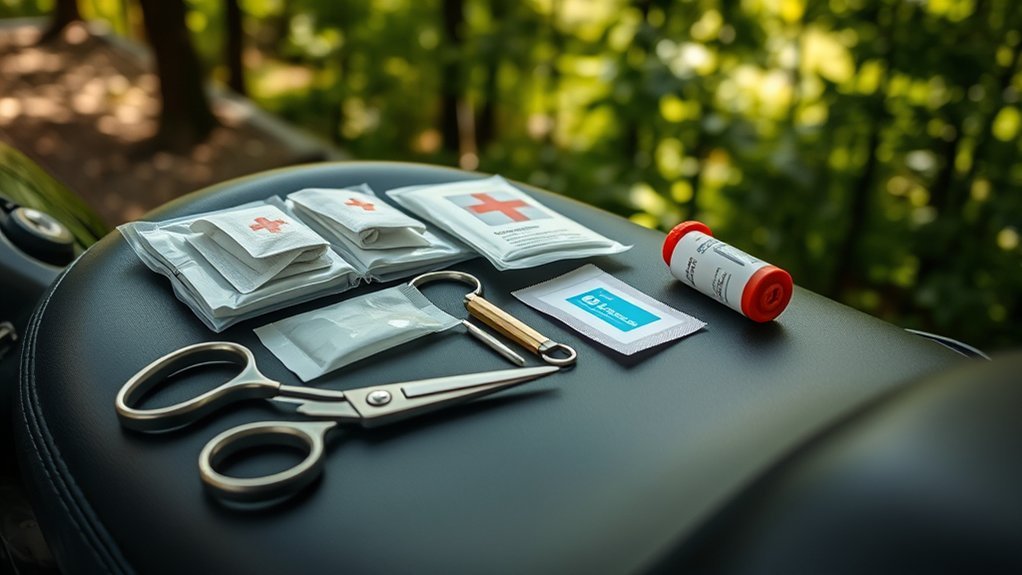
To keep your first aid kit effective, check it regularly and update its contents as needed. This proactive approach guarantees your first aid supplies are ready when you need them most. Here are some essential steps to follow:
Regularly updating your first aid kit ensures it’s always prepared for emergencies when you need it the most.
- Regularly check expiration dates on medications and supplies, replacing any expired items promptly.
- Conduct a complete inventory at least once a year to assess if your kit meets your current needs and activities.
- After significant motorcycle trips, review and restock based on any incidents or injuries encountered.
- Keep a checklist of essential items and their expiration dates for easy reference during restocking sessions.
Consider seasonal adjustments too. Add insect bite relief in warmer months or thermal blankets in colder weather to prepare for specific conditions.
Frequently Asked Questions
How Do I Choose the Right Size First Aid Kit for My Motorcycle?
To choose the right size first aid kit for your motorcycle, consider the kit dimensions and your personal needs. You’ll want something compact yet thorough enough to handle potential injuries on your rides.
Are There Specific First Aid Kits Designed for Long-Distance Motorcycle Trips?
Sure, you could just take any kit for long-distance trips, but that’s like riding without a helmet! Opt for specialized first aid kits designed for motorcycle safety to guarantee you’re prepared for any adventure.
Can I Use a Regular First Aid Kit for Motorcycle Emergencies?
You can use a regular first aid kit for motorcycle emergencies, but it might lack motorcycle kit essentials. Regular kits have advantages, yet customizing yours guarantees you’re prepared for specific riding-related injuries and situations.
What Should I Do if a First Aid Item Expires?
When a first aid item expires, treat it like a wilted flower—replace it promptly. Regularly check your kit for expired items; first aid maintenance is essential to guarantee you’re ready for emergencies when they arise.
How Can I Safely Store My First Aid Kit on My Motorcycle?
To safely store your first aid kit on your motorcycle, use secure mounting options like brackets. Make certain it’s waterproof for weather protection, keeping supplies dry and accessible during your ride. Your safety’s worth it!
Conclusion
In the unpredictable journey of motorcycling, your first aid kit is your lifeline, a safety net woven from preparedness and care. As you cruise down the open road, knowing you’re equipped for the unexpected can bring peace of mind. So, tailor your kit to your adventures, refresh it regularly, and invest in training. With a well-stocked first aid kit by your side, you’re not just riding; you’re embracing the freedom of the road with confidence and responsibility.






Leave a Reply