
Motorcycle commuting can save you money and reduce your stress while getting you around town. Always wear proper safety gear like a full-face helmet and armored clothing. Keep a safe distance from other vehicles and use mirrors often to spot hazards. Stay prepared for any weather with appropriate gear and maintain your bike regularly for reliability. If you’re enthusiastic to enhance your commuting experience, there’s even more valuable information to discover.
Why Motorcycle Commuting Is Worth It: Key Benefits
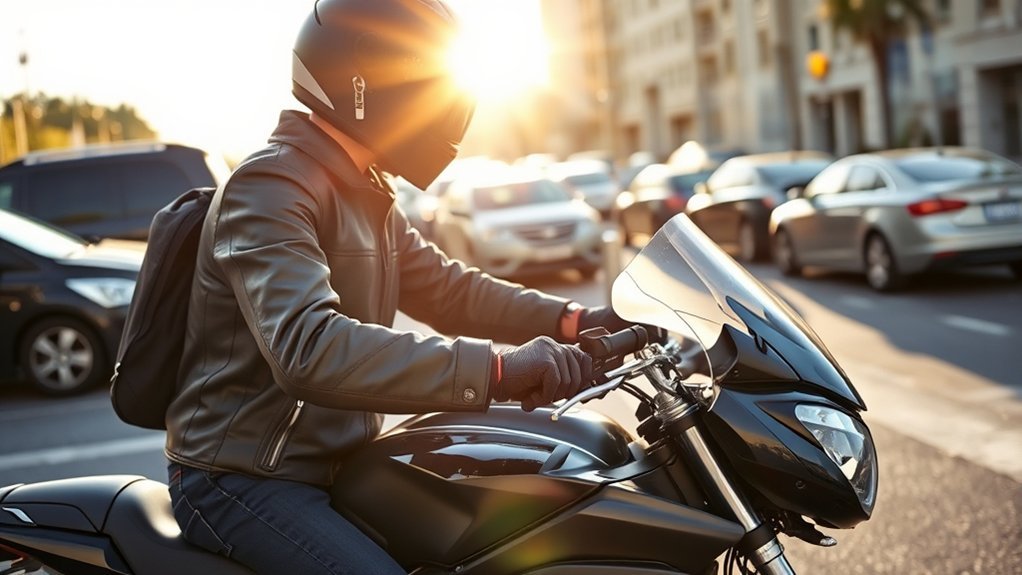
If you’re looking for a way to make your daily commute more enjoyable and efficient, motorcycle commuting offers several key benefits worth considering.
First, you’ll experience significant cost savings, as motorcycles average over 55 miles per gallon—far better than cars, which typically get around 25 miles per gallon. This exceptional fuel efficiency not only helps your wallet but also provides environmental benefits by reducing your carbon footprint.
Beyond economic advantages, riding a motorcycle promotes physical health, burning between 100 to 300 calories per hour.
You’ll also enjoy easier parking in crowded urban areas, making your daily routine smoother. Plus, motorcycle commuting can reduce stress and transform your commute into a pleasurable experience.
Engaging with fellow riders fosters community connections, allowing you to share tips and experiences. All these factors combine to make motorcycle commuting a liberating choice for your daily travels.
Must-Have Safety Gear for Motorcycle Commuting
When you hit the road on your motorcycle, having the right safety gear is essential for protecting yourself and ensuring a smooth commute. Adhering to the ATGATT principle—All The Gear, All The Time—means you should always wear a full-face helmet, armored jacket, gloves, riding jeans with built-in armor, and sturdy boots.
Wearing the right safety gear is crucial for every motorcycle ride, ensuring protection and a smooth commute.
Opt for CE-approved gear to greatly reduce injury risk in a crash.
Don’t overlook visibility enhancements; choose brightly colored helmets and reflective jackets to stand out, especially in low-light conditions. This added visibility can be a lifesaver on busy streets.
Stylish riding jeans provide comfort without sacrificing protection, while touring boots offer both safety and convenience for walking at your destination.
Investing in high-quality safety gear not only enhances your protection but also elevates your confidence as you navigate your daily commute.
How to Navigate Traffic Safely on a Motorcycle?
How can you navigate traffic safely on a motorcycle? Start by maintaining a safe following distance of three to four seconds behind the vehicle in front of you. This gives you adequate reaction time. Use your mirrors often to check for blind spots and adjust your lane positioning to enhance visibility. Always signal your intentions well in advance when changing lanes or turning, as clear communication reduces collision risks.
| Tips for Safe Navigation | Description |
|---|---|
| Maintain Following Distance | Keep three to four seconds behind |
| Use Mirrors | Check for blind spots frequently |
| Signal Early | Alert other drivers of your moves |
| Open Lane Riding | Stay out of gaps between vehicles |
| Scan Ahead | Identify potential hazards and routes |
What to Wear for Every Weather Condition
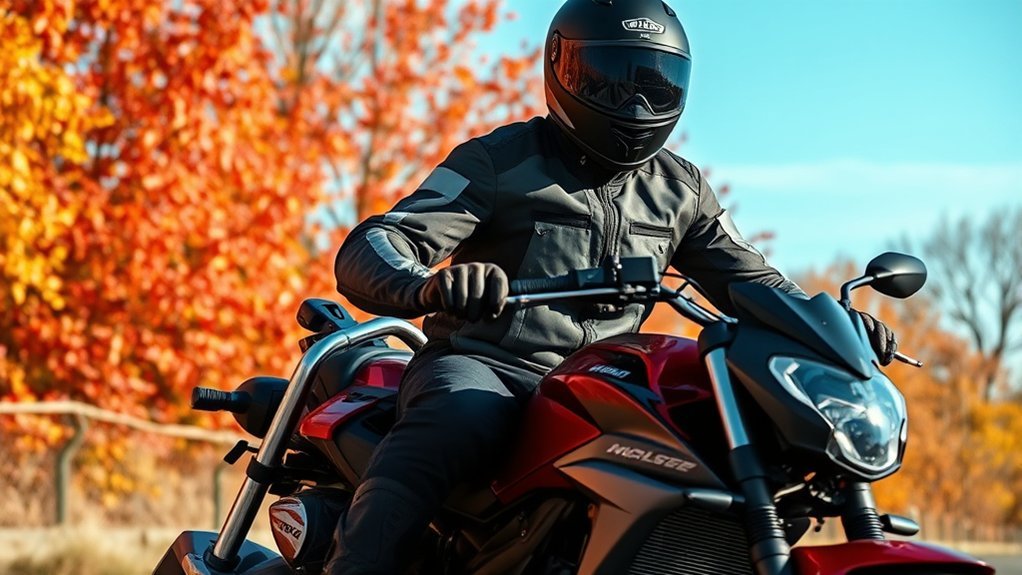
Maneuvering traffic safely on a motorcycle requires more than just skill; it also depends on being properly equipped for the weather you’ll face. Your gear selection can make all the difference in comfort and safety.
Here’s how to dress for every condition:
- Sunny Weather: Wear a lightweight, breathable mesh jacket and pants for airflow and protection.
- Rainy Conditions: Invest in a waterproof riding suit or jacket, along with waterproof gloves and boots to stay dry.
- Cold Weather: Use weather layering with thermal base layers, heated gloves, and vests for added warmth.
- Extremely Hot Weather: Opt for a hi-viz, lightweight ventilated jacket that includes reflective materials for safety.
Always carry an extra pair of socks and a change of clothes in a waterproof bag to stay comfortable at your destination, no matter the unexpected weather changes.
Maintenance Tips for a Reliable Motorcycle Commute
To guarantee a reliable motorcycle commute, regular maintenance checks are essential.
You should monitor tire pressure weekly and inspect fluid levels at every gas fill-up for peak performance.
Staying on top of these simple tasks can greatly enhance your safety and riding experience.
Regular Maintenance Checks
Regular maintenance checks are essential for ensuring your motorcycle is reliable during your daily commute.
By sticking to maintenance schedules and using inspection checklists, you can enhance your riding experience and stay safe on the road.
Here are some key checks to perform regularly:
- Tire Pressure: Check weekly to optimize performance and safety.
- Lights and Signals: Inspect before every ride for visibility and effective communication.
- Oil Levels: Monitor at each gas fill-up; follow your owner’s manual for changes.
- Brake System: Regularly check both front and rear brakes for wear and functionality.
Tire Pressure Monitoring
While you might be enthusiastic to hit the road, checking your tire pressure is an essential step that shouldn’t be overlooked. Aim to check your tire pressure at least once a week.
Under-inflated tires can compromise fuel efficiency and heighten the risk of blowouts during your ride. The recommended tire pressure for most motorcycles, typically between 28 to 40 PSI, can be found in your owner’s manual or on a sticker on your bike.
Always check the pressure when the tires are cold for accurate readings. Consider investing in a digital tire pressure gauge for precise monitoring techniques.
Keeping your tire pressure in check not only enhances safety and handling but also extends tire life, ensuring a smooth commute.
Fluid Level Inspections
Fluid level inspections are essential for keeping your motorcycle in top shape. Regular fluid monitoring can prevent breakdowns and enhance your ride. Make these essential checks part of your routine:
- Oil Level: Check it at every gas fill-up to guarantee your engine runs smoothly and efficiently.
- Coolant Level: Inspect this regularly, especially in warmer months, to prevent overheating.
- Brake Fluid: Verify its level to maintain effective braking performance—low fluid can compromise safety.
- Transmission Fluid: Keep it at the recommended level to guarantee smooth gear shifts.
Don’t overlook other fluids like clutch fluid and fork oil.
Defensive Riding Techniques: Staying Safe on the Road
To guarantee your safety on the road, mastering defensive riding techniques is essential. Start by familiarizing yourself with the Smith System of Defensive Driving, which emphasizes hazard anticipation. This means keeping a clear view of the road ahead and being ready for potential obstacles.
Position yourself strategically in traffic to enhance visibility; this not only helps you see but also creates escape routes for quick maneuvers if necessary.
Maintain a safe following distance—stay at least two seconds behind the vehicle in front of you to make sure you have ample reaction time. Use your mirrors frequently and check your blind spots to stay aware of surrounding vehicles and anticipate their actions.
Finally, cover your brake lever with two fingers while riding in traffic, allowing for a quick response to emergencies without losing control of the throttle. By implementing these visibility strategies, you’ll considerably reduce your risk on the road.
How to Plan Your Motorcycle Commute for Safety and Efficiency?
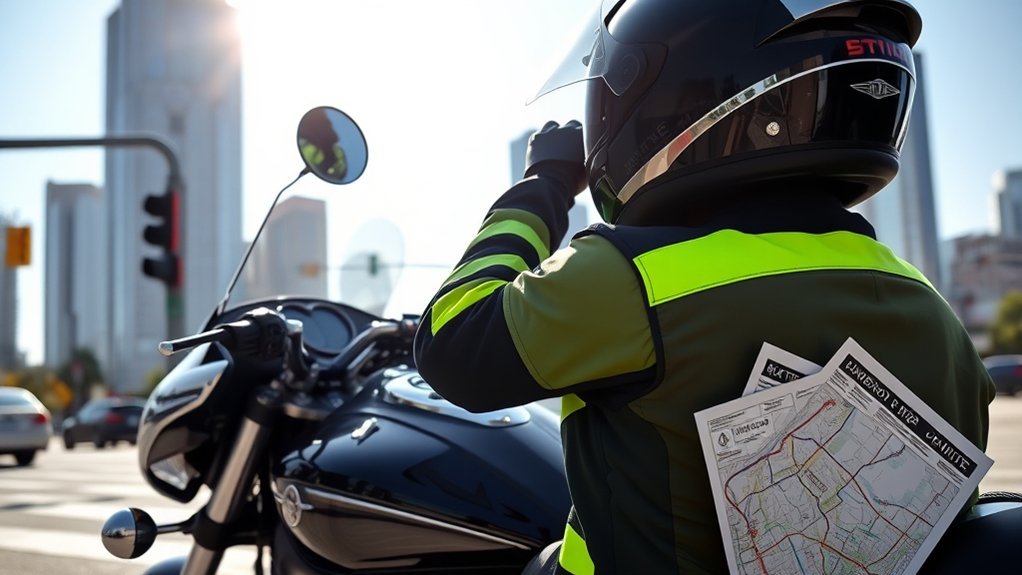
To guarantee a safe and efficient motorcycle commute, you need to plan your route ahead of time.
Test your route on off-days to spot traffic issues and hazards, and always be prepared for changing weather by dressing in layers and having waterproof gear handy.
Regular maintenance of your motorcycle will also play an essential role in keeping your ride reliable and secure.
Route Planning Strategies
When planning your motorcycle commute, it’s essential to prioritize safety and efficiency to guarantee a smoother ride. Here are some effective route planning strategies:
- Test Routes: Use your off days to identify traffic patterns and potential hazards, ensuring a smoother ride during peak hours.
- Utilize Navigation Apps: Choose motorcycle-specific routes to avoid heavy traffic and poor conditions, enhancing route optimization.
- Map Fuel Stops: For longer commutes, plan fuel stops along your route to prevent running low on gas.
- Consider Timing: Factor in the time of day and weather conditions, as these can greatly impact safety and efficiency, aiding in effective traffic analysis.
Weather Preparedness Essentials
While unpredictable weather can pose challenges during your motorcycle commute, being prepared guarantees you stay safe and comfortable on the road. Focus on climate adaptability with the right weather gear, ensuring you’re ready for any conditions. Here’s a quick guide:
| Weather Condition | Recommended Gear | Additional Tips |
|---|---|---|
| Rain | Waterproof rain suit | Keep gloves and boots dry |
| Cold | Windproof jacket | Dress in layers for warmth |
| Hot | Breathable clothing | Hydrate before and during ride |
| Mixed | Layered attire | Check forecasts before leaving |
Invest in quality gear, keep an eye on forecasts, and always carry a spare set of clothes at work for ultimate comfort.
Frequently Asked Questions
What Is the 1% Rule in Motorcycles?
The 1% Rule in motorcycles means you should dedicate 1% of your time to improving rider safety and motorcycle maintenance. This small commitment can lead to significant enhancements in your skills and overall riding experience.
What Is the 12 Second Rule for Motorcycles?
Did you know that riders who practice the 12 Second Rule greatly improve their reaction times? By focusing ahead, you enhance rider awareness and maintain a safe following distance, preparing for hazards before they become a threat.
What Does 2 Fingers Down Mean for Bikers?
The “2 fingers down” gesture signifies camaraderie among bikers, embodying motorcycle etiquette. When you extend two fingers, you’re acknowledging fellow riders, promoting safety, and reinforcing a sense of community on the open road.
Is a Motorcycle Practical for Commuting?
A motorcycle’s practical for commuting, offering fuel efficiency and easy maneuverability. However, you’ll face daily challenges like vulnerability in accidents and weather exposure. Balancing these advantages with risks can lead to a liberating experience.
Conclusion
Incorporating motorcycle commuting into your daily routine can transform your travel experience. Not only can it save you up to 30% in fuel costs, but it also reduces your commute time considerably. By prioritizing safety gear, mastering defensive riding, and staying vigilant on the road, you’ll enjoy the ride while minimizing risks. So gear up, embrace the freedom of the open road, and make the most of your daily commute—it’s worth every mile!





Leave a Reply