
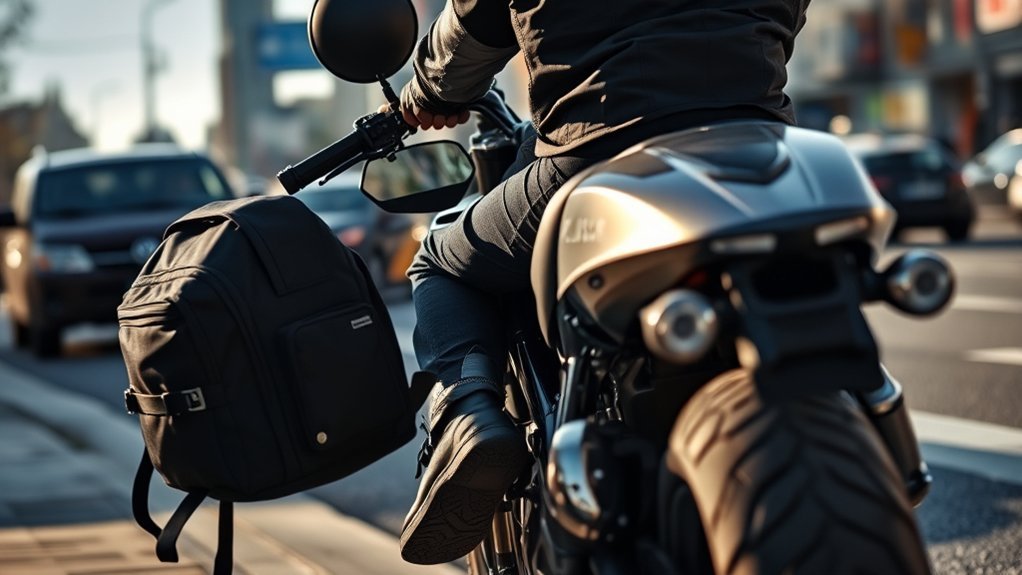
Motorcycle commuting can make a daily trip more efficient and enjoyable, but it also demands more preparation than driving a car. A safe routine starts with proper licensing and training, protective gear, a well-maintained motorcycle, a weather plan, and enough time and space to respond to traffic hazards.
Quick Answer
To commute safely by motorcycle, wear a DOT-compliant full-face helmet and protective riding gear, complete a pre-ride inspection, keep at least a two-second following gap, scan well ahead, avoid blind spots, ride sober, and adjust your speed and route for traffic, weather, road conditions, and your skill level.
Key Takeaways
- Get the required motorcycle endorsement, insurance, registration, and hands-on rider training before commuting in traffic.
- Wear a properly fitted DOT-compliant helmet plus abrasion-resistant jacket, pants, gloves, eye protection, and over-the-ankle boots.
- Use a short pre-ride inspection to check tires, controls, lights, fluids, chassis, and stands.
- Build time and space around the motorcycle, especially at intersections, near driveways, and beside large vehicles.
- Check the forecast, secure your cargo, plan safe parking, and keep a backup transportation option for severe weather or mechanical problems.
At a Glance
| Time Required | About 3–5 minutes for a daily pre-ride check, plus time to put on gear and secure cargo |
| Difficulty | Moderate; commuting in traffic requires training, licensing, judgment, and regular practice |
| Tools Needed | Protective riding gear, tire-pressure gauge, secure luggage, weather layer, phone or navigation system, and motorcycle lock |
| Cost | Varies widely by motorcycle, insurance, training, protective gear, maintenance, fuel, parking, and security needs |
Warning: This guide supports—but does not replace—formal rider training, your motorcycle owner’s manual, local traffic laws, or professional mechanical inspection. Do not ride when impaired, dangerously fatigued, or when weather and road conditions exceed your skills or equipment.
Why Motorcycle Commuting Is Worth It: Key Benefits
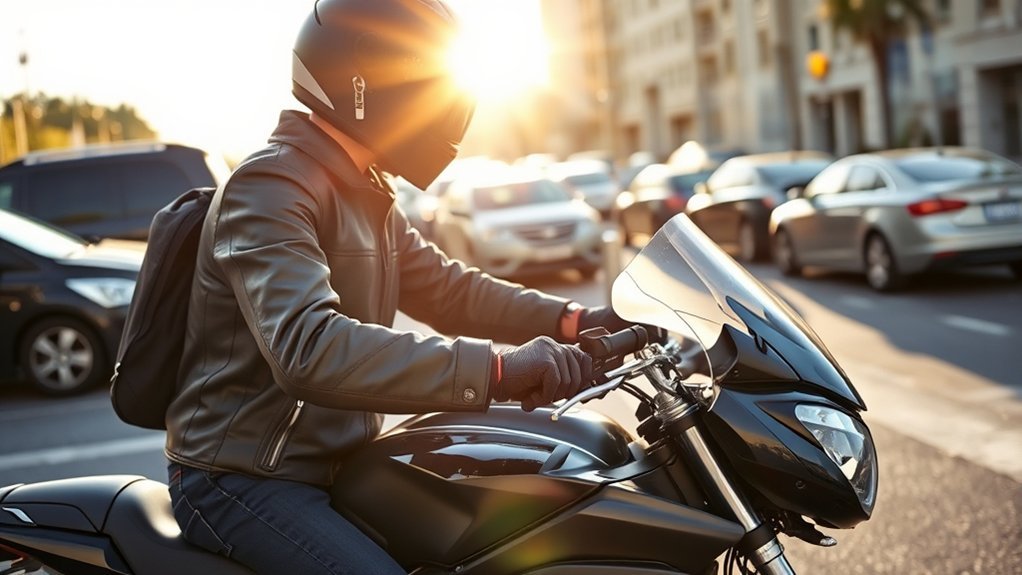
Motorcycle commuting can be practical when the bike, route, weather, and rider are a good match. The biggest advantages often include lower fuel use, easier parking, a smaller physical footprint, and a more engaging trip.
National vehicle-category data from the U.S. Department of Energy show average U.S. fuel economy of about 44 mpg for motorcycles and 25.6 mpg for cars, although actual results vary greatly by engine size, riding style, speed, traffic, maintenance, and load. Fuel savings also do not automatically mean lower emissions of every pollutant, so avoid broad environmental claims without model-specific data.
Motorcycles may reduce fuel and parking costs, but a fair budget must also include protective gear, tires, scheduled service, insurance, registration, security equipment, weatherproof luggage, and possible backup transportation. High-performance bikes and frequent tire replacement can erase much of the expected savings.
Riding also requires balance, coordination, concentration, and exposure to changing conditions. It may feel more mentally engaging than sitting in a car, but it should not be treated as a substitute for regular exercise. Stress can decrease on an enjoyable route, yet heavy traffic, heat, rain, poor visibility, and aggressive drivers can increase it.
NHTSA reports that, per vehicle mile traveled in 2024, motorcyclists were almost 27 times more likely than passenger-car occupants to die in a traffic crash. Convenience never outweighs preparation and risk management.
Before You Start Commuting by Motorcycle
Get Licensed, Trained, and Insured
All U.S. states require the appropriate motorcycle license or endorsement. Requirements differ, but they commonly include a knowledge test, a riding-skills test, or completion of an approved course. A hands-on program such as the Motorcycle Safety Foundation Basic RiderCourse can help new riders practice clutch control, braking, turning, obstacle response, and risk management in a controlled setting.
Confirm that your insurance covers commuting use, accessories, luggage, roadside assistance, medical payments where available, and any financing requirements. Carry the required license, registration, and proof of insurance.
Choose a Practical Commuter Motorcycle
A commuter bike should fit your body, skill level, route, and storage needs. Look for manageable weight, comfortable ergonomics, predictable power, good mirrors, effective lights, anti-lock brakes when available, secure luggage options, and enough range for the round trip plus a reserve.
Practice low-speed turns, controlled stops, emergency braking, swerving, hill starts, and parking-lot maneuvers before entering rush-hour traffic. A new or unfamiliar motorcycle may react differently to throttle, braking, steering, wind, and road surfaces.
Must-Have Safety Gear for Motorcycle Commuting
Use the ATGATT approach—All The Gear, All The Time—because even a short trip can include the same crash hazards as a long ride.
- Helmet: Wear a properly fitted full-face or other protective helmet that meets the applicable legal standard. In the United States, check for the required DOT certification label and avoid novelty helmets. NHTSA explains how to identify a DOT-compliant motorcycle helmet.
- Eye protection: Use a face shield or shatter-resistant motorcycle eyewear. Keep it clean and suitable for the light conditions; a dark visor can reduce vision at night.
- Jacket and pants: Choose purpose-built, abrasion-resistant riding clothing with impact protection at common contact areas. Certification labels can help compare products, but protection levels and coverage vary.
- Gloves: Wear full-finger motorcycle gloves that protect the palms, knuckles, and wrists while allowing smooth use of the controls.
- Boots: Use sturdy, over-the-ankle footwear with secure closures, oil-resistant soles, and protection around the ankle and shifter area.
- Visibility: Bright colors and retroreflective material can help other road users detect you, especially in poor light. Visibility aids support defensive riding; they do not guarantee that a driver has seen you.
Pro Tip: Keep work shoes, a belt, toiletries, and a spare shirt at your workplace. This lets you commute in real protective gear instead of choosing less protective clothing for convenience.
How to Navigate Traffic Safely on a Motorcycle
Safe commuting depends on managing space, visibility, speed, and escape options. Use a minimum two-second following distance in good conditions, then add more space in rain, darkness, heavy traffic, poor pavement, or whenever your view is blocked.
| Strategy | How to Use It |
|---|---|
| Maintain a space cushion | Keep at least two seconds behind in good conditions and increase the gap when conditions worsen. |
| Scan mirrors and blind spots | Check mirrors regularly and make a direct shoulder check before changing lanes or position. |
| Signal early | Communicate before turning or changing lanes, then cancel the signal after the maneuver. |
| Choose a visible lane position | Adjust within the lane to improve your view, increase your visibility, avoid debris, and preserve an escape path. |
| Scan well ahead | Look about 12 seconds ahead for brake lights, turning vehicles, traffic signals, surface hazards, and changing escape routes. |
Use the SEE Strategy
The Motorcycle Safety Foundation teaches SEE: Search, Evaluate, Execute. Search for hazards and escape paths, evaluate how they may affect you, and execute a smooth change in speed, position, or direction before the situation becomes an emergency.
Keep your eyes moving. Check intersections, driveways, side streets, parked vehicles, pedestrians, cyclists, pavement changes, and vehicles waiting to turn left across your path. Watch wheels and vehicle movement rather than relying only on eye contact.
Manage Blind Spots and Intersections
Avoid lingering beside cars, trucks, and buses. Either remain where the driver can see you or pass through the blind-spot area promptly when legal and safe. Leave extra room around large vehicles because they can block your view, create wind turbulence, and hide road hazards.
Approach intersections at a speed that allows you to stop within the distance you can see. Covering the controls may reduce response time, but do not ride with constant brake pressure or a tense grip. Keep enough following distance to see around the vehicle ahead.
Follow Local Lane-Filtering and Parking Laws
Lane splitting, lane filtering, shoulder use, bus-lane access, and motorcycle parking rules vary by state and city. Check the current law through your state motor vehicle or transportation agency before using any special access. Do not assume a practice is legal because other riders use it.
What to Wear for Every Weather Condition
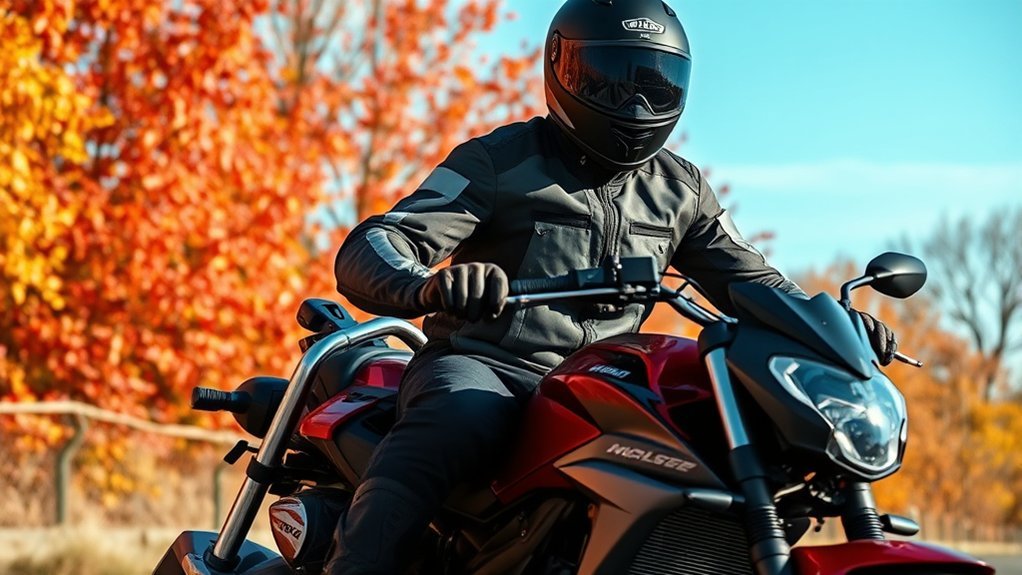
Weather changes traction, visibility, stopping distance, comfort, and concentration. Choose protective gear that works as a system rather than adding loose layers that may flap, restrict controls, or allow water and wind inside.
- Warm and sunny weather: Wear a ventilated motorcycle jacket and pants, gloves, boots, and a helmet with controllable vents. Cover your skin, hydrate before leaving, and watch for signs of heat stress.
- Rain: Use a waterproof or water-resistant outer layer, waterproof gloves and boots, and a clear anti-fog visor. Slow down, increase following distance, use smooth control inputs, and avoid painted lines, metal covers, leaves, and pooled water when possible.
- Cold weather: Add thin thermal and wind-blocking layers without restricting movement. Heated gear must be installed and fused according to the motorcycle and gear manufacturers’ instructions.
- Extreme heat, storms, ice, or strong wind: Delay the ride or use another form of transportation when conditions exceed your equipment, experience, or safe operating limits.
Carry spare socks and a compact change of clothes in a waterproof bag. Check the forecast before leaving, but also look at radar, wind, temperature, and road-condition alerts because conditions can change during the workday.
Note: The first part of a rain shower can be especially slick as water mixes with oil, dust, and road residue. Reduce speed, increase space, and keep steering, braking, and throttle inputs smooth.
Maintenance Tips for a Reliable Motorcycle Commute
Regular maintenance reduces the chance that a small problem will become a breakdown or safety hazard. Follow the intervals and procedures in your owner’s manual rather than relying on generic mileage, pressure, fluid, or adjustment ranges.
Regular Maintenance Checks
Before riding, use a quick version of the MSF T-CLOCS inspection:
- Tires and wheels: Look for damage, embedded objects, abnormal wear, adequate tread, and correct cold pressure.
- Controls: Confirm that the throttle moves freely and snaps closed, and that levers, pedals, cables, and hoses operate normally.
- Lights and electrics: Test the headlight, brake light with both brake controls, turn signals, horn, switches, and instrument warnings.
- Oil and other fluids: Check the levels and look beneath the bike for leaks.
- Chassis: Inspect the frame, suspension, fasteners, chain or belt, and visible brake components.
- Stands: Confirm that the side stand and center stand, if fitted, retract and remain secure.
Tire Pressure Monitoring
Check tire pressure when the tires are cold and use the motorcycle manufacturer’s specified pressure for the bike, load, and tire setup. Do not rely on a generic range such as 28–40 PSI, and do not use the maximum pressure molded into the tire sidewall as the normal operating target unless the motorcycle or tire manufacturer specifically directs it.
Inspect tread, sidewalls, valve stems, and both wheels. Uneven wear, repeated pressure loss, vibration, cracks, bulges, exposed cords, or an embedded object require prompt attention. A digital or quality analog gauge is a useful commuting tool.
Fluid Level Inspections
Check engine oil exactly as the owner’s manual specifies; some motorcycles require the engine to be warm, the bike upright, or a specific wait time after shutdown. Check brake fluid, hydraulic clutch fluid if equipped, coolant on liquid-cooled motorcycles, and separate gearbox or final-drive oil only where the motorcycle has those systems.
Warning: Never remove a radiator cap or open a pressurized cooling system while the engine is hot. Hot coolant and steam can cause severe burns. Check the recovery reservoir only as directed, and let the motorcycle cool fully before opening the system.
Any falling fluid level can indicate worn brake pads, a leak, or another fault. Identify and repair the cause instead of repeatedly topping up the reservoir.
Brakes, Chain or Belt, and Battery
Check brake feel and operation before entering traffic. Have worn pads, damaged discs, leaks, pulsing, scraping, or a soft lever or pedal inspected promptly. Maintain chain slack and lubrication to the manufacturer’s specifications; do not lubricate a drive belt. Keep the battery secure, terminals clean, and charging system healthy, especially if you use heated clothing or accessories.
Defensive Riding Techniques: Staying Safe on the Road
Defensive riding means creating time and space before a hazard demands an emergency response. Use the SEE strategy, keep a clear view ahead, and continually update your escape routes.
- Ride within sight distance: Your speed should allow you to stop or avoid a hazard within the road you can see, especially at night and on curves.
- Separate braking and swerving: In many emergencies, heavy braking and a sharp swerve should be separate actions. Practice both with qualified instruction so the response is controlled rather than improvised.
- Use both brakes smoothly: The front brake provides much of a motorcycle’s stopping force, while the rear brake adds stability and braking. Technique varies with the motorcycle, surface, and available systems such as ABS.
- Avoid distraction: Set navigation and audio before moving. Do not type, read messages, or handle a phone while riding.
- Ride sober and alert: Alcohol, cannabis, impairing medications, and fatigue reduce judgment, balance, coordination, and reaction time.
- Manage emotion: Do not race, retaliate, or follow an aggressive driver. Create distance and choose a safer route or stopping place.
How to Plan Your Motorcycle Commute for Safety and Efficiency
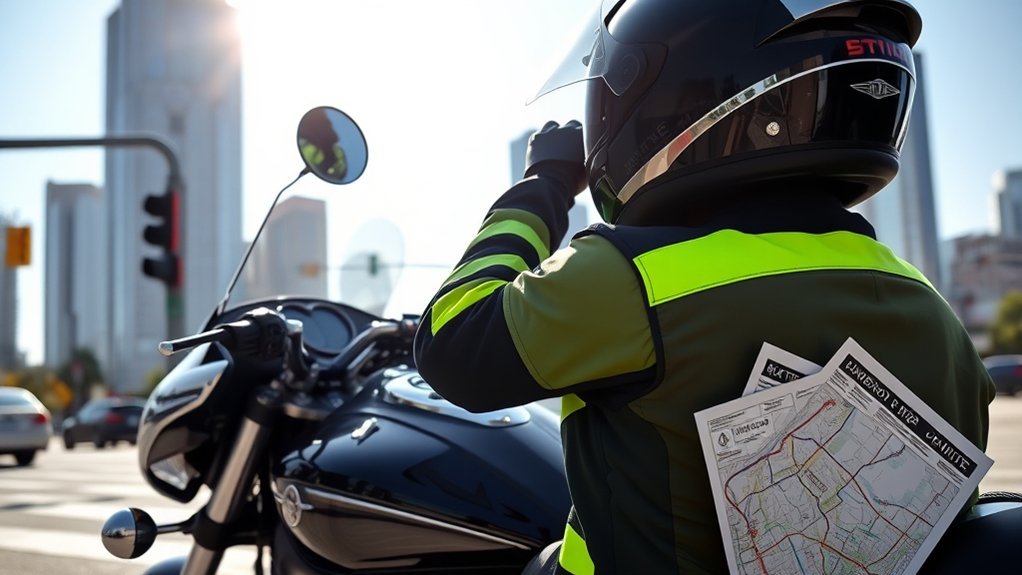
Plan the trip before rush hour forces quick decisions. The safest route may not be the shortest one.
Route Planning Strategies
- Test the route: Ride it during a quieter period to find rough pavement, construction, confusing merges, railroad crossings, poor lighting, and fuel stops.
- Compare alternatives: A slightly longer street route may be better than a high-speed road with frequent merging, or the highway may be safer than repeated busy intersections. Choose based on your skills and local conditions.
- Allow extra time: Rushing encourages speeding, abrupt lane changes, skipped inspections, and poor decisions.
- Plan fuel and charging: Know the practical range of the motorcycle under commuting conditions. Electric riders should include temperature, speed, battery state, and backup charging options.
- Mount devices safely: Secure navigation equipment where it does not block the instruments, controls, or view. Enter the destination before moving.
Weather Preparedness Essentials
| Condition | Recommended Gear | Riding Adjustment |
|---|---|---|
| Rain | Waterproof outer layer, clear anti-fog visor, waterproof gloves and boots | Slow down, increase space, and use smooth inputs |
| Cold | Thermal base layer, windproof shell, insulated gloves, optional approved heated gear | Watch for reduced dexterity, fogging, frost, and shaded ice |
| Heat | Ventilated protective gear and hydration | Take breaks and stop if heat affects concentration |
| Mixed or severe | Layered gear and waterproof storage | Recheck the forecast and use backup transportation when needed |
Parking, Security, and Workplace Setup
Ask your employer where motorcycles may be parked and whether there is covered or secured parking. Use the steering lock plus a visible disc lock, chain, alarm, cover, or other layered security appropriate to the location. Never lock the motorcycle to a prohibited object or block sidewalks, access routes, fire lanes, or accessible spaces.
Store wet gear where it can dry without creating a workplace hazard. Keep a compact towel, deodorant, spare clothing, and charging cable at work. Do not leave a helmet where it may fall, overheat, or be contaminated by chemicals.
Cargo and Luggage
Use motorcycle-specific luggage or securely fastened bags that cannot touch the exhaust, wheel, chain, belt, suspension, controls, or lights. Keep heavy items low and balanced, stay within the motorcycle’s load limits, and adjust tire pressure or suspension only as the manufacturer directs.
Emergency Kit and Breakdown Plan
A small commuter kit can include your phone, charging cable or power bank, emergency contacts, basic first-aid supplies, flashlight, tire-pressure gauge, reflective item, water, weather layer, and the motorcycle’s tool kit. A tire repair or inflation kit is useful only if it is compatible with your tire and you know its limits.
Save roadside-assistance information before the trip. If the motorcycle develops a warning light, fluid leak, damaged tire, unusual sound, brake problem, overheating condition, or unstable handling, stop in a safe place and arrange inspection rather than trying to finish the commute.
Frequently Asked Questions
What is the 1% rule in motorcycles?
There is no recognized motorcycle-safety rule that tells riders to spend 1% of their time on training or maintenance. In motorcycle-club culture, “one-percenter” or a 1% patch has a different historical and social meaning. It is not a commuting or riding-safety guideline.
What is the 12-second rule for motorcycles?
The 12-second concept is a visual lead, not a following distance. Look roughly 12 seconds ahead to identify traffic changes, intersections, surface hazards, and escape routes. Keep at least a two-second following distance in good conditions and add more space when conditions are poor.
What does two fingers down mean for bikers?
Many riders use a low two-finger wave as a friendly acknowledgment of another motorcyclist, sometimes described as wishing the other rider “two wheels down.” The gesture is informal, varies by region, and should be skipped whenever removing a hand from the controls would be unsafe.
Is a motorcycle practical for commuting?
It can be practical when the motorcycle suits the rider and route, parking is available, weather is manageable, and the rider budgets for training, gear, insurance, maintenance, tires, security, and backup transportation. The safety risk is higher than traveling in a passenger car, so convenience should not be the only factor.
How often should I check my motorcycle before commuting?
Perform a brief walk-around before every ride and a more detailed inspection on a regular schedule. Tires, brakes, lights, controls, fluid leaks, chain or belt condition, and stands deserve frequent attention. Follow the owner’s manual for service intervals and adjustment procedures.
Should a new rider commute in rush-hour traffic?
A new rider should first complete training and build control skills in a low-risk environment. Practice the route at quieter times, then increase traffic complexity gradually. Use another form of transportation when traffic, weather, darkness, fatigue, or road conditions exceed your current ability.
Conclusion
Motorcycle commuting can offer fuel savings, easier parking, and a more engaging daily trip, but it is practical only when safety remains the first priority. Get trained and licensed, wear complete protective gear, inspect the motorcycle before riding, create space in traffic, plan for weather, and keep a secure parking and breakdown plan. The best commute is not the fastest one—it is the one you can complete consistently without rushing, guessing, or riding beyond your limits.
Sources
- National Highway Traffic Safety Administration: Motorcycle Safety — licensing, rider risk, protective gear, pre-ride checks, visibility, impairment, and current U.S. crash data.
- NHTSA: Choose the Right Motorcycle Helmet — DOT labeling, helmet construction, fit, and unsafe novelty helmets.
- Motorcycle Safety Foundation: T-CLOCS Pre-Ride Inspection Checklist — tires, controls, lights, fluids, chassis, and stands.
- Motorcycle Safety Foundation: SEE Strategy — Search, Evaluate, Execute hazard-management method.
- Motorcycle Safety Foundation: Basic RiderCourse — foundational hands-on rider training.
- U.S. Department of Energy: Average Fuel Economy by Vehicle Category — national motorcycle and car fuel-economy comparison.





Leave a Reply