
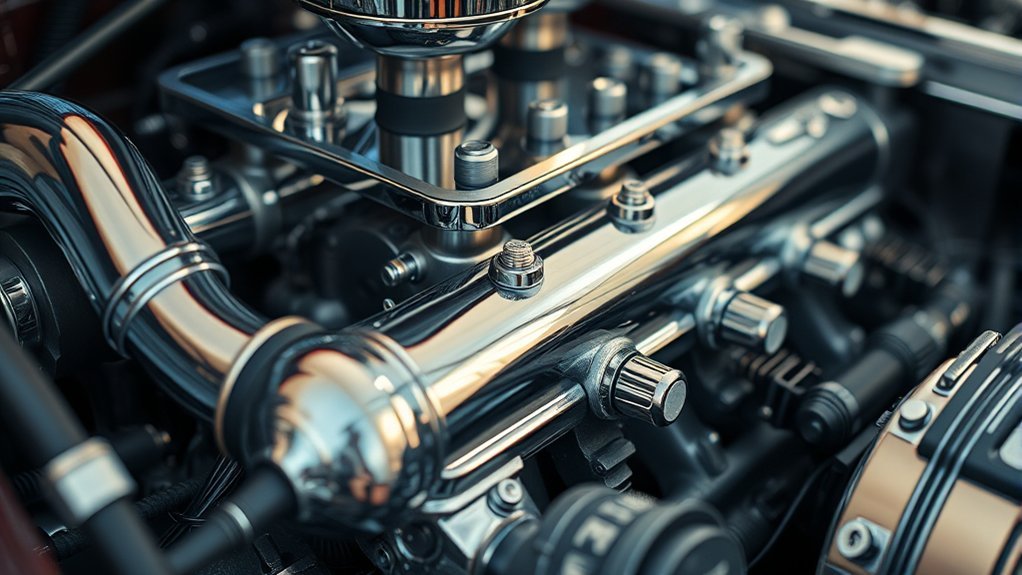
Iconic car engines have shaped the automotive landscape greatly, introducing innovations like the Ford Flathead V8 and Toyota’s 2JZ, which redefined performance and tuning culture. Legendary V12 engines like Ferrari’s Colombo offer unmatched power, while inline-six and four-cylinder models balance efficiency and thrill. Advances in technology also promise exciting futures with electric and hybrid engines. By exploring these historic engines, you’ll discover how they’ve influenced modern performance and what exciting trends lie ahead.
The Evolution of Iconic Car Engines: How They Changed Automotive History
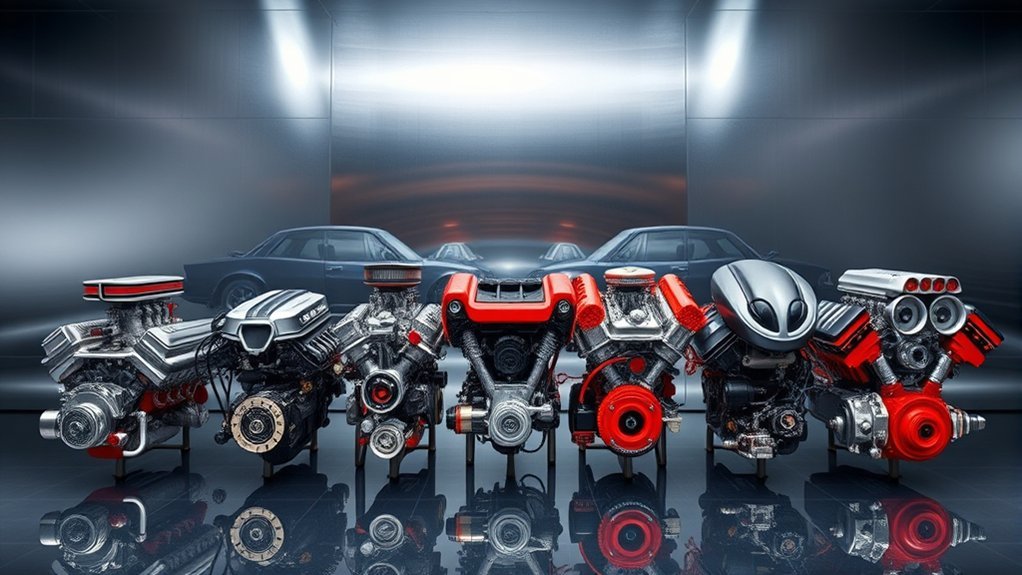
As automotive technology evolved, iconic car engines emerged, shaping the very landscape of the industry. Engine innovation became a driving force behind performance, with the Ford Flathead V8 in 1932 revolutionizing American cars as the first mass-produced V8. Its historical significance set a precedent for high-performance engines, paving the way for future developments.
Fast forward to 1991, and you’ve got Toyota’s 2JZ, a powerhouse that redefined tuning culture and left a mark on the street racing scene.
Then there’s the Chrysler 426 Hemi, dominating the muscle car era in the 1960s with its impressive output and hemispherical design. BMW’s M30 inline-six, produced for three decades, established durability benchmarks that enthusiasts still admire.
Today, modern innovations like Nissan’s VC-Turbo and Mazda’s Skyactiv showcase the continuous evolution of engines, focusing on performance and efficiency while addressing emissions. Each of these engines tells a story of liberation through technological advancement.
Exploring the Best V12 Engines: A Look at Performance Pinnacles
When you think of V12 engines, you’re tapping into a domain of legendary performance and engineering excellence.
These powerhouses, like the Ferrari Colombo and BMW’s S70/2, redefine what’s possible in automotive design, offering a blend of smoothness and raw power.
As we explore these iconic models, you’ll see how each one has set benchmarks in the sphere of high-performance vehicles.
Legendary V12 Models
While many engines have made their mark in automotive history, few can rival the legendary V12 for its blend of power, refinement, and engineering brilliance. These engines embody V12 heritage and performance, showcasing the pinnacle of automotive engineering across several iconic models.
| Model | Power Output | Notable Features |
|---|---|---|
| Ferrari Colombo V12 | Varies | Reliability, 250 GTO |
| BMW S70/2 | 627 hp | McLaren F1, 240 mph |
| Lamborghini V12 L539 | Up to 770 hp | Aventador Ultimae |
From Ferrari’s reliability to Lamborghini’s raw power, each V12 model you explore reveals a legacy that continues to inspire automotive enthusiasts. Embrace the roar of these exceptional engines; they represent freedom, performance, and an exhilarating drive.
Engineering Marvels Unleashed
Few experiences rival the thrill of driving a powerful V12 engine, where engineering excellence meets raw performance.
Take the Ferrari Colombo V12, evolving from its 1.5L origins to the legendary 250 GTO.
The BMW S70/2, found in the McLaren F1, boasts 627 hp, propelling you from 0-60 mph in just 3.2 seconds.
Lamborghini’s V12 L539, with its stunning sound engineering, now churns out 770 hp in the Aventador Ultimae.
Aston Martin’s V12 lineup impresses with smooth power in models like the DB9, while Mercedes-Benz’s M120 combines luxury and performance seamlessly.
These engines not only deliver breathtaking power but also embody engine aesthetics, ensuring your driving experience is as liberating as it’s exhilarating.
Top Legendary V8 Engines and Their Impact on Performance
As automotive enthusiasts know, the legacy of V8 engines is marked by innovation and performance that have shaped the landscape of American muscle cars.
Take the Ford Cobra Jet V8, for instance; its 428 variant combined a production block with high-performance heads, setting drag racing records and influencing muscle car design.
The Chevrolet Small-Block V8, launched in 1955, became a cornerstone of performance engines, thanks to its lightweight adaptability and vast aftermarket support.
Chrysler’s 426 Hemi V8 introduced hemispherical combustion chambers, optimizing airflow for exceptional power.
Pontiac’s Super Duty 455 V8, with its reinforced design, became a favorite among enthusiasts for its torque output.
Finally, Dodge’s Max Wedge V8, particularly the 426 variant, played a critical role in the horsepower race of the 1960s with innovative engineering.
Together, these legends have left an indelible mark on the performance legacy of American automotive history.
How Inline-Six Engines Revolutionized Performance and Efficiency
Inline-six engines have transformed how we think about power delivery and compact design in automotive engineering.
With their ability to generate high power outputs while maintaining a smooth operation, these engines offer a thrilling driving experience without compromising efficiency.
You’ll find that their streamlined design not only simplifies maintenance but also enhances overall vehicle performance, making them a top choice for both manufacturers and enthusiasts.
Enhanced Power Delivery
While many engine configurations vie for attention in the automotive world, few can match the enhanced power delivery and efficiency of the inline-six design. This layout’s performance characteristics shine through its smooth operation and balanced power, minimizing vibrations that often plague other engines.
Iconic examples, like the BMW M30 and Nissan RB series, demonstrate not only durability but also impressive tuning potential, allowing enthusiasts to achieve significant horsepower gains. The inline-six’s simpler design makes maintenance easier, ensuring you can enjoy both daily driving and spirited performance.
Additionally, with better fuel efficiency than many V8s, it strikes a perfect balance, making it a favorite for manufacturers like Toyota and Mercedes-Benz in their performance models.
Compact Engine Design
When you consider the evolution of automotive engineering, the compact design of the inline-six engine stands out for its remarkable balance of performance and efficiency.
The engine compactness allows for fewer moving parts compared to traditional V8s, which translates to reduced friction and enhanced reliability. This design has birthed iconic engines like the BMW M30 and Nissan RB, known for their durability and tuning potential.
Inline six advantages don’t just stop at performance; they also improve fuel efficiency, making them a favorite among enthusiasts and manufacturers alike.
Legendary models like Toyota’s 2JZ showcase how this configuration has revolutionized motorsport and street racing, proving that compactness can indeed deliver power without compromise.
Embrace the inline-six legacy!
Notable Four-Cylinder Engines and Their Impact on Everyday Driving
Four-cylinder engines have revolutionized the way we think about everyday driving, combining efficiency and performance in a compact package.
Take the Toyota 2ZZ-GE, for example; its high-revving nature and 180 horsepower make it a joy to drive, particularly in lightweight models like the Lotus Elise.
The Toyota 2ZZ-GE delivers exhilarating performance, especially in lightweight models like the Lotus Elise.
Honda’s B-Series engines introduced VTEC technology, optimizing both power and fuel efficiency, setting a benchmark for modern engines.
Then there’s Volkswagen’s 1.8T, a turbocharged powerhouse that balances spirited performance with impressive fuel economy, beloved by tuners and everyday drivers alike.
Ford’s EcoBoost engines further enhance this trend, delivering turbocharged performance that doesn’t compromise on efficiency.
Finally, Mazda’s Skyactiv-G engines showcase innovative design, marrying sustainable driving with an enjoyable experience.
These four-cylinder marvels not only elevate your driving experience but also promote a more liberated approach to automotive ownership, proving that you don’t have to sacrifice performance for efficiency.
The Future of Engine Technology: Trends and Innovations
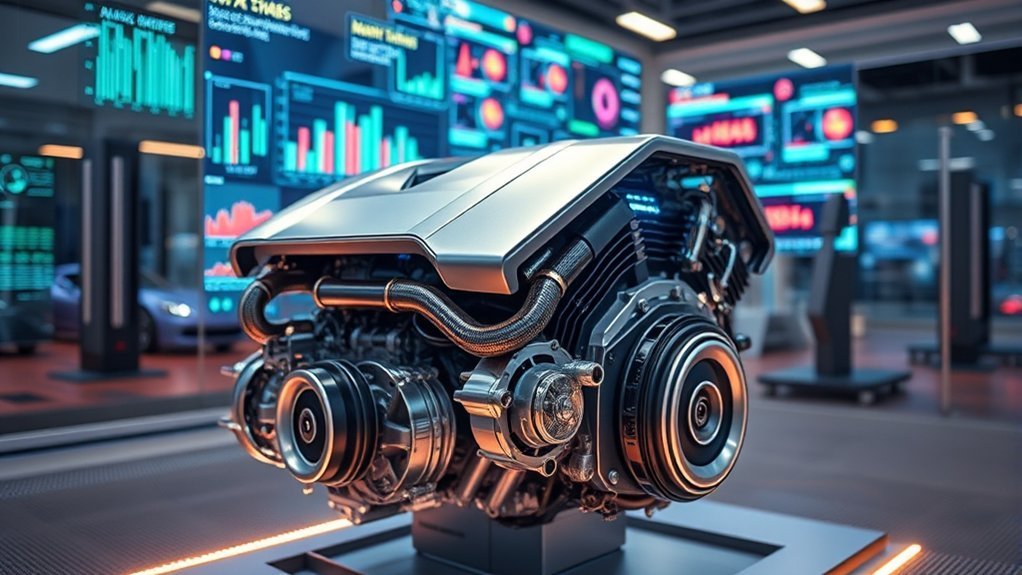
As the automotive landscape evolves, engine technology is on the brink of a revolution, driven by the urgent need for sustainability and efficiency. With electric vehicle advancements, manufacturers are setting the stage for EVs to make up 30% of global sales by 2025. Hybrid technology evolution continues, particularly with plug-in hybrids enhancing fuel efficiency and lowering emissions.
Innovative designs like variable compression innovations, exemplified by Nissan’s VC-Turbo, allow engines to adjust for peak performance. Meanwhile, thermal efficiency improvements in internal combustion engines, such as Mazda’s Skyactiv, keep driving enjoyment intact. Finally, hydrogen fuel developments promise a zero-emission future with quick refueling times.
Here’s a summary of these trends:
| Technology | Current Focus | Future Potential |
|---|---|---|
| Electric Vehicles | Advancements in battery tech | 30% of global sales by 2025 |
| Hybrid Technology | Plug-in hybrids for efficiency | Reduced emissions |
| Hydrogen Fuel Cells | Investment by major automakers | Zero-emission alternatives |
| Variable Compression | Adjusts based on driving conditions | Optimized performance and efficiency |
Frequently Asked Questions
What Is the Most Iconic Engine of All Time?
You could argue the Ford Flathead V8 reigns as the most iconic engine. Its legendary performance and V8 power revolutionized American cars, igniting passion and creativity among enthusiasts, shaping the future of automotive engineering and culture.
Is 5000 Hp Possible in a Car?
Is 5000 hp possible in a car? While you might dream of such engine power, current horsepower limits make it impractical for everyday vehicles. However, future innovations in technology may redefine those boundaries. Keep dreaming!
What Is the Most Unreliable Engine of All Time?
You might find the Ford 6.0L Power Stroke V8 often cited as the most unreliable engine, plagued by engine failures and poor reliability ratings, leading to costly repairs and frustrated owners seeking alternatives.
What Is the Godfather Engine?
The Godfather engine is the Chrysler 426 Hemi V8, renowned for its exceptional performance and power. Embracing the Godfather legacy, it revolutionized muscle cars and racing, embodying America’s automotive freedom and engineering prowess.
Conclusion
As you explore the legacy of iconic car engines, you can truly appreciate how each engine type has shaped the driving experience. From the thunderous roar of a V8 to the smooth elegance of a V12, these powerhouses have etched their mark on automotive history. While we may not have flying cars yet, the innovations on the horizon promise to redefine performance and efficiency. Buckle up; the journey into the future of engine technology is just beginning!







Leave a Reply