
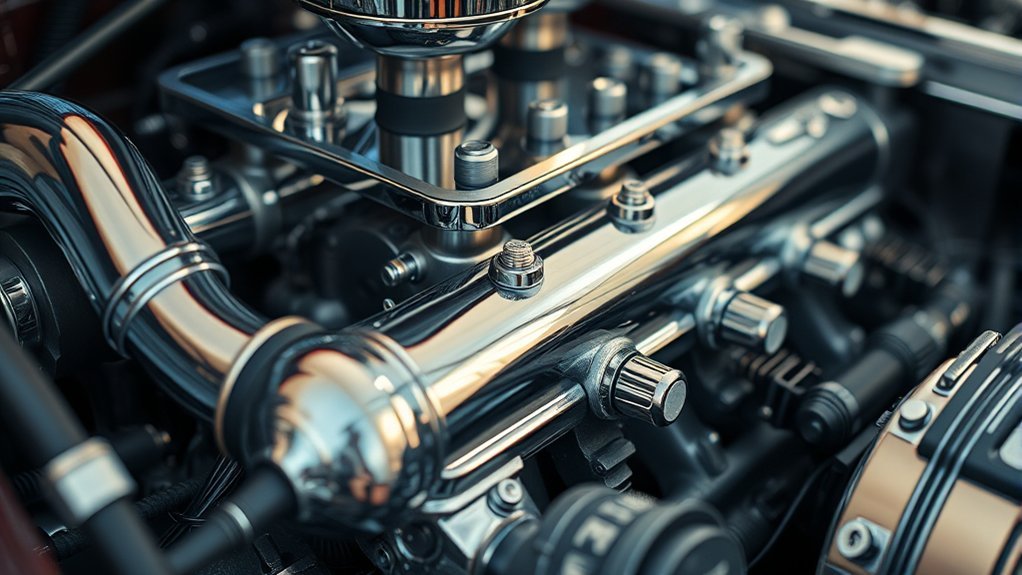
Some car engines become icons because they introduce a new technology. Others earn that status through racing success, durability, affordability, sound, or a huge influence on car culture. From Ford’s Flathead V8 and Toyota’s 2JZ to Ferrari V12s and Honda VTEC four-cylinders, the most important engines changed far more than horsepower figures.
Quick Answer
The most iconic car engines are remembered for their influence, not simply their peak power. Engines such as the Ford Flathead V8, Chevrolet small-block, Ferrari Colombo V12, Toyota 2JZ, Chrysler 426 Hemi, and Honda B16A introduced ideas or capabilities that shaped manufacturing, racing, tuning, and everyday driving.
Key Takeaways
- An iconic engine may be important because of innovation, reliability, production scale, racing results, cultural influence, or tuning potential.
- Factory specifications and modified-engine power figures are not interchangeable.
- V12s offer smoothness and prestige, V8s combine compact power with broad appeal, and inline-sixes are naturally balanced but physically long.
- Rotary, boxer, diesel, V10, and W16 engines also deserve a place in automotive history.
- Electric cars represented about one-quarter of global new-car sales in 2025, while hybrids and advanced combustion engines continue to evolve.
What Makes a Car Engine Iconic?
There is no official list of the greatest engines ever built. “Iconic” is partly subjective, so a useful comparison should consider several factors rather than horsepower alone:
- Technical innovation: Did the engine introduce a manufacturing method, combustion system, valve-control technology, turbo system, or new layout?
- Industry influence: Did competing manufacturers copy its basic ideas or respond with new designs?
- Production impact: Was it installed in millions of vehicles, or did it make previously expensive performance affordable?
- Motorsport and tuning: Did it succeed in racing or become a strong foundation for modification?
- Durability and serviceability: Did the engine build a reputation for long service, simple repair, or strong parts support?
- Cultural importance: Is the engine closely connected to a famous car, sound, era, movie, racing series, or enthusiast community?
Note: An engine layout is not the same as an engine family. “V8,” “V12,” “inline-six,” and “boxer” describe cylinder arrangement. Names such as 2JZ, M30, Colombo, and Small-Block identify particular engine families or designs.
The Evolution of Iconic Car Engines and Their Historical Impact
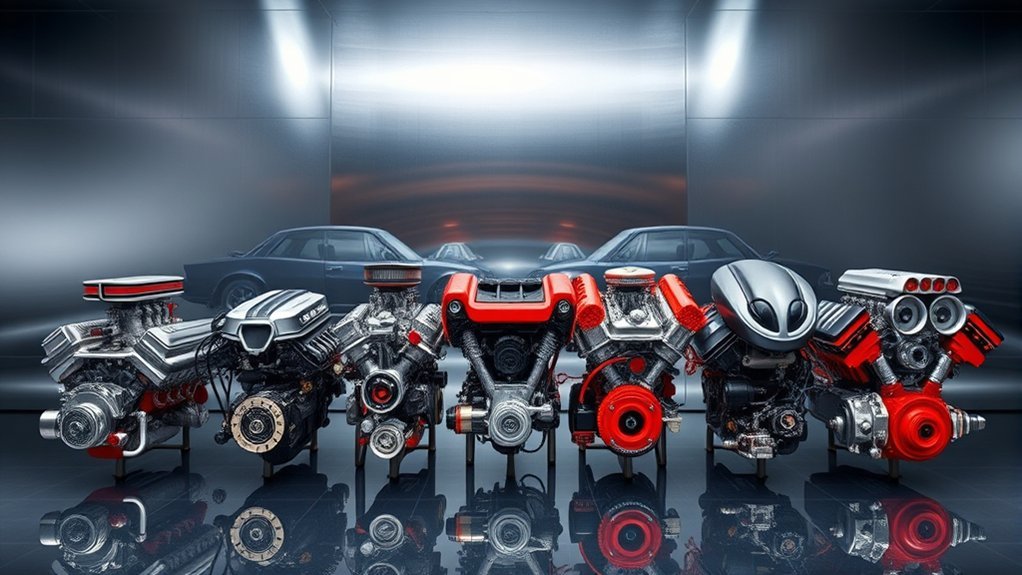
Early automobile engines were often expensive, heavy, and difficult to produce in large numbers. Major breakthroughs came when manufacturers learned to cast more complex blocks, improve lubrication and cooling, raise compression safely, and control fuel and airflow more precisely.
In 1932, Ford introduced its Flathead V8. It was not the first automotive V8, but Ford found a way to build a commercially successful V8 for a broad market. Its relatively affordable price helped make eight-cylinder performance available to ordinary American buyers.
Chevrolet’s small-block V8 arrived for the 1955 model year. Its compact overhead-valve design, interchangeable parts, broad vehicle use, and enormous aftermarket helped establish a formula that influenced American performance for decades.
The Chrysler 426 Hemi became closely associated with 1960s stock-car racing, drag racing, and muscle cars. Its hemispherical combustion chambers supported large valves and strong airflow, although the complete engine was large, heavy, expensive, and designed with performance rather than fuel economy in mind.
In Japan, Toyota introduced the 3.0-liter 2JZ family in 1991. The naturally aspirated 2JZ-GE and twin-turbo 2JZ-GTE were separate versions. Toyota’s original 1991 Aristo announcement rated the home-market 2JZ-GTE at 280 PS. Much larger numbers associated with the engine today usually describe modified builds, not factory output.
BMW’s M30 inline-six, introduced in the late 1960s and used into the 1990s, became known for smooth operation and a long production life. Later inline-six families from BMW, Nissan, Mercedes-Benz, and Toyota strengthened the configuration’s reputation for refined power delivery.
| Engine or Family | Key Era | Why It Mattered | Important Context |
|---|---|---|---|
| Ford Flathead V8 | 1932 onward | Made V8 power more affordable and easier to mass-produce | Not the first automotive V8 |
| Chevrolet Small-Block V8 | 1955 onward | Compact design, broad interchangeability, and vast parts support | A family with many displacements and generations |
| Chrysler 426 Hemi | 1960s–1970s | Major racing and muscle-car influence | Race and street versions differed |
| BMW M30 Inline-Six | Late 1960s–1990s | Long production run and refined power delivery | Nearly three decades, not a single unchanged specification |
| Toyota 2JZ | 1991–2000s | Strong factory engineering and major tuning influence | GE and GTE versions must not be treated as identical |
Exploring the Best V12 Engines
A V12 uses two banks of six cylinders connected to one crankshaft. The layout can provide closely spaced power strokes and excellent smoothness, which is why V12s have appeared in luxury cars, grand tourers, racing cars, and flagship supercars.
That refinement comes at a cost. A V12 is long, wide, mechanically complex, expensive to build, and difficult to package with modern emissions equipment. It also has more pistons, valves, ignition components, and internal friction than a smaller engine of similar technology.
Legendary V12 Models
| V12 Engine | Representative Car | Key Specification | Historical Importance |
|---|---|---|---|
| Ferrari Colombo V12 | Ferrari 125 S and 250 GTO | Began at just under 1.5 liters; later versions grew substantially | Connected Ferrari’s earliest road and racing cars to decades of V12 development |
| BMW S70/2 | McLaren F1 | 6.1 liters and 627 hp | Helped the F1 establish a new benchmark for road-car performance |
| Lamborghini L539 | Lamborghini Aventador | 6.5-liter naturally aspirated V12 | Carried Lamborghini’s naturally aspirated V12 tradition into the modern era |
| Mercedes-Benz M120 | Mercedes-Benz S-Class and SL | 6.0-liter production form, with specialized derivatives | Combined flagship luxury refinement with substantial performance potential |
Ferrari’s first production car, the 125 S, used a Colombo-designed V12 of just under 1.5 liters. Ferrari later developed the family for cars including the 250 GT and 250 GTO, making it important for its adaptability and racing history rather than one fixed output figure. Ferrari documents the engine’s development in its official V12 history.
BMW developed the 6.1-liter S70/2 for the McLaren F1. Its 627-hp output, immediate throttle response, and installation in a lightweight carbon-fiber road car helped create one of the defining supercars of the 1990s. McLaren’s F1 archive also records the model’s carbon monocoque and competition legacy.
V12 Engineering Advantages and Trade-Offs
A well-designed V12 can run with exceptional smoothness because its cylinders fire frequently and the basic arrangement can achieve strong primary and secondary balance. The result is a steady flow of torque with less vibration than many smaller layouts.
However, cylinder count alone does not guarantee a great engine. Intake design, crankshaft strength, cooling, lubrication, exhaust tuning, combustion control, and vehicle weight all affect the final result. A lighter V8, inline-six, hybrid system, or electric motor can outperform a V12 in acceleration, efficiency, or packaging.
An engine becomes iconic when its design changes what manufacturers, racers, or drivers believe is possible—not simply when it produces the largest number on a specification sheet.
Top Legendary V8 Engines and Their Impact on Performance
The V8 became especially important in the United States because it could provide strong torque and substantial displacement without the length of an inline-eight or inline-six. Cross-plane crankshafts gave many American V8s their familiar uneven exhaust character, while flat-plane V8s favored higher engine speeds and a different sound.
The Ford Flathead V8 changed the market by making eight-cylinder power more accessible. Its side-valve layout eventually limited airflow compared with overhead-valve designs, but its affordability and hot-rodding legacy secured its place in automotive history.
The Chevrolet Small-Block V8, launched for the 1955 model year, became a cornerstone of American performance. Its physical size, simple overhead-valve arrangement, broad parts interchange, and decades of development made it useful in family cars, trucks, sports cars, race cars, boats, and countless engine swaps.
The Chrysler 426 Hemi used hemispherical combustion chambers and large valves to support strong airflow. Competition success and limited street availability helped create its legendary status, but racing versions and street versions should not be treated as mechanically identical.
The Ford 428 Cobra Jet combined production-based components with high-flow cylinder heads and other performance parts. It became closely linked with late-1960s Mustangs, drag racing, and the escalating factory horsepower competition.
The Pontiac Super Duty 455 arrived near the end of the original muscle-car era. Reinforced components and strong low-speed torque made it notable, even as emissions rules, insurance pressure, fuel concerns, and changing rating standards reshaped advertised horsepower.
The Max Wedge engines were purpose-focused Chrysler performance V8s offered in 413- and 426-cubic-inch forms. Their cross-ram induction systems and drag-racing focus helped prepare the market for the later 426 Hemi.
Warning: Historical factory horsepower, modern dyno horsepower, and internet claims about modified engines use different test methods and conditions. Major power increases can exceed the limits of the fuel system, cooling system, transmission, driveshaft, tires, brakes, and chassis. High-output builds should be engineered and tested for the complete vehicle.
How Inline-Six Engines Changed Performance and Refinement
An inline-six places all six cylinders in one straight row. This arrangement is naturally well balanced, allowing smooth operation without the balance shafts required by some other layouts. It is also narrower than a V6 or V8, leaving space beside the engine for intake, exhaust, steering, or suspension components.
The main disadvantage is length. An inline-six generally fits best in a vehicle with a longitudinal engine bay and rear- or all-wheel drive. It can be difficult to package across the width of a front-wheel-drive vehicle or beneath a short hood.
Enhanced Power Delivery
Inline-six engines can provide smooth, progressive torque because of their even firing intervals and favorable balance. Those traits helped make the layout popular in luxury cars, sports sedans, grand tourers, trucks, and performance coupes.
BMW’s M30 demonstrated the layout’s durability and refinement over a long production run. Nissan’s RB family became closely linked to Skyline performance models and motorsport. Toyota’s 2JZ gained a similar reputation through the Supra, Aristo, and a large global tuning community.
Turbocharging works especially well with many inline-six installations because the exhaust ports are located in one row and can feed one or more turbochargers from the same side of the cylinder head. That does not make every inline-six easy to modify, but it can simplify exhaust routing compared with some V-engine arrangements.
Packaging Trade-Offs
The inline-six is narrow but not compact in every direction. Its long block, cylinder head, camshafts, and crankshaft require a long engine compartment. A long crankshaft can also create torsional-vibration challenges at high output or engine speed, so crank design and harmonic control matter.
Modern manufacturers sometimes pair inline-six engines with 48-volt mild-hybrid systems, integrated starter-generators, or electrically assisted accessories. Removing belt-driven components from the front of the engine can help recover some of the space that the long layout consumes.
Notable Four-Cylinder Engines and Everyday Driving
Four-cylinder engines have powered everything from basic economy cars to rally cars, sports cars, pickup trucks, and high-output performance models. Their lower cylinder count can reduce size, weight, friction, and manufacturing cost, although vibration control becomes increasingly important as displacement and output rise.
The Toyota 2ZZ-GE used a high-revving design with variable valve lift and timing. U.S.-market Celica GT-S versions were rated around 180 hp, while Lotus applications used different calibrations and specifications. Its character came from producing much of its power high in the rev range.
Honda’s B16A was one of the engines that established VTEC as a major performance technology. The system changed valve timing and lift behavior so the engine could remain usable at lower speeds while breathing more effectively at high rpm.
Volkswagen’s 1.8T showed how a compact turbocharged engine could serve ordinary family cars, sporty hatchbacks, luxury models, and tuner projects. Its impact came from flexibility and broad use rather than one record-setting factory specification.
Ford’s EcoBoost family applied turbocharging, direct injection, and downsizing across a wide range of vehicles. Because EcoBoost is a large family rather than one engine, reliability, output, and design details differ by displacement, model, and production year.
Mazda’s Skyactiv-G engines pursued better efficiency through high compression ratios, combustion-chamber design, reduced friction, and careful control of knock. They demonstrate that naturally aspirated gasoline engines continued to develop even as turbocharging became more common.
Other Engine Layouts That Changed the Industry
Rotary Engines
Mazda’s rotary engines replaced conventional pistons with triangular rotors moving inside specially shaped housings. The design is physically compact and can run smoothly at high speed, helping cars such as the RX-7 earn a distinctive identity.
Rotaries also have important trade-offs. Combustion-chamber shape, sealing, oil consumption, fuel economy, exhaust emissions, and heat management can be challenging. Their appeal comes from unique size, sound, and power delivery rather than universal efficiency or durability.
Boxer and Flat Engines
Horizontally opposed engines place cylinders on opposite sides of the crankshaft. Porsche and Subaru are strongly associated with boxer layouts, which can provide a low center of gravity and good balance.
The engine is wide, however, which can complicate exhaust routing, steering clearance, spark-plug access, and cylinder-head service. Porsche’s flat-six and Subaru’s flat-four illustrate how the same general layout can serve very different performance and price categories.
Diesel Engines
Diesel engines influenced passenger cars and trucks through strong low-speed torque, high compression ratios, and fuel efficiency under load. Engines such as Mercedes-Benz’s OM617 gained loyal followings for longevity, while later turbo-diesels delivered far more power from smaller displacements.
Diesel history also shows why emissions controls matter. Nitrogen-oxide and particulate emissions require carefully engineered aftertreatment systems, and a durable basic engine does not eliminate the need to maintain its turbocharger, injectors, exhaust-gas-recirculation system, particulate filter, or selective catalytic reduction equipment.
V10 and W16 Engines
V10 engines occupy a middle ground between V8 and V12 layouts. Engines used in the Lexus LFA, Porsche Carrera GT, Dodge Viper, and several Formula One eras became famous for distinctive sound, speed, or displacement.
Bugatti’s quad-turbocharged W16 used an unusual arrangement to package 16 cylinders in less length than a conventional inline or V-shaped 16-cylinder engine. Its output and complexity made it an engineering landmark, but not a practical template for ordinary vehicles.
How to Verify an Engine Is Original to a Car
Collector-car advertisements often use phrases such as “numbers matching,” “original engine,” or “correct engine.” These phrases do not always mean the same thing, and verification procedures vary by manufacturer and model year.
- Start with the VIN: Decode the vehicle identification number using information specific to the model year. A VIN may identify the original engine type, but it does not always prove that the installed block is the exact original unit.
- Locate the engine code and serial stamping: Compare the stamped code with manufacturer records, restoration guides, or recognized marque-club documentation.
- Check casting numbers and casting dates: The block, heads, intake, and other major parts should have dates and part numbers that make sense for the vehicle’s assembly period.
- Review build records: A factory build sheet, window sticker, warranty record, protect-o-plate, dealer invoice, or heritage certificate may confirm the original specification.
- Look for altered stampings: Uneven characters, fresh machining, incorrect fonts, unusual spacing, or a surface that differs from the surrounding metal can justify closer inspection.
- Use a marque specialist: Rare or high-value cars should be inspected by someone familiar with that exact engine family and production plant.
Pro Tip: Confirm the VIN, engine code, casting date, transmission code, and supporting records before paying a premium for a “matching-numbers” car. A correct-type replacement engine may still be valuable, but it should not be represented as the original block.
The Future of Engine and Powertrain Technology
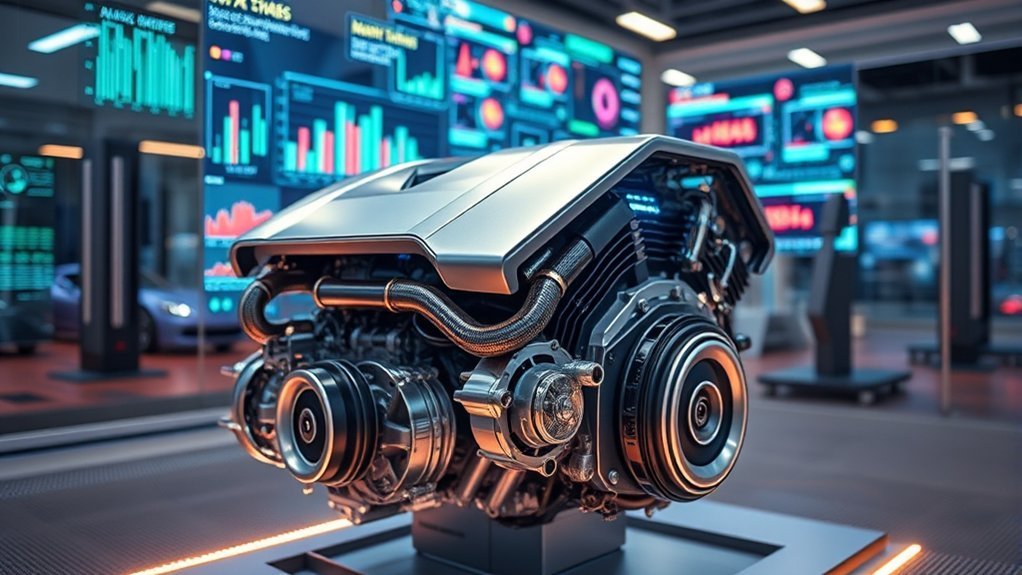
The automotive industry is no longer moving toward one universal replacement for the gasoline engine. Battery-electric vehicles, hybrids, efficient combustion engines, fuel cells, and alternative fuels are developing at different speeds in different markets.
Electric cars represented approximately one-quarter of global new-car sales in 2025, according to the International Energy Agency’s Global EV Outlook 2026. The IEA expects roughly 23 million electric-car sales in 2026, bringing the global share close to 30%.
Strictly speaking, a battery-electric vehicle uses one or more electric motors rather than an internal-combustion engine. Electric motors produce strong torque from low speed, contain fewer routine service items, and can recover energy through regenerative braking. Battery cost, mass, charging time, raw-material supply, and charging access remain important design and ownership considerations.
Hybrids keep a combustion engine but combine it with one or more electric motors. The motor can launch the vehicle, recover braking energy, fill gaps in the engine’s torque curve, or allow the engine to operate in a more efficient speed and load range.
Advanced combustion engines are also evolving. Nissan’s VC-Turbo changes its mechanical compression ratio to balance efficiency and high-load performance. Mazda continues to develop high-compression combustion strategies, while other manufacturers use Miller-cycle or Atkinson-cycle operation, cooled exhaust-gas recirculation, cylinder deactivation, variable valve control, and electrified turbocharging.
Hydrogen fuel-cell vehicles convert stored hydrogen into electricity and drive the wheels with electric motors. They can refuel quickly and produce water at the tailpipe, but fueling infrastructure, hydrogen cost, storage, and the emissions created during hydrogen production limit widespread passenger-car adoption. Hydrogen-burning combustion engines are another possible niche, but they are different from fuel-cell systems.
| Technology | How It Works | Main Advantage | Main Limitation |
|---|---|---|---|
| Battery-electric | Battery powers one or more electric motors | High drivetrain efficiency and no tailpipe emissions | Charging access, battery cost, weight, and charging time |
| Hybrid | Combines a combustion engine with electric propulsion or assistance | Lower fuel use without relying entirely on charging | Added system weight and complexity |
| Plug-in hybrid | Larger battery supports electric driving before the engine is needed | Electric commuting with long-trip flexibility | Benefits depend heavily on regular charging |
| Advanced combustion | Uses improved combustion, compression, boosting, and valve control | Improves existing fuel and manufacturing systems | Still creates tailpipe emissions |
| Hydrogen fuel cell | Fuel cell converts hydrogen into electricity for a motor | Fast refueling and water-only tailpipe output | Limited infrastructure and energy-intensive hydrogen supply |
Warning: Hybrid and electric vehicles can retain dangerous voltage even when switched off. Do not cut, probe, disconnect, or repair orange high-voltage cables, traction batteries, inverters, or electric drive units without model-specific training, approved protective equipment, and the manufacturer’s shutdown procedure.
Frequently Asked Questions
What is the most iconic engine of all time?
There is no objective winner. The Ford Flathead V8 is a strong choice for mass-market influence, the Chevrolet small-block for production and aftermarket reach, the Ferrari Colombo V12 for racing heritage, and the Toyota 2JZ for modern tuning culture. The answer depends on whether you value innovation, scale, performance, durability, or cultural impact most.
Is 5,000 horsepower possible in a car?
Yes. Purpose-built competition vehicles already exceed 5,000 horsepower. The NHRA describes modern Top Fuel dragsters as approximately 11,000-horsepower machines. That output is produced for very short runs with specialized fuel, frequent rebuilding, enormous operating cost, and no expectation of normal road use.
What is the most unreliable engine of all time?
No universal dataset can identify one engine as the least reliable ever built. Engines such as the Ford 6.0L Power Stroke are often criticized because of well-known failure patterns and repair costs, but condition varies with production date, maintenance, updates, operating load, previous repairs, and owner care. Model-specific inspection is more useful than a single worst-engine ranking.
What is the “Godfather engine”?
“Godfather engine” is enthusiast slang, not an official engineering term. Some people apply it to the Chrysler 426 Hemi because of its muscle-car and racing influence. Others use similar language for the Chevrolet small-block, Ford Flathead, Toyota 2JZ, or another engine important to their preferred automotive culture.
Why is the Toyota 2JZ considered legendary?
The 2JZ combined a strong inline-six foundation with smooth operation and, in 2JZ-GTE form, factory turbocharging. Its use in the Supra and Aristo, worldwide parts support, motorsport exposure, and ability to support extensively modified builds created a lasting reputation. Modified outputs should not be confused with Toyota’s original factory ratings.
Do electric vehicles have engines?
Battery-electric vehicles use electric motors, not internal-combustion engines. People sometimes use “engine” as a casual name for any device that powers a car, but “motor” is the more precise term for the electric machine that turns electrical energy into motion. Hybrids normally contain both an engine and one or more electric motors.
Conclusion
Iconic car engines are not defined by one cylinder count, one country, or one horsepower figure. Ford’s Flathead changed mass-market manufacturing, Chevrolet’s small-block built an enormous performance ecosystem, Ferrari’s Colombo V12 connected road cars with racing heritage, and Toyota’s 2JZ became a foundation of modern tuning culture.
Inline-sixes, four-cylinders, rotaries, boxer engines, diesels, V10s, and W16s each solved different engineering problems. Their weaknesses are part of the story: smooth engines can be large, compact engines can run hot, powerful engines can be costly, and durable designs can still depend on careful maintenance.
The next chapter will include electric motors, hybrids, advanced combustion systems, and limited alternative-fuel applications. The technology is changing, but the qualities that make a powertrain memorable—innovation, character, usefulness, and influence—remain much the same.
Sources
- Ford Motor Company History Timeline — Ford’s 1932 Flathead V8 introduction and commercial significance.
- Toyota: 1991 Aristo Debut — Original 2JZ-GE and 2JZ-GTE specifications and applications.
- Ferrari: The Ultimate Engine — Origins and development of Ferrari’s Colombo-designed V12.
- McLaren F1 Legacy — McLaren F1 construction, performance-engine heritage, and motorsport history.
- International Energy Agency: Global EV Outlook 2026 — Confirmed 2025 electric-car sales and current market outlook.
- NHRA Drag Racing Classes — Current Top Fuel horsepower and performance context.







Leave a Reply