
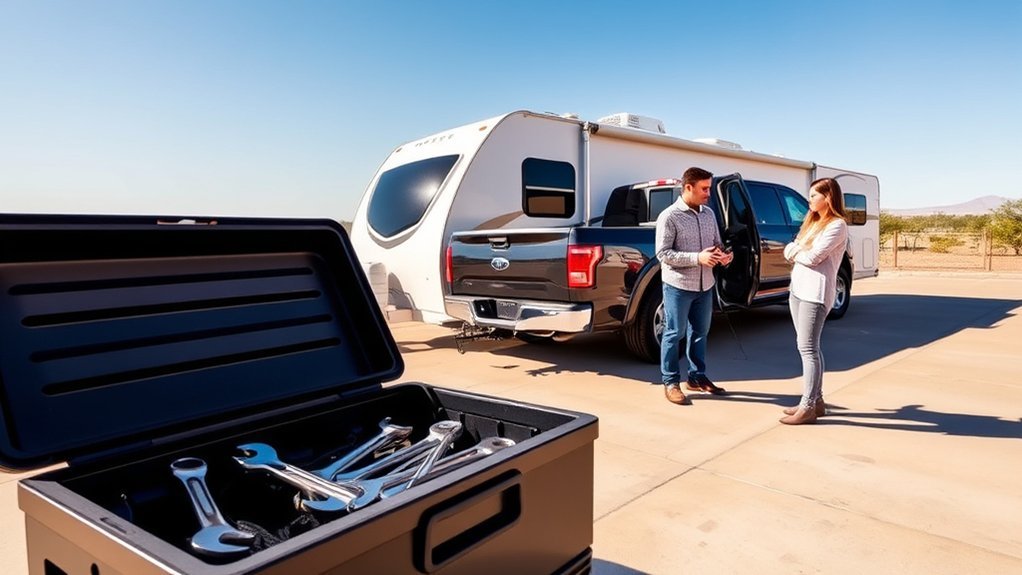
To tow a travel trailer safely, you’ll need essential tools like a weight distribution hitch, safety chains, and a brake controller. Start by verifying your vehicle’s towing capacity, then hitch your trailer, ensuring proper alignment and secured connections. During your drive, maintain a safe distance, make smooth steering movements, and stay aware of your trailer’s position. Avoid common mistakes, such as overloading or neglecting pre-trip checks. Want to explore more tips for a hassle-free experience?
Essential Tools for Towing a Travel Trailer
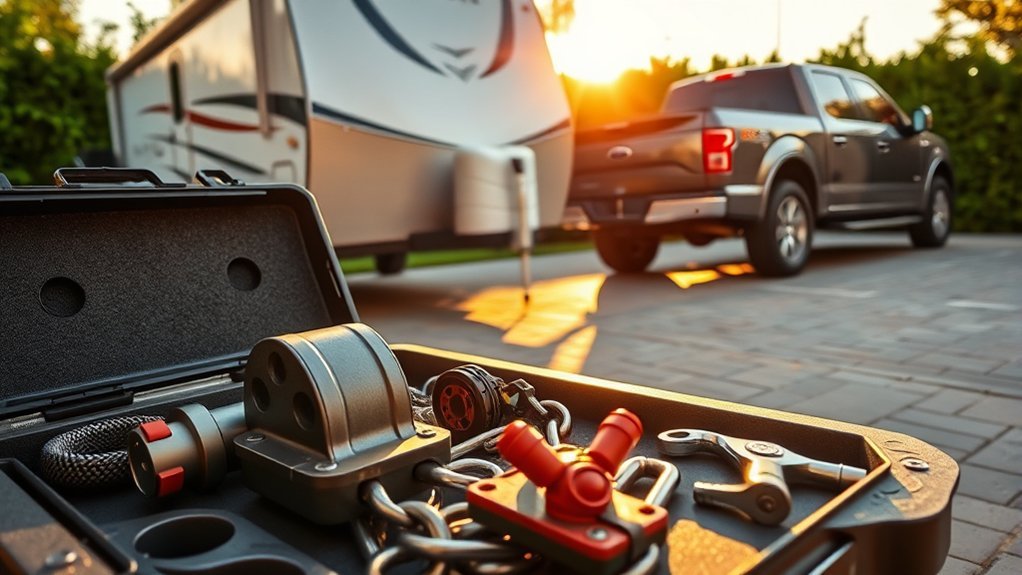
When it comes to towing a travel trailer, having the right tools can make all the difference in ensuring a safe and smooth journey. A weight distribution hitch is vital, as it evenly distributes the trailer’s weight across your tow vehicle, enhancing stability during your travels.
Don’t overlook safety chains; they’re important for providing a backup connection between your tow vehicle and trailer in case the hitch fails. Remember to cross them under the trailer tongue for added security.
If your trailer has brakes, a brake controller is necessary to manage the braking response effectively. Tow mirrors or extensions improve visibility, helping eliminate blind spots around your trailer.
Finally, keep a tire pressure gauge and air compressor handy to maintain proper inflation on both your vehicle and trailer, preventing blowouts and ensuring safety on the road. Equip yourself with these essential tools, and you’ll be ready for a liberating adventure.
How to Hitch Your Travel Trailer Like a Pro
Equipping yourself with the right tools sets the stage for hitching your travel trailer like a pro. First, verify your tow vehicle’s towing capacity meets or exceeds the travel trailer’s Gross Vehicle Weight Rating (GVWR).
Ensure your tow vehicle’s capacity matches or exceeds your travel trailer’s GVWR for a safe hitching experience.
Next, position your vehicle and trailer in a straight line, utilizing effective hitch alignment techniques. Align the hitch ball with the trailer coupler, then lower the coupler to securely lock it in place.
For added safety, cross and attach the safety chains in an X shape under the trailer tongue. This acts as a backup connection should the trailer detach.
Connect the trailer’s wiring harness to your tow vehicle and check all lights—brake lights and turn signals—to confirm functionality.
Finally, conduct a thorough inspection, verifying all components are secure and balanced, with the trailer tongue weight ideally at 10-15% of the loaded trailer weight for maximum stability.
Safe Driving Tips for Towing a Travel Trailer
Towing a travel trailer requires a different approach to driving, as the added weight and length can greatly affect your vehicle’s handling and stopping distance.
To maintain control, make sure you keep a safe following distance of at least six seconds behind the vehicle in front of you. This extra space accounts for the increased stopping distance needed when towing. Use smooth steering movements, and accelerate or decelerate gradually to prevent trailer sway, especially during turns and stops.
Keep your driving speed below 65 mph; higher speeds can exacerbate trailer sway and diminish control. Regularly check your mirrors to stay aware of traffic conditions and monitor your trailer’s position, as blind spots increase when towing.
In windy conditions, reduce your speed and grip the steering wheel firmly to counteract potential sway from crosswinds. By following these tips, you can enjoy a safer and more liberated driving experience with your travel trailer.
Common Mistakes New Trailer Towing Drivers Make
Many new drivers encounter challenges that can jeopardize their towing experience. A significant mistake is underestimating your vehicle’s towing capacity, which can lead to overloading and dangerous situations on the road.
Equally important is proper weight distribution within your trailer; failing to balance the load can cause sway, compromising stability and control.
Additionally, neglecting pre-trip checks—like inspecting your hitch and trailer lights—can create unsafe conditions that you should avoid.
Adjusting your driving techniques for the added length and weight of the trailer is essential; abrupt maneuvers can easily lead to accidents.
Lastly, don’t forget to use towing mirrors. Without them, your visibility is limited, increasing the risk of collisions due to blind spots around your trailer.
Preparing for Arrival at Your Campsite When Towing
As you approach your campsite, taking a moment to prepare can make all the difference in your towing experience.
Before you arrive, compare your travel trailer’s specifications with the campsite dimensions to guarantee a proper fit and avoid parking difficulties. Check for potential parking obstacles like tree branches, rocks, or uneven ground in your intended parking area.
Verify the campsite’s length, width, and height restrictions in advance to sidestep any surprises upon arrival.
Planning your approach is essential; assess tight turns or low clearance areas that could hinder your entry. Aim to arrive during daylight hours, as good visibility simplifies parking and setting up your travel trailer.
Frequently Asked Questions
What Is the 3 3 3 Rule for RV Travel?
The 3 3 3 rule for RV travel suggests you drive no more than 300 miles daily, spend at least 3 hours at stops, and take 3 days to reach your destination, enhancing travel planning and towing safety.
What Is the 80 20 Rule for Towing?
The 80/20 rule for towing means you’ll focus 80% on towing safety and weight distribution, while 20% of your attention’s on monitoring the trailer. This balance enhances control and confidence as you travel.
What Are Common Towing Mistakes to Avoid?
To avoid common towing mistakes, guarantee proper weight distribution and don’t neglect maintenance checks. Regularly inspect your tires and connections, and always secure safety chains to enhance safety and prevent accidents while towing.
What Is the 60 40 Rule for Trailers?
Imagine cruising down the highway, your trailer gliding smoothly behind you. The 60/40 rule means you distribute trailer weight—60% upfront, 40% in the back—maximizing towing capacity and ensuring stability to conquer every journey.
Conclusion
Successfully securing your travel trailer sets the stage for a smooth, stress-free journey. By mastering the mechanics of hitching, honing safe driving habits, and steering clear of common slip-ups, you’ll savor scenic sites with confidence. As you prepare to park, remember: practice patience and precision for a seamless setup. With these skills in your toolkit, you’re not just towing; you’re starting on unforgettable adventures. So, gear up and hit the road to your next getaway!







Leave a Reply