
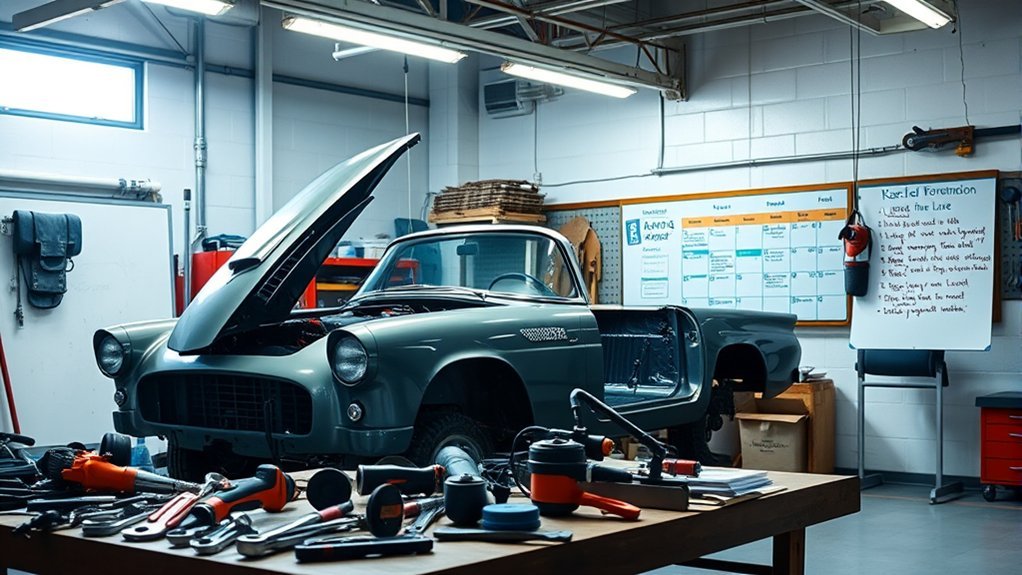
Restoring a classic car requires a structured approach. Start by establishing a budget and timeline, factoring in a 30% contingency for surprises. Equip yourself with essential tools like metric hand tools, a torque wrench, and a MIG welder. Focus on one system at a time, beginning with safety features like brakes. Avoid common mistakes, such as underestimating time and costs, and maintain thorough documentation of the process. There’s much more to uncover about each step, so stay tuned!
Setting Your Budget and Timeline
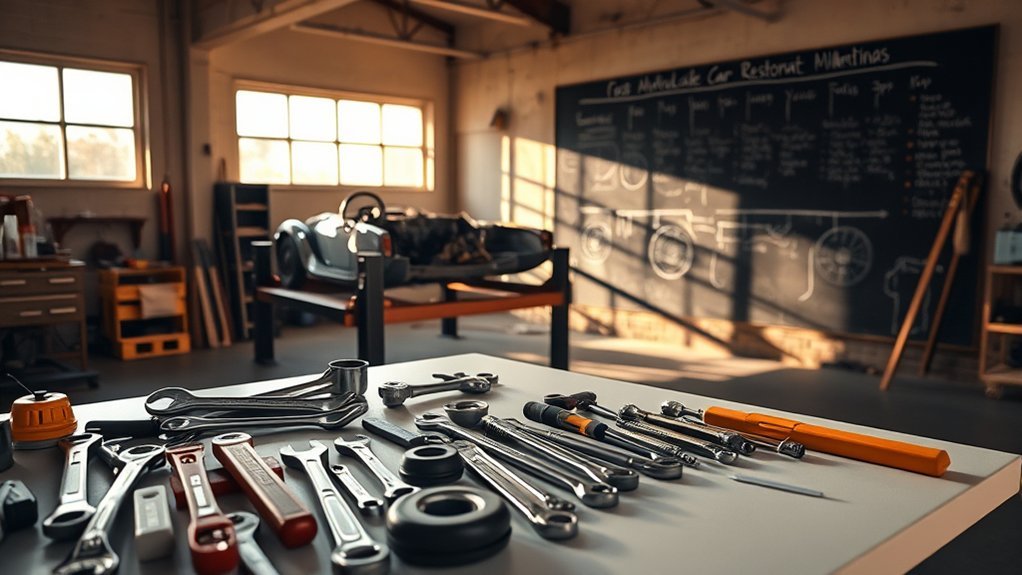
When you commence on a classic car restoration, establishing a budget and timeline is essential to your project’s success. Start with a budget estimation that includes parts, labor, and a buffer of at least 30% for unexpected expenses.
Research market prices to guarantee your budget reflects the true costs, breaking it down into categories like bodywork, engine, and interior. This breakdown helps you track spending and prioritize critical components effectively.
For timeline management, set realistic deadlines for each phase, understanding that sourcing parts or addressing unexpected challenges can extend your timeline.
Regularly review and adjust both your budget and timeline throughout the restoration process. This proactive approach allows you to accommodate changes in scope, guaranteeing you stay on track and within budget.
Must-Have Tools for Your Classic Car Restoration Project
A well-equipped tool kit is essential for any classic car restoration project, ensuring you have everything you need to tackle various tasks effectively.
Your tool selection strategies should focus on acquiring a blend of hand and power tools to streamline your work. Here’s a list of must-have items for your essential toolkits:
Focus on a mix of hand and power tools to enhance efficiency in your classic car restoration project.
- Quality SAE and metric hand tools
- Torque wrench for precise measurements
- Heavy-duty jack and jack stands for safety
- Angle grinder and power drill for cutting and drilling
- Impact driver for efficient disassembly
Don’t forget to invest in a MIG welder for metalwork and acquire a factory service manual specific to your car model.
This guide will provide critical specifications and insights, helping you navigate the restoration process with confidence.
How to Tackle Restoration Step-by-Step: Focus on One System at a Time
Start by prioritizing the brake system, as having functional brakes is essential for your safety during the restoration process.
Organize your efforts by tackling one system at a time, such as brakes, fuel, or electrical, which helps you maintain focus and motivation.
Keep a detailed checklist of each system’s condition and repairs to track your progress and guarantee no critical components are overlooked.
Prioritize Safety Systems First
Prioritizing safety systems is essential in car restoration, as safeguarding reliable operation can prevent accidents and enhance your overall driving experience.
Start with the brake system to confirm your ride is safe:
- Inspect and replace worn brake lines, pads, and rotors.
- Bleed the brake system to eliminate air and assure peak performance.
Next, focus on the fuel system; clean or replace the fuel tank, lines, and filters.
Check ignition components, replacing spark plugs and wires as needed for reliable starting.
Finally, inspect the electrical system, securing connections and checking wiring harnesses to prevent issues.
Systematic Progress Tracking
With safety systems addressed, it’s time to establish a structured approach to the restoration process.
Focus on one system at a time—start with the brakes to guarantee functionality before tackling others like fuel or electrical.
Break down tasks within each system for manageable progress and enhanced motivation. Use progress metrics to document every part replaced, repair made, and adjustment performed. This not only aids future maintenance but also enriches your vehicle’s history.
Regularly review your progress to prevent stalling; staying committed through task prioritization keeps the project on schedule.
Embrace this methodical approach, and you’ll find liberation in the steady advancement toward your classic car’s restoration.
Top 10 Mistakes to Avoid During Classic Car Restoration
When you start your classic car restoration, a well-structured plan is essential to avoid chaos and incomplete tasks.
Don’t underestimate the time and financial resources required; many projects exceed initial estimates considerably.
Planning Without Structure
Starting a classic car restoration project without a structured plan can lead to overwhelming chaos and incomplete work. To set yourself up for success, clearly define your restoration goals and establish project milestones.
Here are a few essential strategies to take into account:
- Organize your workspace with labeled containers to streamline efficiency.
- Catalog parts meticulously before disassembly to avoid confusion.
- Tackle one section at a time and maintain detailed records of components.
- Seek expert advice and engage with the restoration community for valuable insights.
- Document every step of the process to enhance the vehicle’s resale value.
Ignoring Financial Realities
While it’s easy to get swept up in the excitement of restoring a classic car, failing to acknowledge the financial realities can lead to significant pitfalls. To avoid these mistakes, implement financial contingency planning and conduct a thorough restoration cost analysis. Here’s a concise breakdown:
| Expense Type | Estimated Cost | Importance Level |
|---|---|---|
| Parts Replacement | $500 – $5,000 | High |
| Labor Costs | $1,000 – $10,000 | High |
| Unexpected Repairs | $300 – $3,000 | Medium |
| Tools & Equipment | $200 – $2,000 | Medium |
| Miscellaneous Fees | $100 – $1,000 | Low |
Tracking expenses meticulously guarantees you allocate funds for critical components, avoiding overspending and project stalls. Prioritize quality over cost to prevent future headaches.
Why Documenting Your Restoration Process Matters?
Documenting your restoration process isn’t just a good practice; it’s essential for guaranteeing a successful project. The documentation benefits extend far beyond mere record-keeping.
By maintaining thorough restoration records, you set yourself up for future success. Here’s why it matters:
- Future Maintenance: Detailed records of parts and modifications simplify addressing later issues.
- Visual Progress: Before-and-after photos keep you motivated while showcasing your transformation.
- Financial Proof: Receipts and warranties enhance your vehicle’s resale value, proving quality components.
- Clear Agreements: Documentation prevents disputes with restoration companies by clarifying expectations.
- Systematic Approach: Engaging in record-keeping minimizes mistakes and guarantees thorough project completion.
How to Maintain Your Classic Car After Restoration
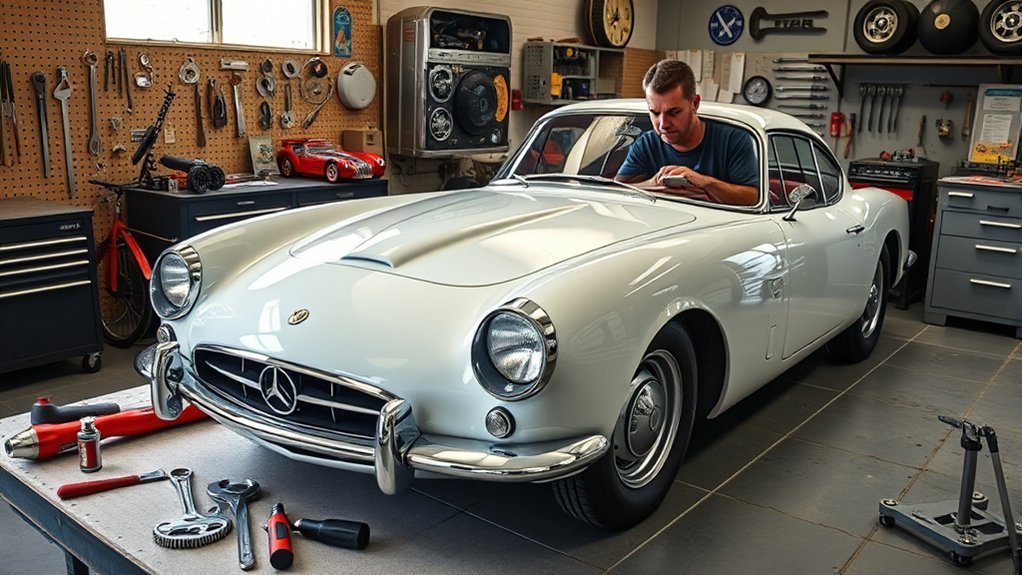
After completing your restoration, it’s essential to guarantee your classic car remains in top condition for years to come.
Start with routine inspections, checking the oil every 3,000 to 5,000 miles. This prevents harmful contaminants from damaging your engine.
Annually inspect the braking system, ensuring brake fluid levels are adequate, replacing worn pads, and checking for rust or damage.
Tire maintenance is equally important; keep them properly inflated and rotate them every 5,000 to 7,500 miles to enhance handling and fuel efficiency.
Regularly wash and wax your classic car using products designed for vintage vehicles to protect against corrosion and environmental damage.
When not in use, store your car in a climate-controlled environment to prevent rust and deterioration.
Consider a car cover for additional protection against dust and scratches, ensuring your prized possession stays pristine through seasonal preparations and beyond.
Joining the Classic Car Community for Support and Resources
Joining the classic car community can be one of the most rewarding steps you take in your restoration journey. By engaging with fellow enthusiasts, you tap into a wealth of knowledge and support that can enhance your project considerably.
Here are some benefits of community engagement and resource sharing:
- Access to experienced restorers who can offer invaluable insights.
- Guidance on sourcing hard-to-find spare parts.
- A motivational network that keeps you focused on your goals.
- Online forums for asking questions and sharing progress.
- Opportunities to showcase your work at local car shows and events.
Connecting with others not only inspires you but also provides practical advice that can save you time and money.
Whether you choose a local club or an online platform, being part of this vibrant community will certainly enrich your restoration experience.
Embrace the journey, and let the community support your passion for classic cars.
Frequently Asked Questions
What Is the Order of Restoring a Classic Car?
To establish a restoration timeline, prioritize the restoration sequence: assess condition, focus on safety systems like brakes, address mechanical and electrical components, tackle bodywork, and finally, restore the interior for a complete transformation.
What Are Common Car Restoration Mistakes?
Ever tried sailing a ship without a map? Budget overruns and sourcing parts often sink restoration projects. You must plan meticulously, catalog every component, and track expenses to avoid chaos and disappointment.
What Is the 30-60-90 Rule for Cars?
The 30-60-90 rule divides your restoration process into phases: 30% for planning, 60% for execution, and 90% for final inspection. This approach optimizes your car maintenance efforts and keeps your restoration budget in check.
What Skills Are Essential in Classic Car Restoration?
You’ll need mechanical expertise to diagnose and repair systems, alongside bodywork skills for restoring exterior panels. Mastering welding and electrical knowledge enhances your restoration capabilities, giving you the freedom to breathe life into classic cars.
Conclusion
Restoring a classic car can feel like piecing together a vintage puzzle—each part has a story to tell. Just like a well-loved book, your car’s restoration journey is filled with twists and turns, requiring patience and precision. By avoiding common pitfalls and following a systematic approach, you’ll not only revive a piece of history, but you’ll also forge a deeper connection with your vehicle. So gear up, immerse yourself, and enjoy the ride of restoration!






Leave a Reply