
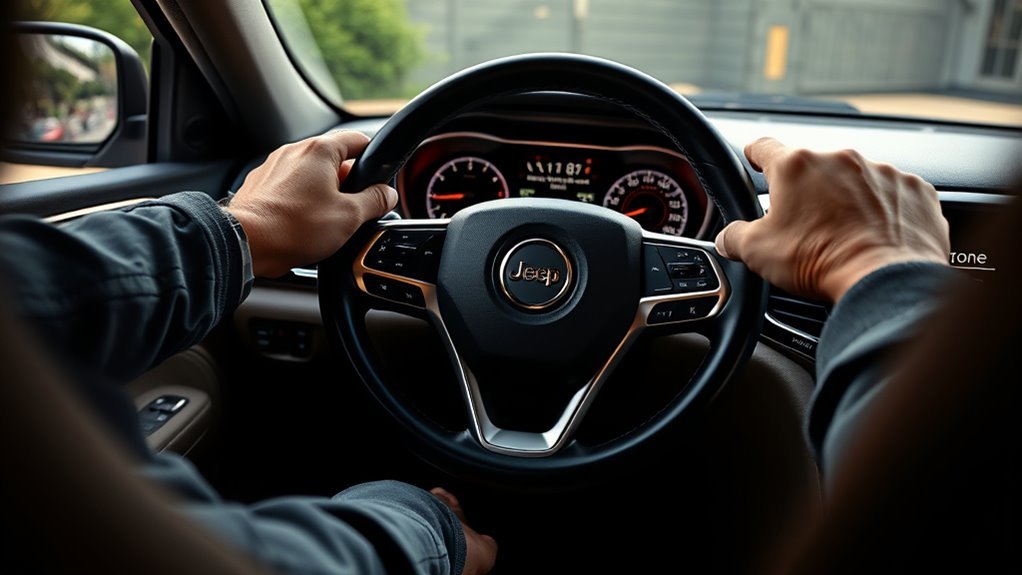
To reset the oil life indicator in your 2015 Jeep Grand Cherokee, turn the ignition to the ON/RUN position without starting the engine. Navigate to the Vehicle Info menu, select Oil Life, and press and hold the OK button until it resets to 100%. Alternatively, start the engine and access the main menu via the steering wheel buttons. If you encounter issues, double-check the steps. Explore further for insights on maintenance and maximizing your vehicle’s lifespan.
Why Resetting the Oil Life Indicator Matters
Resetting the oil life indicator is vital because it guarantees your vehicle’s maintenance schedule stays on track. By doing this after an oil change, you confirm accurate tracking for your next oil change, avoiding potential engine damage from ineffective oil. The oil monitoring system adapts to your driving conditions, such as off-road use or heavy loads, which can shorten oil life, making timely resets essential for peak performance.
If you neglect to reset the oil life indicator, you might face unnecessary engine alerts, leading to confusion about your vehicle’s maintenance needs. This oversight can result in missed service intervals, which could compromise your engine’s health. An accurate oil life indicator not only promotes better fuel efficiency but also extends your vehicle’s lifespan, ultimately saving you on long-term repair costs. Prioritizing this simple task empowers you to maintain your Jeep effectively and liberate it from unnecessary stress.
Preparing Your Jeep for the Reset Process
After understanding the significance of resetting the oil life indicator, it’s time to prepare your Jeep for the reset process. First, park your vehicle on a level surface and verify the engine is off. This step is vital for an accurate reset. Next, check that you’ve completed the necessary oil change, confirming that all oil levels are within the recommended range. This guarantees your Jeep operates efficiently and maintains peak performance.
Once you’ve verified the oil change, turn the ignition to the ON/RUN position without starting the engine. Familiarize yourself with the accelerator pedal’s location and the dashboard buttons you’ll need for the upcoming reset procedure. It’s also wise to review the owner’s manual for any model-specific instructions or variations that may apply to your 2015 Jeep Grand Cherokee. By following these steps, you’ll set the stage for a smooth reset process.
Complete Procedure for Resetting the Oil Life Indicator
To reset the oil life indicator in your 2015 Jeep Grand Cherokee, start by turning the ignition to the “ON/RUN” position without starting the engine. Next, navigate to the “Vehicle Info” menu on the Driver Information Display and select the “Oil Life” submenu. Press and hold the “OK” button until the oil life gauge resets to 100%. This process is essential for effective oil maintenance, ensuring your Jeep’s longevity.
Alternatively, you can perform a pedal-based reset. While the ignition is still in the “ON/RUN” position, fully press the accelerator pedal three times within 10 seconds. If the “Oil Change Required” message reappears upon starting, repeat the reset procedure to confirm success. This straightforward approach helps you maintain your vehicle’s performance and enhances its lifespan. Keep your Jeep in top shape by regularly checking and resetting the oil life indicator.
How to Reset the Oil Life Indicator With Engine on
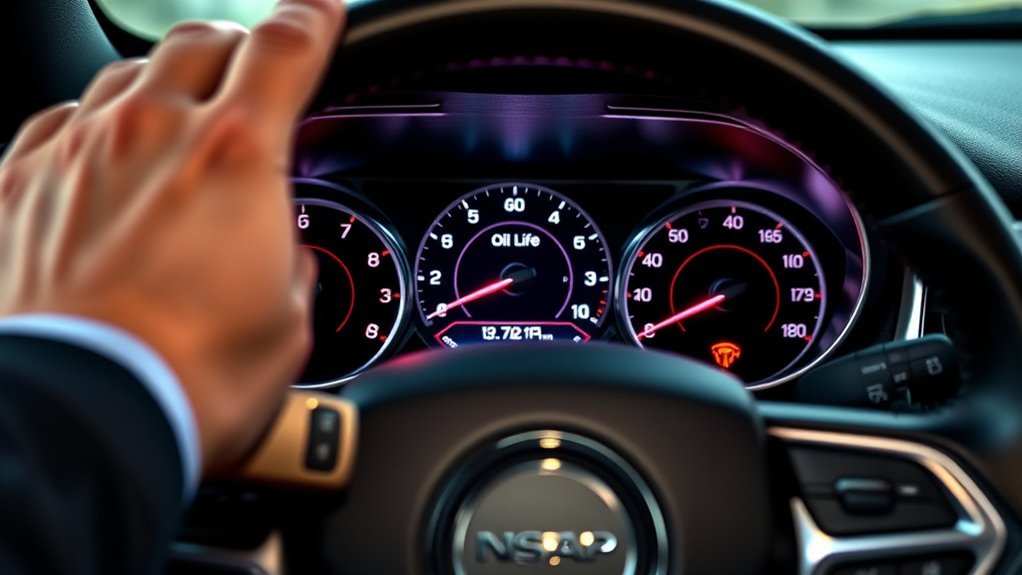
Start your engine without pressing the brake pedal to reset the oil life indicator in your 2015 Jeep Grand Cherokee. Next, use the arrow buttons on your steering wheel to access the main menu on the instrument cluster display. Navigate to the “Vehicle Info” section and select the “Oil Life” submenu.
Once you’re in the submenu, press and hold the OK button until the oil life gauge resets to 100%. This reset technique guarantees that you’ve effectively cleared the old oil life data.
To confirm the reset was successful, restart your vehicle and check that the Oil Change Required message no longer appears. By following these straightforward steps, you can easily manage your oil life, assuring your Jeep performs at its best. Regular maintenance not only enhances performance but liberates you from worry about engine health.
How to Fix Common Reset Problems
If the oil life indicator still shows an alert after your reset attempts, double-check that the ignition is in the ON/RUN position without starting the engine. This is a common step in reset troubleshooting. If the issue persists, follow these tips:
If the oil life indicator remains alert, ensure the ignition is in the ON/RUN position before troubleshooting further.
- Confirm you’re using the correct reset procedure for your 2015 model; some allow a menu-based reset via the Driver Information Display.
- Fully depress the accelerator pedal three times within 10 seconds if you’re using the pedal method; missing this step could lead to an indicator malfunction.
- If the indicator lights up again upon starting the engine, repeat the reset process, as the initial attempt may have failed.
Consulting community forums can also provide insights, as others may have faced similar challenges and found effective workarounds. Don’t lose hope; with patience, you’ll conquer this reset challenge!
Alternative Reset Methods for Various Jeep Models
When resetting the oil life indicator, different Jeep models require specific steps. For instance, smaller models like the Compass and Renegade use the accelerator pedal method, while the 2014-2015 models let you reset through the Driver Information Display. Understanding these variations guarantees you follow the correct procedure for your specific Jeep, maintaining peak performance.
Different Jeep Models
Understanding that different Jeep models have unique oil life reset procedures is essential for maintaining your vehicle’s performance. Each model features distinct reset techniques based on its design and systems. Here are some key Jeep model variations to take into account:
- Compass and Renegade: Depress the accelerator pedal three times within 10 seconds, then turn off the vehicle.
- Wrangler, Grand Cherokee, Gladiator, Wagoneer, Grand Wagoneer: Use either the accelerator pedal method or navigate through the Driver Information Display.
- 2014-2015 Models: Hold the OK button in the Oil Life submenu until it resets to 100%.
Always consult your owner’s manual for the precise procedure, as reset methods can differ notably across various Jeep models.
Step Variations Explained
Various Jeep models offer distinct methods for resetting the oil life, ensuring you can choose the most convenient option for your vehicle. For the 2015 Jeep Grand Cherokee, navigate to the main menu on the instrument cluster and hold the OK button in the Oil Life submenu. In contrast, models like the Compass and Renegade require you to fully depress the accelerator pedal three times within 10 seconds while the vehicle is off. Smaller models may need the ignition in the ON position for this method to work. Additionally, the alternative reset via the Driver Information Display applies to various models from 2014-2015. These oil change tips and reset troubleshooting methods provide flexibility for all Jeep owners.
Key Service Records to Track for Engine Health
To guarantee your engine’s health, it’s essential to track key service records like your maintenance schedule adherence and oil change history. Documenting filter replacement records also plays an important role in maintaining ideal oil flow and engine efficiency. Keeping these detailed logs not only aids in timely maintenance but also enhances your vehicle’s resale value.
Maintenance Schedule Adherence
Maintaining a detailed log of your Jeep Grand Cherokee’s service history is essential for ideal engine health. Tracking your oil change frequency and other maintenance activities guarantees timely service, preventing costly repairs. Here’s what to include in your maintenance checklist:
- Oil change dates and mileage: Helps remind you when the next service is due.
- Fluid levels and replacement schedules: Keep an eye on essential fluids to avoid engine strain.
- Filter and belt replacements: Regular checks can save you from unexpected breakdowns.
Oil Change History
Keeping a thorough oil change history is crucial for your Jeep Grand Cherokee’s engine health. Documenting each oil change helps you track the frequency of changes, ensuring timely maintenance and maximizing oil change benefits. Use tracking methods like spreadsheets or apps to log oil type, mileage, and change dates. This practice not only identifies patterns of oil degradation—particularly important if you drive under harsh conditions—but also prevents engine sludge build-up, which can lead to costly repairs. Additionally, maintaining service records supports warranty claims and can boost buyer confidence when selling your vehicle. By keeping accurate records, you enhance your Jeep’s performance and longevity, making informed maintenance decisions easier.
Filter Replacement Records
Tracking filter replacement records is essential for sustaining your Jeep Grand Cherokee’s engine health. By keeping detailed logs, you guarantee timely maintenance and prevent potential issues down the road. Here’s what to focus on:
- Filter types: Document the specific filters and part numbers used for easy reordering.
- Replacement frequency: Track intervals, usually every 5,000 to 7,500 miles, to maintain peak performance.
- Driving conditions: Note any factors, like off-road driving or extreme weather, that could affect filter lifespan.
These records not only help you stay on schedule but also provide valuable insights for diagnosing future engine issues. By staying organized, you empower yourself to enhance your Jeep’s longevity and performance.
Impact of Oil Changes on Engine Health
While it might seem like a minor task, changing your oil regularly plays an essential role in preserving engine health. Fresh oil helps maintain ideal oil viscosity, ensuring proper lubrication of engine components. This reduces friction, which not only enhances engine performance but also maximizes fuel efficiency. Over time, old oil accumulates sludge and contaminants, hindering the engine’s ability to operate smoothly. Neglecting oil changes can lead to increased wear and tear, greatly shortening your engine’s lifespan.
To keep your 2015 Jeep Grand Cherokee running at its best, adhere to the recommended oil change intervals of every 5,000 to 7,500 miles. The Oil Life monitoring system alerts you when it’s time for a change, preventing potential engine damage. By prioritizing regular oil changes, you’re investing in the longevity and efficiency of your vehicle, ensuring it remains a reliable companion on the road.
When to Seek Professional Help for Oil Resets
If you encounter persistent difficulties resetting the oil life indicator in your 2015 Jeep Grand Cherokee, it’s wise to contemplate professional assistance. Ignoring these challenges might mask underlying issues requiring professional diagnostics.
Consider seeking help if you notice:
- A recurring “Oil Change Required” message post-reset
- Complications during the reset process that make you uneasy
- Concerns about warranty implications if the vehicle is still covered
Technicians at dealerships have specialized training and access to diagnostic tools to pinpoint problems that DIY methods might miss. Additionally, professional service guarantees that all maintenance records are accurately logged, which is essential for your vehicle’s history. Addressing these issues promptly not only secures the integrity of your Jeep’s oil life monitoring system but also protects your investment in the long run. Don’t hesitate to reach out if you’re unsure; it’s a step toward peace of mind.
How Off-Roading Affects Oil Life in Your Jeep
Off-roading greatly impacts your Jeep’s oil life by increasing contamination and accelerating degradation. The rough terrain generates higher engine temperatures and friction, leading to quicker breakdown of lubricants. Additionally, dust and debris can infiltrate the oil, further compromising its effectiveness and necessitating more frequent oil changes.
Increased Oil Contamination
Engaging in off-road adventures can greatly impact your Jeep’s engine oil, leading to increased contamination and reduced oil life. The rugged terrain exposes your engine to various contamination sources, compromising oil filtration and overall performance.
- Dust and dirt swirl around your engine, introducing harmful particles.
- Grit and debris accumulate, increasing wear and tear on essential components.
- Frequent stops and starts result in incomplete combustion, leaving deposits in the oil.
These factors necessitate more frequent oil changes to maintain engine health. By regularly monitoring oil quality and changing it as needed, you can guarantee your Jeep remains reliable and performs at its best, even in the toughest conditions. Stay vigilant to keep your off-road adventures exhilarating and engine running smoothly.
Accelerated Oil Degradation
While traversing rugged trails and steep inclines, your Jeep’s engine oil endures significant stress and heat, leading to accelerated degradation. Off-roading subjects your oil to higher temperatures and increased shear forces, breaking it down more rapidly. Dust and debris from rough terrains introduce contaminants that further reduce oil effectiveness and lifespan. Frequent high RPMs contribute to quicker degradation, making it essential to monitor oil life closely. Utilizing quality oil additives can enhance protection, while off-road filters help trap particulates, extending oil longevity. Your Jeep’s Oil Life monitoring system is designed to alert you sooner about needed changes under these demanding conditions, ensuring your engine maintains peak health. Stay proactive to enjoy the freedom of off-roading without compromising performance.
Frequently Asked Questions
Can I Reset the Oil Life Indicator Without Starting the Engine?
Yes, you can reset the oil life indicator without starting the engine. Just access the vehicle settings, navigate to oil life, and follow the prompts. This helps guarantee effective engine maintenance and longevity.
What Happens if I Forget to Reset the Oil Life Indicator?
If you forget to reset the oil life indicator, you might overlook essential oil changes, leading to decreased engine performance and potential damage. Regular maintenance is vital for ideal vehicle health and longevity. Don’t neglect it!
How Often Should I Check the Oil Life Indicator?
You should check the oil life indicator every 3,000 to 7,500 miles, depending on your driving habits. Regular monitoring is essential for ideal engine performance and effective oil maintenance tips to prolong your vehicle’s life.
Does the Oil Life Reset Affect My Warranty?
Resetting your oil life doesn’t affect warranty coverage, as long as you meet maintenance requirements. It’s essential to document your oil changes and maintenance to guarantee you maintain your warranty protection effectively.
Can I Use a Different Method for Resetting on Other Jeep Models?
Yes, you can use different resetting procedures for other Jeep models. However, model differences may require specific steps. Always consult your vehicle’s manual to guarantee you’re following the correct method for your particular model.
Conclusion
Resetting the oil life indicator in your 2015 Jeep Grand Cherokee is as vital as changing the oil itself. Not only does it keep your dashboard clear, but it also guarantees your engine stays healthy. By following the steps outlined, you can easily manage this task and maintain your vehicle’s performance. Remember, regular oil checks and changes are important, so stay proactive—your Jeep will thank you for it on every off-road adventure.







Leave a Reply