
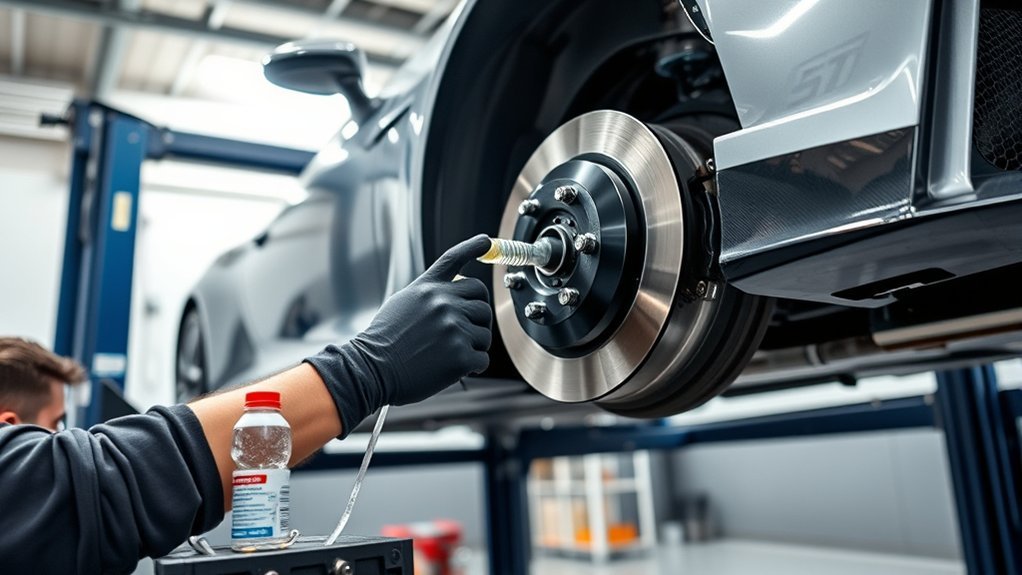
To bleed your brakes for track performance, gather a wrench, clear tubing, a collection container, and fresh brake fluid (DOT 3 or DOT 4). Start from the wheel furthest from the master cylinder and work your way forward, keeping the master cylinder topped up. Open the bleeder valve, pump the pedal, and close it before releasing. Avoid common mistakes like letting the fluid run dry and bleeding out of order. There’s more you can do to enhance your brake maintenance.
Why Bleeding Your Brakes Is Essential for Track Performance
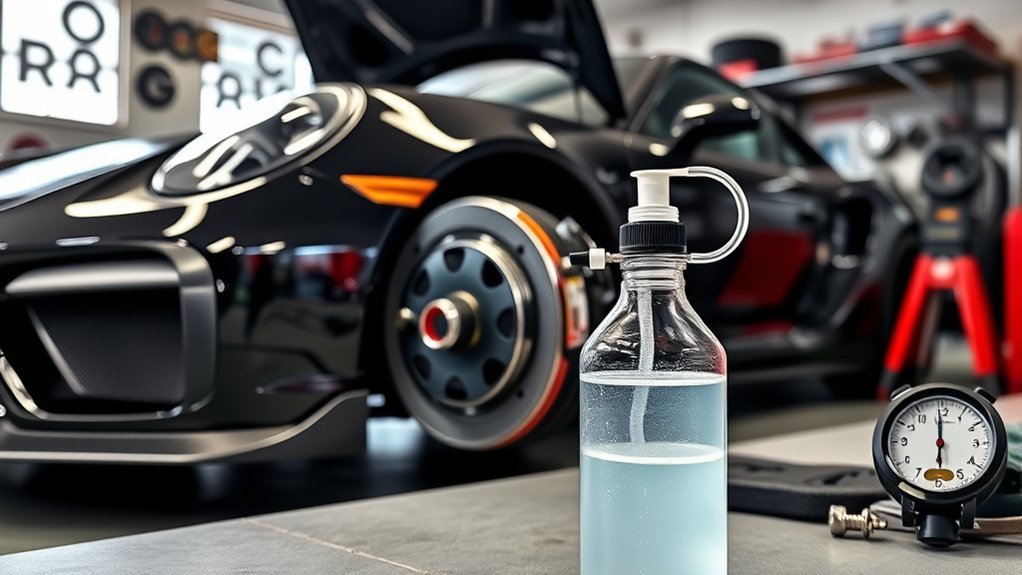
When you hit the track, ensuring your brakes are bled is essential for maintaining peak performance. Air bubbles in the brake system can lead to a spongy pedal feel and delayed braking response, jeopardizing your control during high-speed maneuvers.
Properly bled brakes guarantee consistent brake fluid pressure, vital for maximum stopping power and precision. Contaminated or old brake fluid lowers the boiling point, risking brake fade—an outcome you can’t afford on the track.
Regularly bleeding your brakes, ideally every two to three track days, keeps your system reliable and responsive. This not only enhances your lap times through improved braking responsiveness but also reduces the risk of brake failure in extreme conditions.
Tools You Need for Effective Brake Bleeding
To effectively bleed your brakes, you’ll need a few essential tools that streamline the process and guarantee accuracy.
Start with a wrench or socket set to loosen the bleeder valves. Clear tubing is important for directing old brake fluid into a collection container—this prevents spills and mess. Make sure you have a suitable container ready to catch the fluid. Fresh brake fluid is essential; keep about 500 ml of DOT 3 or DOT 4, as specified in your vehicle’s manual.
Start with a wrench to loosen bleeder valves, and use clear tubing to prevent spills while collecting old brake fluid.
A jack and jack stands are necessary to safely lift the vehicle, giving you access to all four wheel calipers. For efficiency, consider using a vacuum bleeder or pressure bleeder; these tools allow for easier one-person operation and minimize the risk of air re-entry into the system.
Always use sealed, fresh bottles of brake fluid and refrain from mixing different types to avoid contamination.
How to Properly Bleed Your Brakes
To properly bleed your brakes, you’ll need essential tools like clear tubing and a reliable brake fluid container.
Be mindful of common mistakes, such as bleeding in the wrong order or letting the master cylinder run dry, which can compromise your results.
Following the correct process guarantees your brakes perform at their best on the track.
Essential Tools Needed
Properly bleeding your brakes requires a few essential tools to guarantee efficiency and safety.
First, gather a wrench or socket set to open the bleeder valves, along with clear tubing to collect old brake fluid. Confirm you have a container to catch the fluid during the bleeding technique.
A jack and jack stands are vital for safely lifting the vehicle, providing access to brake calipers and bleeder valves.
Consider using a speedbleeder to simplify the process; it features a one-way valve that eliminates the need for an assistant.
Finally, keep at least 500 ml of fresh brake fluid on hand, as specified in your vehicle manual, to prevent running the master cylinder dry while bleeding.
Common Bleeding Mistakes
Bleeding your brakes requires not just the right tools but also an understanding of common mistakes that can compromise the process.
Avoid these pitfalls to guarantee peak brake performance:
- Using the wrong brake fluid: Always consult your vehicle manual for the correct specifications; incorrect fluid can lower boiling points and lead to brake fade.
- Incorrect bleeding sequence: Follow the manufacturer’s recommended order to prevent trapping air bubbles and creating soft pedal issues.
- Letting the master cylinder run dry: Keep it topped up; running dry introduces air into the system, necessitating a complete restart.
Remember to test drive after bleeding to guarantee no air bubbles remain.
Use a controlled pumping method to maintain system integrity.
Avoid These Common Mistakes When Bleeding Brakes
When bleeding brakes, you can’t afford to skip the correct sequence, as starting with the farthest wheel guarantees all air is removed.
Keep a close watch on the brake fluid level; letting it run dry can introduce air back into the system.
Finally, always take your vehicle for a test drive afterward to confirm that the brakes perform as expected, since air can shift during normal operation.
Correct Bleeding Sequence Importance
Guaranteeing the correct bleeding sequence is crucial for ideal brake performance, as a misstep can trap air within the system. Follow this sequence: right rear, left rear, right front, left front.
Using proper bleeding tools and adhering to this order is essential to prevent air pockets that can compromise your braking system.
- Refer to your vehicle service manual for the recommended sequence.
- Even clear fluid doesn’t guarantee you’ve purged all air—stay vigilant.
- Avoid inconsistent brake feel that could jeopardize your handling on the track.
Understanding and executing the right bleeding sequence can save you from re-bleeding and guarantee reliability during high-performance driving conditions.
Your safety and speed depend on it.
Monitor Fluid Levels Constantly
How can you maintain ideal brake performance during the bleeding process?
Constantly monitor your brake fluid levels to prevent running dry, which can introduce air bubbles into the system, resulting in spongy brakes. Use a funnel to easily check fluid levels, ensuring the reservoir stays above the “Minimum” line.
After every few pumps of the brake pedal, top off the brake fluid to maintain consistent levels and avoid air intake. Keep the master cylinder cap slightly loosened for visual access without complete removal.
Frequent checks are essential, especially when bleeding alone, as it’s easy to lose track and allow air to infiltrate the brake system. Your attention to fluid levels is critical for achieving ideal braking performance.
Test Drive After Bleeding
After you’ve bled the brakes, it’s important to perform a test drive to confirm that the pedal feels firm and responsive.
The test drive is vital for evaluating brake pedal feedback and guaranteeing that no air remains in the system.
During your test drive, keep an eye out for:
- Signs of trapped air, like a soft pedal or delayed response
- Any sponginess or abnormal pedal travel
- Unusual noises indicating potential leaks or failures
If you encounter issues, re-bleed the system.
Remember, the test drive’s significance can’t be overstated; any air left in the lines can compromise your safety and performance on track.
Thorough testing guarantees your braking system performs effectively, granting you the liberation to push your limits confidently.
How to Care for Your Brakes After Bleeding
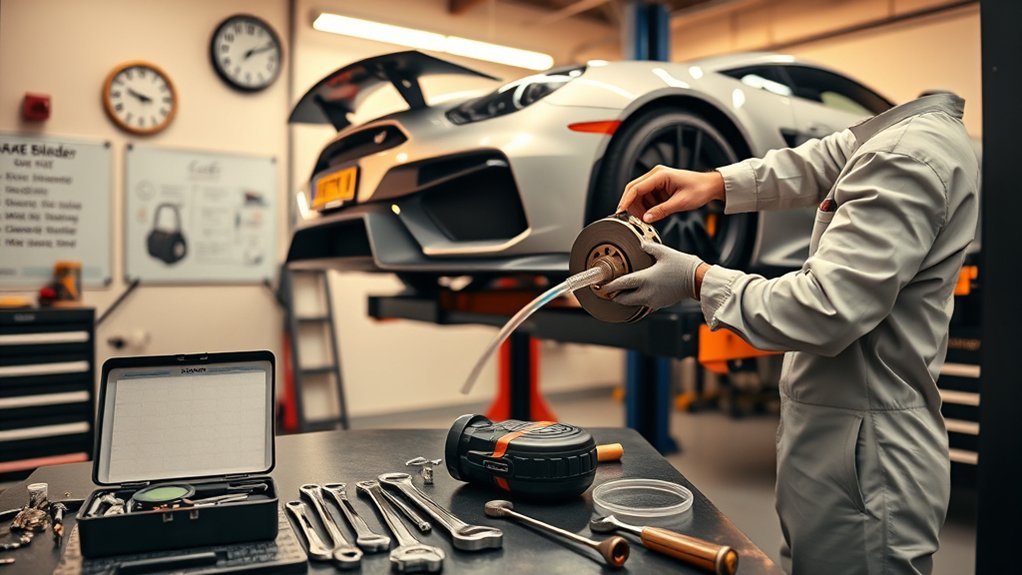
Once you’ve bled your brakes, it’s crucial to top off the brake fluid reservoir to the maximum fill line, which helps maintain ideal hydraulic pressure and prevents air from entering the system.
After topping off, monitor brake performance during test drives. Look for any signs of sponginess or delayed response, as these may indicate residual air in the system.
Monitor your brake performance during test drives for any sponginess or delayed response, as these may signal lingering air in the system.
Immediately clean up any spilled brake fluid, as it can damage your vehicle’s paint and components if left untreated.
Regularly inspect your brake system for leaks or signs of wear, especially after bleeding, to guarantee safety and performance on the track.
Additionally, stick to a maintenance schedule that includes periodic brake fluid changes every two to three years. This helps maintain fluid integrity and prevents contamination that could compromise braking efficiency.
Proper care now will enhance your driving experience and keep you liberated on the track.
How to Diagnose Spongy Brakes After Bleeding?
Could your brake pedal feel soft even after bleeding? This spongy sensation often indicates that air bubbles are still trapped in the system. Here’s how to diagnose the issue effectively:
- Check for leaks: Inspect brake lines, fittings, and hoses for any signs of fluid leakage. Even a small leak can introduce air and compromise your braking performance.
- Monitor the brake fluid reservoir: Verify it didn’t run dry during the bleeding process. Low brake fluid can lead to air entering the system.
- Evaluate the master cylinder and brake booster: A pedal that sinks to the floor may signal a faulty master cylinder or issues with the brake booster, requiring further investigation.
If you suspect air in the ABS module, remember that some systems need separate bleeding.
Address these factors to regain confidence in your braking system and guarantee peak performance on the track.
When to Consult a Mechanic for Brake Problems
Brake issues can compromise your safety, so knowing when to consult a mechanic is vital.
If your brake pedal feels spongy or travels to the floor, it could indicate trapped air or fluid leaks, necessitating a professional brake inspection. Unusual noises like grinding or squeaking suggest worn components that need assessment or replacement.
Pay attention to brake fluid levels—if you notice a significant drop without visible leaks, internal problems may exist that require expert evaluation. Additionally, persistent brake warning lights on your dashboard signal malfunctions needing diagnosis by a qualified technician.
If you experience inconsistent braking performance or a disparity in response between the front and rear brakes, don’t hesitate to consult a mechanic.
Prioritizing these signs can guarantee your vehicle remains safe and reliable on the track, allowing you to enjoy the drive without compromise.
Frequently Asked Questions
What Are the Common Mistakes When Bleeding Brakes?
Common mistakes when bleeding brakes include using incorrect brake fluid, not following the right sequence, letting the reservoir run dry, or quick pumping. Always make certain you’ve removed all air bubbles for best braking performance.
What Is the 30 30 30 Rule for Brakes?
Think of your brakes as the heartbeat of your vehicle. The 30 30 30 rule dictates checking brake fluid monthly, replacing it every 30,000 miles, and inspecting pads every month for safety precautions and ideal performance.
How to Bleed Brakes Step by Step?
To bleed brakes, gather brake fluid and tools. Attach tubing to the bleeder valve, pump the pedal, open the valve, and release fluid. Repeat until clear fluid flows. Follow proper bleeding techniques for ideal results.
How Many Times Do You Pump Brakes When Bleeding?
You should pump the brake pedal three to five times for proper technique, ensuring brake fluid flows and expels air bubbles. This vital step helps you achieve that liberating, firm pedal feel you desire.
Conclusion
In the world of track performance, the difference between a flawless lap and a catastrophic failure often lies in your brake system. By bleeding your brakes thoroughly, you’re ensuring a firm pedal feel and ideal stopping power. Yet, neglecting this essential maintenance can lead to spongy brakes and safety risks. So, take the time to bleed your brakes properly; your safety and speed depend on it. Remember, precision in preparation leads to victory on the track.






Leave a Reply