
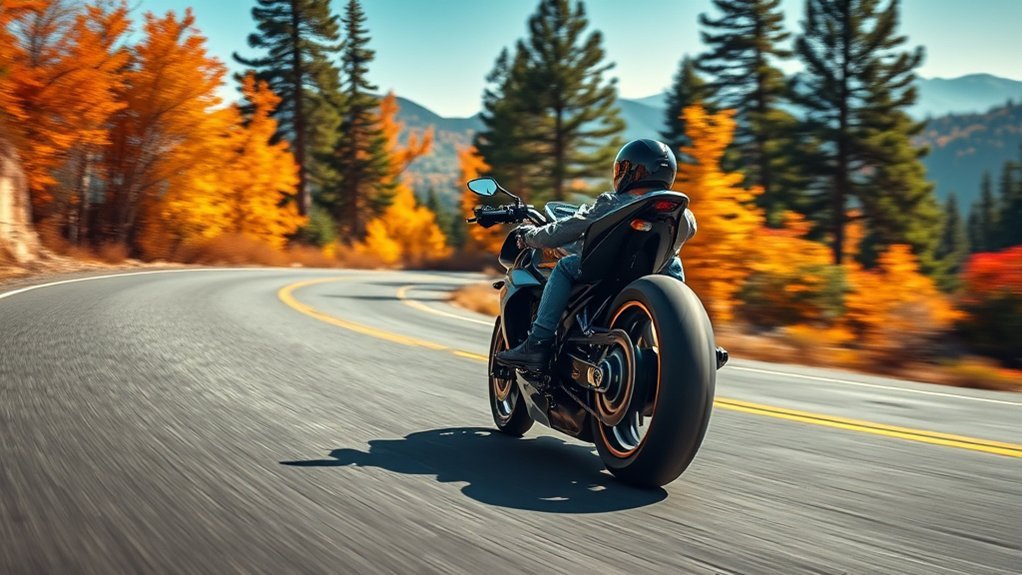
Countersteering is a fundamental motorcycle technique that lets you turn smoothly by pushing the handlebars opposite to your desired direction. This shift helps the bike lean into the turn, enhancing control, especially at speeds above 30 mph. For instance, when maneuvering a curve, pushing right on the right handlebar helps you lean left, ensuring stability. Mastering this allows you to react quickly in emergencies and improves your overall riding skills. There’s much more to discover about countersteering techniques and their applications.
What Is Countersteering and Why Is It Important?
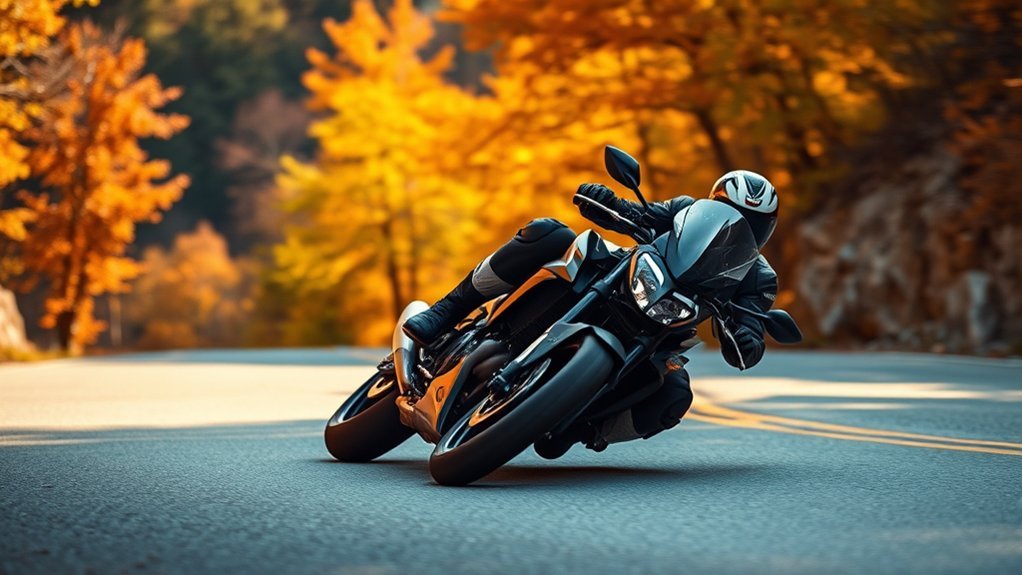
Countersteering is an indispensable technique every motorcycle rider should master for safe and effective riding. This method involves pushing the handlebars in the opposite direction of your desired turn, initiating a lean angle that helps you navigate curves seamlessly.
At speeds above 0 mph, rider awareness becomes critical; without countersteering, your bike might struggle to maintain balance, risking an unintended straightening during turns.
The counterintuitive nature of this technique—pushing left to turn left—can be surprising, but it’s crucial for enhancing your cornering capabilities.
Mastering countersteering not only boosts your confidence but also equips you to make quick adjustments when faced with hazards. Practicing this skill in a controlled environment allows you to develop a deeper understanding of how your bike reacts, ultimately leading to a more liberated riding experience.
Embrace countersteering, and unleash the freedom of riding with greater safety and control.
How Countersteering Works: Understanding the Mechanics
When you initiate a turn on your motorcycle, you’re not just twisting the handlebars; you’re engaging with the physics of leaning.
By applying pressure to the handlebars, you create a dynamic balance that allows the bike to lean into the turn, counteracting the outward pull from centripetal force.
Understanding this handlebar pressure dynamic is key to mastering control and stability while cornering at various speeds.
Physics of Leaning
To navigate a turn smoothly on a motorcycle, you need to understand the intricate physics behind leaning and countersteering.
- Countersteering shifts your weight, initiating the lean angle.
- The centripetal force pulls the bike’s top outward during a turn.
- Higher speeds demand greater lean angles for stability control.
- Pushing the left handlebar steers the wheel right, causing a left lean.
- Effective leaning is essential to maintaining control on curves.
Handlebar Pressure Dynamics
Understanding how handlebar pressure influences your motorcycle’s dynamics is essential for mastering countersteering. When you apply pressure to the right handlebar, the front wheel steers left, prompting your bike to lean into a right turn. This handlebar feedback is vital; maintaining consistent pressure throughout the turn keeps your motorcycle balanced.
If you release this pressure, you risk straightening up, which compromises control. At higher speeds, the dynamics intensify, requiring more deliberate pressure application to achieve the desired lean.
To enhance your skills, practice on straight stretches, experimenting with varying handlebar pressure and observing your bike’s response. This hands-on experience will deepen your understanding and liberate your riding, allowing for smoother, more controlled turns.
How Leaning Affects Countersteering?
Leaning plays an essential role in the effectiveness of countersteering, as it directly influences how well you can navigate a turn. By mastering your lean angle, you enhance motorcycle balance and improve your overall riding experience.
Here’s how leaning affects your countersteering:
- It helps counteract centrifugal force, allowing smoother cornering.
- A greater lean angle is necessary at higher speeds to maintain control.
- Leaning into the turn reduces the motorcycle’s tendency to straighten up.
- You can apply throttle more effectively as you lean, boosting stability.
- Mastering the lean-countersteering relationship builds your confidence in tight corners.
Embracing the art of leaning not only enhances your skills but also liberates your riding spirit.
As you become attuned to the dynamics of lean angle and balance, you’ll find the thrill of cornering becomes an exhilarating dance between you and your motorcycle.
Countersteering at Different Speeds: Key Considerations
As you navigate different speeds on your motorcycle, the way you approach countersteering shifts markedly. At low speeds, typically below 20 mph, you can rely on direct steering techniques, allowing for smoother turns without significant lean.
However, once you exceed this threshold, especially around 30 mph, countersteering becomes essential. Here, the physics of centrifugal force demands that you lean into the turn, requiring more pronounced handlebar pressure for effective high-speed adjustments.
Once you hit 30 mph, mastering countersteering is crucial for safe and effective cornering.
At moderate to high speeds, the forces acting on your bike necessitate a deeper understanding of countersteering dynamics. You must adjust your techniques accordingly to maintain control and enhance maneuverability.
Embracing these key considerations allows you to navigate curves with confidence, ensuring both safety and an exhilarating ride. By mastering low speed techniques and high speed adjustments, you empower yourself to conquer any road ahead.
Debunking Common Myths About Countersteering
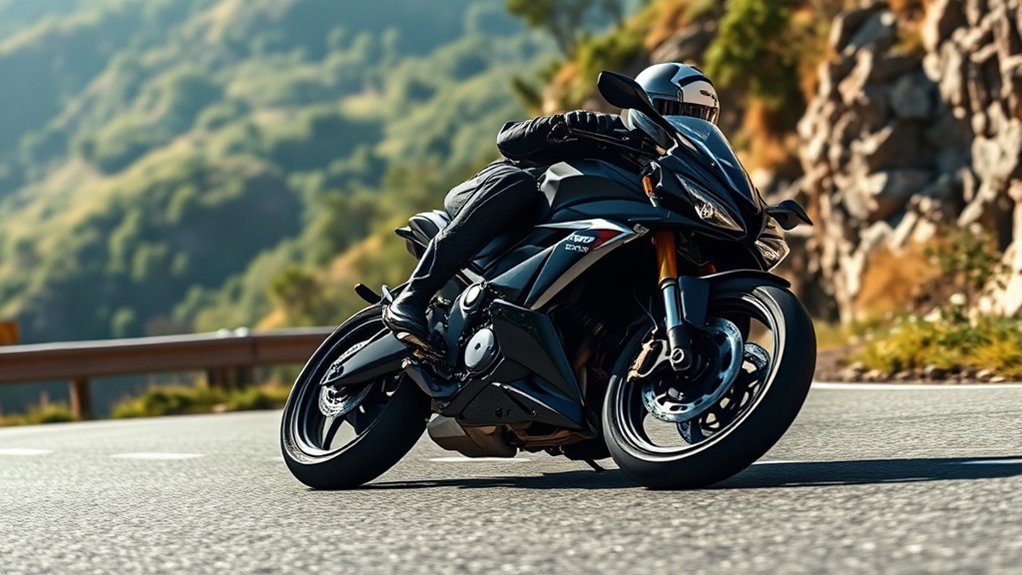
You might think that normal steering is enough at any speed, but that’s a big misconception, especially when you’re moving faster.
Many riders misunderstand how handlebar movements work; countersteering is essential for effective turns, regardless of your experience level.
Once you grasp its mechanics, you’ll find countersteering feels instinctive, not complicated.
Misunderstanding Handlebar Movements
While many riders think that simply turning the handlebars in the direction of the turn is enough, this belief can lead to serious misunderstandings about effective cornering.
Here are some handlebar myths and steering misconceptions you need to recognize:
- Countersteering is crucial at all speeds, not just high speeds.
- The initial lean is primarily created by countersteering, not just steering.
- For experienced riders, countersteering becomes instinctual and automatic.
- Letting go of handlebar pressure during a turn will cause the bike to straighten up.
- Effective cornering relies on pushing the handlebars in the opposite direction to initiate the lean.
Speed’s Impact on Steering
Understanding how speed influences steering is critical for any motorcyclist aiming to enhance their cornering skills. At moderate to high speeds, effective speed management becomes essential, as the pressure you apply on the handlebars directly impacts your steering techniques.
Many beginners mistakenly think normal steering will suffice, but this can lead to dangerous situations. Countersteering is crucial for initiating the lean necessary for smooth turns, particularly when maneuvering sharp corners or avoiding obstacles.
Practicing this technique at low speeds won’t yield the same results, so focus on mastering it at higher speeds for best control. Misunderstanding speed’s role in countersteering can compromise your handling, reducing your overall safety and riding experience.
Embrace the liberation that comes with mastering these skills!
Instinct vs. Conscious Action
As riders become more attuned to the dynamics of speed and steering, it’s important to recognize how instinct plays a role in countersteering. Many don’t realize that their instinctive reactions kick in during turns, often without conscious thought. This can lead to misconceptions about steering at varying speeds.
- Countersteering is vital above 0 mph.
- Leaning begins when the bike is moving, not stationary.
- Pushing one handlebar leans the bike in the opposite direction.
- Misunderstanding this technique can lead to dangerous situations.
- Conscious practice enhances your control and safety.
Acknowledging the balance between instinct and conscious action is significant.
Essential Tips for Beginners on Countersteering
How can you master the art of countersteering as a beginner? Start by practicing in a safe environment, like an empty parking lot. This helps you gain confidence and grasp the mechanics at low speeds before tackling higher velocities.
Remember, slowing down before entering turns is key; it enhances control and minimizes beginner mistakes.
To initiate a right turn, gently push on the right handlebar while pulling the left, and do the opposite for a left turn. This action encourages your bike to lean into the turn.
It’s essential to maintain continuous pressure on the handlebars throughout; releasing it can cause the bike to straighten up, compromising your control.
Once you’re comfortable, practice drills at speeds of at least 20 mph. This will deepen your understanding of leaning and turning, preparing you for real-world riding scenarios.
Embrace the journey, and you’ll soon navigate turns with confidence and ease!
Real-World Countersteering Examples: When and How to Use It
Countersteering is essential for making quick lane changes, maneuvering tight corners, and executing emergency maneuvers.
By understanding how to apply this technique in real-world scenarios, you can enhance your riding precision and safety.
Whether you’re avoiding an obstacle or leaning into a curve, mastering countersteering will elevate your confidence on the road.
Quick Lane Changes
When you’re maneuvering through traffic and need to make a quick lane change, understanding the mechanics of countersteering is essential for maintaining control.
Here are some quick tips to enhance your skills:
- Push on the handlebar opposite your desired turn.
- Lean into the turn to facilitate speedy directional changes.
- Practice in a controlled environment, like an empty parking lot.
- Maintain steady throttle during the maneuver to prevent loss of balance.
- Avoid abrupt movements, as they can destabilize your ride.
Navigating Tight Corners
As you approach tight corners, mastering the art of countersteering can greatly enhance your riding experience.
To initiate a turn, gently push on the handlebar in the opposite direction; push left for a left turn and right for a right turn. This technique is essential for sharp turns at moderate to high speeds, allowing you to lean the bike effectively while maintaining balance and control.
Picture yourself on a winding mountain road; countersteering helps you adjust your line smoothly, enhancing your cornering confidence.
Practice these tight cornering techniques in an empty parking lot to build your skills. Just remember, releasing handlebar pressure while leaned can cause the bike to straighten up, compromising your control in those tight corners.
Emergency Maneuvers
In emergency situations, knowing how to utilize countersteering effectively can be a game-changer for riders. When you face sudden hazards, quick reactions are essential. Here are some key points to remember:
- Countersteering helps you lean the bike quickly.
- Apply it during panic situations to maintain control.
- Keep a steady throttle while swerving to stabilize the motorcycle.
- Practice in a controlled environment to build muscle memory.
- Mastering this technique boosts your confidence in emergencies.
During emergency braking, remember that initiating countersteering at moderate to high speeds allows for sharper turns.
With experience, you’ll navigate around obstacles more safely, turning potential disasters into minor inconveniences. Embrace countersteering; it’s your ticket to freedom on two wheels.
How Physics Plays Into Countersteering
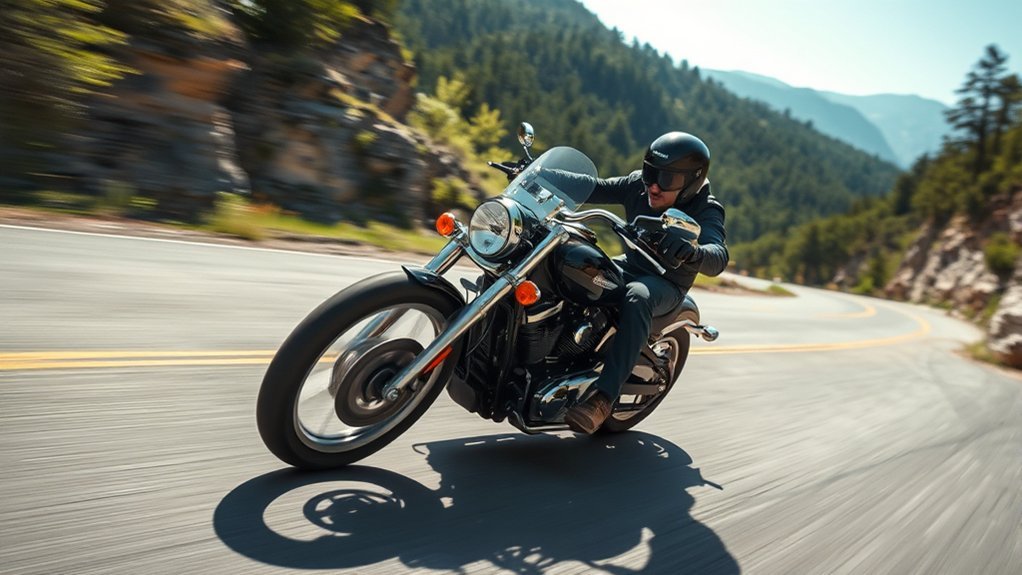
Understanding how physics influences countersteering is essential for any motorcycle rider looking to master their craft. At its core, countersteering is governed by centripetal force, which requires you to lean into a turn to counteract the outward pull during cornering.
As you increase speed, the gyroscopic effects of the front wheel make it more resistant to turning, prompting you to push harder on the handlebars to initiate a lean.
When you push the right handlebar, the front wheel briefly turns left, causing the bike to lean right. This process combines lean and speed, effectively changing your direction.
Grasping these mechanics allows you to balance speed, lean angle, and turning radius, enhancing your control during maneuvers. By appreciating the physics at play, you reveal a new level of freedom on your ride, empowering you to navigate corners with confidence and precision.
Boosting Riding Skills With Conscious Countersteering
Mastering countersteering goes beyond simply grasping the physics behind it; it’s about applying that knowledge to enhance your riding skills.
Conscious countersteering can elevate your control and confidence on the road, allowing for smoother navigation through challenging corners and unpredictable conditions.
- Boosts rider control with immediate adjustments
- Develops muscle memory for instinctive responses
- Achieves ideal lean angles for stability
- Reduces accident risk with quicker evasive maneuvers
- Improves throttle application and cornering speed
Video Resources and Community Discussions on Countersteering
While many riders grasp the fundamentals of countersteering, video resources can bring those concepts to life, illustrating techniques that might seem abstract in theory.
Video tutorials showcase the mechanics in action, demonstrating how handlebar pressure influences bike lean, which can clarify the often counterintuitive nature of countersteering. Engaging visuals make it easier for both beginners and seasoned riders to grasp the technique.
Additionally, community feedback plays a crucial role in deepening your understanding. Forums and social media groups dedicated to motorcycle riding foster discussions that highlight common misconceptions and shared experiences.
By participating, you gain valuable insights and real-world examples of countersteering in various scenarios.
Accessing a variety of video resources, coupled with active community engagement, enhances learning retention and helps you cultivate a richer comprehension of countersteering.
Embrace these tools to liberate your riding skills and confidence on the road.
Frequently Asked Questions
How to Explain Counter Steering?
To explain countersteering, you push the handlebar away from your intended turn, initiating motorcycle dynamics that cause your bike to lean. This steering technique enhances cornering control, especially at higher speeds, promoting safety and confidence.
What Does 2 Fingers Down Mean for Bikers?
The two finger salute signifies camaraderie among bikers. It’s a simple gesture of biker communication, showing respect and solidarity, fostering a sense of community and connection on the open road, enhancing your riding experience.
Which of the Following Is Countersteering?
Countersteering’s not just a myth spun by conspiracy theorists; it’s your ticket to mastering motorcycle control. When you push the handlebars, you initiate a lean, transforming your ride into a dance of freedom and precision.
Why Is Counter Steering so Important?
Countersteering’s essential for your safety benefits and effective riding techniques. It helps you lean into turns, maintain control, and execute emergency maneuvers, empowering you to navigate the road confidently and liberate your riding experience.
Conclusion
In the dance of two-wheeled navigation, mastering countersteering transforms your ride from a simple jaunt into a symphony of control and grace. By understanding its mechanics and embracing the nuances of leaning, you’ll glide through corners with confidence. So, as you begin your next adventure, remember that a little finesse in your steering can turn potential pitfalls into thrilling triumphs. Embrace the art of countersteering, and watch your riding skills blossom like a well-tended garden.






Leave a Reply