
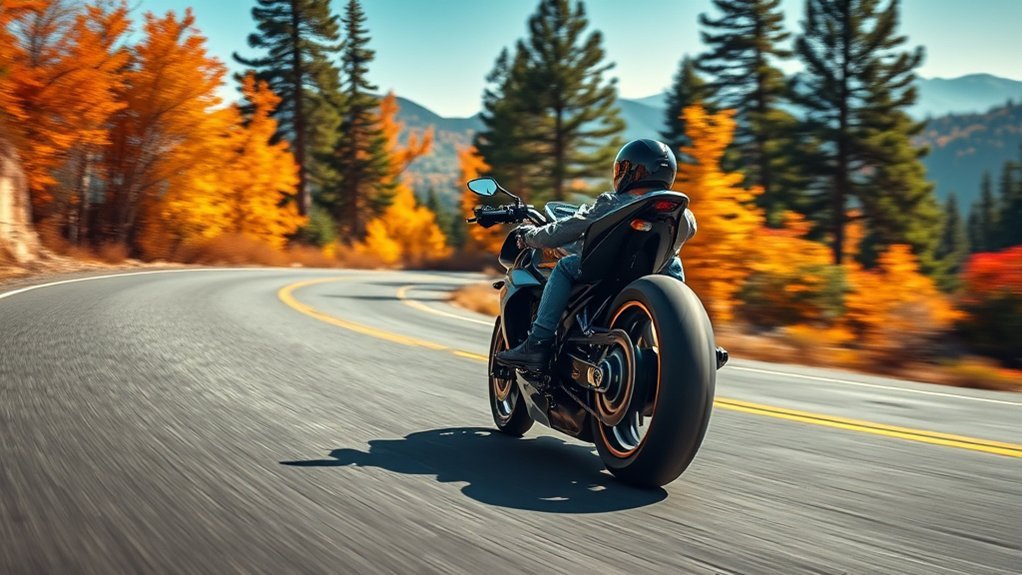
Countersteering is the main way a rider initiates and adjusts lean on a moving two-wheel motorcycle at normal riding speeds. The easiest instruction to remember is press right, lean right, go right; press left, lean left, go left. The front wheel briefly deflects the other way, but the motorcycle leans and travels toward the grip you press.
Quick Answer
To countersteer right, gently press the right handgrip forward. The front wheel briefly points left, which starts a right lean, and the motorcycle then turns right. Press left to lean and turn left. Use smooth pressure, look through the turn, and practice only in a controlled area.
Key Takeaways
- Press the grip on the side you want to turn: press right to go right and press left to go left.
- The initial front-wheel movement is briefly opposite the turn, but the resulting motorcycle lean is toward the turn.
- Countersteering pressure initiates and adjusts lean; you do not always hold one fixed amount of pressure through the entire curve.
- Walking-pace turns also require clutch control, direct steering, and counterweighting.
- During an emergency swerve, separate swerving from hard braking: brake before or after the swerve, not while performing it.
At a Glance
| Time Required | About 20–30 minutes for an introductory controlled-range drill; continued practice is needed |
| Difficulty | Easy to understand; moderate skill required for smooth, consistent execution |
| Tools Needed | A mechanically sound motorcycle, full protective riding gear, a closed practice area, and optional traffic cones |
| Cost | No extra cost for private-range practice; professional rider-course fees vary by location |
Warning: Do not attempt high-speed cornering or emergency swerves on a public road to “test” countersteering. Practice on a clean, closed range while wearing a DOT-compliant helmet and full protective gear. New riders should learn under the supervision of a qualified RiderCoach.
What Is Motorcycle Countersteering?
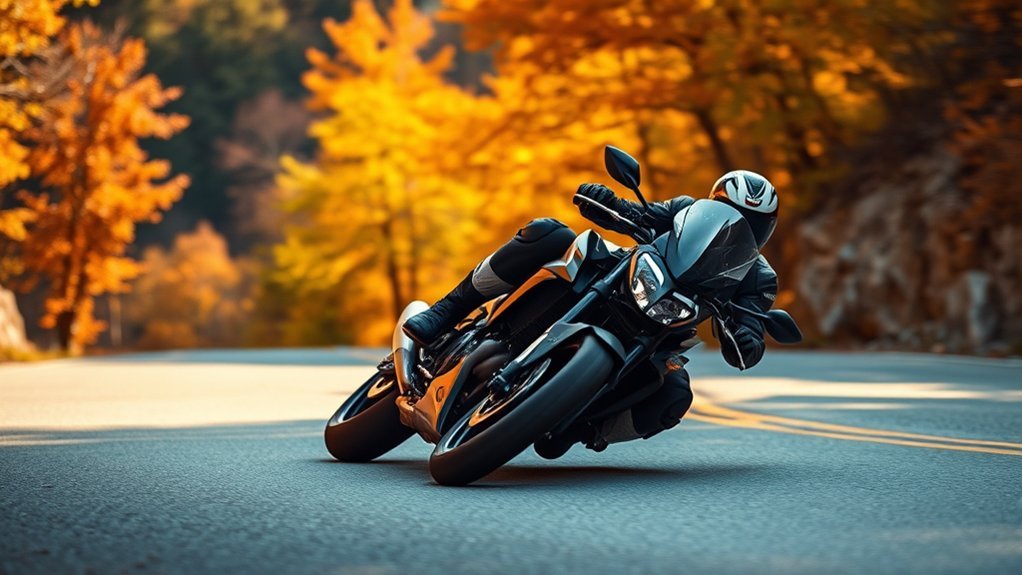
Countersteering is a steering input used to initiate or change the lean of a moving two-wheel motorcycle. To begin a right turn, press forward on the right handgrip. To begin a left turn, press forward on the left handgrip.
The rider-facing instruction is simple:
- Press right, lean right, go right.
- Press left, lean left, go left.
This is the same instruction used in official motorcycle operator manuals. The Washington State Motorcycle Operator Manual, for example, explains that pressing the left grip causes a left lean and turn, while pressing the right grip causes a right lean and turn.
Note: “Press right” and “the front wheel briefly points left” are not contradictory. Pressing the right grip applies steering torque that briefly deflects the wheel left. That tiny movement starts a right lean, and the motorcycle then settles into a right turn.
Many experienced riders countersteer without thinking about it. Conscious practice is still valuable because deliberate grip pressure allows quicker and more precise line changes when a curve tightens, a vehicle moves into your lane, or an obstacle appears.
How Countersteering Works
The Initial Press Starts the Lean
Imagine that you are riding straight and want to turn right. When you press the right grip forward, the front wheel briefly steers left. The tire contact path moves slightly left while the motorcycle’s combined mass continues forward. This creates a roll toward the right.
As the motorcycle leans right, its steering geometry and tire forces help the front wheel steer into the right-hand curve. The entire process happens quickly, so a rider usually notices the grip pressure and lean more than the brief opposite wheel movement.
You do not need to pull hard on the opposite grip. A smooth press on the inside grip is normally enough. Pulling the other grip may happen naturally, but thinking “press right” or “press left” is easier and reduces tension in the arms.
Countersteering Adjusts Lean
Grip pressure is not only for entering a turn. It also changes lean while the motorcycle is moving:
- Press the inside grip more to increase lean and tighten the path, provided traction and clearance allow it.
- Reduce the input as the motorcycle reaches the desired lean.
- Press the opposite grip to reduce lean, widen the path, or stand the motorcycle up at the exit.
The exact pressure felt at the bars varies with the motorcycle’s steering geometry, weight, tire profile, suspension, speed, and turn radius. Some motorcycles require a light continuing input in a steady curve; others feel nearly neutral once settled.
Lean Angle, Speed, and Turn Radius
A motorcycle must lean to balance the forces acting on it in a curve. In general, a higher speed or a tighter turn requires more lean. The Oregon Motorcycle and Moped Manual uses the same principle when explaining normal turns.
Lean angle is not determined by speed alone. Turn radius, road camber, tire condition, surface grip, wind, cargo, passenger weight, and rider position also affect how the motorcycle responds.
Press the grip on the side you want to go: press right to lean right, and press left to lean left.
Countersteering at Normal and Low Speeds
There is no universal speed at which countersteering suddenly switches on. The transition depends on the motorcycle and the maneuver. What changes is how noticeable and deliberate the input becomes.
Normal Riding Speeds
At normal road and training-range speeds, pressing the inside grip is the practical way to initiate and adjust lean. A rider can make a gentle lane-position change with a light press or create a quicker lean with a firmer, controlled press.
The goal is not to force the handlebars through a large visible movement. Countersteering inputs are usually small. What matters is the motorcycle’s response.
Walking-Pace and Tight Turns
During a walking-pace U-turn or tight parking-lot maneuver, the handlebars visibly point in the direction of the turn. The rider also relies on clutch friction-zone control, a small amount of steady throttle, rear-brake control when appropriate, and counterweighting.
Counterweighting means allowing the motorcycle to lean into the slow turn while the rider keeps more body weight toward the outside. Official training guidance distinguishes this from normal turns, where the rider and motorcycle usually lean together.
Do not try to apply a rigid speed rule such as “direct steer below 20 mph and countersteer above 20 mph.” Focus on the maneuver: use low-speed controls and counterweighting for tight walking-pace turns, and use deliberate grip pressure to initiate lean during normal-speed riding.
How to Practice Countersteering Safely
1. Prepare the Motorcycle and Practice Area
Use a level, paved area that is closed to traffic and free of gravel, oil, potholes, parked vehicles, pedestrians, and fixed obstacles. Wear a DOT-compliant helmet, eye protection, gloves, over-the-ankle boots, long pants, and an abrasion-resistant jacket.
Check tire condition and pressure, brakes, controls, lights, fluid leaks, and steering movement before riding. Do not practice on a motorcycle with damaged tires, loose steering, brake problems, or an active warning light.
2. Begin With Straight-Line Presses
Ride in a straight line at a comfortable, stable training-range pace. Keep your head and eyes up, knees against the tank, feet on the footrests, and elbows relaxed.
Gently press the right grip. Notice the motorcycle begin to lean and move right. Press the left grip to return upright. Repeat in the other direction. Keep each movement small and smooth.
3. Practice Wide, Predictable Turns
Set two or more widely spaced cones to create a broad curve. Reduce speed before the turn, look through it, press the inside grip, and maintain smooth drive through the curve.
A commonly taught sequence is:
- Slow: Set a safe entry speed before the curve.
- Look: Turn your head and look through the path you intend to follow.
- Press: Press the grip on the side of the turn to initiate lean.
- Roll: Use smooth throttle to maintain a stable speed or gently accelerate when conditions allow.
The Georgia Motorcycle Operators Manual applies this slow-look-press-roll procedure to curves while emphasizing safe entry speed and changing road conditions.
4. Adjust and Exit the Turn
Once the motorcycle reaches the desired lean, use only the pressure needed to hold or refine the path. As the exit opens, look ahead and press the outside grip to reduce lean and return the motorcycle upright.
For a right turn, this means pressing the left grip to help stand the motorcycle up. For a left turn, press the right grip.
5. Build Skill Gradually
Do not chase a target speed. First make your inputs smooth, predictable, and repeatable. Increase pace only within the limits of the practice area, your training, and your motorcycle.
Pro Tip: Keep a light bend in your elbows and support your upper body with your core and legs. Stiff arms and a tight grip make small steering inputs harder to control and may cause unintended bar pressure over bumps.
Common Countersteering Myths and Mistakes
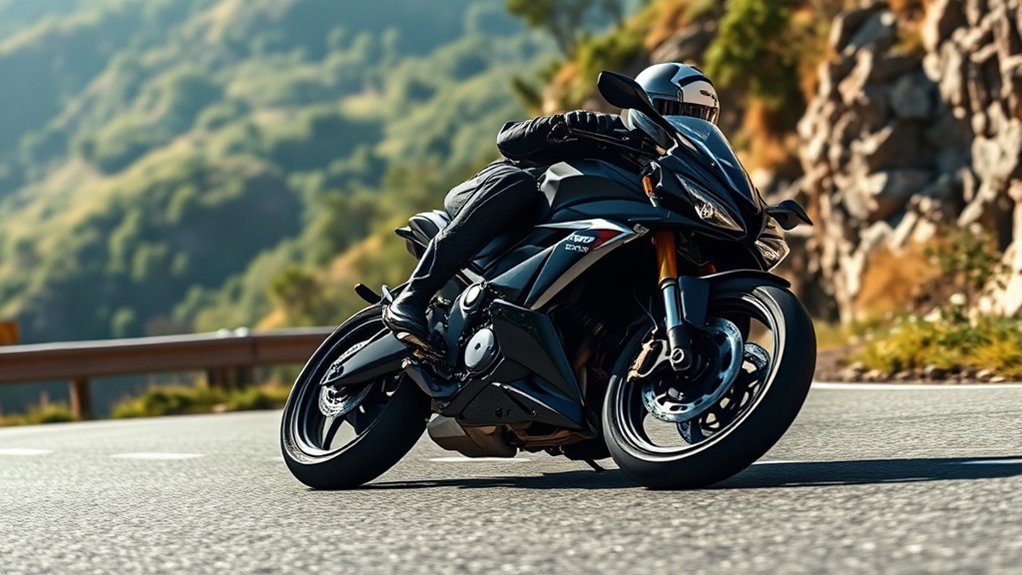
Myth: Push the Grip Opposite the Turn
This wording confuses many riders. To turn right, press the right grip. To turn left, press the left grip. The front wheel’s brief initial deflection is opposite the turn, but the rider should remember the direction of the grip pressure and lean.
Mistake: Trying to Turn With Body Weight Alone
Moving your upper body can affect motorcycle balance, especially on a light machine, but body movement is not a substitute for steering input. On a normal road motorcycle, deliberate grip pressure produces a faster and more predictable change in lean.
Myth: Hold the Same Pressure Through the Entire Turn
The initial press creates lean, and additional pressure changes it. Once the motorcycle reaches the correct angle, the needed bar input may decrease or change. At the exit, a press on the opposite grip helps reduce lean.
Mistake: Entering the Curve Too Fast
Countersteering cannot cancel excessive speed or create extra traction. Set a safe entry speed before the curve. If you enter too fast, you may run out of lean clearance, sight distance, road width, or tire grip.
Mistake: Looking at the Hazard
The motorcycle tends to follow where the rider directs attention and steering. Look through the intended path rather than staring at a curb, guardrail, pothole, or center line. Keep your eyes moving and scan for changes in the curve.
Mistake: Abrupt Controls
Sudden steering, braking, or throttle changes can upset traction. Apply bar pressure progressively, especially on wet pavement, painted lines, metal surfaces, sand, gravel, or leaves.
Real-World Countersteering Examples
Lane-Position Changes
For a controlled move to the right, check mirrors and the blind spot, signal when required, and press the right grip. As the motorcycle reaches the desired position, press the left grip to stand it up and stabilize the new path.
This is a shallow version of a swerve. Keep the movement smooth and confirm that the destination space is open before changing position.
Navigating a Curve
Before entering, reduce speed and select a lane position that gives you useful sight distance without placing you near oncoming traffic, roadside debris, or the edge of the pavement.
Look through the curve, press the inside grip, and maintain smooth throttle. If the curve tightens, look farther through the safe path and add a measured inside-grip press to increase lean. Do not grab the brakes or abruptly close the throttle while leaned.
When the curve opens, press the outside grip to reduce lean and allow the motorcycle to return upright.
Emergency Swerving
A swerve is a rapid change of path made with two countersteering inputs. To swerve right, press the right grip firmly enough to create the needed lean. After clearing the obstacle, press the left grip to recover and return to a stable path.
Keep your knees against the tank, your feet on the footrests, and your upper body relatively upright while the motorcycle moves beneath you. Look toward the escape path rather than at the obstacle.
Warning: Separate hard braking from swerving. Brake before the swerve if space permits, release the brakes while swerving, and brake again after the motorcycle is upright and traveling on the new path. The Oregon Motorcycle and Moped Manual specifically advises riders not to brake while swerving.
The Physics of Countersteering
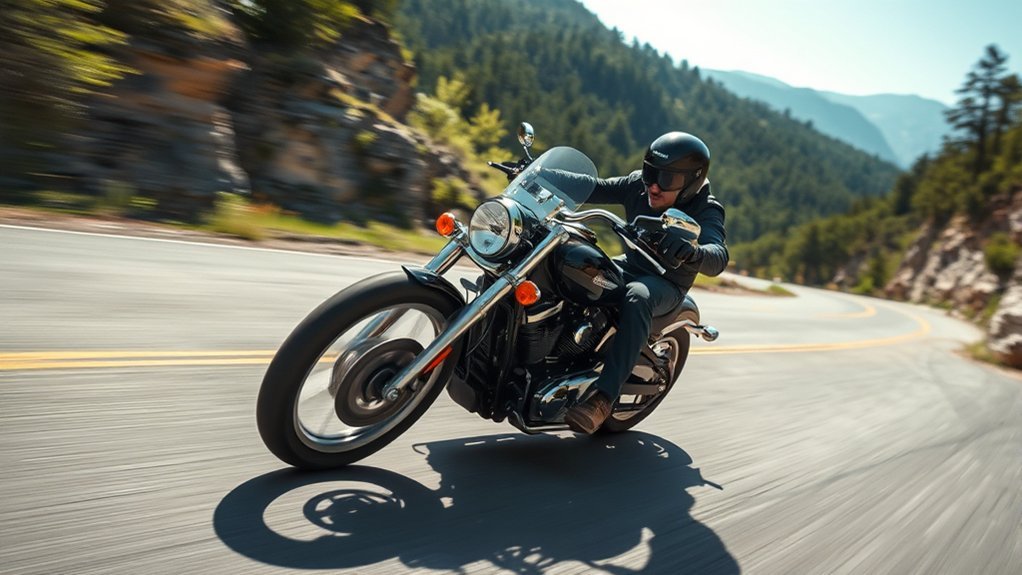
A motorcycle needs an inward net force to follow a curved path. The tires generate that force at the road surface. Leaning places the combined weight of the rider and motorcycle in a position that balances the forces acting during the turn.
Countersteering creates the lean by briefly moving the tire contact path away from the intended turn. For a right turn, the front wheel initially deflects left, moving the support point left while the motorcycle’s mass continues forward. The motorcycle rolls right.
As the motorcycle leans, steering geometry, tire forces, gravity, speed, and mass distribution interact. The wheel then steers into the curve as the motorcycle approaches a stable turning condition.
Gyroscopic effects contribute to motorcycle behavior, but they are not the complete explanation. A technical analysis published by the University of California, Berkeley, “Steering in Bicycles and Motorcycles”, found that steering geometry and tire-contact dynamics play major roles and that gyroscopic action is not the primary cause of the lean.
For everyday riding, the practical lesson is more useful than the equations: use smooth pressure on the grip on the side you want to turn, observe the lean response, and make small corrections rather than forcing the bars.
Building Countersteering Skill
Countersteering improves through repetition, but practice quality matters more than the number of miles ridden. Use a progression that develops one skill at a time:
- Practice relaxed posture and straight-line grip presses.
- Add broad, constant-radius turns.
- Practice standing the motorcycle up smoothly at the exit.
- Add controlled lane-position changes.
- Practice braking and swerving as separate exercises.
- Repeat the drills on your own motorcycle after receiving instruction.
The Motorcycle Safety Foundation Basic RiderCourse includes coached exercises for initiating and adjusting lean, tight turns, curve judgment, lane changes, stopping in a curve, and obstacle swerving. A course provides a closed range, structured progression, and immediate feedback that self-practice cannot fully replace.
Road awareness is equally important. The MSF SEE strategy teaches riders to Search for hazards, Evaluate how those hazards may develop, and Execute an appropriate response. Good countersteering technique is most useful when the rider identifies a problem early enough to choose a safe path.
Video Resources and Community Discussions
Video can make the relationship between grip pressure, wheel movement, and lean easier to see. Choose demonstrations produced by a government motorcycle program, the Motorcycle Safety Foundation, a recognized training school, or a qualified instructor.
A useful video should:
- Use the correct “press right, go right” instruction.
- Distinguish grip pressure from the front wheel’s initial deflection.
- Show the drill on a closed range.
- Require protective gear.
- Separate braking from swerving.
- Avoid encouraging public-road experiments or arbitrary minimum speeds.
Online communities can help riders compare experiences with different motorcycles, but comments are not a substitute for hands-on coaching. Be cautious when a post presents one motorcycle’s steering feel as a universal rule or recommends practicing an emergency maneuver in traffic.
Frequently Asked Questions
How do you explain motorcycle countersteering simply?
Press the handgrip on the side you want to turn. Press right to lean and turn right; press left to lean and turn left. The wheel briefly deflects the opposite way, which starts the lean.
What does two fingers down mean to other bikers?
A rider extending two fingers downward is usually offering a friendly wave that represents respect or “keep two wheels down.” The gesture is informal and unrelated to countersteering, and riders should never take a hand off the grip when traffic, curves, wind, or road conditions require full control.
Which action is an example of countersteering?
Pressing the right handgrip to initiate a right lean and right turn is countersteering. Pressing the left handgrip initiates a left lean and left turn.
Why is countersteering important?
It gives the rider a quick, precise way to initiate and adjust motorcycle lean. That control is needed for ordinary curves, lane-position changes, line corrections, and properly trained emergency swerves.
Does countersteering work at low speed?
Small steering inputs are part of balancing a moving two-wheel motorcycle, but walking-pace turns are handled differently in practice. Riders visibly steer into the turn while using clutch control, steady drive, rear-brake control when appropriate, and counterweighting.
Do you hold countersteering pressure for the whole turn?
Not necessarily. The initial press creates lean, and additional pressure changes the lean angle. Once the motorcycle settles into the desired path, the required input varies. A press on the opposite grip helps reduce lean and exit the turn.
Should you brake while performing an emergency swerve?
No. Standard rider-training guidance is to separate hard braking and swerving. Brake before the swerve or after the motorcycle has recovered and is upright, rather than braking while it is rapidly leaning from side to side.
Does countersteering apply to three-wheel motorcycles?
It applies to motorcycles that lean, including some tilting three-wheel designs. Most rigid, non-tilting three-wheel motorcycles steer directly like other multi-track vehicles. Follow the training and owner’s manual for the specific vehicle.
Conclusion
Countersteering becomes much easier to understand once the directions are stated correctly: press right to lean and go right; press left to lean and go left. Use smooth grip pressure to initiate or adjust lean, look through the intended path, and set a safe speed before entering a curve.
Practice the technique gradually on a closed range rather than experimenting in traffic. Most importantly, learn emergency braking and swerving as separate skills. Formal rider training can turn the basic concept into a reliable habit while helping you manage vision, traction, posture, and motorcycle control as one complete system.
Sources
- Washington State Motorcycle Operator Manual — countersteering direction and rider-control guidance.
- Oregon Motorcycle and Moped Manual: Vehicle Control Skills — turning, lean direction, posture, braking, and slow-turn counterweighting.
- Oregon Motorcycle and Moped Manual: Roadway Management — emergency swerving and separation of braking from swerving.
- Georgia Motorcycle Operators Manual — slow-look-press-roll cornering procedure and curve selection.
- Motorcycle Safety Foundation Basic RiderCourse — formal exercises covering lean adjustment, cornering, lane changes, braking, and swerving.
- University of California, Berkeley: Steering in Bicycles and Motorcycles — technical analysis of steering torque, lean, trail, and gyroscopic effects.







Leave a Reply