
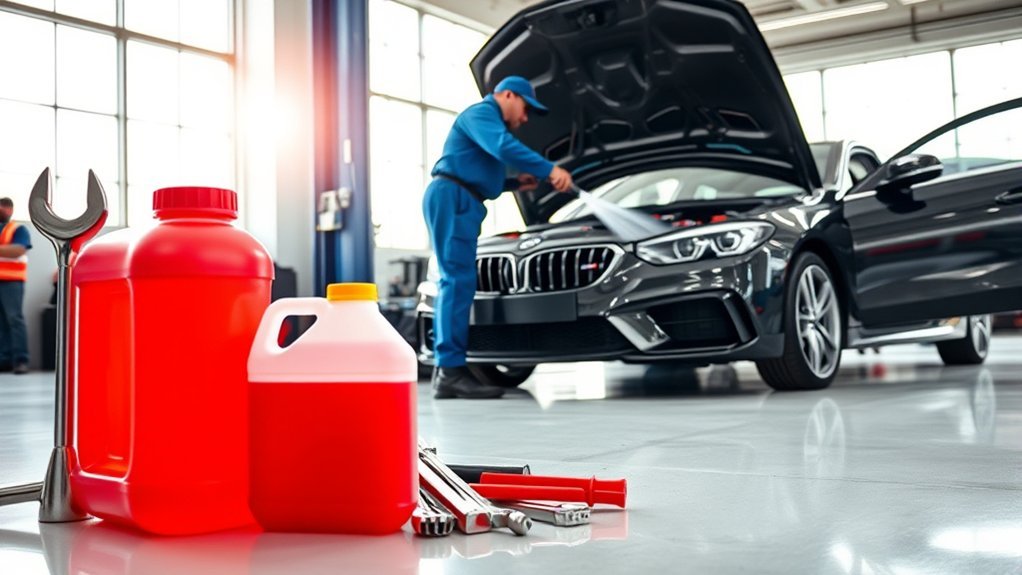
To perform a coolant flush, start with a cool engine and drain the old coolant using the radiator’s petcock. Add a radiator flush product mixed with water, then run the engine for 10-20 minutes. Next, refill the system with a 50/50 mix of antifreeze and water. Regular maintenance is vital, so check your coolant levels every few thousand miles. Follow the detailed steps to guarantee peak engine performance, along with essential safety precautions and tools for a successful flush.
How to Perform a Coolant Flush
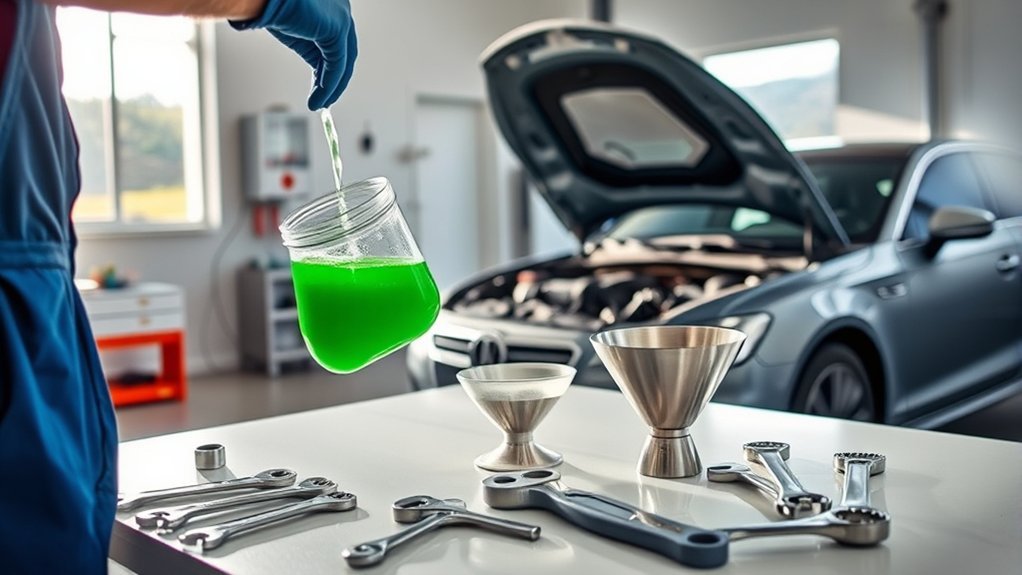
To perform a coolant flush effectively, start by ensuring the engine is cool and then drain the old coolant from the radiator using the petcock, making sure to have a container ready to catch the used fluid.
Next, use a radiator flush product, like Irontite Thoro-Flush. Mix it with water and pour it into the radiator to eliminate buildup and contaminants.
After running the engine with the flush solution for 10-20 minutes, drain the radiator again and refill it with water to clear out any remaining debris.
Finally, check and refill the coolant level in both the radiator and reservoir using the appropriate coolant types, ensuring a 50/50 mixture of antifreeze and water for ideal performance.
Regular coolant flushes are essential, recommended every 30,000 to 50,000 miles, to prevent engine overheating and prolong the lifespan of crucial engine components.
Safety Tips for Your Coolant Flush
Before starting your coolant flush, make certain you’re equipped with proper personal protective equipment like gloves and safety goggles to safeguard against spills.
Handle coolant with care, allowing the engine to cool and removing the radiator cap only when safe to do so.
Familiarize yourself with emergency spill procedures to quickly address any accidental leaks or spills.
Proper Personal Protective Equipment
When performing a coolant flush, wearing proper personal protective equipment (PPE) is essential for your safety.
Start with glove selection; use chemical-resistant gloves to protect your hands from harmful coolant substances. Eye protection is equally important; don safety goggles to shield your eyes from potential splashes while draining coolant or pouring flush solutions.
Dress in a long-sleeved shirt and closed-toe shoes to minimize skin exposure and reduce the risk of injury. Always keep a first aid kit nearby to address any accidental spills or contact with coolant, which can be toxic.
Finally, avoid working on the cooling system when the engine is hot; allow at least 30 minutes for it to cool down to prevent burns.
Coolant Handling Precautions
While performing a coolant flush, it’s crucial to prioritize safety by adhering to specific handling precautions. Here are some key tips to keep in mind:
- Allow cooling time: Always let the engine and radiator cool for at least 30 minutes to avoid burns from hot coolant and steam.
- Wear protective gear: Use gloves and eyewear, as coolant can be toxic and harmful if it contacts your skin or eyes. Maintain coolant toxicity awareness at all times.
- Dispose responsibly: Follow local regulations for coolant disposal methods, as used coolant is hazardous waste that can harm the environment if mishandled.
Emergency Spill Procedures
Accidents can happen, and being prepared for a coolant spill is essential to secure safety and minimize environmental impact.
First, immediately cover the spill area with absorbent materials like kitty litter or sand for effective spill containment. Always wear gloves and safety goggles when handling coolant; it’s toxic and can cause skin irritation or eye damage.
If coolant contacts your skin, wash the area thoroughly with soap and water, seeking medical help if irritation persists. For larger spills, contact your local hazardous waste disposal facility for guidance on emergency response and proper disposal procedures.
Keep a spill kit in your workspace, including absorbent pads, a shovel, and a container for used coolant to make sure you’re ready to act swiftly.
Essential Tools for a Coolant Flush
To successfully perform a coolant flush, you’ll need a few essential tools.
Gather a funnel, a container for old coolant, and rags for any spills.
Additionally, a radiator flush product, socket or wrench, gloves, and a coolant tester will help guarantee an effective and safe process.
Essential Supplies Checklist
Before you plunge into performing a coolant flush, it’s important to gather the right supplies to guarantee the process goes smoothly.
Using the correct coolant types and flushing techniques is essential for optimal results. Here’s a checklist of important supplies:
- New Coolant: Verify it’s compatible with your vehicle.
- Radiator Flush Product: Consider something like Irontite Thoro-Flush for thorough cleaning.
- Safety Gear: Gloves and goggles are crucial to protect against coolant toxicity.
Additionally, keep a container for used coolant disposal and rags for cleanup.
A funnel will help pour fluids without spills, and a torque wrench might be necessary for securely tightening any drain plugs or caps afterward.
Being prepared will make your coolant flush efficient and safe.
Recommended Maintenance Tools
While performing a coolant flush, having the right maintenance tools on hand is essential for ensuring an effective and efficient process.
Start with a quality radiator flush product, like Irontite Thoro-Flush, to eliminate contaminants. You’ll also need a container for safely collecting and disposing of used coolant, as it’s toxic and shouldn’t be spilled. A funnel aids in pouring new coolant into the radiator without mess, while rags or shop towels keep your workspace tidy.
Using distilled water for flushing is vital, as it prevents mineral buildup that can compromise your cooling system’s longevity.
Regular maintenance, including considering coolant types and flush frequency, will enhance your vehicle’s performance and extend its lifespan.
Draining Old Coolant: A Step-by-Step Guide
Draining old coolant is a crucial maintenance task that helps keep your engine running smoothly. To guarantee a successful drain, follow these essential steps:
- Prepare Your Vehicle: Park on a level surface and let the engine cool for at least 30 minutes.
- Open Caps: Remove the radiator fill cap and any reservoir caps to allow air in, facilitating the drainage process.
- Drain the Coolant: Locate the radiator drain (petcock) underneath your car and place a container beneath it. Slowly open the drain valve to let the coolant types flow out completely. Close it once no more coolant is draining.
After draining, be sure to dispose of the used coolant properly, as it’s toxic to both humans and animals.
Never pour it down the drain or throw it in the trash. Following these draining techniques keeps your cooling system healthy and efficient.
How to Effectively Flush Your Radiator System
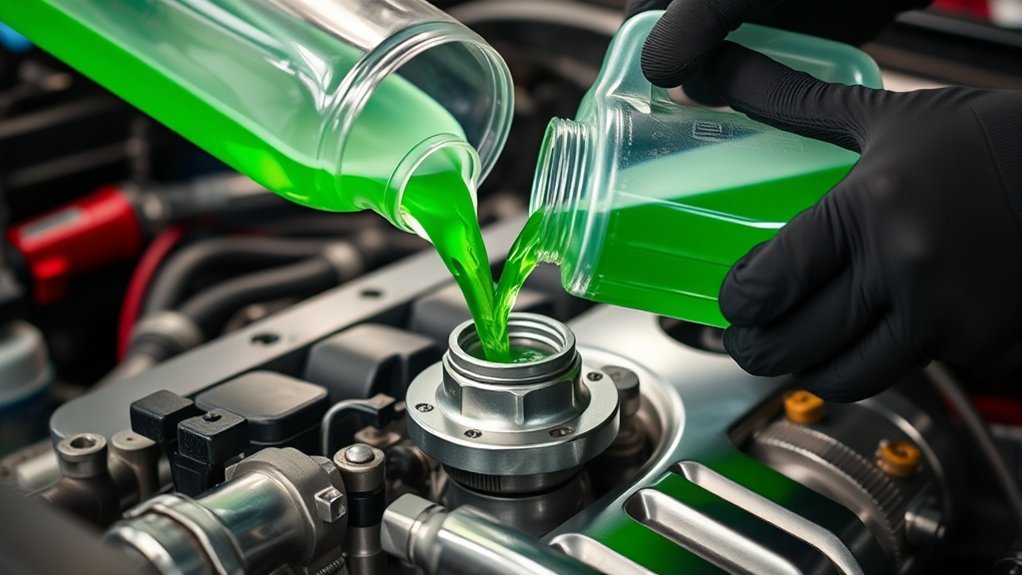
Once you’ve successfully drained the old coolant, it’s time to flush your radiator system to remove any lingering contaminants and buildup.
Begin by adding a radiator flush product, like Irontite Thoro-Flush, mixed with water. This solution helps dissolve debris within the cooling system. Start your engine and let it run for 10-20 minutes, ensuring the flush circulates effectively. Keep an eye on the temperature gauge to prevent overheating during this process.
After the flushing period, drain the system again to eliminate the flush solution along with any dislodged contaminants.
For ideal radiator maintenance, refill with a 50/50 mixture of new coolant and distilled water, which helps in maintaining engine temperature regulation.
Regularly flushing your radiator system every 30,000 to 50,000 miles is essential to prevent engine overheating and extend the lifespan of your engine components.
Refilling Your Radiator With New Coolant
Refilling your radiator with new coolant is an essential step in maintaining your vehicle’s cooling system. To guarantee peak performance, always use a 50/50 mixture of antifreeze and distilled water.
Refilling your radiator with a 50/50 antifreeze and distilled water mix is crucial for optimal cooling system performance.
Here are some effective refill techniques:
- Use a Funnel: This helps you pour the coolant without spills, keeping the process clean and efficient.
- Run the Engine: After refilling, let the engine run for about 10-15 minutes. This circulates the new coolant and helps identify any air bubbles that may need bleeding.
- Check Levels: Regularly inspect the coolant level in both the radiator and reservoir post-refill, as it may settle and require topping off.
Consider adding a product like Irontite All Weather Seal during the refill. This can help prevent leaks and extend the life of your cooling system components.
Coolant Flush Maintenance Tips
To keep your vehicle’s cooling system functioning efficiently, performing a coolant flush every 30,000 to 50,000 miles is crucial.
Regularly check your coolant levels every 3,000 to 5,000 miles for effective leak detection. Early detection can prevent costly repairs and guarantee your engine runs smoothly.
Always use the correct coolant types specified in your owner’s manual, as using the wrong one can lead to engine damage and decreased performance.
When flushing the system, make certain to create a proper 50/50 mix of antifreeze and distilled water to optimize cooling and freeze protection.
Additionally, consider adding a product like Irontite All Weather Seal during refills. This helps prevent future leaks and extends the life of your cooling system.
Frequently Asked Questions
How Often Should I Perform a Coolant Flush?
You should perform a coolant flush every 30,000 to 50,000 miles, depending on your vehicle’s coolant lifespan. Regular flush intervals help maintain ideal engine performance and prevent overheating, ensuring your car runs smoothly.
Can I Use Any Coolant Type for My Vehicle?
You can’t just grab any coolant; it needs to match your vehicle’s specifications for proper coolant compatibility. Always check your manual to verify you’re using the right type and keep your engine running smoothly.
What Are the Signs That My Coolant Needs Flushing?
You’ll notice coolant discoloration, often a sign of contamination, and your engine may overheat. If you experience these symptoms, it’s essential to flush the coolant to maintain ideal engine performance and prevent damage.
Is a Coolant Flush Necessary for Newer Vehicles?
Just like a river needs clean water to flow, your newer vehicle benefits from regular coolant maintenance. While they’re more resilient, flushing coolant can still enhance performance and extend your vehicle’s lifespan. Don’t overlook it.
Can I Mix Different Coolant Types?
You shouldn’t mix different coolant types due to compatibility issues. Mixing coolants can lead to chemical reactions, reducing effectiveness and potentially damaging your engine. Always check compatibility before adding any coolant to your system.
Conclusion
To summarize, performing a coolant flush is essential for maintaining your vehicle’s cooling system and preventing overheating. By following the steps outlined, you can guarantee your engine runs smoothly and efficiently. Don’t you want to extend the life of your car? Regular maintenance, including coolant flushes, can save you from costly repairs down the road. Keep an eye on your coolant levels and schedule flushes as needed to keep your vehicle in top shape.







Leave a Reply