
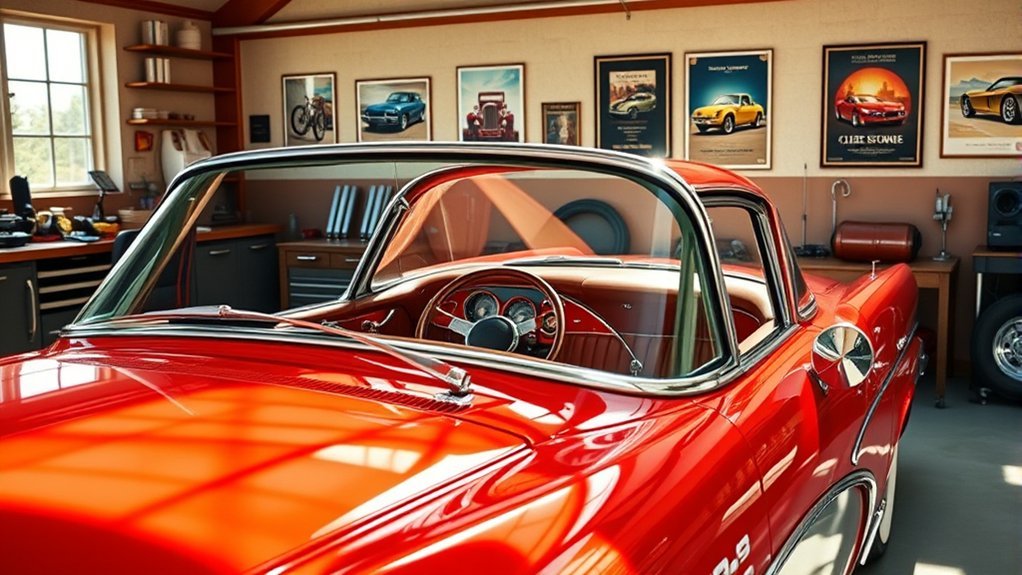
Classic car insurance with agreed value coverage guarantees you receive a pre-determined payout based on your vehicle’s appraised value in case of total loss. This protects your investment against market fluctuations and eliminates valuation disputes during claims. Be aware that agreed value isn’t the same as purchase price, and it requires proper appraisals. Factors like vehicle rarity and condition can affect premium costs. Continue to explore how to determine your classic car’s value and choose the right insurance provider for your needs.
Understanding Agreed Value Coverage for Classic Cars
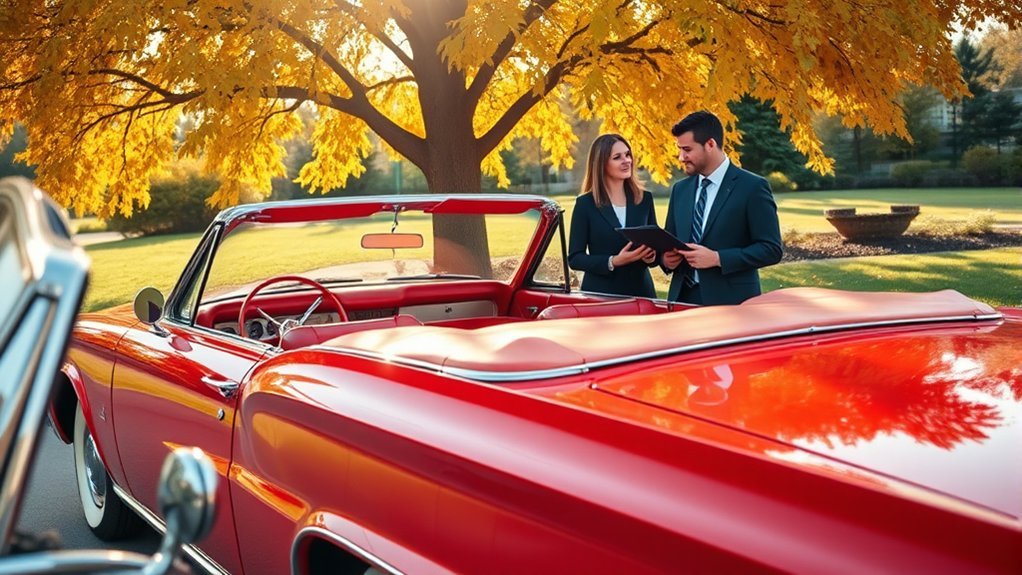
When it comes to insuring your classic car, have you considered the benefits of Agreed Value Coverage? This coverage guarantees a pre-determined amount is paid in the event of a total loss, securing you receive the full value of your investment without depreciation considerations.
The agreed value implications are significant, as they protect you from market fluctuations that could impact your vehicle’s worth. To establish this value, you’ll typically need to provide appraisals and documentation reflecting your car’s condition and current market trends.
Unlike standard insurance models that rely on Actual Cash Value (ACV), Agreed Value Coverage eliminates disputes over valuation during claims, giving you peace of mind.
Many specialty insurers recognize the unique appreciation potential and usage patterns of classic cars, offering tailored Agreed Value Coverage to meet your needs. This approach safeguards your investment and guarantees you’re compensated fairly in the event of a loss.
Key Benefits of Choosing Agreed Value Insurance
Choosing Agreed Value Insurance for your classic car offers several key benefits that greatly enhance your coverage. By securing a pre-determined payout amount, you protect your investment against depreciation and market fluctuations. This means you won’t be shortchanged in the event of a total loss.
Here’s a quick benefit analysis:
| Benefit | Description |
|---|---|
| Full Compensation | Receive the appraised value, not depreciated market value. |
| Avoid Disputes | Pre-established value eliminates conflicts during claims. |
| Tailored Coverage | Specialty insurers provide expert support for classic vehicles. |
| Regular Updates | Adapt coverage to current market values for continued protection. |
These advantages make it easier for you to make informed policy comparisons and guarantee your classic car remains a valuable asset.
Common Misconceptions About Agreed Value Coverage for Classic Cars
You might think that agreed value coverage guarantees a payout equal to your classic car’s purchase price, but that’s not the case; it actually reflects a pre-determined value set after an appraisal.
Many also confuse agreed value with stated value coverage, which can lead to surprises during claims.
Understanding these misconceptions is essential to ensuring your investment is properly protected.
Misunderstanding Coverage Limits
How well do you understand the nuances of agreed value coverage for classic cars? Many owners face coverage misconceptions and misunderstand policy limits.
Here are four key points to clarify:
- Payout Amount: You won’t receive the full purchase price; instead, you’ll get the agreed-upon value based on appraisals.
- Depreciation: Unlike actual cash value policies, agreed value coverage doesn’t decrease payouts due to age or condition.
- Requesting Coverage: Not all classic car insurance policies include agreed value automatically; you must specifically ask for it.
- Establishing Value: Insurers require a professional appraisal to determine the fair market value, so you can’t arbitrarily set any amount as your agreed value.
Understanding these aspects is essential for protecting your investment.
Assumed Depreciation Myths
While many classic car owners often assume their vehicles will depreciate like standard cars, this belief overlooks the unique nature of classic automobiles and the benefits of agreed value coverage. Agreed value policies protect your investment by acknowledging that classic car values can appreciate over time. Here are some common depreciation misconceptions:
| Misconception | Truth |
|---|---|
| All classic cars depreciate | Many appreciate in value |
| Agreed value coverage is too costly | Tailored policies often reduce overall costs |
| Only high-end cars qualify | Many classic vehicles under $25,000 qualify |
Determining Your Classic Car’s Agreed Value
Determining your classic car’s agreed value is essential for guaranteeing you’re adequately protected in case of a total loss. This process involves several key steps, primarily focusing on the appraisal process and valuation factors that influence the vehicle’s worth.
Establishing your classic car’s agreed value is crucial for ensuring proper protection in case of a total loss.
Here are four important considerations:
- Professional Appraisal: Engage a certified appraiser to evaluate your car’s condition, originality, and market demand.
- Valuation Factors: Assess the vehicle’s age, rarity, modifications, and current market trends to establish a fair value.
- Documentation: Maintain thorough records, including maintenance logs, restoration invoices, and high-quality photographs to support your agreed value.
- Regular Updates: Revisit the agreed value every 2-3 years or after significant modifications to guarantee it reflects the car’s current condition and market standing.
What Affects the Cost of Agreed Value Insurance for Classic Cars?
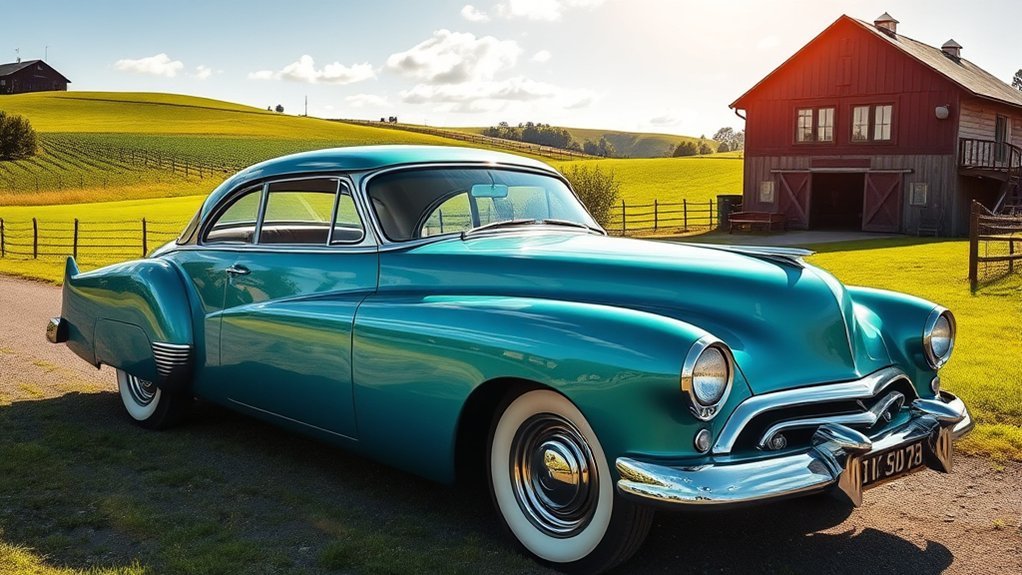
Understanding what affects the cost of agreed value insurance for classic cars is essential for ensuring you get the best coverage at a reasonable price.
Key valuation factors include your vehicle’s appraised value; higher valuations typically lead to increased premiums. However, this often results in lower costs per dollar of coverage.
The rarity and type of your classic car also play a significant role, as exotic models can incur higher insurance costs due to their collectible status.
Additionally, secure storage conditions, like climate-controlled garages, reduce risk assessment concerns, potentially lowering premiums.
Your driving profile matters too; a clean driving record can lead to reduced costs.
Finally, your geographic location impacts rates, with areas that boast lower theft rates and active classic car communities often offering more favorable insurance options.
Keep these factors in mind to optimize your coverage and costs.
How to Choose the Best Agreed Value Insurance Provider
When selecting the best agreed value insurance provider for your classic car, you should evaluate the coverage options they offer, ensuring they align with your specific needs.
Assess the experience levels of various providers, as those with a proven track record in classic car insurance will better understand your requirements.
Finally, compare premium costs effectively to find a balance between thorough coverage and affordability.
Evaluate Coverage Options Available
Choosing the right agreed value insurance provider for your classic car can greatly impact your investment’s protection and peace of mind.
To guarantee you’re selecting the best coverage options, consider the following:
- Specialty Insurers: Opt for providers specializing in classic, antique, and collectible vehicles, as they understand your car’s unique needs.
- Claims Handling: Evaluate their claims process, focusing on their history with classic vehicle repairs.
- Flexible Coverage Options: Look for features like restoration coverage, diminished value protection, and tailored liability options.
- Financial Stability: Review ratings from independent agencies to assess their reliability and customer service reputation.
Assess Provider Experience Levels
How can you guarantee that your agreed value insurance provider truly understands the intricacies of classic car coverage?
Start by examining provider qualifications—look for insurers specializing in classic cars, like Hagerty, who focus solely on this niche.
Review customer testimonials to gauge their efficiency in handling claims and their understanding of unique valuations.
Assess their claims process; confirm they’re familiar with classic car appraisals and willing to honor agreed values during total loss scenarios.
An industry reputation you can trust often comes from a proven track record of flexible policies tailored to classic car owners.
Finally, check their involvement in the classic car community, as sponsorships and memberships reflect their commitment to serving your specific needs.
Compare Premium Costs Effectively
Are you sure you’re getting the best value for your classic car insurance?
To effectively compare premiums, consider these key cost factors:
- Coverage Levels: Basic (valued $10,000-$25,000: $200-$600), Mid-range ($25,000-$75,000: $400-$1,200), High-value (over $75,000: $1,000+).
- Vehicle Rarity: Unique models often have higher premiums due to increased risk.
- Storage Conditions: Secure storage can lead to lower rates, so guarantee your vehicle’s protection.
- Driving History: A clean driving record can help reduce costs.
Frequently Asked Questions
Can I Change the Agreed Value After My Policy Is Active?
Yes, you can change the agreed value after your policy’s active. Most insurers allow policy changes for value adjustments, but you’ll need to contact them to discuss the specific requirements and procedures involved.
What Documentation Is Needed to Establish My Car’s Agreed Value?
To establish your car’s agreed value, you’ll need documentation like appraisals, purchase invoices, or valuation reports. These documentation requirements help guarantee accurate valuation methods, reflecting your classic car’s true worth in your policy.
Does Agreed Value Insurance Cover Modifications Made to My Classic Car?
Agreed value insurance can cover modification coverage if you document those changes properly. Make certain you discuss valuation adjustments with your insurer to reflect the increased worth of your classic car after modifications are made.
How Often Should I Reassess My Classic Car’s Agreed Value?
You should reassess your classic car’s agreed value every few years or after significant modifications. Regularly evaluating its worth guarantees value adjustments reflect market changes, providing you with the protection your prized vehicle deserves.
Are There Restrictions on How I Use My Classic Car With This Insurance?
Yes, there are usage limitations and mileage restrictions with this insurance. You typically can’t use your classic car for daily commuting or as a primary vehicle, so check your policy for specific terms and conditions.
Conclusion
To summarize, opting for agreed value insurance for your classic car isn’t just a smart choice; it’s often misunderstood. Many believe standard policies suffice, but they fail to account for your car’s true worth. By securing agreed value coverage, you protect your investment and guarantee fair compensation in the event of a loss. Don’t leave your classic car’s value to chance—explore your options and choose a provider that understands the unique needs of classic car enthusiasts like you.






Leave a Reply