
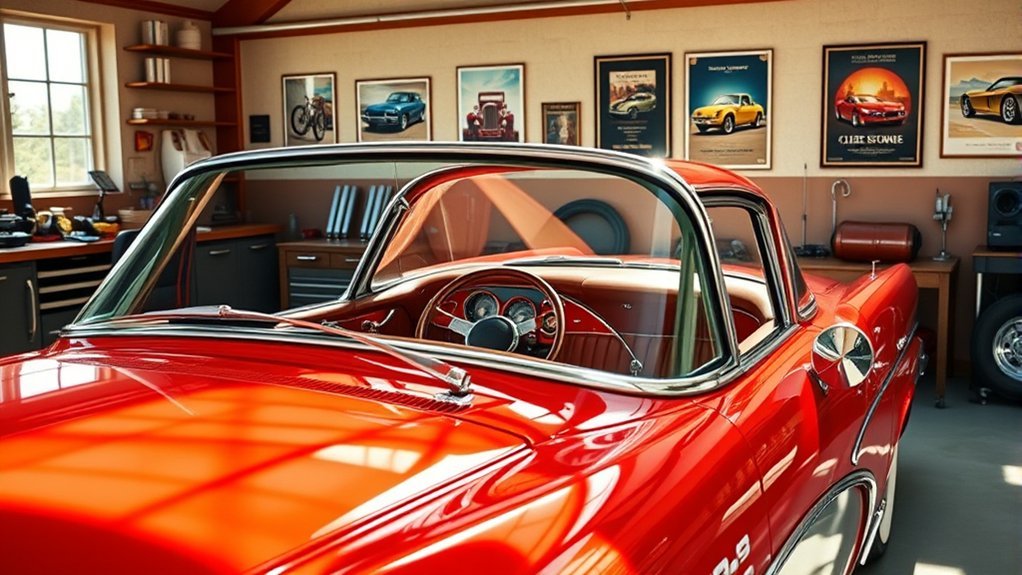
Agreed value coverage can be a strong fit for a classic or collector car because you and the insurer set the vehicle’s insured value before a loss. The key is to read the actual policy wording. A covered total-loss payment may still be reduced by a deductible, salvage value if you keep the car, or other policy terms.
Quick Answer
Agreed value coverage pays the amount you and the insurer accepted in advance after a covered total loss, subject to the policy’s deductible, exclusions, and salvage rules. It usually avoids an after-loss depreciation calculation, but it does not guarantee payment for an excluded event or an outdated, underinsured value.
Key Takeaways
- Agreed value applies to a covered total loss; the declarations page and loss-settlement clause control the payment.
- Agreed value, stated value, and actual cash value are not interchangeable terms.
- A professional appraisal can help, but many insurers accept photos, receipts, market data, and other records instead.
- Review the value at every renewal and after a restoration, major modification, or meaningful market change.
- Compare restrictions, deductibles, claims provisions, repair options, licensing, complaints, and financial health—not just the premium.
At a Glance
| Time Required | About 30–90 minutes to gather records and compare detailed quotes |
| Difficulty | Moderate; policy language and vehicle valuation require careful comparison |
| Tools Needed | VIN and build details, photos, receipts, restoration records, market sales, current policy, and quote worksheets |
| Cost | Quotes are usually free; an independent appraisal may cost extra and is not always required |
Note: Insurance contracts, definitions, eligibility rules, and total-loss procedures vary by insurer and state. This guide is general information, not legal or financial advice. Read the complete policy and ask a licensed insurance professional or your state insurance department about your situation.
Understanding Agreed Value Coverage for Classic Cars
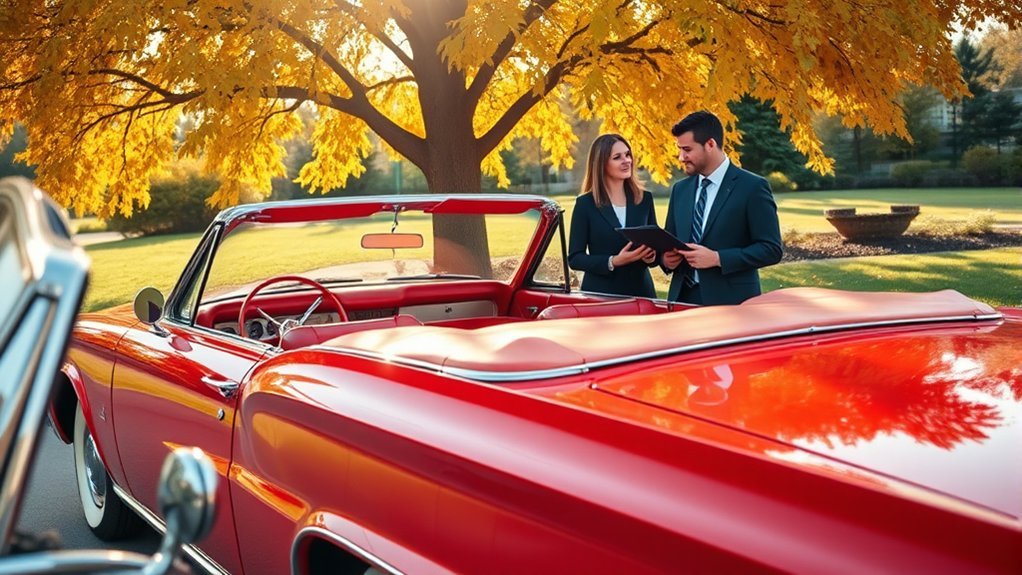
With agreed value coverage, you and the insurer approve an insured amount before the policy begins or renews. The National Association of Insurance Commissioners describes a valued policy as one whose value is agreed upon in advance. In collector-car policies, that amount is generally used to settle a covered total loss rather than calculating the car’s value only after the loss.
The exact payment depends on the contract. Many agreed value policies promise the insured amount for a covered total loss without a depreciation deduction, but an applicable deductible can still be subtracted. If you retain the salvage, the policy or state rules may also reduce the payment by the salvage value. Taxes, title fees, transportation costs, and other expenses are not automatically included in every policy.
The most important number is not what you paid for the car. It is the agreed value shown on the current declarations page, read together with the loss-settlement terms.
Agreed Value vs. Actual Cash Value and Stated Value
| Valuation Method | How a Total-Loss Value Is Set | Main Risk to Check |
|---|---|---|
| Agreed value | You and the insurer approve a value before the loss. | The amount may become too low if the market or the car changes, and policy deductions or exclusions still apply. |
| Actual cash value (ACV) | The insurer determines the vehicle’s pre-loss value under the policy and state rules. The California Department of Insurance, for example, defines ACV as fair market value unless the policy says otherwise. | Rare options, provenance, restoration quality, and collector demand may be disputed or missed if the evidence is weak. |
| Stated value or stated amount | You state a limit, but the settlement formula varies. Some forms may allow payment of the lower of the stated amount and another calculated value. | The label alone does not prove that the stated amount will be paid. Read the loss-settlement clause. |
Agreed value can reduce disputes about the vehicle’s pre-loss value, but it does not eliminate every possible claim dispute. Coverage can still turn on whether the loss is covered, whether the car is a total loss, whether an exclusion applies, the deductible, salvage handling, misrepresentation, or compliance with policy conditions.
Key Benefits of Choosing Agreed Value Insurance
Agreed value coverage can make a collector-car total-loss claim more predictable. Its strongest benefits come from setting a defensible value in advance and choosing policy features that match how the car is stored, driven, repaired, and restored.
| Benefit | What It Means in Practice |
|---|---|
| Known insured value | The declarations page shows the value approved before a covered total loss. |
| No routine depreciation calculation | A qualifying total loss is generally settled from the agreed amount rather than an after-loss depreciation formula. |
| Better recognition of collector details | Original equipment, rare trim, documented provenance, high-quality restoration work, and approved modifications can be considered when the value is set. |
| Specialty policy options | Depending on the insurer, options may include spare-parts coverage, restoration coverage, roadside assistance, inflation protection, or a choice of repair shop. |
Warning: Do not assume “agreed value” means every loss is paid at the full insured amount. Partial losses are handled under repair provisions, and a total-loss payment remains subject to covered-cause requirements, deductibles, exclusions, and other contract terms.
What Agreed Value Coverage Does Not Do
Agreed value solves one narrow problem: how the insured vehicle is valued for a covered total loss. It does not replace the rest of the auto policy.
- It does not guarantee that damage will be declared a total loss. The insurer applies the policy, repair estimate, salvage value, safety concerns, and state rules.
- It does not automatically pay every repair bill. Partial-loss coverage can involve deductibles, repair methods, parts availability, betterment, labor rates, and policy limits.
- It does not cover excluded uses or events. Racing, commercial use, regular commuting, unlisted drivers, or other activities may be limited or excluded, depending on the policy.
- It does not erase a loan. A lienholder may be named on the payment, and the owner remains responsible for any debt not satisfied by the claim.
- It does not track the market forever. If the vehicle appreciates above the listed value, the policy can become underinsured unless the value is updated or the policy includes an applicable inflation feature.
Common Misconceptions About Agreed Value Coverage for Classic Cars
Misunderstanding Coverage Limits
- Myth: The purchase price is the payout. Reality: The policy pays according to the agreed value and loss-settlement terms, not automatically what you paid or spent restoring the car.
- Myth: No deductible can apply. Reality: Some policies have a zero deductible, while others subtract the deductible shown on the declarations page.
- Myth: A professional appraisal is always required. Reality: Requirements vary. Insurers may accept photos, receipts, valuation guides, comparable sales, or other records. Hagerty’s current FAQ states that it typically does not require appraisals unless additional documentation is needed.
- Myth: You can select any value you want. Reality: The insurer must accept the amount. An unrealistic value can be rejected or require more proof.
- Myth: The agreed value can never change. Reality: You can usually request an adjustment, but the insurer must review and approve it, and the premium may change.
Assumed Depreciation Myths
Classic-car values do not move in one direction. Some vehicles appreciate, some remain stable, and others fall because of condition, market demand, authenticity concerns, or broader economic changes. Agreed value coverage does not predict the market; it records an insured amount for the policy period.
| Misconception | More Accurate View |
|---|---|
| All classic cars appreciate. | Values depend on model, specification, condition, originality, provenance, supply, and demand. |
| Agreed value is always expensive. | Premiums depend on the full risk profile, including use, storage, drivers, location, deductible, coverage, and insured value. Only comparable quotes can show the cost difference. |
| Only high-dollar museum cars qualify. | Eligibility varies by insurer and can include many collector, enthusiast, modified, or newer specialty vehicles—not just antiques or six-figure cars. |
Determining Your Classic Car’s Agreed Value
A defensible agreed value starts with correct vehicle identification and current evidence. Confirm the VIN, model year, make, model, body style, trim, engine, transmission, factory options, and significant modifications. For older cars with nonstandard VIN formats, use the manufacturer’s records, build sheet, data plate, club documentation, or a marque specialist to verify the specification.
- Document the car’s identity and condition. Take clear photos of every side, the interior, engine bay, trunk, underbody, VIN or serial plate, odometer, and known flaws.
- Collect ownership and restoration records. Keep the bill of sale, prior appraisals, receipts, maintenance logs, restoration invoices, parts records, awards, and provenance documents.
- Research real market evidence. Compare recent completed sales—not only asking prices—for the same year, model, specification, and condition. The Hagerty Valuation Tools can provide one reference point, but unusual cars may need additional evidence.
- Account for originality and modifications. Matching-number components, rare factory options, documented history, restoration quality, and insurer-approved modifications can change the value. Modification cost does not always equal added market value.
- Use an independent appraisal when it adds value. An appraisal is especially useful for rare, highly modified, recently restored, disputed, or high-value vehicles, even when the insurer does not require one.
- Agree on the amount in writing. Confirm that the approved number appears on the declarations page and that the policy form truly uses agreed value for the relevant physical-damage coverage.
Pro Tip: Keep a digital claim file with dated photos, receipts, valuation reports, VIN and build information, and the current declarations page. Update it whenever the car is restored, modified, damaged, or sold into a different market tier.
How Often to Update the Agreed Value
Review the value at every renewal—commonly once a year—and request a change when the evidence supports it. Do not wait several years if the car has received a major restoration, engine swap, custom work, rare parts, an important award, or a sharp market move. An annual review also helps prevent paying for an unsupported value that is too high.
What Affects the Cost of Agreed Value Insurance for Classic Cars?
There is no reliable nationwide premium table for agreed value classic car insurance. Rates vary by state, insurer, underwriting program, and individual risk. A quote can change when any of the following factors changes:
- Agreed value and deductible: More physical-damage coverage generally costs more, while a higher deductible may reduce the premium.
- Vehicle type and repair risk: Parts availability, repair complexity, theft risk, performance, rarity, and use of specialized labor can affect pricing.
- Driver profile: Age, driving history, claims history, experience with the vehicle, and household drivers may matter.
- Use and mileage: Pleasure use, events, tours, occasional errands, commuting, business use, and annual mileage are treated differently across programs.
- Storage and security: Many collector programs require secure storage. An enclosed locked garage, alarm, tracker, or other protections may affect eligibility or pricing.
- Location: State rules, traffic density, weather exposure, catastrophe risk, repair costs, and theft experience can influence rates.
- Coverage package: Liability limits, uninsured or underinsured motorist coverage, medical payments or personal injury protection, roadside assistance, spare-parts coverage, restoration coverage, and other endorsements affect the total premium.
- Discounts and policy structure: Multi-vehicle, multi-policy, club, storage, and other discounts vary by company and state.
Climate-controlled storage may protect the car, but it is not a universal premium discount. Ask each insurer which storage features affect eligibility, price, or claims conditions.
Eligibility, Use, and Mileage Rules
Collector-car insurance is often designed for vehicles that are not the household’s primary daily transportation. However, the exact rules differ. Some programs use a fixed mileage option, some allow flexible pleasure use, and others focus more on how the car is used than on a hard mileage cap.
Before buying, ask for written answers about commuting, school or work trips, errands, overnight parking away from home, club tours, rallies, shows, wedding use, track events, occasional business use, young drivers, household members, and travel outside the country. A low premium is not useful if the policy excludes the way you actually drive the car.
How to Choose the Best Agreed Value Insurance Provider
Evaluate Coverage Options Available
Compare the complete policy, not a marketing label. Ask each provider for a specimen policy or the exact form and endorsements that would apply in your state.
- Confirm the named insurance company. The brand selling or administering the program may not be the company underwriting the policy.
- Read the total-loss clause. Verify the agreed amount, deductible, taxes and fees, salvage retention, appraisal process, and any limit on payment.
- Review partial-loss terms. Ask about choice of repair shop, labor rates, original or reproduction parts, betterment, diminished value, and what happens when parts are unavailable.
- Check collector-specific extras. Consider spare parts, tools, automobilia, restoration in progress, newly acquired vehicles, roadside service, trip interruption, and inflation protection.
- Match liability protection. Do not focus only on the car’s value. Compare liability, uninsured or underinsured motorist, medical payments or personal injury protection, and umbrella-policy compatibility.
- Verify use rules. Confirm storage, mileage, commuting, event, driver, and geographic restrictions in writing.
Assess Provider Experience Levels
Specialty experience can help with unusual parts, restoration methods, and collector-market evidence, but sponsorships and community visibility do not prove claim quality. Use independent checks. The NAIC Consumer Insurance Search provides information about company licensing, complaints, and financial health, and your state insurance department can confirm whether the insurer and agent are authorized in your state.
Ask who handles claims, whether adjusters have collector-car experience, how repair shops are selected, how hard-to-find parts are valued, and how disputes are resolved. Also review the insurer’s financial-strength information and complaint history, while recognizing that no single rating or review tells the whole story.
Compare Premium Costs Effectively
Dollar ranges without a state, driver profile, vehicle, deductible, and coverage package are misleading. Obtain at least three quotes using the same inputs, then compare them line by line.
| Quote Item | What Must Match |
|---|---|
| Vehicle value | Same agreed value and same vehicle specification |
| Deductibles | Same comprehensive and collision deductibles |
| Liability limits | Same bodily injury, property damage, and uninsured or underinsured motorist limits |
| Use assumptions | Same mileage, storage, drivers, events, and commuting status |
| Endorsements | Same restoration, spare-parts, roadside, inflation, and repair-shop provisions |
| Fees and payment plan | Same billing frequency, installment fees, membership charges, and policy fees |
Questions to Ask Before You Buy
- Does the policy say “agreed value,” “agreed amount,” “stated value,” or something else, and what does the loss-settlement clause actually promise?
- Is the total-loss payment reduced by a deductible, salvage value, or another amount?
- Are sales tax, title fees, or transportation costs included where permitted?
- Who decides whether the car is repairable, and is there an appraisal or dispute-resolution clause?
- Can I choose a restoration shop, and how are rare, original, used, or reproduction parts handled?
- What documentation is required now and at renewal?
- What driving, storage, mileage, event, and driver restrictions apply?
- How are modifications, racing equipment, trailers, spare parts, and a restoration in progress covered?
- Can the agreed value be changed midterm, and when does the new amount take effect?
- Which insurance company underwrites the policy, and is it licensed in my state?
Frequently Asked Questions
Can I change the agreed value after my policy is active?
Usually, you can ask for a midterm or renewal adjustment, but the insurer must approve the new amount. It may request current photos, receipts, market evidence, or an appraisal. The premium can change, and the higher value is not effective until the insurer confirms it.
What documentation is needed to establish my car’s agreed value?
Common records include clear photos, the VIN or serial number, build and option details, a bill of sale, restoration invoices, maintenance records, prior appraisals, provenance, and recent comparable sales. Requirements vary, and a professional appraisal is not always mandatory.
Does agreed value insurance cover modifications made to my classic car?
It can, but only when the insurer knows about the modifications and accepts the revised vehicle description and value. Keep photos, receipts, and build records. Undisclosed performance or structural changes can create underwriting or claim problems.
How often should I reassess my classic car’s agreed value?
Review it at every renewal and immediately after a major restoration, modification, important award, or meaningful market change. Annual review is safer than waiting several years because both the vehicle and the collector market can change quickly.
Are there restrictions on how I use my classic car?
Often, yes. Many programs limit daily transportation, commuting, commercial use, racing, unlisted drivers, or storage arrangements. Mileage rules vary: some policies use a fixed limit, while others permit broader pleasure use. Check the written policy rather than relying on a sales summary.
Is agreed value the same as replacement cost?
No. Agreed value sets a dollar amount for the insured vehicle. It does not promise that an identical replacement will be available or that the policy will pay any amount needed to buy one. The agreed amount and policy terms set the limit.
Does agreed value apply to partial-loss repairs?
Not in the same way. The agreed amount is primarily the total-loss valuation. A partial loss is handled under the policy’s repair provisions, including the deductible, covered parts and labor, repair-shop rules, exclusions, and any betterment or diminished-value terms.
What happens if my classic car appreciates above the agreed value?
The policy may be underinsured unless you increase the agreed value or have an applicable inflation or value-guard feature. Report the change and obtain written confirmation of the new amount before assuming the higher value is covered.
Conclusion
Agreed value insurance can protect a classic car more predictably than a policy that determines value only after a loss, but the phrase is not enough by itself. Confirm the insured amount, deductible, total-loss wording, salvage rules, repair provisions, use restrictions, and underwriting company. Keep strong valuation records and review the value every year so the policy continues to match the car.
Sources
- National Association of Insurance Commissioners — Glossary of Insurance Terms — definition of a valued policy.
- California Department of Insurance — Automobile Insurance Terms — actual cash value and fair market value terminology.
- Hagerty — Stated Value vs. Guaranteed Value Insurance — insurer explanation of agreed value, stated value, deductibles, and salvage.
- Hagerty — Classic Car Insurance FAQs — appraisal requirements and policy questions.
- State Farm — How to Value Your Classic Car for Insurance — valuation evidence and factors affecting collector-car value.
- NAIC Consumer Insurance Search — company licensing, complaints, and financial-health research.







Leave a Reply