
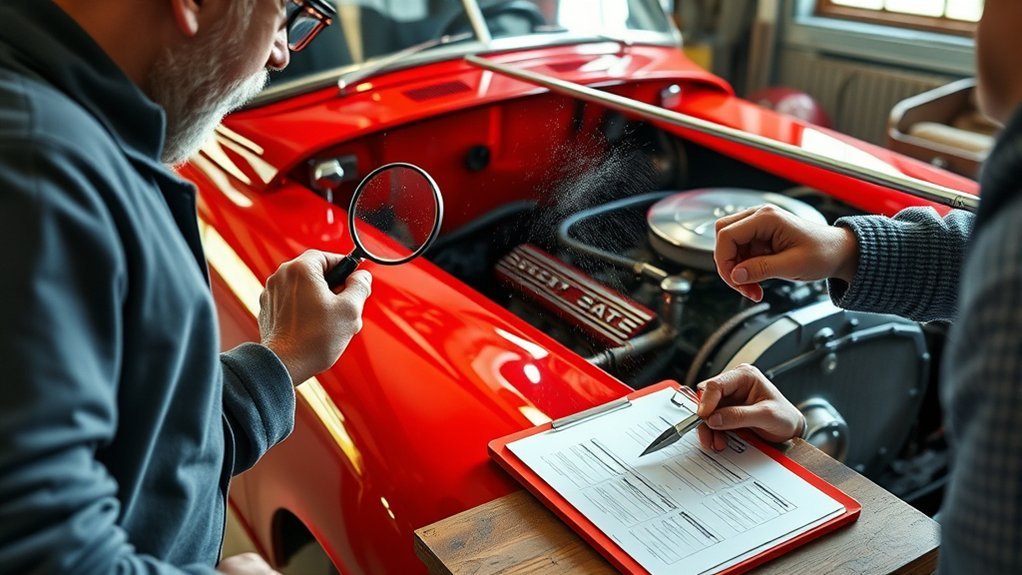
A classic car appraisal is essential for determining your vehicle’s true market value and ensuring full insurance coverage. Factors like rarity, condition, authenticity of parts, and restoration quality greatly influence value. Professional appraisers use methods like market comparison and replacement cost to provide accurate assessments. Understanding market trends can also impact your investment decisions. By getting an appraisal, you can safeguard your financial interests and enhance resale potential. Discover more about the appraisal process and its benefits.
Why You Need a Classic Car Appraisal for Your Investment
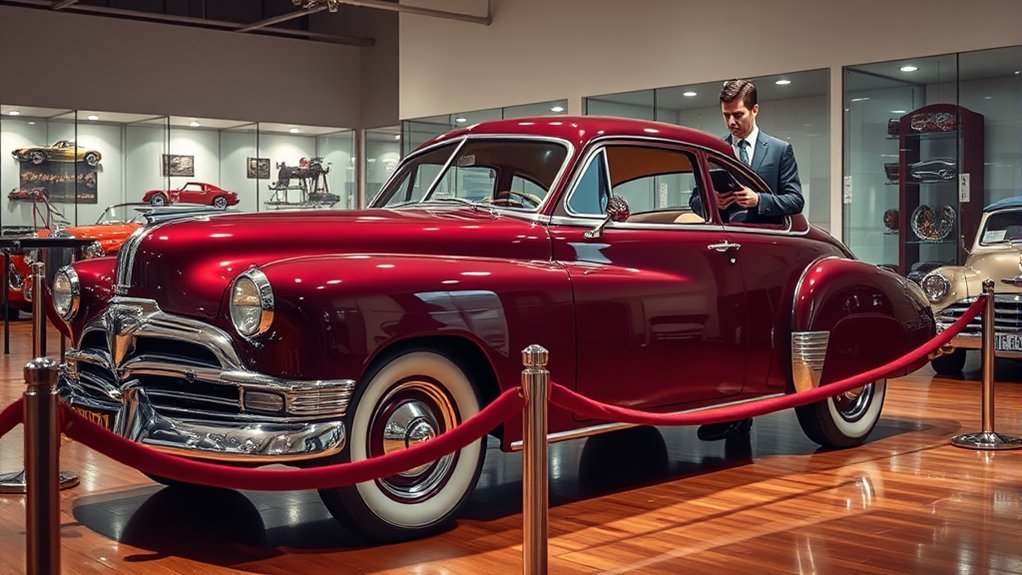
When you invest in a classic car, securing a professional appraisal is vital to protect your financial interests. An accurate appraisal guarantees you have full insurance coverage, minimizing the risks of underinsurance that could leave you vulnerable to losses from damage or theft.
This investment protection is essential, especially for rare models like a Jaguar E-Type or Land Rover, where market value can fluctuate considerably.
Moreover, a detailed appraisal aids in establishing the true market value of your vehicle, facilitating effective negotiations during resale.
Regular appraisals reflect your car’s rarity and condition, safeguarding your investment and enhancing its resale potential. Proper documentation from a certified appraiser prevents undervaluation, guaranteeing you receive a fair price when selling.
Essential Factors That Determine Classic Car Value
Understanding the essential factors that determine classic car value is imperative for any collector or investor. The overall condition of the vehicle, including its exterior, interior, engine, and drivetrain, profoundly impacts its appraisal. Well-maintained cars fetch higher prices.
The vehicle’s overall condition significantly influences its value, with well-maintained classic cars commanding higher prices.
Rarity also plays a key role; limited production models or those with unique features are typically valued more. Authenticity is paramount; vehicles retaining original parts and factory-correct finishes command higher prices than modified examples.
Documentation, such as maintenance records and restoration history, enhances a vehicle’s appeal and can lead to a more accurate appraisal, reflecting its true market value.
Restoration quality is equally important; a meticulously restored car with high craftsmanship can elevate value considerably.
Finally, vehicle provenance—its history and ownership—adds to its allure and desirability, making it a key factor in determining worth in the collector market.
How Market Trends Impact Classic Car Appraisals
Market trends considerably shape the appraisal values of classic cars by reflecting current demand and supply dynamics.
You’ll notice that historical price trends often reveal patterns where certain models appreciate faster due to their popularity and rarity.
Current Market State
As demand for vintage vehicles continues to surge, classic car appraisals are increasingly influenced by market trends that reflect both collector preferences and economic conditions. Models from the 1960s and 1970s, like the 1969 Dodge Charger and 2005 Porsche Carrera GT, are predicted to appreciate markedly. Limited edition cars are particularly desirable, impacting appraisal values due to their rarity.
| Vintage Trends | Collector Preferences |
|---|---|
| Increasing demand | Focus on limited editions |
| Economic fluctuations | Preference for historical significance |
| Price insights from Hagerty | Regular appraisal necessity |
Staying informed about these dynamics is vital for accurate vehicle valuations, ensuring your appraisal reflects the current market state effectively.
Historical Price Trends
While classic car values can fluctuate substantially over time, several key factors consistently shape these historical price trends. Understanding market fluctuations is essential for accurate appraisals and value predictions.
Here are some insights that impact classic car valuations:
- Rarity plays a significant role in appreciation rates.
- Seasonal trends influence auction prices, often peaking during specific times.
- Limited edition models tend to appreciate faster than common ones.
- Economic conditions can shift buyer interest and investment levels.
- Resources like the Hagerty Price Guide provide valuable appreciation forecasts.
Choosing the Right Appraisal Method for Your Classic Car
How do you determine the best appraisal method for your classic car? Understanding the various appraisal methodologies can greatly enhance valuation accuracy. Consider these three primary approaches:
| Appraisal Method | Description | Best For |
|---|---|---|
| Market Comparison | Evaluates recent sales of similar vehicles | Most classic cars |
| Replacement Cost | Estimates replacement costs for a similar model | Restorations and modifications |
| Income Approach | Assesses potential income generation from the vehicle | Rental or exhibition cars |
The Role of Professional Appraisers in Accurate Valuation
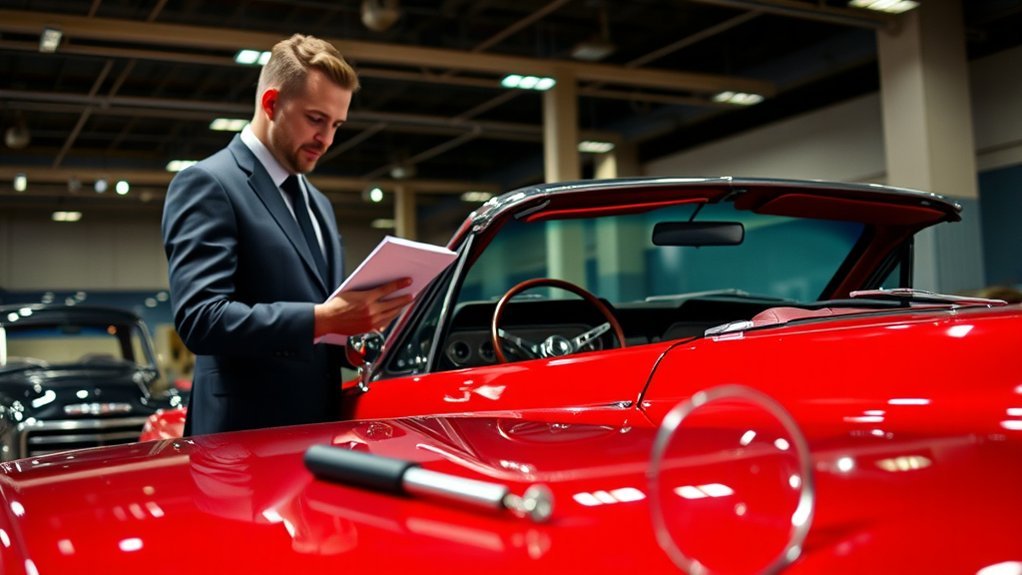
When it comes to valuing classic cars, the expertise of professional appraisers is essential.
Their specialized knowledge allows them to identify nuances that influence a vehicle’s worth, ensuring an accurate assessment.
Additionally, certified appraisers provide unbiased evaluations, which are important for making informed investment decisions.
Expertise In Classic Cars
To guarantee an accurate valuation of classic cars, the expertise of professional appraisers is indispensable. Their specialized knowledge not only encompasses classic car aesthetics but also involves a rigorous understanding of market trends and historical significance.
Certified appraisers, recognized by organizations like the ASA and IVAN, maintain high standards for appraisal qualifications, ensuring credibility.
- Conduct thorough physical inspections of vehicles
- Assess exterior, interior, engine, and drivetrain conditions
- Utilize Market Comparison and Replacement Cost Approaches
- Provide objective evaluations critical for insurance and resale
- Enhance overall valuation accuracy with extensive assessments
With their experience, expert appraisers deliver well-rounded valuations, empowering you to make informed decisions in the classic car market.
Unbiased Professional Assessments
The role of professional appraisers in the classic car market extends beyond mere aesthetics; they provide unbiased assessments that are vital for accurate valuations. Their wealth of knowledge and experience guarantees you receive unbiased evaluations grounded in industry standards and trends.
Certified appraisers, often affiliated with recognized organizations, uphold professional standards, adding credibility to their assessments. Their expertise encompasses the nuances of specific makes and models, essential for determining rarity and historical significance.
How to Prepare for Your Appraisal
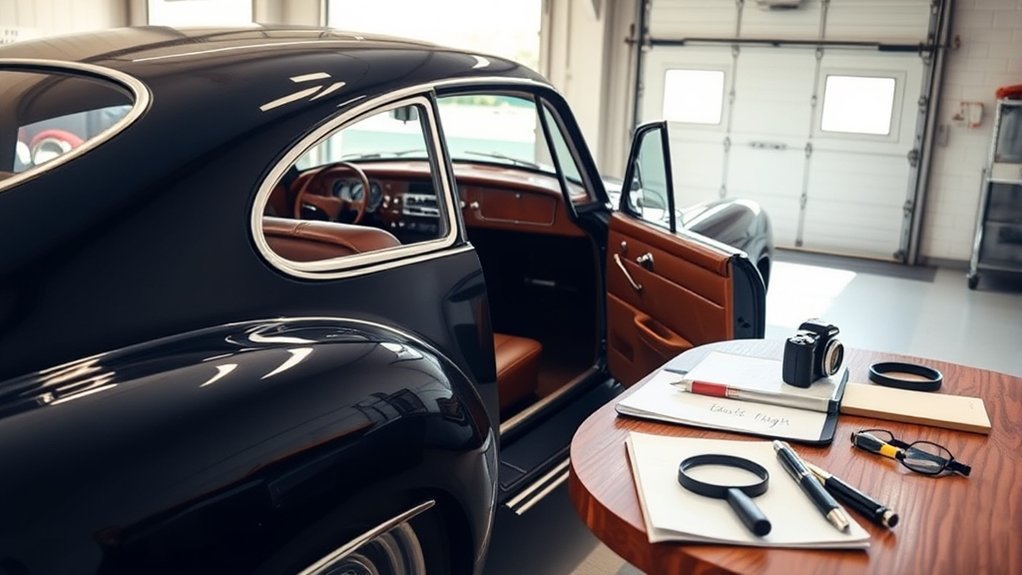
Preparing for your appraisal can considerably influence the outcome, so it’s essential to approach this process methodically.
An effective appraisal checklist will help you present your vehicle in the best light and provide the necessary documentation to support its value.
- Gather maintenance records and original sales receipts.
- Clean the vehicle inside and out for ideal vehicle presentation.
- Compile certificates of authenticity and documents showcasing rarity.
- Organize all relevant information for easy access during the appraisal.
- Be ready to discuss the car’s history, including modifications and restorations.
Common Appraisal Mistakes to Avoid
When appraising a classic car, accurately evaluating the vehicle’s condition is essential; overlooking key components can lead to significant misrepresentation of its value.
Additionally, ignoring current market trends can skew your pricing strategy, potentially alienating prospective buyers.
To guarantee a fair appraisal, you need to balance condition evaluations with up-to-date market insights.
Inaccurate Vehicle Condition Assessment
Conducting an accurate vehicle condition assessment is essential for determining a classic car’s true value, as overlooking even minor details can lead to significant misjudgments.
Here are common appraisal mistakes to avoid:
- Failing to perform a thorough exterior and interior assessment.
- Neglecting authenticity verification of original parts or matching numbers.
- Overlooking modifications or restorations that impact desirability.
- Ignoring factory-correct finishes during the appraisal process.
- Lacking extensive documentation, such as maintenance records and restoration history.
Ignoring Market Trends
Ignoring market trends can severely skew the appraisal of a classic car, leading to misguided valuations that either inflate or deflate a vehicle’s worth. Staying updated on market demand is essential for guaranteeing valuation accuracy. Recent sales data and comparables from similar vehicles should guide your appraisal process.
| Factor | Impact on Valuation |
|---|---|
| Market Demand | Influences desirability |
| Recent Sales Data | Reflects current value |
| Comparables | Guarantees fair pricing |
| Limited Editions | Enhances valuation |
| Unique Attributes | Increases rarity value |
What Should You Expect After Your Classic Car Appraisal?
After you receive your classic car appraisal, you can expect an extensive report that details your vehicle’s condition, historical significance, and estimated market value based on current trends and comparable models.
This report analysis is essential for understanding your car’s worth in the market and can aid in various financial decisions.
- Full insurance coverage recommendations
- Documentation for negotiations with buyers or insurance companies
- Insights into potential resale or investment strategies
- Suggestions for maintaining or enhancing your vehicle’s value
- Understanding the financial implications of ownership
The appraisal process serves not just as a valuation tool but also as a guide for informed decision-making.
Evaluating Condition and Authenticity of Your Classic Car
Understanding your classic car’s condition and authenticity is vital for ensuring an accurate appraisal. Start by conducting a thorough condition evaluation that covers the exterior, interior, engine, and transmission.
Pay special attention to the presence of original parts, as these greatly enhance your vehicle’s authenticity and market value. Matching numbers are also essential; they confirm a car’s originality and can heavily affect appraisal outcomes.
Original parts and matching numbers are critical for enhancing a classic car’s authenticity and maximizing its market value.
Next, evaluate the factory finishes. Deviations from these specifications can diminish the car’s value, making it important to maintain factory-correct finishes.
Any modifications or restorations that stray from original designs can lead to a decrease in worth.
Finally, remember that even minor imperfections can impact the overall valuation of your classic vehicle. By thoroughly evaluating these elements, you’ll position yourself for a more accurate and favorable appraisal.
Understanding the Historical Context of Classic Cars
While the allure of classic cars often stems from their aesthetic appeal and performance, their historical context is equally important in shaping their appraisal value. Understanding this context allows you to appreciate how cultural significance and technological advancements influenced the vehicle’s design and functionality.
- Historical significance of manufacturing details
- Impact of cultural movements on car designs
- Rarity of limited edition models
- Technological advancements during the production era
- Insights into automotive history and provenance
Professional research into a classic car’s history is essential. It helps establish authenticity and can elevate its appraisal worth considerably.
Frequently Asked Questions
How to Complete a Classic Car Auto Appraisal?
To complete a classic car auto appraisal, gather documentation, evaluate the vehicle’s condition, and consult a certified appraiser. Use valuation methods like Market Comparison and Replacement Cost to guarantee a thorough and accurate appraisal process.
How Do I Find Out How Much My Classic Car Is Worth?
To find out how much your classic car’s worth, consult valuation tools for vintage vehicle valuation, research recent sales, assess its condition, and consider professional appraisal services for accurate classic car insurance assessments.
What Is the 20 3 8 Rule for Buying a Car?
The 20 3 8 rule is a car buying strategy that recommends a 20% down payment, a maximum 3-year loan term, and keeping monthly payments under 8% of your gross income to guarantee financial freedom.
How Much Does It Cost to Appraise a Classic Car?
Appraisal fees for classic cars can vary like the price of fine art, ranging from $200 to $500. Valuation factors include the appraiser’s expertise and vehicle complexity, which greatly influence overall costs.
Conclusion
Getting a classic car appraisal might seem unnecessary, especially if you think you know your vehicle’s worth. However, an accurate appraisal not only safeguards your investment but also provides insights into market trends and condition evaluations. By understanding the true value of your classic car, you can make informed decisions about restoration, insurance, and potential sales. Don’t underestimate the importance of professional guidance—it’s an essential step in preserving both your passion and investment.






Leave a Reply