
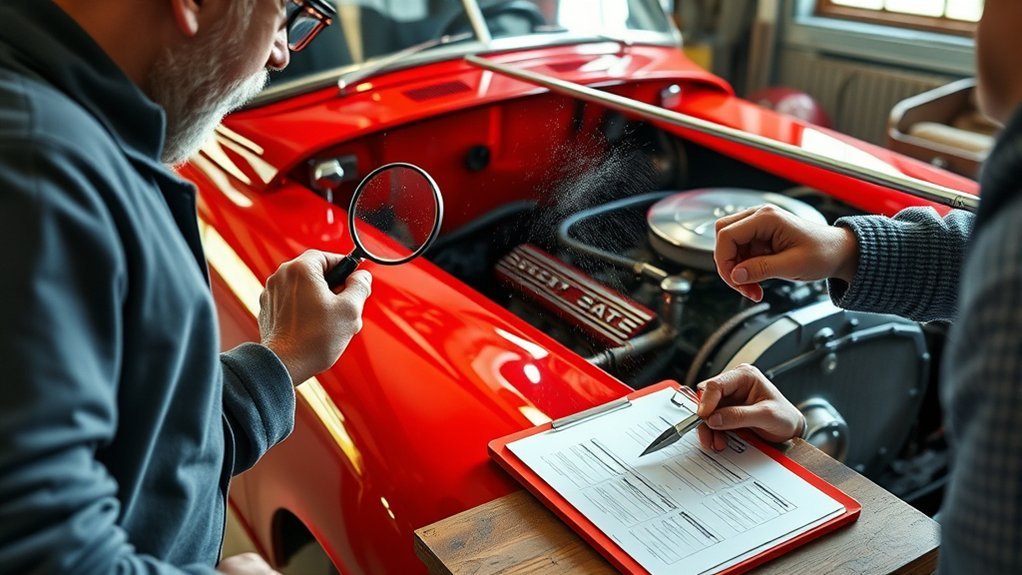
A classic car appraisal gives you a documented opinion of value for a specific vehicle, purpose, and effective date. It can support an insurance decision, sale, purchase, estate matter, donation, financing request, or restoration plan. The strongest appraisals combine a physical inspection, identity and history checks, current comparable sales, and clear adjustments for condition, originality, provenance, and market demand.
Quick Answer
A classic car appraisal is a written, date-specific opinion of value based on the vehicle’s identity, condition, originality, documentation, provenance, and recent comparable sales. It can support insurance, buying, selling, estate, tax, or legal needs, but it does not by itself guarantee coverage or a future sale price.
Key Takeaways
- Define the appraisal’s purpose first because fair market value, insured value, replacement cost, and liquidation value are not interchangeable.
- Recent sold prices for truly comparable cars matter more than asking prices or broad model averages.
- Condition, exact specification, originality, restoration quality, provenance, documentation, and buyer demand all affect value.
- Choose an independent appraiser with verifiable collector-vehicle experience, appropriate credentials, and a written scope of work.
- Review the appraisal with your insurer, tax professional, attorney, lender, or other intended user before relying on it.
At a Glance
| Time Required | A scheduled inspection plus research and report preparation; timing depends on the vehicle and assignment scope. |
| Difficulty | Moderate for owner preparation; professional judgment is needed for a formal valuation. |
| Tools Needed | Title and registration, identification numbers, maintenance records, restoration invoices, factory documentation, keys, and clear access to the vehicle. |
| Cost | Varies by location, travel, vehicle complexity, research needs, intended use, and report detail. Request a written quote. |
Why You May Need a Classic Car Appraisal
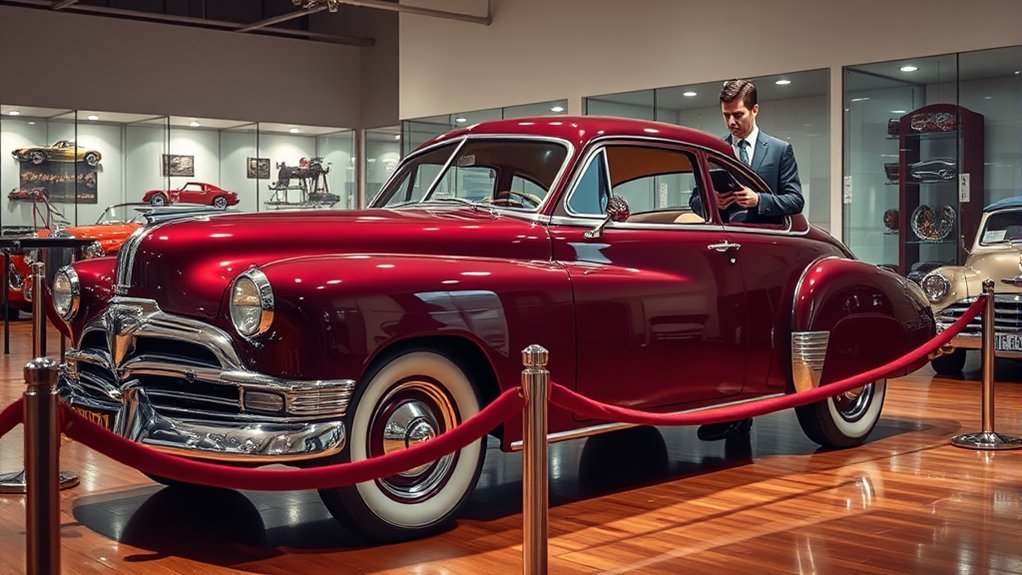
A professional appraisal can protect your financial interests by documenting what the vehicle is, what condition it was in, which market evidence was considered, and what type of value was concluded on a stated date. That record can be useful during an insurance review, sale negotiation, purchase decision, estate settlement, charitable donation, divorce, loan request, or dispute.
An appraisal does not automatically provide full insurance coverage. Collector-car policies may use agreed value, stated value, or actual cash value terms, and the policy language controls the claim. Some specialty insurers do not routinely require an appraisal; for example, Hagerty says it typically requests one only when more value documentation is needed. Other insurers may require appraisals for unusual, modified, newly restored, or high-value vehicles. Confirm the required evidence and valuation basis with the insurer before ordering the report.
Exact identification matters. Even within well-known collector names such as the Jaguar E-Type and early Land Rover models, values can differ greatly by series, body style, engine, market specification, originality, production details, and history. A broad make-and-model estimate is not a substitute for inspecting the specific car.
Note: Insurance, tax, estate, divorce, bankruptcy, and litigation assignments may require different definitions of value, report language, effective dates, or appraiser qualifications. Ask the intended user what it requires before the appraisal begins.
Choose the Correct Type of Value
The word value can mean different things. The assignment’s purpose determines the correct market, assumptions, effective date, and value definition. Mixing these concepts can produce a report that is unusable for its intended purpose.
| Value Type | What It Generally Addresses | Common Use |
|---|---|---|
| Fair market value | The price informed, willing parties would agree to in the relevant open market, with neither forced to act. | Many sale, estate, donation, and tax assignments, subject to the applicable legal definition. |
| Agreed or insured value | A value accepted under the terms of an insurance policy. | Collector-vehicle insurance; policy wording and exclusions control. |
| Replacement cost | The cost to obtain a substitute with comparable utility or characteristics under defined assumptions. | Certain insurance or specialized assignments; it may differ sharply from fair market value. |
| Orderly or forced liquidation value | Expected proceeds under a limited sale period or compelled-sale conditions. | Lending, insolvency, business, or court-related situations. |
The IRS definition of fair market value illustrates why an insurance replacement figure is not automatically the same as open-market value. For tax work, use the definition and appraisal requirements that apply to the specific transaction.
Essential Factors That Determine Classic Car Value
A credible valuation considers the complete vehicle rather than relying on the year, make, and model alone. Important factors include:
- Identity and specification: Chassis or VIN, body style, engine, transmission, trim, market version, factory options, production date, and special-edition status.
- Condition: Body, frame or unibody, paint, brightwork, glass, weather seals, interior, electrical system, engine, cooling system, transmission, brakes, steering, suspension, wheels, and tires.
- Originality and authenticity: Original components, documented replacement parts, date codes, stampings, factory finishes, and consistency with marque records.
- Restoration quality: Workmanship, correctness, invoices, photographs, materials, hidden repairs, and whether the work suits the expectations of the relevant buyer market.
- Provenance: Ownership chain, competition or show history, notable use, documented celebrity ownership, original sales records, and other verifiable history.
- Rarity and demand: Production volume matters only when buyers also want the model or configuration. A rare car is not automatically a valuable car.
- Market evidence: Recent arm’s-length sales of closely comparable vehicles, adjusted for condition, specification, location, date, venue, and sale terms.
Rarity can support value, but scarcity without buyer demand does not guarantee a premium.
Documentation strengthens the appraiser’s ability to identify the car and explain adjustments, but paperwork does not erase physical defects. Likewise, an expensive restoration does not guarantee that the market will repay every dollar spent. Some buyers pay more for preserved originality, while others prefer a correctly restored or thoughtfully modified vehicle.
How Market Trends Impact Classic Car Appraisals
Collector-car values change as tastes, demographics, supply, economic conditions, event exposure, and model-specific enthusiasm change. A valuation should be tied to an effective date and supported by evidence available for that date. It should not be presented as a promise of future appreciation.
Use Current Sold Comparables
Recent completed sales usually carry more weight than asking prices. The appraiser should compare vehicles that match as closely as possible in series, body style, engine, transmission, condition, originality, documentation, and market location. Auction, dealer, and private-party results may represent different buyer pools and sale terms.
When reviewing auction data, determine whether the published result includes a buyer’s premium and whether the sale was completed. A high asking price, a no-sale bid, or an exceptional celebrity or competition-history car should not be treated as an ordinary comparable without explanation.
Valuation guides are useful starting points. For example, the Hagerty Price Guide methodology considers condition, documentation, rarity, modifications, demand, and other market factors. A guide range still needs to be reconciled to the specific car.
Interpret Historical Price Trends Carefully
Historical charts can show direction and volatility, but they do not guarantee future returns. Limited-production cars, 1960s and 1970s performance models, and modern collectibles such as the 2005 Porsche Carrera GT may attract strong interest at times, yet model-specific performance can reverse as supply, tastes, and economic conditions change.
- Compare several years of data rather than one headline sale.
- Separate ordinary examples from concours, celebrity-owned, competition, or ultra-low-mileage cars.
- Account for inflation, auction fees, currency, and market location when relevant.
- Give more weight to sales close to the appraisal’s effective date.
- Explain why each comparable is similar and how differences were adjusted.
Choosing the Right Appraisal Method for Your Classic Car
The appraiser selects and reconciles methods that fit the assignment. No single approach is automatically correct for every classic car.
| Appraisal Method | How It Works | When It May Fit |
|---|---|---|
| Sales comparison approach | Analyzes completed sales of similar vehicles and adjusts for meaningful differences. | The primary approach for many collector cars when reliable comparables exist. |
| Cost approach | Considers the cost to create or replace comparable utility, then accounts for depreciation, obsolescence, and market reality. | Rare or highly specialized vehicles with limited sales data; it should not assume restoration cost equals market value. |
| Income approach | Converts supportable expected income into an indication of value. | Uncommon for privately enjoyed classics; potentially relevant when the vehicle is an established income-producing asset and reliable income data exist. |
The Role of Professional Appraisers in Accurate Valuation

A qualified appraiser identifies the assignment’s intended use, researches the correct market, inspects and documents the vehicle, analyzes relevant sales, explains adjustments, and reports a supported conclusion. The appraiser should also disclose important assumptions, limiting conditions, prior services, and conflicts of interest when applicable.
Look for Relevant Collector-Car Expertise
General automotive knowledge is helpful, but marque- and era-specific experience can be crucial. Prewar cars, muscle cars, European sports cars, race cars, customs, prototypes, and modern exotics can require different records, specialists, and markets.
The Uniform Standards of Professional Appraisal Practice apply to personal-property appraisal practice, and organizations such as the American Society of Appraisers provide credentials, ethics requirements, and consumer guidance. A credential is useful, but it does not replace direct experience with the type of vehicle being valued.
How to Choose an Appraiser
- Ask for verifiable experience with the vehicle’s marque, era, and value range.
- Confirm the appraiser can produce the report format required by the insurer, court, lender, estate, or tax adviser.
- Request a written engagement letter stating the intended use, type of value, effective date, inspection scope, fee, delivery terms, and report type.
- Ask whether the appraiser follows USPAP and whether the report will identify comparable sales and explain adjustments.
- Check credentials directly with the issuing organization and request references or a redacted sample report when appropriate.
- Choose an independent appraiser who has no undisclosed financial interest in buying, selling, restoring, or insuring the vehicle.
Warning: Avoid an appraisal fee based on a percentage of the concluded value or on reaching a target number. The fee should be based on the work performed, not the outcome.
How to Prepare for Your Appraisal
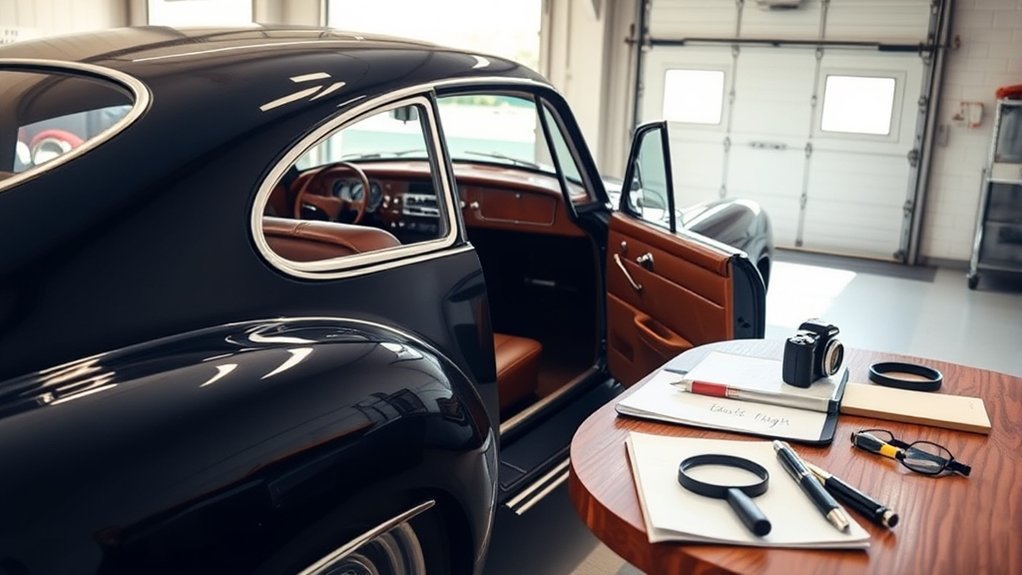
Good preparation helps the appraiser identify the car, inspect it efficiently, and verify claims. Do not hide defects or make last-minute cosmetic changes that could misrepresent condition.
- Confirm the assignment: Tell the appraiser who will use the report and why.
- Gather ownership records: Provide the title, registration, bill of sale, prior appraisals, and any lien or estate documents relevant to the assignment.
- Record identification numbers: Locate the VIN or chassis number, body tag, engine number, transmission number, trim tag, and other manufacturer identifiers.
- Organize history: Collect maintenance records, restoration invoices, build sheets, certificates, factory correspondence, judging sheets, and period photographs.
- List modifications: Disclose replacement engines, color changes, body conversions, upgraded brakes, electronic ignition, air conditioning, safety equipment, and reversible original parts kept with the car.
- Provide access: Make the engine bay, interior, trunk, underbody, storage area, keys, battery switch, and documentation available.
- Clean without concealing: A basic wash and tidy interior improve visibility, but do not cover rust, leaks, damage, warning lights, or mechanical problems.
- Describe operating condition: State when the car last ran, known faults, fluid leaks, overheating, brake concerns, and whether a safe road test is possible.
For model year 1981 and newer vehicles, the NHTSA VIN decoder can confirm manufacturer-reported information encoded in a standardized VIN. Earlier vehicles may use shorter or manufacturer-specific serial systems, so factory records, marque clubs, build data, and physical stampings may be needed.
A report from the National Motor Vehicle Title Information System may help identify title brands, recent odometer information, and certain history records. Coverage can be incomplete for older vehicles, so it should supplement—not replace—physical inspection and documentary research.
What a Classic Car Appraiser Inspects
The scope varies, but a thorough inspection commonly addresses the following areas:
| Area | What Is Documented |
|---|---|
| Identity | VIN or chassis number, tags, stampings, configuration, options, production details, and consistency with records. |
| Body and structure | Rust, corrosion, collision repair, panel fit, frame or unibody condition, glass, trim, and weather seals. |
| Paint and finish | Color correctness, repaint quality, defects, overspray, cracking, filler evidence, and finish consistency. |
| Interior | Materials, trim, instruments, controls, upholstery, headliner, carpets, odors, water damage, and operation. |
| Mechanical systems | Engine, cooling, fuel, electrical, transmission, driveline, steering, suspension, brakes, exhaust, wheels, and tires. |
| Documentation and provenance | Ownership records, service history, restoration evidence, awards, competition history, and support for claimed significance. |
Warning: Do not start, lift, or road-test a long-stored or unsafe vehicle solely for the appraisal. Unknown brakes, old tires, fuel leaks, damaged wiring, or degraded fluids can create serious risks. Arrange a qualified mechanical inspection first when needed.
Common Appraisal Mistakes to Avoid
Inaccurate Vehicle Condition Assessment
Small omissions can cause large valuation errors. An appraisal should distinguish between cosmetic presentation and underlying condition. Fresh paint, a clean engine bay, or a recent interior does not prove that structural repairs, corrosion, drivetrain wear, or electrical faults were corrected.
- Do not describe a car as original without identifying what remains original.
- Do not rely on photographs alone when an in-person inspection is practical and required by the intended user.
- Do not treat “matching numbers” as a universal yes-or-no label without explaining the marque’s numbering system and supporting evidence.
- Do not overlook nonfunctional gauges, aged tires, fluid leaks, poor panel fit, previous collision damage, or hidden rust-prone areas.
- Do not assume a restoration is high quality because it was expensive.
Ignoring Market Evidence
Asking prices show seller expectations, not completed transactions. A sound appraisal identifies sold comparables, verifies the sale terms when possible, and adjusts for differences that buyers actually recognize.
- Use the correct series, body style, engine, transmission, and market specification.
- Separate restored, preserved, modified, and project cars.
- Explain how auction fees, location, sale date, and venue affect comparability.
- Do not anchor the value to the owner’s purchase price, restoration cost, emotional attachment, or desired insurance limit.
Using the Wrong Value or Appraiser
A report prepared for an insurance discussion may not satisfy a court, lender, estate, or tax filing. Likewise, a dealer’s trade offer, an auction estimate, and a professional appraisal serve different purposes. Define the assignment before paying for the work.
What to Expect After Your Classic Car Appraisal
A useful report should be clear enough for the intended user to understand what was valued, when it was valued, how the conclusion was reached, and what limits apply. Depending on the assignment, it may include:
- The client, intended users, intended use, effective date, and report date
- A defined type of value and relevant market
- Vehicle identification, specification, history, condition, and photographs
- The inspection scope and any items not inspected or tested
- Assumptions, extraordinary assumptions, limiting conditions, and disclosures
- Comparable sales with sources, dates, descriptions, and adjustment reasoning
- The valuation approaches considered and the final reconciliation
- The appraiser’s signed certification, qualifications, and contact information
Read the full report rather than focusing only on the final number. Correct factual errors promptly and provide missing records, but do not pressure the appraiser to reach a desired value. Share the completed report with the intended insurer, attorney, accountant, lender, buyer, or other user and confirm that it meets that party’s requirements.
Evaluating Condition and Authenticity
Authenticity is best treated as a documented conclusion, not a marketing phrase. Start with the vehicle’s identification numbers and compare them with the title, registration, factory records, body tags, date codes, and known production practices for that marque and year.
The phrase matching numbers can mean different things. Some vehicles have serialized engines or transmissions that can be tied directly to a chassis; others rely on date codes, casting numbers, assembly stamps, or factory records. The report should explain the evidence and the standard used rather than simply checking a box.
Factory-correct paint, trim, hardware, drivetrain components, and finishes may support value in an originality-focused market. However, period modifications, safety upgrades, competition preparation, or high-quality customs can also have strong buyer demand. The appraisal should analyze the market for the car as it exists, not assume every modification lowers value.
Pro Tip: Keep removed original parts, dated photographs, receipts, and a written modification log. Reversible changes with documented original components are easier for an appraiser and future buyer to evaluate.
Understanding Historical Context and Provenance
Historical context can explain why one example is more desirable than another. The appraiser may research the model’s place in automotive history, production changes, competition record, design significance, technical innovations, cultural importance, and the reputation of specific variants.
Provenance carries weight only when it is verifiable. Ownership claims, race participation, celebrity association, factory prototypes, awards, and original-delivery stories should be supported by titles, registrations, logbooks, photographs, period publications, factory correspondence, or other reliable records. Unsupported stories may be interesting, but they should not receive the same weight as documented history.
When to Update a Classic Car Appraisal
There is no single update interval that fits every vehicle or purpose. Review the value and supporting records when:
- The insurer requests updated documentation or the policy renews
- A major restoration, repair, modification, or authenticity discovery changes the car
- Comparable sales or market conditions move materially
- The vehicle is being bought, sold, donated, financed, transferred, or included in an estate
- The prior report no longer reflects the car’s condition, intended use, or effective date
An older appraisal can still document past condition and value, but it may not support a current decision without an update.
Frequently Asked Questions
How do you complete a classic car appraisal?
First define the intended use, value type, and effective date. Then identify and inspect the vehicle, verify available records, research recent comparable sales, analyze condition and market differences, reconcile the evidence, and issue a signed written report with photographs, assumptions, sources, and qualifications.
How do I find out how much my classic car is worth?
Start with collector-car valuation guides and recent sold listings for the exact model and specification. Adjust for condition, originality, restoration quality, provenance, options, and market venue. For insurance, tax, estate, legal, lending, or a high-value transaction, obtain a purpose-specific appraisal from a qualified independent appraiser.
What is the 20/3/8 rule for buying a car?
The 20/3/8 rule is a budgeting guideline that suggests putting 20% down, financing for no more than three years, and keeping the monthly payment at or below 8% of gross income. It is not an appraisal standard and may not fit collectible-car purchases, irregular income, maintenance costs, storage, insurance, or investment risk.
How much does it cost to appraise a classic car?
There is no universal fee. Cost depends on travel, vehicle complexity, research time, intended use, report detail, urgency, and whether specialists are needed. Request a written quote and scope. Avoid compensation tied to a percentage of the appraised value or to reaching a target result.
Do I need an appraisal for classic car insurance?
Not always. Requirements vary by insurer, vehicle, modifications, requested insured value, and policy type. Ask whether the company needs photographs, receipts, a valuation-guide figure, or a formal appraisal, and confirm whether the policy uses agreed value, stated value, or actual cash value.
Can an online valuation guide replace a professional appraisal?
A guide can provide a useful range, but it may not verify the specific car’s identity, hidden condition, originality, restoration quality, provenance, or intended-use requirements. A formal appraisal is more appropriate when a third party needs a signed, supported, date-specific opinion.
Conclusion
A classic car appraisal is most useful when it answers a clearly defined question with current evidence. Start with the purpose, choose the correct type of value, hire an independent appraiser with relevant experience, provide complete records, and read the entire report. The result can support better decisions about insurance, restoration, buying, selling, tax, estate, and long-term ownership—but it remains a date-specific opinion, not a guarantee of coverage, profit, or sale price.
Sources
- The Appraisal Foundation — USPAP — professional appraisal standards for personal property and other appraisal disciplines.
- American Society of Appraisers — Consumer FAQs — appraiser selection, ethics, credentials, and fee guidance.
- IRS Publication 561 — fair market value, comparable sales, replacement cost, appraisal methods, and qualified-appraisal requirements for federal tax purposes.
- NHTSA VIN Decoder — manufacturer-reported information encoded in standardized VINs.
- National Motor Vehicle Title Information System — title, brand, odometer, and selected vehicle-history information available to consumers.
- Hagerty Price Guide Methodology — collector-vehicle condition ratings, market evidence, and factors used in valuation-guide analysis.







Leave a Reply